





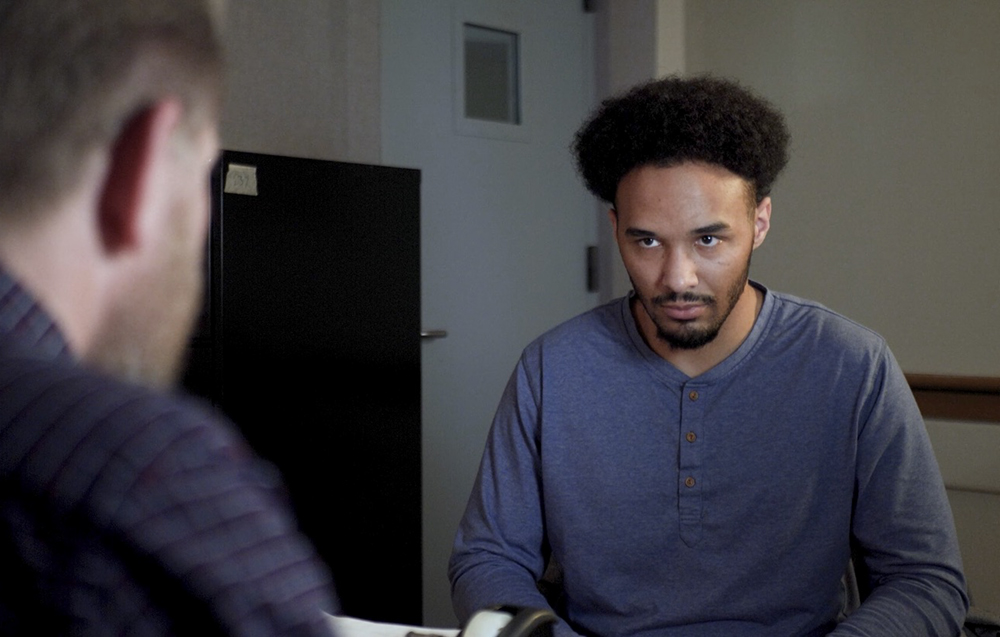
Writer/Director Ryan Flemingâs short film, âSisyphus Unbound,â carries familiar notes. It carries with it a solid acting performance by veteran indie film actor Timothy Cox, and an opening film style that caught my attention. It takes the Greek myth of Sisyphos and turns it into a tangible hand you can grasp â except this time it is not Sisyphos rolling a huge rock up a hill for eternity, but a young man trying to impress his un-impressible and thoroughly unlikable writing professor. The tale unfolds like things weâve seen before; and though dynamic performances propel it along, the end left me wanting something more.Â
âSisyphus Unboundâ starts with an idea: that it is possible, through sheer, undeniable talent, to move the immovable. Frederick J. Todd plays Virgil, an aspiring writer who has finished a manuscript, the titular âSisyphus Unbound.â He hopes to get it published â or rather sent in for consideration â after his writing professor, Richard Laymen (Cox), signs off on it. Of course, Laymen will not sign off on it â that much is guaranteed. But the major problems is that there is no real reason that Laymen wonât, aside from his need to be an angry control-freak. Flemingâs short draws tremendous inspiration from Damien Chazelleâs âWhiplash,â but without the take-a-ways on perfection, mental health, and sacrifice that made Chazelleâs script perfect.Â
A Familiar Tale of Abuse and Control
What âSisyphus Unboundâ is, in comparison, is a straightforward tale of nepotism and control. Iâve followed Coxâs career for a while, and have never seen him in a role like this. Heâs truly in top form. However, I feel that Fleming doesnât give him enough in the way of depth to really hammer home his characterâs points. We first see him walking into his meeting with Virgil, voicing disdain for teaching freshman literature, as well as a dated and basically racist reduction of Shakespeareâs iambic pentameter as âlike rap, but good.â Itâs not that these comments shocked me, but rather that they seemed tired and old, rather than a fresh, modern look at entitled academics.Â
Thereâs also the basic fact that Laymen (an ironic name for an erudite) has no reason to reject Virgilâs manuscript sight unseen aside from the scriptâs necessity he do so. Laymen is the type of person who garners some kind of power from âteachingâ new students because he can lord his intelligence and education over them, not because he enjoys teaching. Itâs kind of ugly, and the fact that Flemingâs script doesnât take the time to flesh out Laymenâs relationship between he and Virgil, or why Laymen is like this in the first place, just makes it all kind of mean. And a following scene where Laymen digs in deep, and shames Virgil for even seeking an education was just icky.Â
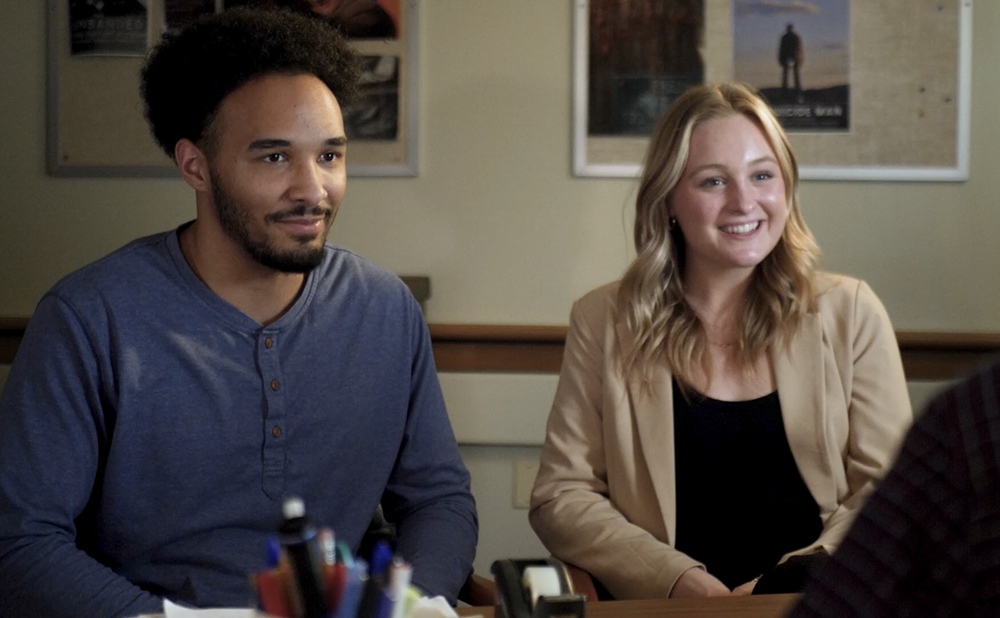
The filmâs additional jabs at âkids these daysâ not being able to take the pressure, mocking mental health, was, I feel, an ode to Chazelleâs aforementioned âWhiplash,â without the self-awareness to realize they might be actually causing these mental health issues. In Chazelleâs film, his antagonist (J.K. Simmons) knows this but denies it; in âSisyphus Unboundâ Laymen stands too high on his pedestal to even hear the voices of his own demons crawling after him. Itâs nearly impossible to have an ounce of empathy for him.
Still, Great Performances Within
âSisyphus Unbound,â as stated, is not without merit. Frederick J. Todd plays a good role as a Virgil, capturing the anxiety and apprehension of being forced to make yourself vulnerable and stand up for yourself. From his IMDb credits, it seems Todd is just starting to make appearances, and Iâd love to see him in more works. Additionally, as mentioned, Cox truly owns his character. Itâs the sign of a great actor to take a characters and make you truly hate them â and I hated Laymen from the second he walked into the room. Emerson Adams makes a brief appearance as Laymenâs daughter, and does a good job despite the lack of material.Â
All-in-all, âSisyphus Unboundâ is a wholly watchable film, but feels like a miss. Its sub 8-minute run-time â and good production value â make it pass freely and easily, but its take-a-ways seem barely to scratch the surface. Both Laymenâs abuse and Virgilâs response seem wrapped in a film that presents these as reportable facts rather than felt emotions. Given the material, I would have loved to have seen a more powerful âput-in-your-placeâ moment directed at Laymen, but its quick wrap-up â even with hope for Virgilâs character â feels rushed. Maybe a longer run-time would have allowed Fleming to tackle the themes of education abuse, racism, and power more fully. âSisyphus Unboundâ the short tries, but unfortunately lacks the power to leave a needed impact in its wake.Â
“Sisyphus Unbound” is still in its festival run. It was an official submission for ‘Winterfilm X Festival’s’ 10th anniversary.Â




