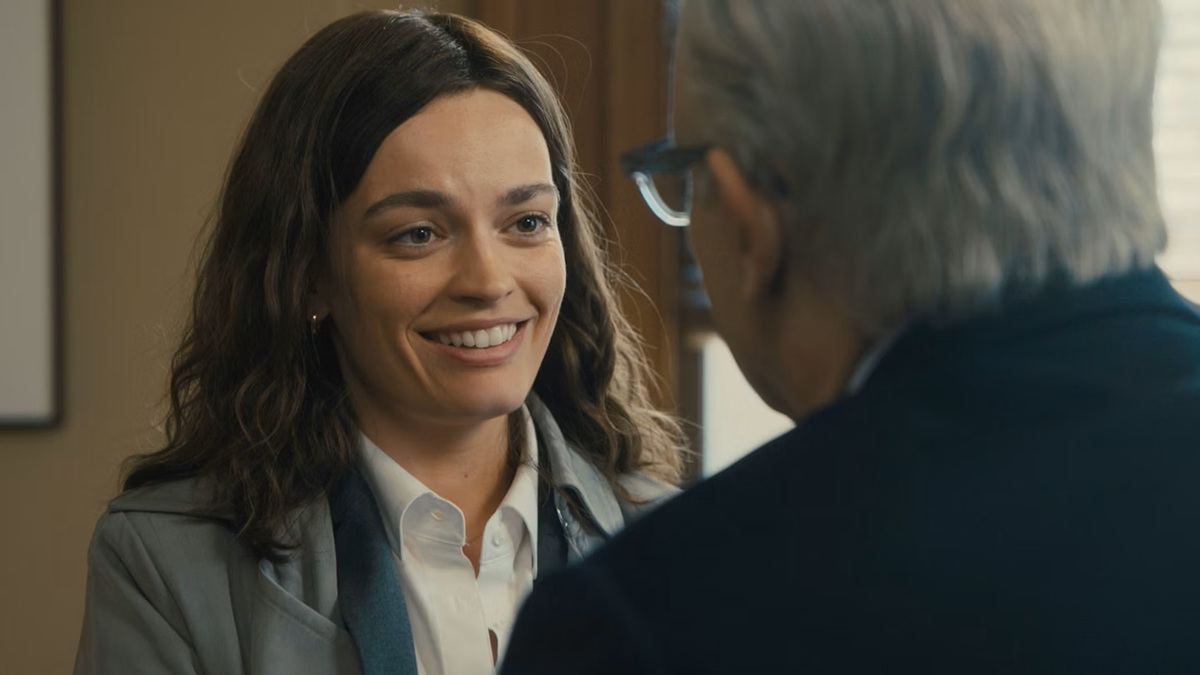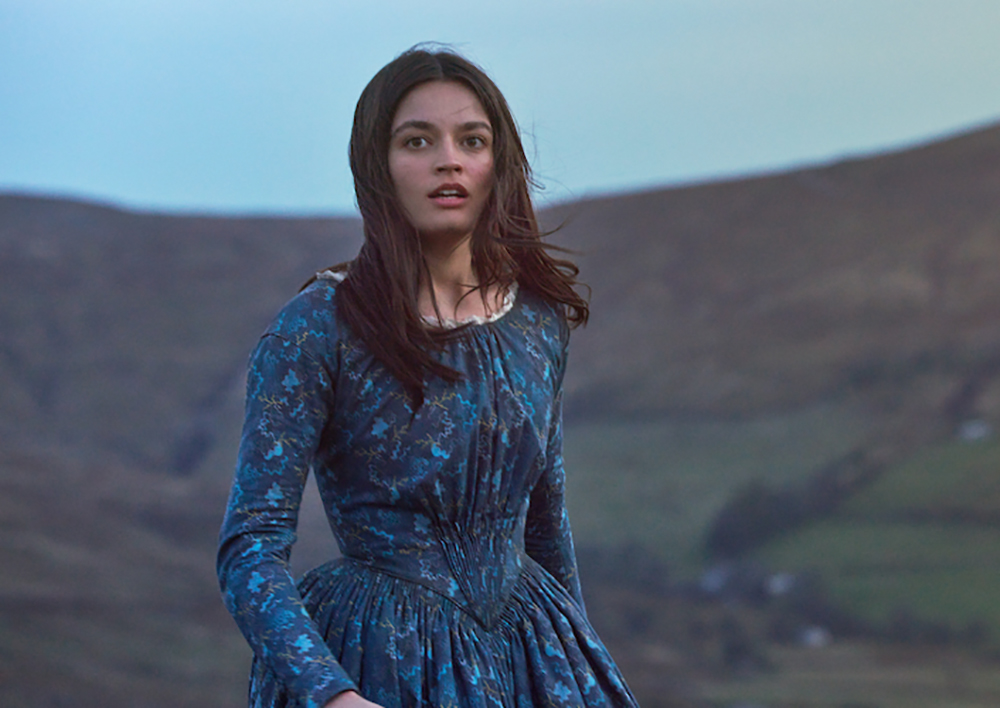
Emily Brontë, most famous for penning the novel âWuthering Heights,” is the subject of the biographical film “Emily,” directed and written by Frances OâConnor (British-born Australian actress and star of such films as 1999âs “Mansfield Park” and 2003âs “Timeline”) in her directorial debut. The film aims high, wrestling with themes of personal freedom and religious hypocrisy amidst the ultra-Puritanical society of the early 1800s, but falls short in making Emily and her relationships captivating
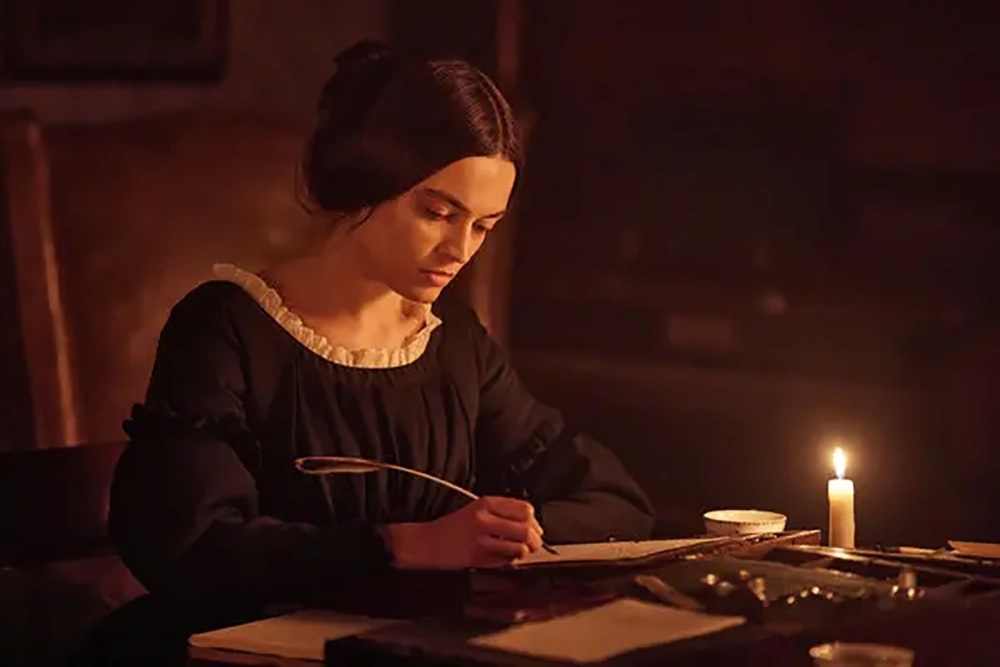
The film begins as Emily Brontë (played by Emma Mackey) lays dying from Tuberculosis at the age of 30. On her deathbed, she flashes back to the last few years of her life and all the incidents and relationships that opened her heart and mind and led her to write âWuthering Heights.”
A Conglomeration of Other Works
“Emily” seems like a mosaic assembled from an eclectic mix of other works. At times it feels like a tawdry bodice-ripper romance like “The Thorn Birds.” At other times itâs playfully fun and cheeky like Phoebe Waller-Bridgeâs “Fleabag” or Amy Heckerlingâs “Clueless.” There are even a couple scenes that are downright bone-chilling and feel like they were pulled from an old Hammer horror film from the 1970s.
I could never tell whether Emily was shy or whether she was just a misanthrope who disliked socializing with people. As I left the theater after seeing the film, I overheard a couple friends saying they thought she was autistic.
I donât know if the real Emily Brontë struggled with social interactions as much as Emma Mackeyâs version in this film, but itâs interesting seeing the differences between her and her sisters. Older sister Charlotte (Alexandra Dowling) is the most driven of the three, having no room for levity or even cracking a smile as she focuses on her studies and duties around the house. Younger sister Anne (Amelia Gething) is fun-loving, always optimistic, and exuberant, and much more supportive of Emily than Charlotte is. Â
Some Curious Elements About the Brontë Family
Emily seems to be a fusion of her two sisters. Sheâs not as grim as Charlotte but not as cheerful as Anne. Thereâs a wonderful symbiosis between the trio. When Charlotte chastises Emily and brings her down, Anne lifts Emily back up. When Anne gets too silly, Emily backs up Charlotte when Charlotte scolds Anne.
Emma Mackey lets Emilyâs body language speak for her. When the Brontë family is having a party or theyâre in church, Emily sits rigidly, barely moving other than nervously shifting in her seat or rolling her eyes at an insipid comment made by a person nearby. She emanates social anxiety.
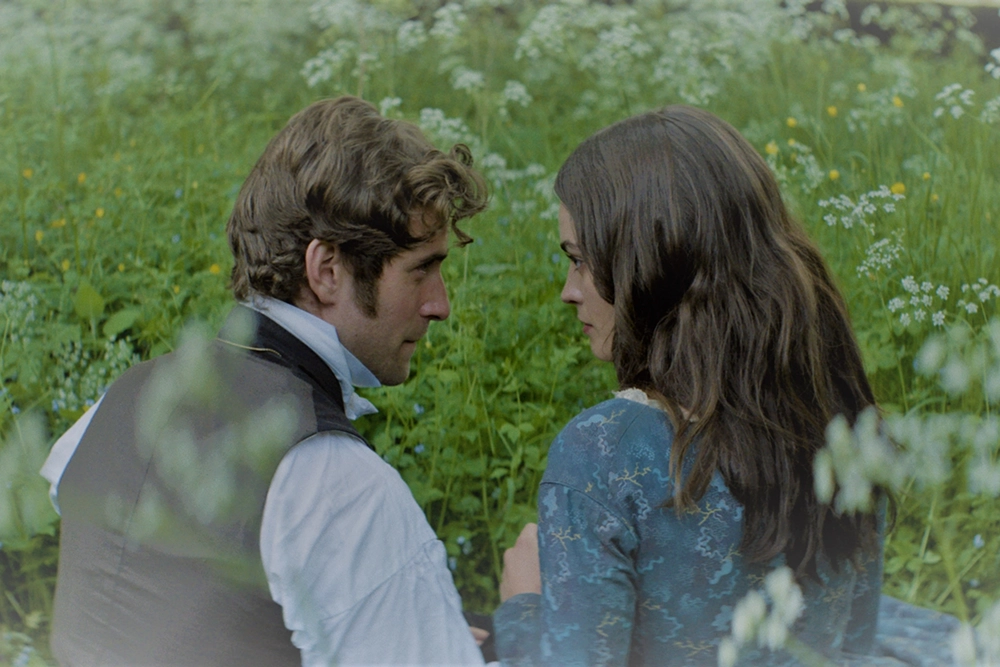
The strangest aspect of the film is Emilyâs relationship with her brother Branwell (Fionn Whitehead), whoâs devilish and mischievous and, over the course of the film, helps Emily express herself and celebrate life. The way director Frances OâConnor films their scenes together, it seems like the pair have an almost incestual relationship, staring into each others eyes lovingly, frolicking in open fields and rolling in the grass together like young lovers. I personally felt the relationship between them was a bit TOO intimate, but itâs fun watching Emily start opening up and doing some boldly mischievous things after being influenced by Branwell.Â
Not a Home-Run, but a Solid Debut from Director Frances O’Connor
The other man in Emilyâs life is William Weightman (Oliver Jackson-Cohen), a new arrival in town. Heâs a religious man and an assistant to the townâs Vicar. Even though heâs the âromantic interestâ of the film, he oddly seems to have less chemistry with Emily than Branwell does, and that ultimately brings the film down, because their scenes together, which should have been passionate and stirring, seem forced and bland.Â
Abel Korzeniowskiâs score is beautiful and lilting, and one of my favorite things about the film is how the film punctuates major moments with a crescendo of booming music, alternating that with moments of complete silence. Itâs symbolic of Emilyâs anxiety and her internal struggle to break free of the societal chains that bound every woman in the early 1800s.
Even though I felt “Emily” wasnât a total home run, itâs a solid debut from Director Frances OâConnor, and I look forward to seeing what she does next.

“Emily” is still playing in theaters, and is not currently available for streaming.Â