





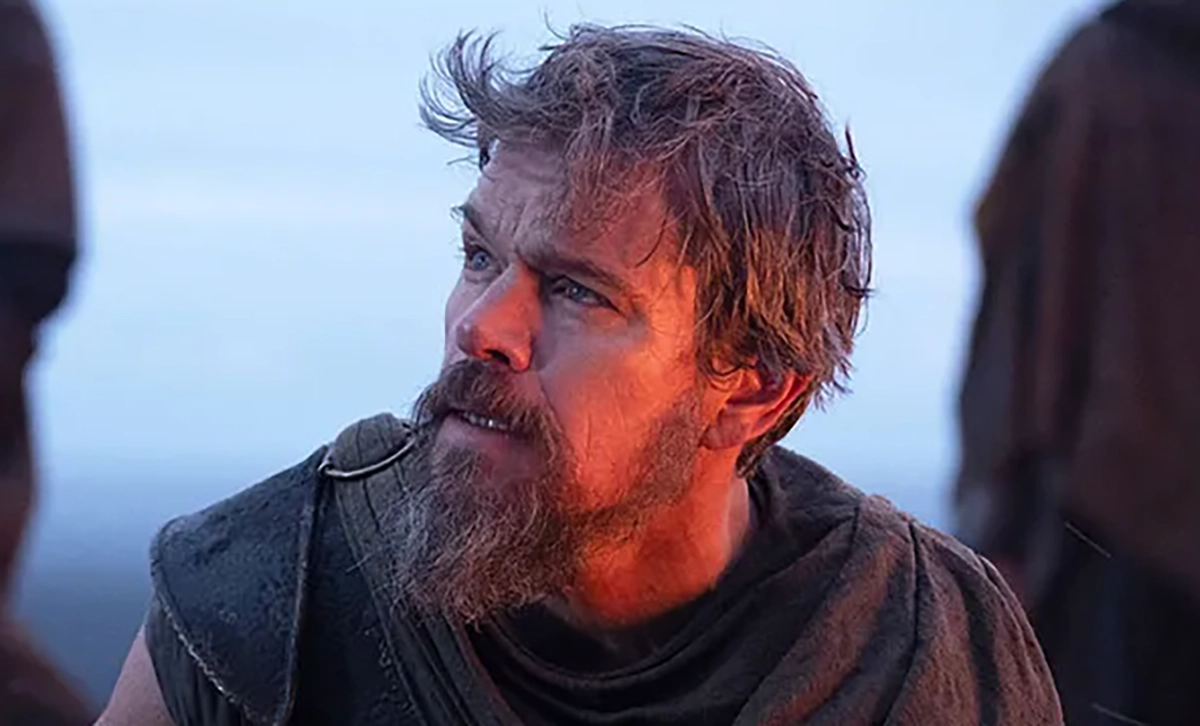
Warning: this article contains spoilers for Christopher Nolanâs âThe Odysseyâ as well as Homerâs âThe Iliadâ and âThe Odyssey.â
I haven’t seen a bigger controversy in years to match the absurdity of the âauthenticityâ of Christopher Nolanâs âThe Odyssey.â These Internet voices come in two forms â the anti-woke crowd who deride casting choices such as Elliot Page and Lupita Nyong’o, and the erudite crowd, spearheaded by recent Homer translator and professor Emily Wilson. We’ve come to expect the former. Everything these days is a culture war, especially around casting choices of persons of color or the LGBTQ+ community. The latter was more of a surprise. Not so much because criticism from academics is unwanted, but in how mean-spirited it was. The cynical part of me feels like this happened mostly because itâs a film from a popular, Oscar-winning filmmaker. I donât remember any of this fuss during âTroy’sâ release in 2004.Â
Just having re-watched âTroyâ this week, criticism over “The Odyssey’s” inauthenticity becomes even more bizarre. In his 2004 review, critic Roger Ebert bemoaned the filmâs near-total abandonment of Greek mythology, opining that âthe Homer Estate should sue.â Heâs not wrong about the almost complete neglecting of mythology in the run-time of âTroy.â However, I canât help but laugh at the quip about Homerâs Estate. âHomerâ was likely the name given to a set of oral traditions and spoken poems ultimately put into writing, and not one person. âThe Iliadâ and âThe Odysseyâ take place more than a generation apart; clearly the man wasnât alive to pen them.Â
‘The Odyssey’ and the Latest Culture War
And now we have Nolanâs âThe Odyssey,â which, aside Wilsonâs criticisms, Iâve also seen derided as a âboring slog.” It’s an odd criticism as the film contains a modestly-serious attempt at Greek mythology. It brings more to the screen of myths and Gods than I’ve hitherto seen. But the film is slow. Its 2 hour and 53-minute run-time feels like it, whereas âTroyâsâ 2 hour and 45-minute allotment seemed to fly by. âTroyâ is mostly action and âThe Odysseyâ is mostly slow-burn spectacle (aside its brief action sequences). The filmâs also both differ in tone. âTroyâ centers around Achillesâ (Brad Pittâs) disdain for King Agamemnon (Brian Cox) and his affection towards a slave girl (Rose Byrne) and his cousin Patroclus (Garrett Hedlund). The film carries a thesis of immortality through having your name remembered â Achilles is obsessed with the idea â and of not fading into the anonymity of history.
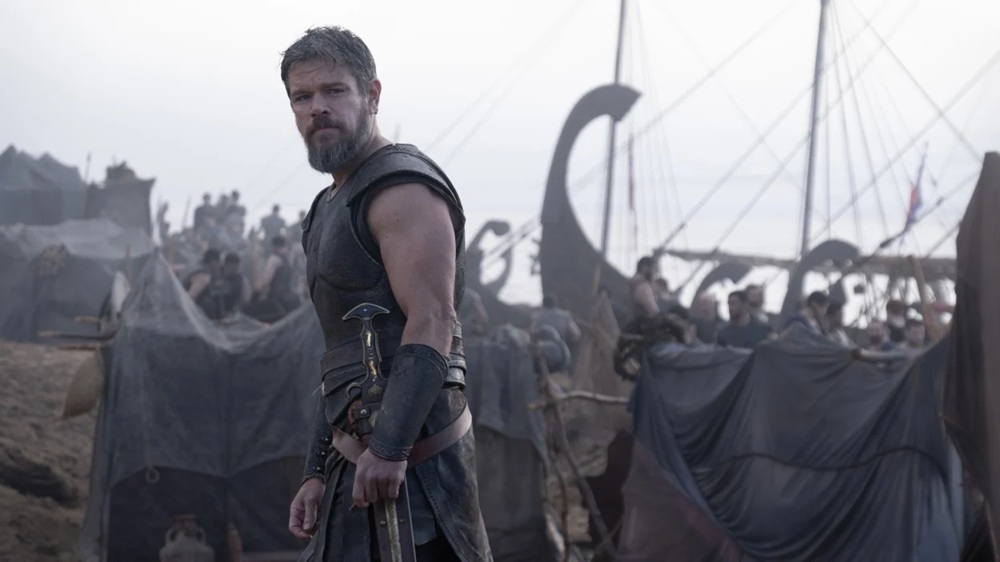
âThe Odyssey,â on the other hand, brings the Gods to bear more and centers on the idea of âhome.â In Homerâs âThe Odyssey,â King Odysseus (Matt Damon) would take 10 years to return to his home in Ithaca after already having spent 10 years waging war on Troy. It also has a thematic take on what Nolan calls âZeusâs Law.” He likens to the Golden Rule: treat others as you want to be treated. âThe Odysseyâ is a full spectacle. It almost certainly requires a second viewing.
Nolan and His Thesis of ‘Home’
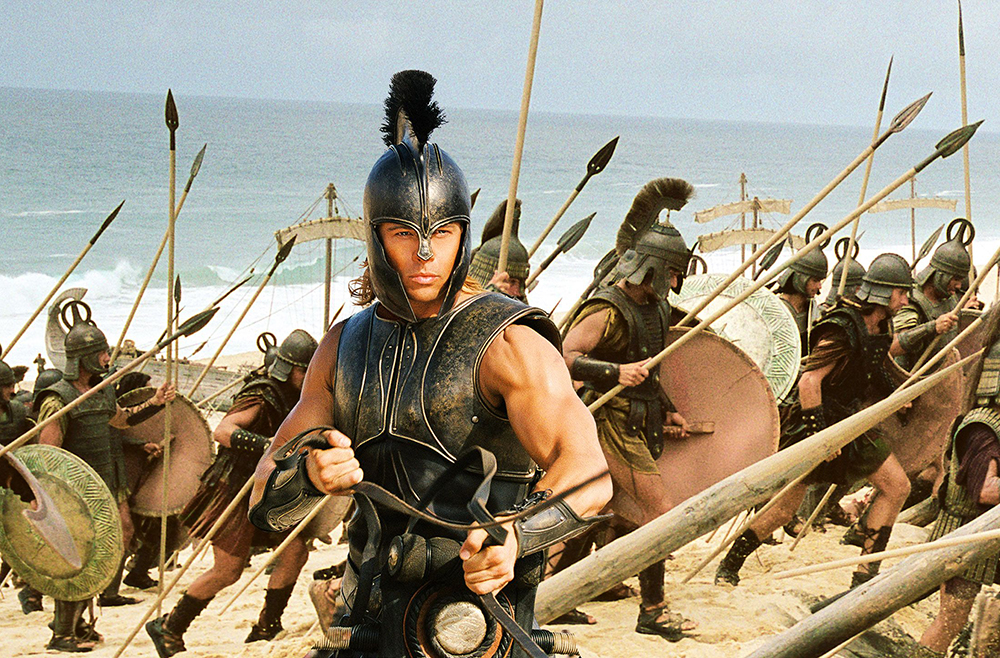
However, it isnât hard to see how Nolanâs thesis plays out here. We see this especially in the suffering Odysseus and his compatriots endure at the hands of the Gods. âTroyâ barely opined on Odysseusâ more barbaric nature (he came up with the idea for the Trojan Horse, which led to the sack, rape, and murder of most of Troy). In contrast, âThe Odysseyâ kind of keeps him a blank slate for most of the film until the end. It’s here we see him regret what heâs done to Troy â and to his men along the voyage home â offering to go into exile to pay his men the honor and prayers they deserve. Here, Nolan drastically changed Odysseusâ finale. Homerâs poem paints him much more monstrous. He kills the hundreds of suitors who loiter his palace, makes his slaves clean up their bodies, and then has the slaves executed.
And itâs here I broach the thesis of my own writing: filmmakers make decisions based on what they feel will best translate to screen. Their job is not to include âperiphery gods from the poem,â as covered by Looper. It’s also not to cover everything in the literary works. They have to make it work for the screen. For instance, in âThe Iliad,â King Agamemnon takes the priestess Briseis from Achilles after having to give up his own captive girl, Clytemnestra. This was after the God Apollo literally rained down silver arrows on his army for nine days until Agamemnon had no choice but to relent. And while âThe Iliadâ shows the ancient Greekâs fear of the Gods and what they believed about their world at the time, this would certainly make for ludicrous cinema. In âTroy,â director Wolfgang Peterson instead has Agamemnon and Achillesâ feud the cause of the latter losing Briseis. It’s not hard to see it’s a wiser choice.
Understanding Cinema vs. Written Texts
Likewise, the epic battle of Hector vs. Achilles has this same treatment. I felt the sequence in Petersonâs film was excellent. We see Hector getting ready, reluctantly, to face an angered Achilles after he mistakenly killed the warriorâs cousin, Patroclus, in combat. It feels like a funeral march; thereâs never a moment where we wonder if Hector is going to die. We know he is. Yet in Homerâs poem, we don’t see Hector as this brave man going to his death valiantly. Rather, he flees around the palace three times before the Goddess Athena intervenes, tricking him into standing his ground.
Again: this is not something that makes good cinema.
Both Nolan and ‘Troy’ Director Wolfgang Peterson Humanize Inhuman Characters
And this comes from the fact that in order to enjoy a film, we have to care about its characters. Achilles is a vicious warlord. Yet in âTroyâ I was able to like him due to his philosophical nature (âthe Gods envy usâ) and his love for Briseis. And Odysseus is painted in the same light. His savagery at Troy â devoid of any regret aside the curse he and his men acquired from the Gods â does not make a good picture. We can get behind the Odysseus Nolan provides us. He’s someone who regretted what he did with such awareness that he felt exile and atonement the only recompense. Should Nolan instead have shown the man eviscerating the suitors in his temple and executing a bunch of innocent slaves? The point here is that Homer’s works contain a legion of vengeful, opportunistic Gods and some really despicable men. Do we really want to watch a movie devoted to that?
Toxic Males and Scholars Join Forces
And then the criticisms. I found Emily Wilsonâs piece snooty and arrogant. Her opening paragraph alone (âMy teenagers had a good time. Unlike some of Nolanâs other films, âThe Odysseyâ is not boring, thanks to the source material, which is impossible to mess up entirely“) is one of the most pretentious things Iâve read to date. Iâm not sure what she was trying to accomplish here, but it struck me in a funny way. Iâm used to reading insults from fan boys about how a DC film got Superman’s cape or suit wrong. But in an age of anti-intellectualism, where conspiracy theory and meming answer for thought, I found the virility of Wilsonâs critique ludicrous. Itâs all the Internet has talked about for almost two weeks.
Of course, Wilsonâs criticism follows weeks of the usual cries from immature white men. These have been led by Elon Musk, who clamor about the inaccurate casting choices of Elliot Page and Lupita Nyong’o. Of course, these people use the term inaccurate when they mean woke. And by that, I mean they take offense a film adaptation about ancient literature includes a Transman and a Black woman. I donât recall this criticism of âTroy,â whose leads were played by an Englishman, an American, an Irishman, a German, and a Scot (Sean Bean, Brad Pitt, Brendan Gleeson, Diane Kruger, and Brian Cox, respectfully) for ânot being authentically cast.”Â
Have we reached a critical point where we simply can’t enjoy movies?
The reason for these arguments’ absurdity is of course because Helen of Troy and the Trojan war are not real. Itâs even more absurd realizing ancient Greek thought on Blacks (Aithiops/Ethiopians) ranged from exotic fascination to a study of their beauty, artwork, and more. The standards of beauty change over time. Obesity was once a sign of privilege, and thereâs no reason Nyong’oâs Helen of Troy wouldnât be the hegemony of beauty men would fight over. Of course, thatâs not even what the Trojan War was about. Spurned King Menelaus wanted her back to kill her and his brother Agamemnon used her to destroy Troy, which stood in his way of trade routes. Read: these are boring, immoral people. But since we live in a climate of cultural warfare, no casting choice is sacrosanct. The Internet often reverberates with racism and hate in most of its corners.
Remembering Films Before the Age of Culture Wars
All-in-all, I think my basic point is weâre at a critical junction where people simply canât enjoy movies anymore. Of course, âThe Odysseyâ is faring extremely well with audiences and critics alike and is crushing Box Office records. But youâre allowed to dislike it. Of course you are. I found it head scratching that a Facebook article asked, pointedly, âare you allowed to dislike âThe Odyssey?â with only Forbes magazine having the wherewithal to comment on how the filmâs criticism is absurd and the latest example of placing culture wars above art. The word âadaptationâ exists for a reason. Storytellers and film directors take what they have and make us feel something.
Personally, I felt âTroyâ did a better job at making me feel its characters drives and emotions. However, âThe Odysseyâ did a better job in atmosphere and making me feel the actual myths and the Greek’s fear of the Gods. Yet most films come and go without the acrimony and incessant buzzing and criticism to face this film. Iâm hoping eventually we can open social media without hearing the hot take de jour of Nolanâs latest and get back to business as usual. At least until the release of next Marvel or âStar Warsâ film. And then the vitriol will start again, subjecting us to an endless cycle of culture wars and toxic fandom where in the past we simply had these things called movies.
–> Read More: Discover all of our Christopher Nolan reviews and articles.


