





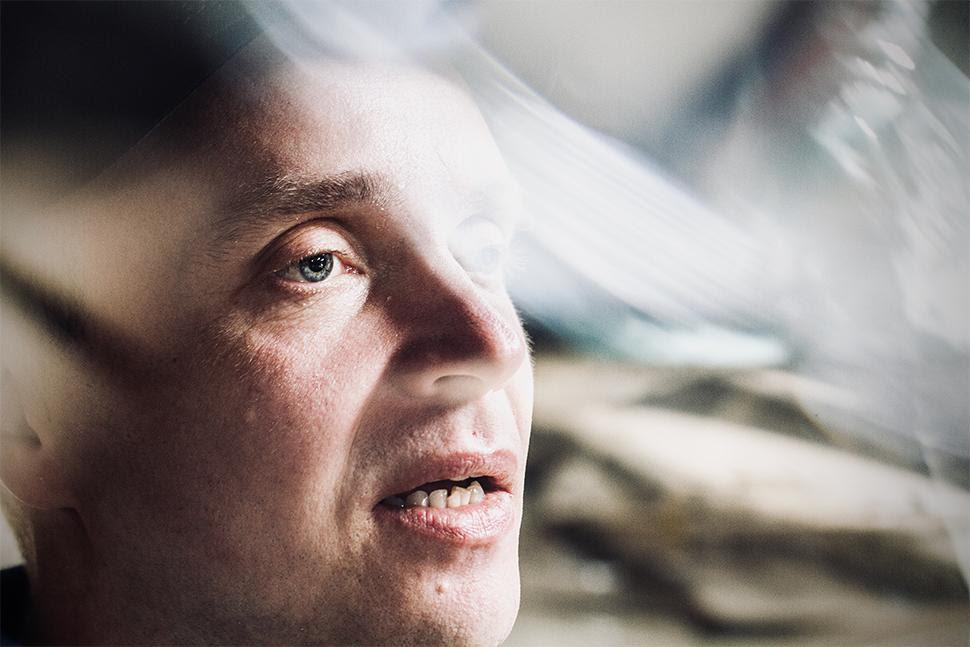
When someone with limitations and impediments makes a decision, do we understand how such small action for us might mean the very representation of freedom to that person? In Finnish director Teemu Nikkiâs film âThe Blind Man Who Did Not Want to See Titanic,â we get the answer. Casting Petri Poikolainen in the lead role as a blind man paralyzed from the waist down; Nikki presents us with a film that intimately examines oneâs desire for connectionâdisabilities be damned.
âThe Blind Manâ follows Jaakko (Poikolainen), a cinephile with a dry sense of humor who loves referring to people and events around him by characters from different films. For instance, his caregiver he calls Annie Wilkes; and that the reason he fell on the floor was that Rocky knocked him down.Â
Every day, he gets to talk to his girlfriend Sirpa (Marjaana Maijala) on the phone. Theirs is a long-distance relationship exacerbated by their afflictions: while Jaakko suffers from blindness, Sirpa (whom he envisions as an Ellen Ripley lookalike) fears that her diagnosis might be vasculitis. The everyday conversations range from mundane tasks to medical checkups, punctuated by playful yet acerbic humor and film references.
Despite the large collection of films at home, there remains one film Jaakko never watched: James Cameronâs âTitanic.â The problem, though, is that the James Cameron film is Sirpaâs favorite.
âI love that movie.â
âNobodyâs perfect.â
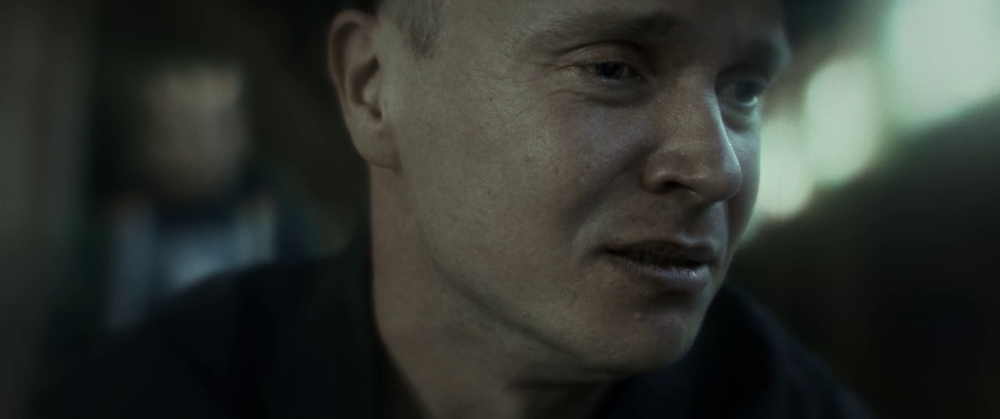
âWill we manage to see each other, before one of us dies?â
âThe Blind Manâ wastes no time presenting the conflict to the (already-complicated) relationship, when Sirpa informs Jaakko that her diagnosis might be fatal. The latter, having found the courage to pursue somethingâsomeoneâthat keeps him alive, decides to go visit her where she lives.
But as Jaakko clearly missed the memo, his blindness and naivete toward trusting the help of random strangers might be his undoing. Visiting Sirpa in a different city requires the help of at least five individuals. And given his condition, Jaakkoâs idealism is about to get a harsh reality check.
Add to this Nikkiâs approach of shooting âThe Blind Manâ with a shallow focus, and audiences have a hazy, unsettling viewing experience. In a way, viewers themselves share the experience of visual impairment.
When a Heart Thatâs Willing Bucks the Challenges, Blindness Be Damned
Itâs refreshing to see major characters in a film suffering from a swathe of disabilities, yet who donât allow those afflictions to define who they are. With âThe Blind Manâ, the pair engage in self-deprecating and dark humor that only shows their true mettle. Jaakkoâs sense of humor amplifies the characterâs likeability tenfold, making the audience root for him to make it out of his ordeal alive.Â
This brings us to the central character of the film, and the person behind it.Â
In a statement, Nikki asked Poikolainen, with whom heâs friends in real life, if the latter would like to act. Given Poikolainen himself is blind and suffers from aggressive multiple sclerosis, the directorâs decision to make a film centering on his friendâs condition meant handling everything with sensitivity and such honesty missing in recent films that try to tackle illnesses ranging from benign to inoperable.
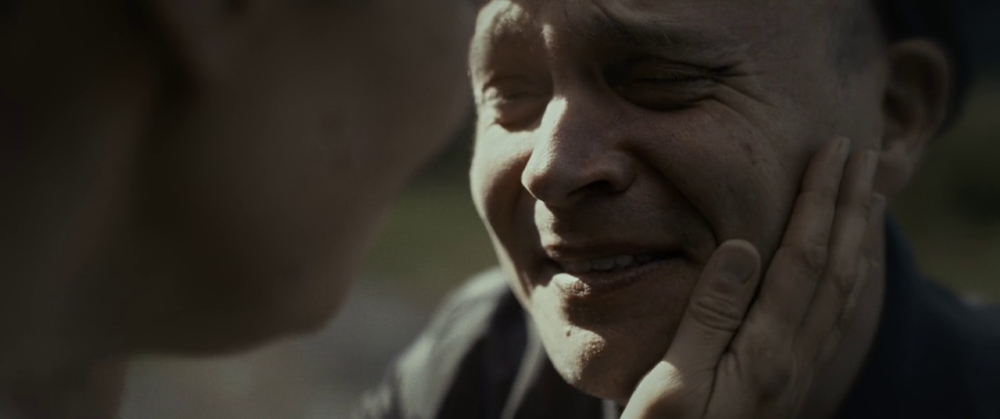
âThe Blind Man Who Did Not Want to See Titanicâ: A Film About Loneliness
âThe Blind Manâ examines the deep loneliness these characters feel, with Jaakkoâs insistence not to discard his movie collection even when his eyesight gradually waned driving home the point. For what itâs worth, he hopes that people who visit him would look at his collection and see what kind of person he is based on the films he has.Â
One of the quieter moments in the film featured a virtual slow dance between the lovers, knowing that theyâre basically living on borrowed time. Poikolainenâs performance through clenched teeth moved me in ways that only a handful of films did in recent years. And even when the filmâs third act deviates tonally by employing suspense and thriller as Jaakkoâs life rests in the hands of good-for-nothing men, the film’s merits by that point have been so pronounced that even a few drags can be excused.Â
There are a few films about disabilities that I enjoyed because of their honesty and conscious decision not to resort to manipulating the audience to shed tears. At the top of my head, 2007âs âThe Diving Bell and the Butterflyâ starring Mathieu Amalric and 2012âs âThe Sessionsâ with John Hawkes at the helm come to mind.
âThe Blind Man Who Did Not Want to See Titanicâ, frankly, might just be among those films.





