





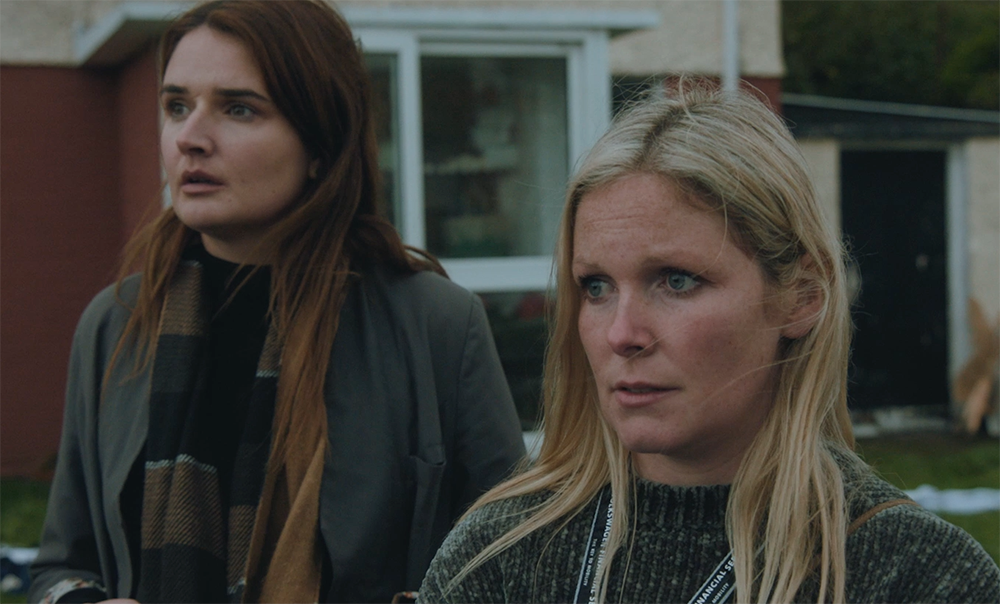
âWednesdayâs Childâ is the new short film from Irish director Laura OâShea, who weâve previously covered for her films âMatchâ and âHold the Line.â And whereas OâShea had either written or co-written â and starred in â her previous two films, âWednesdayâs Childâ is a new endeavor. OâShea directs material written by Caroline Harvey and inspired by the memoir of the same name by Shane Dunphy. It is the story of a social care worker on what appears to be her first home visit, who has her passion and ideals shattered by the reality of her work. Itâs also a hard look at people suffering from poverty, and what that can do the family unit and those around them. The film has made an impression, winning the âTiernan McBride Awardâ at the Galway Film Fleadh, an Oscar-Qualifying festival.Â
What makes âWednesdayâs Childâ powerful is its subject matter and the manner of deference with which OâShea treats it. Like the filmâs main character, Marie (Caroline Harvey), it works to break down expectations and preconceived notions. At the filmâs beginning, Marie holds a piece of paper with a mantra on it about presence, which she feels will center her for her job. By the end of the film, we â and Marie â have a starkly different vision. The film in essence takes a âset the world on fireâ rookie and shows them reality. By the end we get a better idea of what’s going through her head, shown not through words but visuals. OâShea captures the nuances well, and the cinematography by Evan Barry follows suit.Â
An Empathy-Laden Production with Solid Acting
The acting here is well-done, specially by the aforementioned Caroline Harvey and Fionna Hewitt-Twamley, who plays the matriarch of the family that Marie and her co-worker Annie (Charleigh Bailey) go to visit. Harvey uses her sweetness and genuine concern for the family to try and make headway. Meanwhile, Hewitt-Twamley is full of anger, fear, and hopelessness. OâShea and Evans shoot the home visit scene with the tension and realism it deserves. As a social worker myself, it makes me wonder what manner of technical advisement OâShea received to make the scene as authentic as it is.Â
Also Read:Â Review: Modernizing Jane Austen Does More Harm than Good in the Netflix Adaptation of âPersuasionâ
One of the consequences of OâSheaâs film is it manages to dredge up empathy for its characters â all of them â without moralizing or judgement. âWednesdayâs Childâ shows the lives of social care workers and what they do to cope with a stressful job at the filmâs beginning. However, even the filmâs most dangerous scene, as Hewitt-Twamleyâs Dympna expresses anger that borders on hostility, is centered in forgiveness. While shaken at the events, Marie still attempts to console Dympna in a sweet and sympathetic way. All the while, the camera centers on Dympnaâs daughter Geraldine (Lauren Kinsella). She wears an expression of burden, burnout, and concern throughout the entire proceedings.Â
Depicting the Heart and Soul of a Difficult Subject
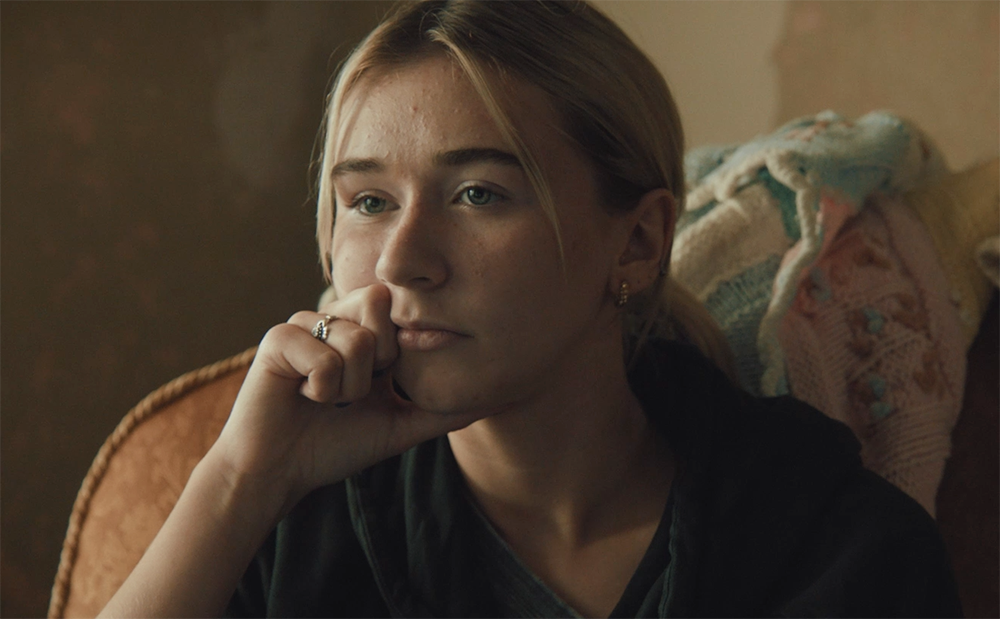
As with OâSheaâs previous effort, âHold the Line,â which I found to be an authentic portrayal of the call center profession, âWednesdayâs Childâ basks itself in realism. It also refrains from taking sides â and, in truth, there are no sides to take. If nothing else, OâSheaâs film makes important strides to show what people suffering from the sorts of issues that Dympna and her family do with clarity, empathy, and objective narration. The film also covers important ground. It shows how social care workers feel they are not able to do enough to help, hamstrung by systems only meant to put bandaids on complex social issues. The film in fact becomes a fight against this. Annie accepts it and lets it roll of her shoulders, where Marie cannot â or is at least reluctant to.Â
All-in-all, âWednesdayâs Childâ is a powerful short from Laura OâShea. It shows her step away from the writing and starring aspect of films and take her mantle as a director. The film handles its difficult subject matter with deference and realism. It also avoids taking sides, where it would have been so easy to do so. A small criticism, but I wish that the film had been a little longer. At just over 10 minutes, we donât get to know the lives of its participants as much as I would have liked. However, what OâShea does here is paint a situation and a theme that is wholly understandable and relatable. âWednesdayâs Childâ is a painting of broad strokes. It not only showâs that OâShea feels confident behind the camera, but that, once again, she excels at perfecting the heart and soul of her subjects.Â
“Wednesday’s Child” is currently doing the festival circuit. Follow The Movie Buff for more information as it becomes available.Â
Support the Site:Â Consider becoming a sponsor to unlock exclusive, member-only content and help support The Movie Buff!


