





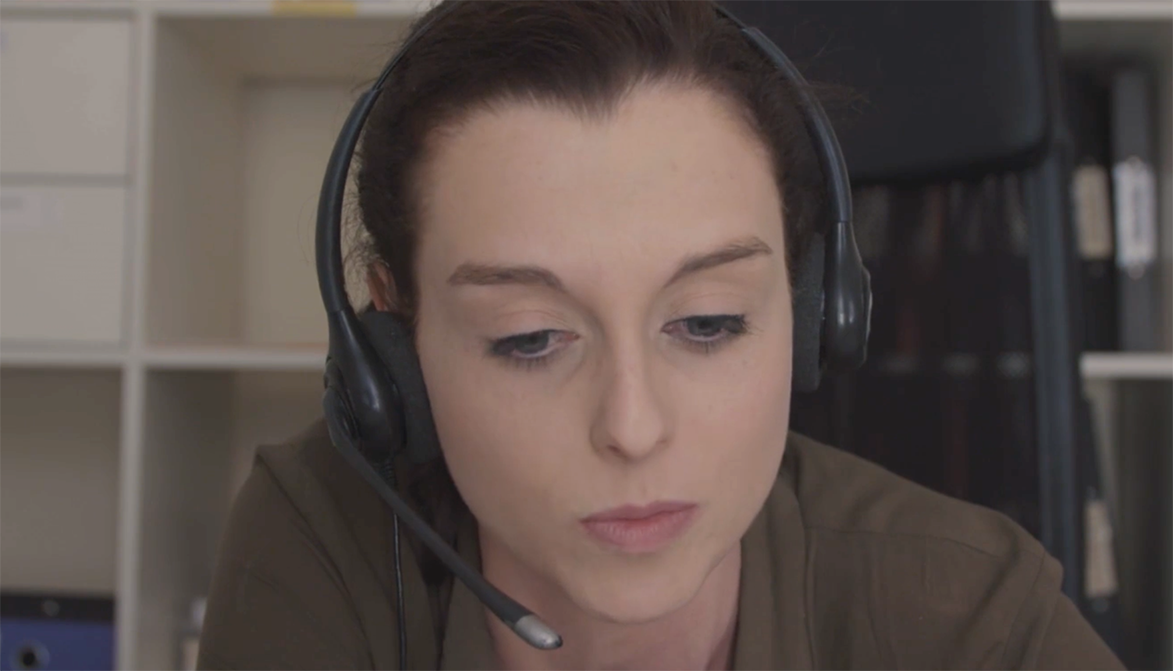
âHold the Lineâ is an independent short written and directed by Laura OâShea, star of the indie films âConâ and âNarcan.â Itâs a focused picture, seemingly unambitious but impressive. Its small scope belies a deeper film, one that accurately portrays the world of call center work: full of high call volumes, irate customers, and systems and policies that often donât let you do your job. But itâs also sweet. The filmâs protagonist, Em, is going through something. And while we never find out exactly what that something is, director OâShea injects notes of empathy and realness of character that make the feature pleasing to watch.Â
As shorts go, âHold the Lineâ feels just right. Itâs just shy of 12 minutes including credits, and adequately captures a day of the life of Em, played sympathetically by OâShea. She works for a telecommunications call centerâ¦a small desk, a confection adorned coffee tumbler, and a headset her only company. While the set is likely a home, and not an office, the film pulls off the act well. Em – who we learn is named Emily in the filmâs dying seconds, is balancing a legion of irate callers while trying to get through her day. An important text comes amidst one such call; she tries to process its immediacy in the midst of a barrage of customer insults, âbitchâ being the most kind.Â
I hate to editorialize, but I will say, as a veteran of a call center myself, that OâShea layers her picture with authenticity and realism. If you’ve never worked this kind of job the filmâs callers may appear gruff, angry, and caricatures and exaggerations of real customers. Theyâre not. Nor is the filmâs final caller – a sweet, kind lady named Patsy who needs help resetting her internet. Itâs callers like Patsy that can make an employeeâs day. OâShea understands this, layers it realistically, while also hinting at a personal meaning to their interaction the film hints at, but wisely doesnât explain.Â
The acting is good, and OâShea, playing the main character, writes Em well. OâShea doesnât wish to comment on the customer service life as the focus of her film, but uses it subtly to tell a bigger story. Em’s reactions are believable and relatable: frustration…forced suppressed anger while being lambasted by irate customers… politely asking callers to stop using abusive language lest she has to terminate the call.Â

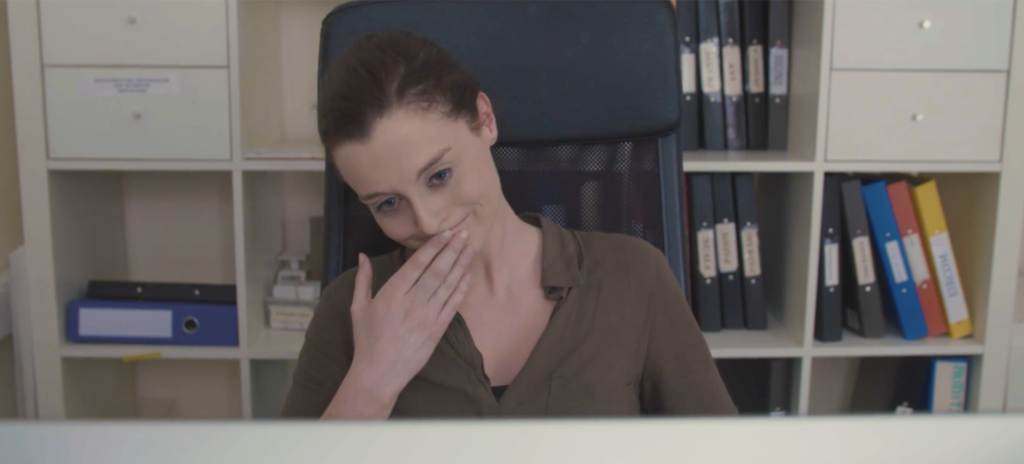
One of my favorite shots involves Em, returning from a bathroom break, sitting at her desk, donning her headset, and readying the call queue once again. She pauses, looks around, picks up her coffee cup and takes a quick gulp before taking the next call. Itâs the small things that often make jobs bearable. And OâShea – who stated call center work lined her past before moving on to acting – clearly understands this.Â
The film is produced well. It has good lighting, sound, editing, and competent cinematography. The photography, done by Conor Tobin, is crisp and professional, yet gives Emâs âofficeâ personal touches that make the picture that much richer. A colorful and modern analog clock sits by her desk, counting the minutes. It seems fun, soothing, and out of place in such an environment. As does Emâs coffee cup. Itâs used not just for drinking; a later shot, focusing on this cup and a framed picture that has special meaning to Em, is a brilliant addition to the film that tells us in images what OâShea has already done in facial expression.Â
Probably the nicest thing about âHold the Lineâ is that itâs not really about anything. Sure, it hits the notes of working a job that is stressful and loathsome, and the struggles we have to balance work life with the personal. But what the film is, more acutely, is a character study of its protagonist that is purposefully vague while also wholly relatable. Her final caller, who treats her with the dignity and respect her other callers have not, isnât used as a one-off. Both Patsy and Em give something to each other, and the result is joy-inducing and sublime. The interaction means something to both; the way it is handled by OâShea, Lesa Thurman Russell (who voices Patsy), and the filmâs closing musical number âConnectionâ by Wayne Jones is nothing short of remarkable.Â
âHold the Lineâ is pleasing. Itâs short, focused, and rewarding. OâShea (with co-director Karen Killeen) has produced a good project here, and one that should find sympathetic footing among the indie community.Â
– by Mark Ziobro


