





Kevin Parks
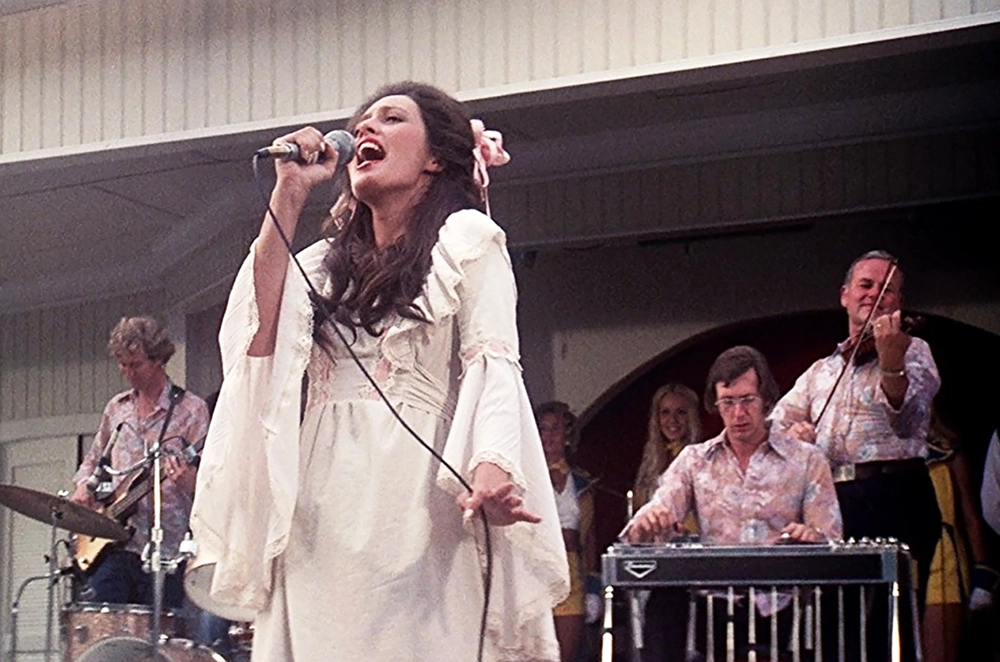
1. “Nashville” â Three Altman films were contenders for my top ten, but only one of them could have been number one. Heâs my favorite filmmaker, and Iâm always drawn to his epic mosaics of messy characters who canât win. Without mentioning the name Nixon or the country Vietnam, Altman and his dozens of kooky collaborators made an enduring, breathtaking movie that reveals how life in America hasnât changed much in the last 50 years. And somehow, itâs not a political film. Thereâs no clearcut, heavy handed message: all about the characters, and how about those characters?! Tomlin, Carradine, Gibson, Goldblum! Cameos by Julie Christie & Eliot Gould! Itâs dizzying, sublime filmmaking that reaches ecstatic heights after almost three hours, when Barbara Harris grabs the mic and drops the curtain crooning it donât worry me!
2. “Do The Right Thing” â Unbearably powerful and surprisingly tender, Spike Leeâs masterpiece might be the greatest NYC film of all. And for that reason alone, it deserves a spot here. But itâs also a shattering and frightening look at how hate and love do not always cancel each other out, especially when the city heat suffocates. This is a trash-can-through-the-window of a film, a Big Issue movie without a pat resolution or oversimplified explanations.Â
3. “Goodfellas” â Another singular NYC film, with Scorseseâs camera at its most frenetic. The pacing is giddy, and these charactersâ inner lives are rendered so fully that weâre able to root for them, murders and all. The film has many memorable scenes and quotable lines. Scorsese surely spawned plenty of imitators, but this has to be the quintessential movie about actual mobsters.Â
4. “Magnolia” â Paul Thomas Anderson elevated above the label of a Scorsese imitator with this massive swing, Altmanesque in its scope yet totally deft and completely original in its execution. An unconventional and inimitable cast, all cranked up to maximum versions of any role theyâd previously played, this film builds up to, and earns its biblical finale. Itâs a three-hour plus long panic attack. But at least we have a capable hand guiding us through the amphibious Valley streets.Â
5. “A Woman Under the Influence” â I need to watch this movie at least once per year, and Iâm only now a little bit closer to understanding why. Itâs a microscope on the unraveling of a family, anchored by what has to be the most demanding screen performance of all time: Gena Rowlandsâ Mabel. Cassavetes might be unsparing, but he also does not take sides, allowing his friend Peter Falk to play the wild card, too. Itâs an incredibly moving film, forcing us to zoom out and consider the burden and gift of unconditional love.Â
6. “Toni Erdmann” â Maren Adeâs high-wire act is her ability to bounce from slapstick to realism, often in the same scene. This is the on-screen father and daughter relationship I love most, and this film has only grown in the five years since I first saw it at New Yorkâs Film Forum (twice, within a span of one week). Like the Cassavetes film, this reiterates that people are absurd, relationships are impossible, but true love is singing Whitney Houston with your father at a strangerâs house.Â
7. “Wild Strawberries” â There must be a Bergman on this list. This was the first Bergman I saw (also at Film Forum!), and I had reservations about excluding a Bergman/Ullman collaboration. Still, this is the one that means the most, touching on so many Bergman preoccupations – death, regret, sexual torment! – in a crisp 91 minute run-time.Â
8. “Make Way for Tomorrow” â Also 91 minutes, this one is more unforgiving than any movie on the list. Leo McCarey plays this heartbreaking material with an even hand, making the final scene feel inevitable but also the preceding sequences seem totally realistic. No one wants to do the wrong thing. But this is a movie in which everyone seems to have only less bad choices, at best.Â
9. “Amour” â There must be a Michael Haneke on this list. And who would have thought any movie he made could connect to a Leo McCarey picture, from 75 years earlier. This one features another aging couple faced with impossible circumstances, and only each other to solve them. The two lead performances (from legends Jean-Louis Trintignant and the late Emmanuelle Riva) are extraordinary. They are so good in fact, that both Hanekeâs masterful direction and the great Isabelle Huppert play supporting roles. Itâs a love story with a sense of dread comparable to a horror movie. Hard as it might be to digest, it should be required viewing for the next couple of decades.
10. “Stroszek” â Rounding out the list with another German, this is Herzogâs best and most underrated film (link to review). It says as much about America as “Nashville” does, about dashed dreams, loneliness and alienation. If it all didnât feel so true, it might come off as a farce. Herzog makes us care not just for Bruno, but for his friends, his bird Beo, and those dancing chickens.Â


