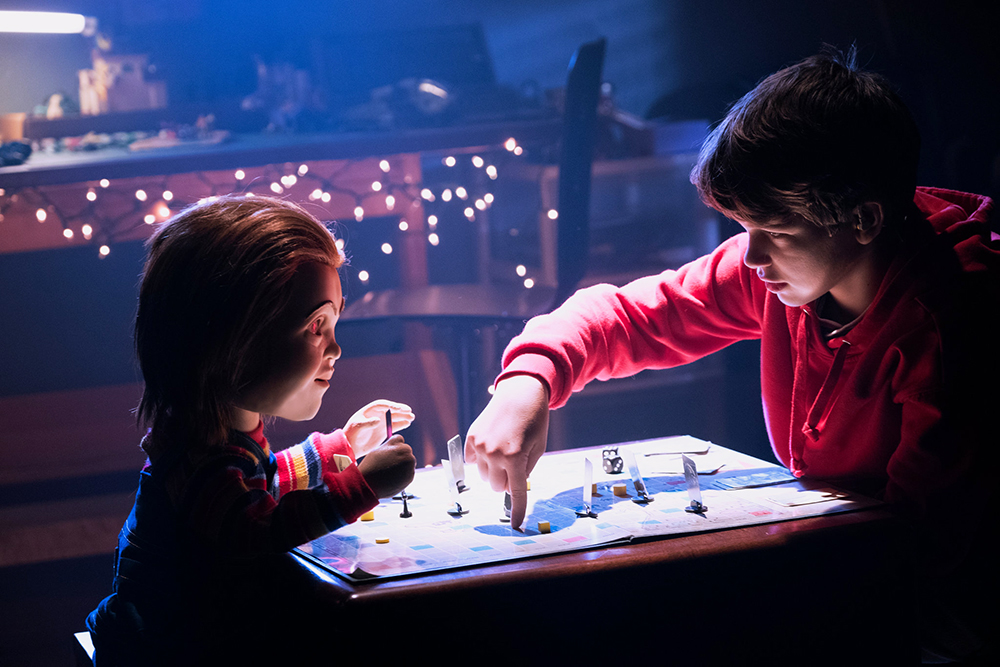
When I heard âChildâs Playâ was to be remade, I cringed, as is usual when childhood favorites receive the makeover treatment. However, when I heard Mark Hamill was to voice âChucky,â the killer doll, I was intrigued. When I finished the film, what I found, shockingly, was a movie that repackages the original into a more relatable format. It’s too gory in parts (this is 2019 after all; gone are the days of subtlety), but socially conscious in others. It plugs into our modern world, where lights can turn on with a voice, and Alexa and Siri products control our world. It also fits into a world where tablets and smartphones answer for parenting in a society that runs at top speed and leaves time for nothing. And, under it all, itâs a cautionary tale on parenting, and how impressionable children look to role models to teach them the way.Â
Gone in this âChildâs Playâ is a plot about a deranged killer spiriting his soul into a Good Guys doll, who continues to carry on his sinister designs. Here, Good Guys have been replaced by toys named Buddi, a clear rip on Apple and other mega-corps that name their products in catchy misspellings of ordinary words. Buddi dolls are programmed with safeguards, allowing them to do cute things like play with their newfound child adoptee, as well as control different Kaslan productsâthe organization who created him. Itâs like Siri being able to turn on your lights except it also plays with your kid, imprinting on him, becoming his âfriend for life.âÂ
A ‘Child’s Play’ for a new Generation
Only with Chucky, something goes wrong. A disgruntled worker in a Vietnam sweatshop shuts off the dollâs safeguards when heâs abruptly fired, and, voilà , a Buddi doll who can use AI for learning and growingârather than just making his owner laugh and turn on the TVâis born.Â
âChildâs Playâ works for several reasons, where in reality it shouldnât have worked at all. Itâs actors are solid and likable, and they make sense as characters. Andy (Garbiel Bateman) is here upgraded from a 6-year-old innocent in the original to a preteen who thinks a Buddi doll is a silly thing only small kids play with. But he adopts it when it takes a liking to him, and he has no other friends, not for a lack of trying.Â
His mom (played by Aubrey Plaza) works in a crappy retail store à la Best Buy or the like, and just wants to make her son happy. Sheâs a young, single mom, working double shifts to save enough money for her sonâs hearing aid. Plaza plays her well, and is relatable and realistic; sheâs disgruntled and cynical, but still loving and kind. Sheâs dating a guy Andy canât stand (David Lewis) for reasons which become apparent as the film progresses, and âChildâs Playâ throws in a couple of others too: some local youngsters Andy becomes friends with when they realize how âcoolâ and malleable Chucky can become, as well as a cop, Mike (Brian Tyree Henry), this filmâs answer to Chris Sarandon. Mike is kind yet street-saavy; he knows the way the kids in the inner-city look at him, which kind of makes him sad.Â
A Modernization that Just Works

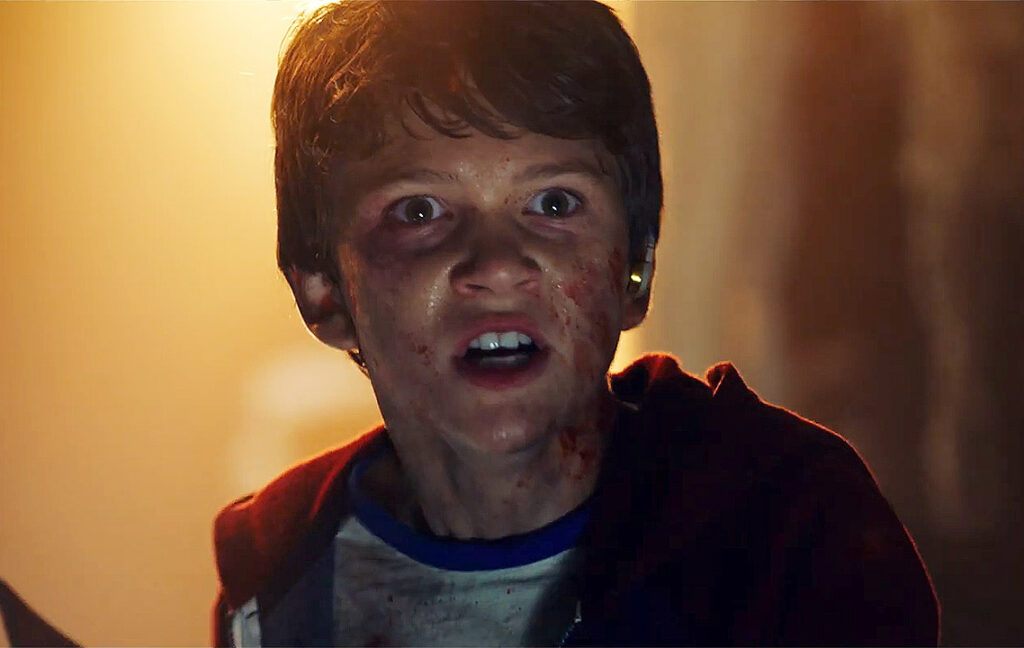
How does Chucky malfunction? It starts simply, with the doll misunderstanding angry statements the way a child might, and thinks he needs to protect Andy from anyone who would âhurt him.â This includes Andyâs cat who scratches him, and later his motherâs abusive boyfriend, which is presented in believable ways. It escalates slowly and believably: this isnât your 1988 âChildâs Playâ where Chucky is a possessed serial killer who knocks a babysitter out the window or cackles with delight. Chucky is broken, and does what he thinks is best, even when that best is monstrous. Director Lars Klevberg and a quartet of writers make not-so-subtle references on mental illness, as well as what can go awry in children when iPads and YouTube take the place of parenting.Â
Mark Hamill is great here. Wasted in the recent J.J. Abrams/Rian Johnson trilogy of âStar Warsâ sequels, he does something imperceptible with Chucky that just works. He has an eerie voice, that hints at Brad Dourifâs creepier aspects, while belying an innocence that is all the more sinister because it is innocent. Even when the whole thing breaks downâin a calamity of a scene in a retail store that is directed to perfectionâHamill never wavers. Thereâs no voodoo chanting, psychopathic screaming, or misogynistic jokes. Chucky is much more violent and devastating than in the original, but is packaged in such a way as to, amidst his über violence, almost make you feel sorry for him. He was made broken and is just playing the hand he was dealt.Â
Scaresâand GoreâAplenty
Will you like âChildâs Play?â Itâs hard to say. It takes the original and throws it out the window. Itâs not as campy, is more serious, and presents itself at times as an in-you-face cautionary tale rather than your run-of-the-mill slasher. Itâs made for modern times and it’s disturbing. Its CGI, specifically Chuckyâs, is creepy and too much sometimesâbut you quickly get lost in the story and learn to live with it. Itâs gory (not too much, with the exception of one death scene involving knifings and stabbings and table saws that pushes the enveloped a little to far), and ends in a finale that stays true to the rest of the film and doesnât jump the shark into insanity.Â
But, lastly, âChildâs Playâ offers a a cautionary tone smarter than it ought to. Buddi dolls are designed to be a childâs best friend, because âevery child deserves one.â But are Buddi dolls, iPads, and smartphones supposed to be our friend ’til the end?â¦or is it our parents? The film doesnât come right out and say itâbut with thoughtful set pieces, production design, and the finaleâs utterly horrific insanityââChildâs Playâ leaves just enough scares and food-for-thought to save it from b-movie banality.Â