



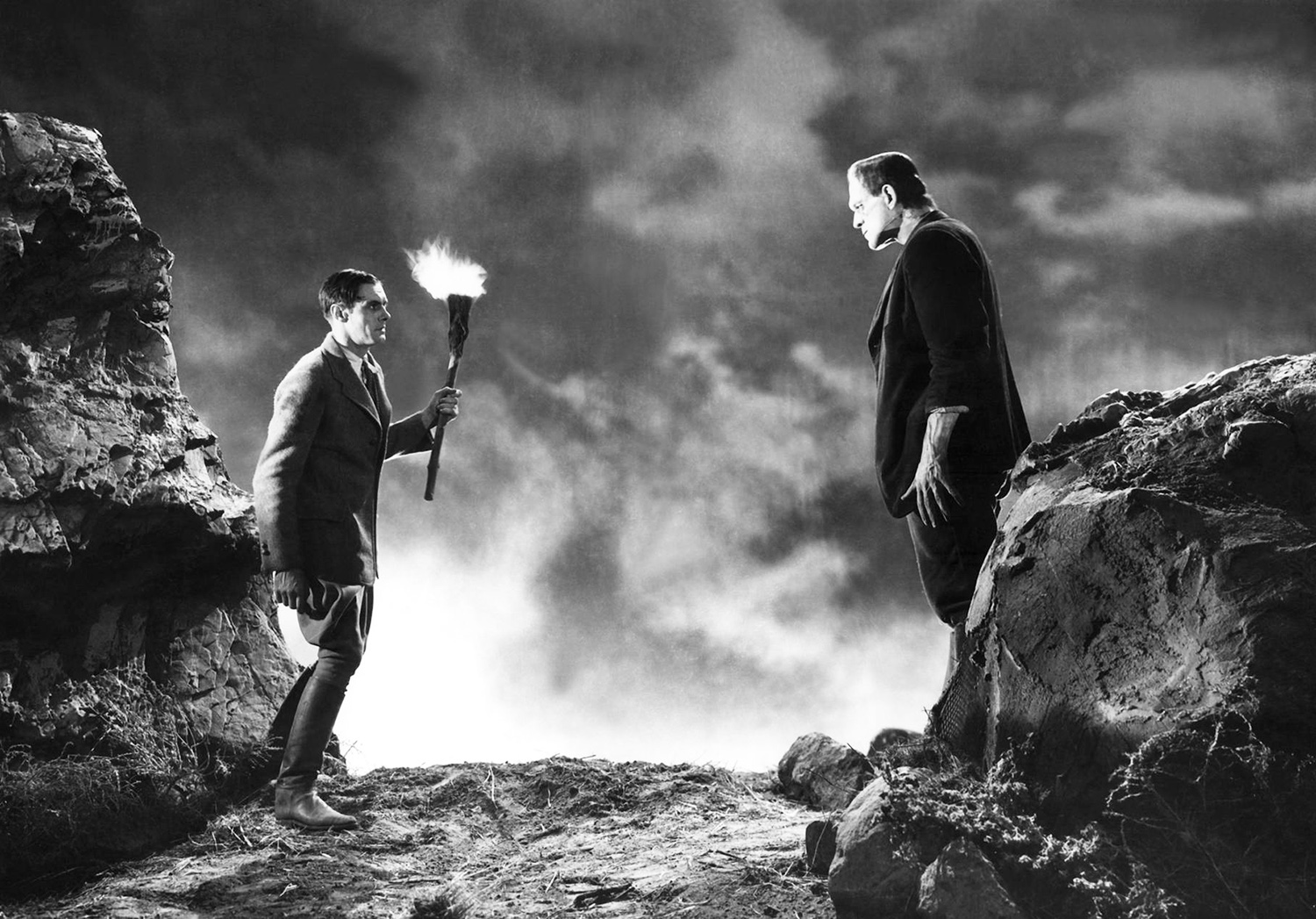
Released in 1931, âFrankensteinâ begins with a âfriendly warningâ to all viewers: âIt will thrill you. It may even shock you. It may even horrify you. So, if any of you feel that you do not care to subject your nerves to such a strain, nowâs your chance to, wellâwe warned you.â With an opening like that, you know it is a horror classic.
I am sure that you are familiar with the tale of âFrankenstein.â A mad doctor creates a creature from the bodies of the dead, bringing to life a horrifying monster that goes on to terrorize the village.Â
It is astonishing how deeply engrained this film is in our cultural consciousness. The word âFrankensteinâ immediately conjures images of a big green monster with a flat square head and bolts in its neck. While âFrankensteinâ actually refers to the mad scientist, Dr. Frankenstein, the fact that the name is now synonymous with the monster is a testament to the filmâs impact.
The movie is filled with iconic scenes and set pieces. The opening graveyard scene, the hunchbacked assistant, the laboratory, the mad doctor screaming, âItâs alive!â amidst crackling electricityâthis movie has played such a defining role in contemporary horror culture that these scenes almost feel clichéd.Â
Boris Karloff receives the most recognition for his portrayal of the infamous monster. The slow shuffling gait, the empty eyes, and the deep moans are all deeply linked with our collective imagining of Frankensteinâs monster. However, the best performance of the film comes from Colin Clive as the mad scientist Henry Frankenstein. His actions skitter along the boundaries of madness and he lights up the screen in every scene.Â
In contrast to a film like âDraculaâ (1931) with a clearly defined struggle of good versus evil, âFrankensteinâ is similar to a Greek tragedy. The audience is forced to grapple with ideas such as the destruction of innocence, mob mentality, and the monstrous âother,â a concept that can be linked to all forms of xenophobia and racism. We also see manâs inability to control the technology that he has created. This topic is all too evident in our 21st Century world.
In this way, the film draws on the sympathetic and philosophical elements of the novel, while imbuing the story with gothic atmosphere. By taking liberties with the story, this horror movie classic and Mary Shelleyâs literary masterpiece can be enjoyed as separate entities, both adding to the story of Frankenstein.
Is it still scary? No. The lack of dramatic music and Karloffâs slow shuffle cannot compete with modern scares. Is it an iconic horror staple? Yes, without a doubt. Still holding up 90 years later, it is a perfect Halloween watch.