






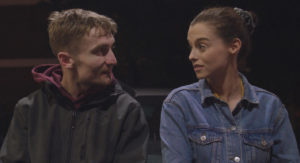
At The Movie Buff, we recently had the chance to review Laura OâShea’s film âMatchâ (also co-written and starring OâShea) about a romantic rendezvous between two strangers that becomes a sweet look at love, life, and everything in between. The movie, filmed in Ireland between the Wicklow Mountains and Dublin City Centre, was an introspective look at two individuals on different paths, and an exercise in thoughtful, independent filmmaking.
OâShea is no stranger to The Movie Buff. The site has reviewed another of her shorts, âHold the Line,â which won the filmmaker âBest Actressâ at our 2018 Independent Film Awards (Oâ Shea would also garner an honorable mention in the siteâs 2019 Independent Movie Awards for her performance in âMatchâ). OâShea has a way of weaving life lessons into easily accessible indie, that has seen success from her on the international stage as well as striking victories for festival circuit productions.
We recently had the opportunity to speak to Laura OâShea about her films, their reception, independent films as medium, and her hopes for the future.
Movie Buff: Hello, can you please introduce yourself for our readers?Â
Laura OâShea: Hey! My name is Laura OâShea. Iâm an actor/writer/director from Limerick, Ireland.Â
MB: Can you tell us what interested you in filmmaking? What were some of your inspirations?Â
LO:Â I had never intended on becoming a filmmaker, really. I moved to Dublin in 2015 to train as an actor and pursue a career doing just that. A few months passed by after I had finished training, and I realised that I was just waiting around for the phone to ring. I became a little frustrated at the fact I wasnât being offered any decent parts, and the parts I was being offered were of no interest to me. I decided that instead of complaining about it, Iâd create those parts for myself. So, I took out a pen and paper and started flexing my writing muscle. This led to producing and co-directing my own work, creating parts and characters for myself and telling stories that I personally wanted to see on screen.Â

I remember seeing a short film called “Thunder Road” by Jim Cummings in 2015. It was one shot, one location, and one amazing performance. This was a huge inspiration for me. It made the idea of filmmaking accessible; as long as the script is strong and the acting is believable, then budgets and fancy CGI arenât important. Seeing this approach to filmmaking inspired me to make my first short film, “Hold the Line.â “Hold the Line” features one actor on screen; itâs shot in one location and was written from personal experience. We shot it in one day on a budget of 500 euro.Â
MB: How many films have you produced? What was your favorite one? How about the hardest one for you to make?Â
LO: So far, Iâve made two short filmsâ”Hold the Line” and âMatch.” Itâs hard to choose a favorite though; I love both of them for different reasons. “Hold the Line” was very personal for me; thereâs a lot of myself in the story and also in the character. It was a really good exercise in the âless is more approach.’ âMatch,” on the other hand, was so much fun. I co-wrote and co-directed with the other actor in the film, Tony Doyle. Because it was a collaboration from the get-go, it felt less like work and more like just hanging out with friends.Â
In terms of which was harder to makeâ”Hold the Line” was harder for me in the sense that I was wearing a lot of hats on the day of the shoot. I didnât realise how much work would be involved on the day and thereâs a lot of pressure on you when youâre the only actor on screen for 12 minutes. Thankfully I had an amazing co-director, Karen Killeen, who was able to advise on my performance and keep me on the straight and narrow for the day. Outside of the performance pressure, it was a very smooth shoot with little hiccups along the way. Itâs easy to shoot all day when you only have one location to work with.Â
“We shouldnât measure success against festival laurels and awards. We should measure success on whether or not youâve made something that youâre proud of.â
Laura OâSheaÂ
With âMatchââanything that could have gone wrong, went wrong. We were rained off set several times, we set off house alarms accidentally and had a brush with the police more than once due to some angry neighbours (we wonât say any more about that). This meant we were searching for new locations on the nights of the shoot and hoping people would let us shoot in their petrol station for an hour if we promised to buy lots of coffee. From a production standpoint, it was a very stressful two nights [of]shooting for us and our producers, but the performance side of things was very easy and smooth for Tony and me. We work together a lot and have a really good shorthand, which thankfully means we donât need to shoot many takes.Â
Both experiences were super educational and I learned heaps from both shoots. The only way you really learn is by doing. Something will always go wrong, but you get through it and youâll know what not to do the next time.Â
MB: Can you talk a bit about independent films? Do you think the medium is gaining traction with the proliferation of online media options and online film critics?Â
LO:Â Absolutely. Itâs never been easier to be an independent filmmaker than it is now. Technology is advancing and getting cheaper by the day. Decent camera equipment and recording equipment are becoming more and more affordable. With platforms like Kickstarter and WeFunder, filmmakers are no longer held back by funding applications and studio investments. If you want to, you can create a funding campaign and raise thousands of euros to shoot your film, in exchange for the people donating having potential shares and credits in your project.Â

Even social media can negate the need to hire a marketer. For a reasonable amount of money, you can run your own ad campaign across various platforms such as Facebook and Instagram, reaching targeted audiences and specific groups that you know will be interested in your project. Online film critics are so important to the Indie Filmmaker. It gives us a platform to share our work and get some well-written feedback on it. Having a review from a respected critic helps a lot when youâre on the festival circuit and are trying to get as much publicity for your film as possible. Itâs an exciting time to be a filmmaker, itâs about finding your tribe and working together as much as possible. The indie filmmaking community is just that, a community. Itâs people helping each other and lending a hand where possible, because itâs fun to work with your friends and create something that everyone believes in.Â
MB: Where are you located?Â
LO: I’m located in Dublin City, Ireland.Â
MB: We recently watched and reviewed one of your films, âMatch,â which you produced with Tony Doyle. What was your inspiration for this film? What message do you hope your viewers will walk away with? Are you trying to make a statement about online dating, or something deeper?Â
LO: The idea for âMatch” was born from experiences that myself and Tony either went through ourselves or heard about from close friends. We are all living in a very strange time with the world of online datingâitâs an incredibly useful tool that has seen so many people find their soulmate and live happy lives together âbut it can also make dating and âchoosingâ a partner feel very fleeting and superficial. The essence of âMatch” is about connection. Real connection. Not just matching online and talking over devices. Granted, [though]the short does begin with these two characters meeting through an app, it quickly becomes about something else when these two people put their devices away and share their thoughts and feelings with one another. The ideal outcome for us with âMatch” was that people would finish watching the short with a smile on their face and a glimmer of hope.Â
MB: What is the biggest struggle of being an independent filmmaker? How about the biggest Blessing?Â
Also Read:Â Exclusive InterviewâFilm and Stage Actor Timothy Cox on his Roles, Life, and Aspirations
LO:Â The biggest struggle for me as an independent filmmaker is trying to find the time. So far, Iâve yet to receive any form of external funding or bursary towards my filmmaking, which means I work a full-time job to pay rent, bills etc. This leaves only a few hours each day to write and work on producing new projects. This also has positives to it though; it means that Iâll use my time more carefully and productively when I do get the chance, as I know itâs few and far between. The biggest blessing about indie filmmaking is because youâre the one funding it, more often than not, you get to call the shots. You really own the film. Thereâs a lot of freedom in it and you also learn a lot when youâre wearing multiple hats. Itâs important to know how to do all the roles involved in the process, it makes you more empathetic to work with.Â
MB: Do you have any upcoming projects in the future? Can you tell us about them?Â
LO:Â At the start of this year, âMatch” was selected for the ‘Short to Feature Lab’ in Malibu, California. I got to go to America for a week and learn about developing a short film to a feature film from filmmakers that have already been through the process. It was a super educational and eye-opening experience from a âDIYâ perspective. So right now, Tony and I are writing a feature-length script based on the short âMatch.” Itâs early days yet, but weâre 100% on track to making our first feature film, which is very exciting and terrifying at the same time. Watch this space!Â
MB: What advice do you have for individuals looking to get into independent films? What are the ups and downs?Â
“The only way you really learn is by doing. Something will always go wrong, but you get through it and youâll know what not to do the next time.â
Laura O’Shea
LO: The best advice I would give to anyone looking to make a film for little to no money is: write what you know. The script is the first and most important thing. If you can write something that comes from a personal place, itâll shine through. The ups and downs will differ for every person. For me, the ups are receiving messages from people Iâve never met telling me that they saw my film and it really touched them. Thatâs the goal, and it feels great to think youâve reached someone. The downs are feeling like youâre banging your head off a brick wall for very little comeback. The reality here is, if youâve gotten up off your ass and made something, then youâre successful.
We shouldnât measure success against festival laurels and awards. We should measure success on whether or not youâve made something that youâre proud of. Reminding myself of this every now and then helps me to press on when it feels like it might never happen. Make the film that you want to watch and others will want to watch it too.Â
MB: What are your hopes for the future? What are your goals and aspirations?Â
LO:Â All I want is to be able to live a comfortable life doing what I love. If I fast forward a few years and see that Iâm supported financially from filmmakingâbe that acting/writing/directing, then Iâd consider that a dream come true. In the meantime, Iâm just going to keep working with the people I trust and respect, and hope it continues for years to come.Â
Click link below to watch âHold the Lineâ for free on Vimeo
âMatchâ is still running the festival circuit. Itâs next screening will be Feb 28th at the Chicago Irish Film Festival and then in early April at the Belfast Film Festival.
You can view more of Laura OâShea/follow her with the following links:
IMDB: https://www.imdb.com/name/nm7772360/?ref_=nv_sr_srsg_0
Twitter:Â LauraOShea91
Instagram: LauraOShea91


