





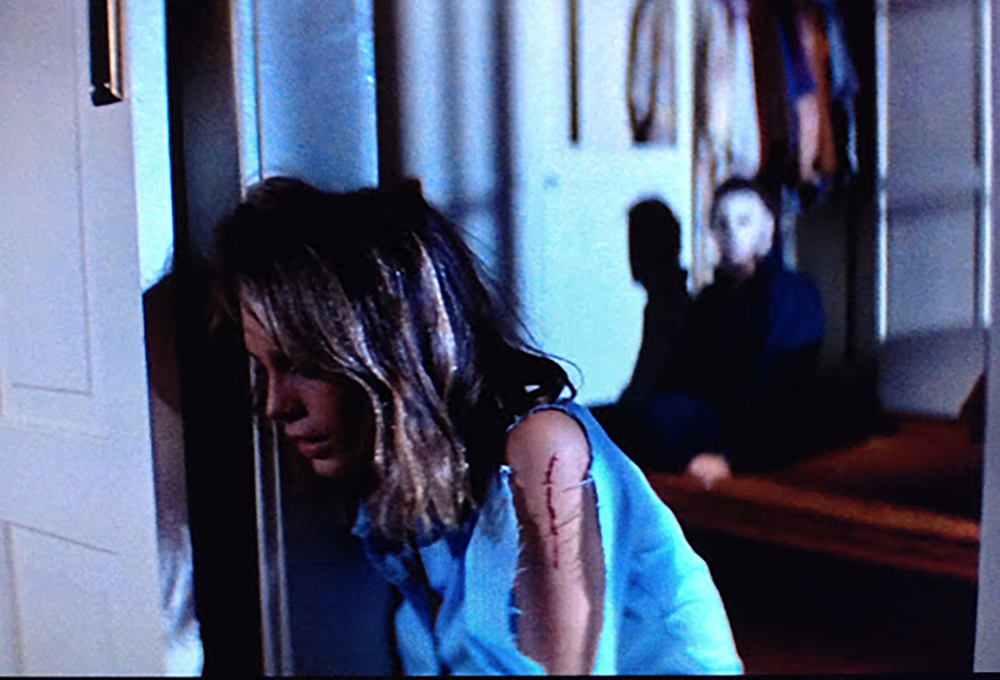
When thinking of scary movies that most accompany the Halloween season, the genre that most springs to mind are slashers. A killer stalking unsuspecting girls and guys, killing them one-by-one, has been much solidified as the horror movie gold standard. âFriday the 13th.â “A Nightmare on Elm Street.” âScream.â Everyone has seen these films due to their practically inescapable infamy. However, like all successful films, we can trace them back to a single genesisâa movie that started it all. And in this case that movie is indisputableâ”Halloween.â
Released in 1978, âHalloweenâ was produced by then-unknown John Carpenter (“The Thing,â âEscape from New Yorkâ) and Debra Hill on a paltry budget of $100,000. However, the movie would go on to set the tone in terms of original scares, filming techniques, and in its creation of the silent but deadly antagonist Michael Myers. Now, 30+ years after its release, there have been a staggering 8 sequels made, and three remakes. But however hard they try, the donât come close to matching the original. Carpenter set the tone in terms of macabre setting, bone-chilling musical score, and a tightness and tension that the plot, actors, and cast and crew were able to create.
The movie opens with a teenager girl, Judith Myers, making out with her boyfriend and quickly catapults us toward horror. From a point-of-view camera angle, we see a small child work his way into the kitchen, select a butcher knife from a drawer, and find his way upstairs to kill the unsuspecting girl. Unlike todayâs horror films, the murder isnât gory. In fact itâs over before it began; the real horror comes as the young boy, who we learn is Judithâs brother Michael, is discovered by his parents standing outside the house, staring blankly, holding in one hand the large, bloody knife while dressed in his Halloween costume. It can be seen as the death of innocence.
15 years later, we are introduced to Psychiatrist Sam Loomis (Donald Pleasance, whose character would be played by British actor Malcolm McDowell in Rob Zombieâs remake), who is on his way to escort his patient, Michael Myers, to court have him committed for the rest of his life. He believes Michael is beyond âcuringâ and is, ‘evil personified,’ as he vehemently states. In fact it is Loomisâ emphatic cries that Michael is evil, and his reactions to him, that help paint the danger of this now grown-psychopath. When Michael escapes the sanitarium, Loomis merely utters, âHe is gone from here. The evil is gone.â
Thus sets up a series of event that leads Michael back to the small town of Haddonfield, where he committed his first murder. He takes sights on Laurie Strode (Jamie Lee Curtis, in her first theatric role) and friends Annie (Nancy Kyes) and Lynda (P.J. Soles ).

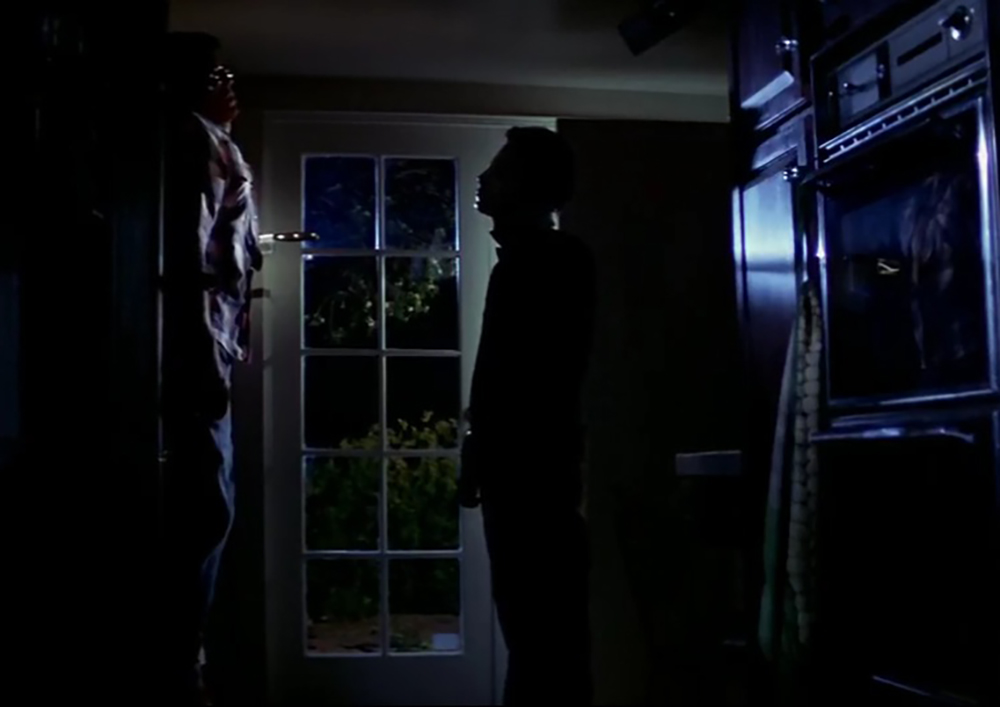
To speak more of the plot is to tarnish it. What separates âHalloweenâ from horror films that make less an impact is the care John Carpenter took in building up the suspense in the film. Where other movies go for the quick kill, he didnât; he takes pains to establish Myers as a truly scary presence on-screen before he pulls out the knife.
He accomplishes this in several ways. For instance, one scene, in which Michael merely looks on, head tilted, as Annie washes a shirt in the washroom manages to send chills up our spines because we never know when he is going to strike. However, when he does, the effect is equally creepy. Another scene is equally creepy, as 5-year-old Tommie Doyleâwhom Laurie is babysittingâwitnesses Michael carrying a body in his arms before quickly disappearing into a house across the street. The scene is only 10 seconds in length but accomplishes what a dozen scenes of gore cannot; it is objective horror in its purest form with the audience unwilling witnesses.
As the movie progresses, the pace remains slow as it jumps back and forth between Laurieâas Myers makes his way to herâand Loomis as he entreats the help of Annieâs father, the local sheriff, in tracking down Michael. Loomis meets the sheriff’s disbelief with entreaties of how dangerous he really is. And it honestly goes along with the time period; a loose mental patient in 1978 was not a popular concept, and one the sheriff struggles to understand. However, when he does  understand, his reaction is understandable and solemn. âIf he is as dangerous as you sayâ¦damn you for letting him out.â

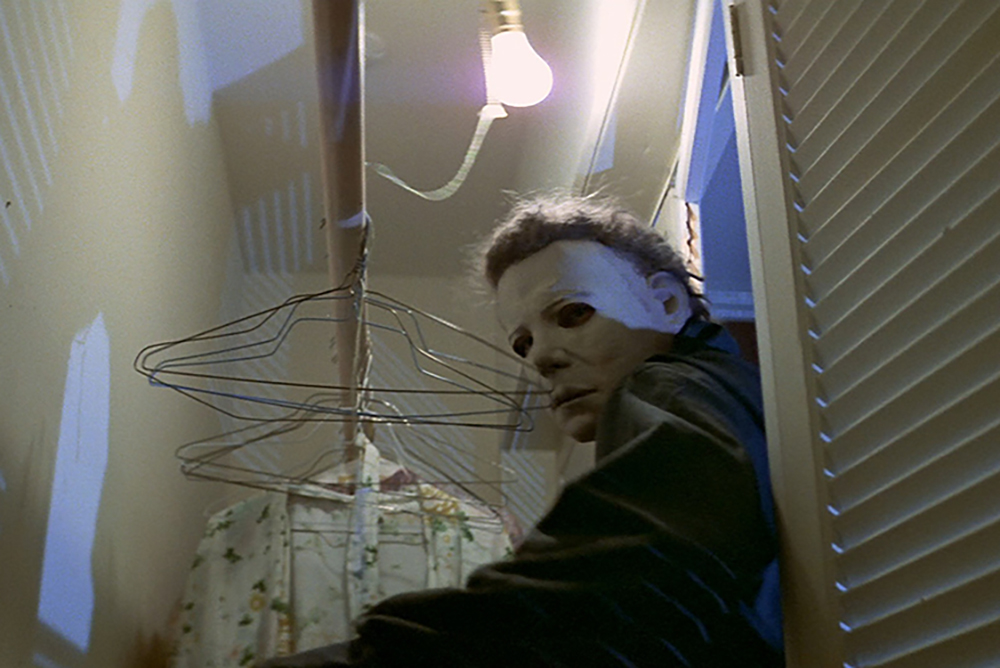
As the movie intensifies, it invokes terror through the iconic piano score, created by Carpenter himself. It is simple, yet horrifying. Although subsequent “Halloweens” would make Michael more violent, or change details, this hallmark score would forever follow Michael. If youâve seen the movie, you know what I mean; and if you havenât you need to stop reading this review and run out and rent it right away.
It’s a concert of ambiance and suspense built through setting, pace, and character development that makes âHalloweenâ horrific to behold. There is not one unnecessary take in this film; nor is there one piece of dialogue that doesnât go toward enhancing the film. Early on, as Tommie asks Laurie about the existence of a âboogieman,â the effect is childish and a bit silly. However, when Laurie asks Dr. Loomis these same questions after encountering Myers, the effect is sobering and singular. âWas that the boogieman?â she asks. His response is steady and even, âAs a matter of fact, it was.â
âHalloweenâ is an experience. Itâs not often when a horror film comes along that truly makes such an impact. The acting is top-notch, as is the character development. Laurie, Annie, and Lynda play the parts of carefree teenagers perfectly, and the film presents terror through their ignorance of how close to danger they truly are. Suspense is built, according to Alfred Hitchcock, from the viewing audience being aware of something the characters on-screen arenât. Not only did âHalloweenâ utilize this concept but it perfected it. Laurie and friends willingly place themselves in mortal danger with the nonchalance of walking to the corner store, but with the lasting impressions borne of an unforgettable nightmare.
With its lasting impact on the horror genre, âHalloweenâ worked to define the horror genre for future generations. Itâs not gory, itâs not overly complex, and for all practical purposes it shouldnât have had the success it has. Perhaps if Carpenter had named it its intended title, âThe Babysitter Murders,â it wouldnât have. However, as fate would have it âHalloweenâ presents a horrific, one-of-a-kind horror experience that forever changed the genre and paved the way for generations of movies to come.



2 Comments
Pingback: » Candyman (R)
Pingback: » The Ward (R)