If you visit Bran Castle in Transylvania, the 13th-Century fortress commonly linked with Dracula, the main approach takes you through a small village of souvenir shops. Although there is little evidence Bram Stoker knew anything about the castle, and it only has tenuous links to Vlad the Impaler, that doesnât stop the locals cashing in on the association. Itâs a great place to pick up some traditional Romanian needlework or a Dracula mug or T-shirt, even if it ruins the mystique somewhat.
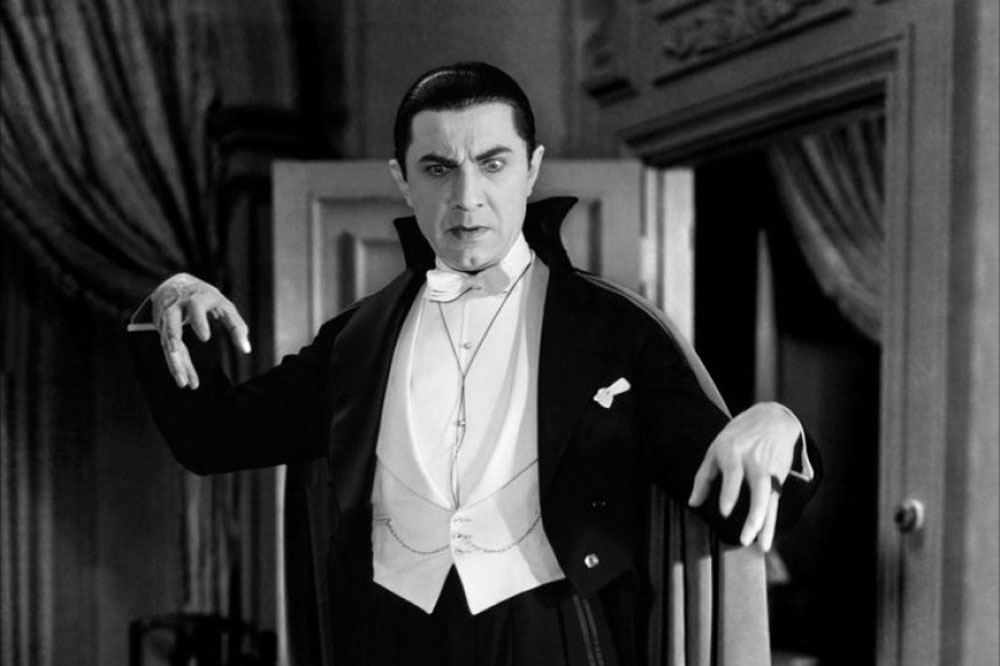
One of the most common depictions of the vampire on the heaps of tourist that available is very familiar: dark eyebrows, slicked-back black hair, glowering eyes, courtly threads and a big black cape with a red lining. Itâs a look that traces its roots back to “Dracula,” Todd Browningâs 1931 hit movie that helped Universal establish the golden era of Hollywood horror. It was also the first talkie vampire film, making the most of Bela Lugosiâs rich accent and stately manner in the lead role.
The story wastes no time throwing us into what is now familiar territory. A smart young lawyer named Renfield (Dwight Fryer) is traveling through Transylvania to conduct some business at Count Draculaâs castle. The locals are all superstitious and fear the place; Renfield laughs off their warnings and proceeds by coach, which is driven by supernatural powers.
On arrival at the crumbling castle high in the mountains, Renfield is greeted by Count Dracula (Lugosi); Dracula has brought him there to sort out the paperwork on a lease for Carfax Abbey in England. Despite the evident creepiness of his surroundings, Renfield accepts his hostâs hospitality and stays the night.Â
Bad idea. The Count hypnotises Renfield and attacks him; subsequently he turns the young lawyer into a pathetic slave who craves the life force of small creatures. They travel to England by ship, Dracula treating the crew as a packed lunch to see him through the journey. By the time they reach their destination, Renfield is the only survivor, driven mad by the horrors he has witnessed.

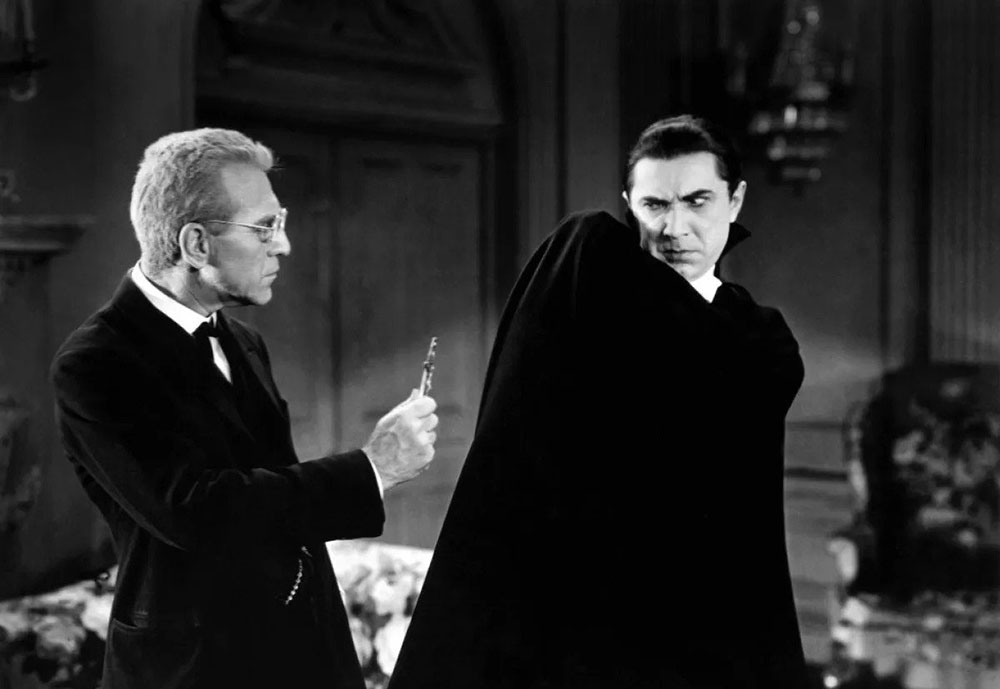
While Renfield is sent to Dr Sewardâs sanatorium, conveniently located next to Carfax Abbey, the Count heads to London. There he snacks on a flower girl and accidentally-on-purpose bumps into Seward (Herbert Bunston) at the theatre. There, he also meets Sewardâs daughter, Mina (Helen Chandler), her fiancé, John Harker (David Manners), and their friend Lucy (Frances Dade). Later, Lucy is attacked in her bedroom by the Count, who then sets his sights on Mina. After he bites her, it is up to Professor Van Helsing (Edward Van Sloan) to solve the mystery of the recent murders and kill Dracula before Mina succumbs to his dreadful curseâ¦
This version of “Dracula” benefits from a superbly atmospheric start in Transylvania; it has some daunting matte-painted scenery and the Countâs spooky castle, which is shrouded in cobwebs and infested with bats, spiders, and, er… armadillos. The set design of the castle doesnât quite match the expressionistic heights of James Whaleâs “Frankenstein” from the same year, but it runs pretty close. Unfortunately, the surroundings arenât as visually exciting once the action moves to England. Things get pretty stagey, perhaps reflecting the screenplayâs basis in the 1924 theatre version. Browningâs camera becomes static, fixed on groups of people standing around offices and drawing rooms spouting exposition at one another.Â
Considering weâre supposed to be racing against time to save Mina from a vampireâs curse, itâs all so curiously inert; it’s hindered further by the lack of incidental music. There is a dash of Tchaikovskyâs âSwan Lakeâ over the opening credits, but there is no score for the film. This results in a lot of dead air in the scenes where Dracula leers over his victims. The overall sluggish pace makes the trim 75-minute run time really drag at times. And we donât even get any kills to spice things up a bit; the camera cuts away whenever Dracula moves in to take a bite out of someone.Â
I was looking forward to seeing Lugosiâs career-defining take on such a famous character, coming to the movie via Tim Burtonâs “Ed Wood” and his parts in “Plan 9 From Outer Space” and “Glen or Glenda.” He brings a sense of mystery to the role with his haughty manner and thick Hungarian accent, but itâs a very theatrical performance; and, like the rest of the movie, he is very static. Nevertheless, his intriguing line readings are iconic; listen to how he seems to add about seven extra syllables to his legendary âchildren of the nightâ line.Â

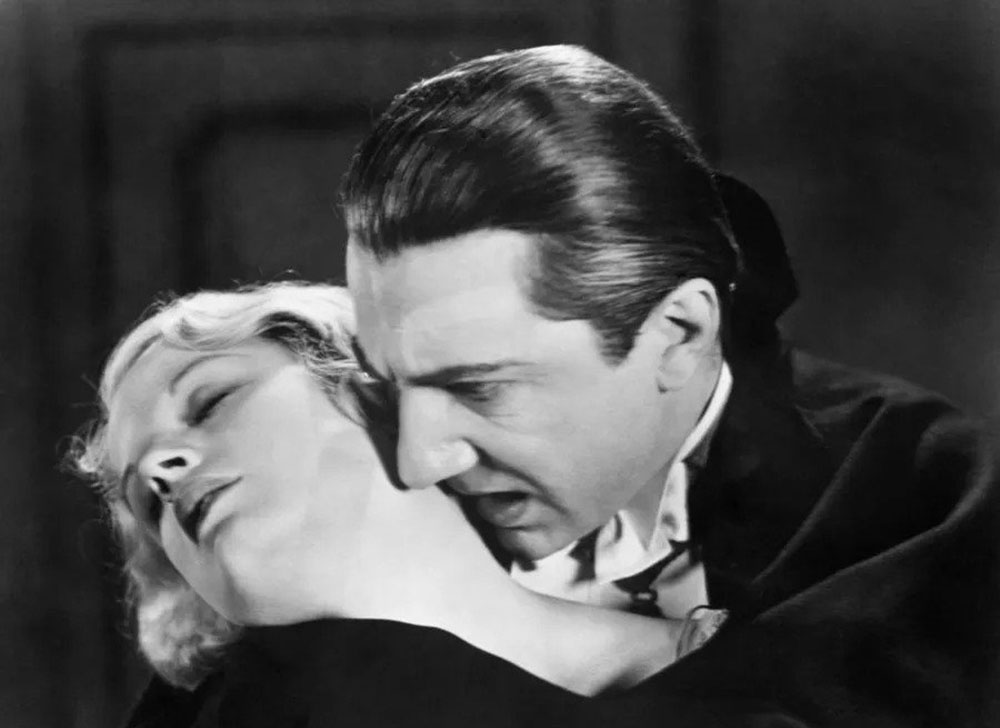
But hereâs the thingâheâs just not very menacing. He seems more like a prowler stalking young women than an undead creature lusting after blood. I realise that Iâm making that criticism from a distance of 90 years; but the film lacks the elemental power of “Frankenstein,” which still has the ability to disturb almost a century later.
The rest of the cast are a mixed bag. Manners as Harker plays the disbelieving husband-to-be as a stuffed shirt naysayer who petulantly rejects all evidence of the supernatural, even when a vampire is literally creeping up to bite his sweetheart on the neck. Chandler as Mina isnât much better. Sheâs one of those simpering early cinema heroines, all âoohsâ and âahhsâ and fluttering eyelashes; she has little to do but defer to her man and do a bit of shrieking and fainting. Dade as Lucy at least has a little bit of modern woman vitality about her, but unfortunately sheâs not around for very long.
Van Sloan brings authority to the role of Van Helsing, and heâs an assured presence. The Professor is one of the primary sources of heavy-handed exposition in the movie; but Van Sloan makes him an intriguing, indomitable character. One of the highlights of the film is the scene when he finally faces off against Dracula and almost succumbs to the vampireâs hypnotic powers…almost.Â
Fryer goes big as Renfield and he is the filmâs MVP as the seething, sniveling madman. His performance owes a lot to the silent era style of acting; he over-emphasizes emotions and gestures, but steals every scene heâs in and injects some much needed energy. He has quite a lot of screen time compared to other iterations of the character, and itâs very welcome. Fryer also has one of the filmâs creepiest moments, when the police discover him giggling maniacally below decks of the death ship, with an insane stare and a rictus grin fixed on his face.
“Dracula” is a classic horror film that has had an unquestionable influence on the genre and pop culture, but has aged badly compared to other titles from Universalâs roster of classic monsters. Itâs worth checking out due to its historical importance, but just donât expect too many scaresâ¦
You can rent or watch “Dracula” on most streaming services.Â