





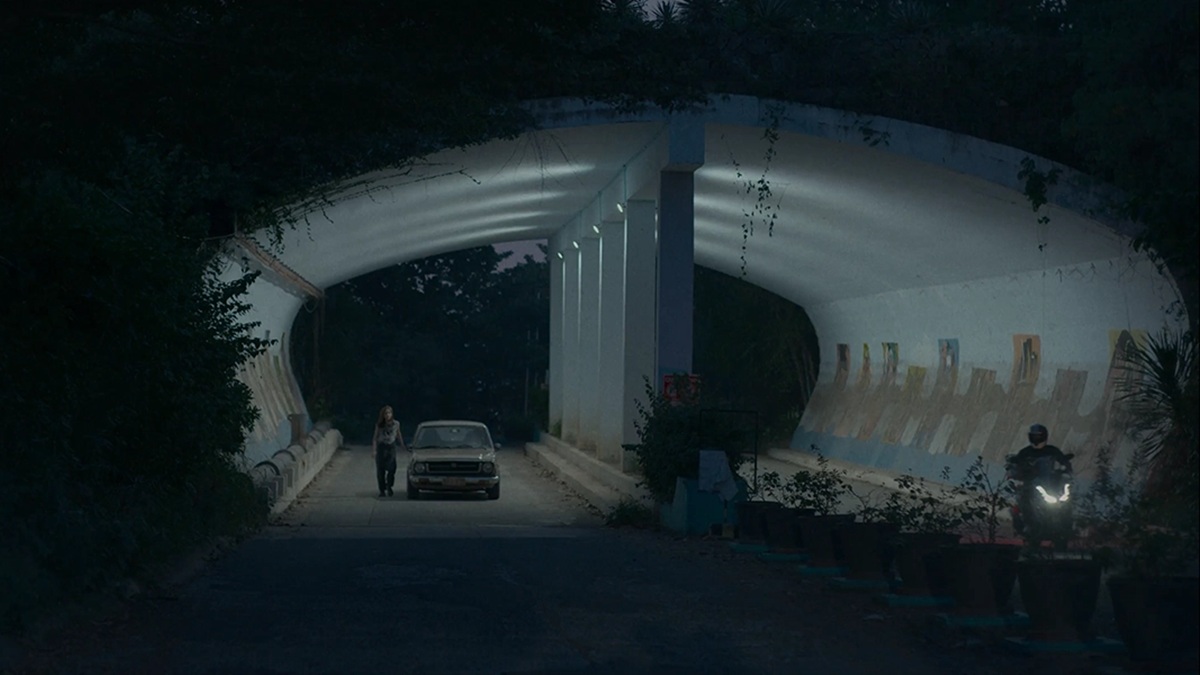
âDo you believe an app can control us?â
Detective Mijares asks the question somewhere inside the nocturnal haze of John Torres‘ “The Remotes.” By then, the literal answer almost feels beside the point. An app doesn’t need to seize your muscles to exert control. It can choose the road you take, decide what appears on your screen, tell you where to eat, whom to follow, what to buy, even what deserves your attention for the next thirty seconds. We make these trades willingly because they’re convenient. After a while, surrender stops registering as surrender.
Torres takes that arrangement one disturbing step further.
Mijares (Alchris Galura), a detective preparing to leave the country while still grieving his wife, investigates a series of strange road accidents. The common thread is a government program meant to retrain reckless drivers. Participants attend a seminar run by sisters Eva (Julia Richards) and Gill (Gabby Padilla), where rehabilitation involves giving themselves over to a voice-guided driving system. On paper, it sounds harmless enough. Listen carefully. Follow the instructions. Become a better driver.
Except the voice doesn’t always stop at telling them where to turn.
Eva once lent hers to the system, and somewhere along the way it seems to have escaped whatever boundaries were meant to contain it. Directions become commands. Drivers lose track of where their own decisions end and somebody else’s begin. Some crash. Others move through the program with the eerie passivity of people who have decided not to resist.
Even the title begins to shift in meaning. These people aren’t holding remote controls. They’re increasingly behaving like the remotes themselves, bodies waiting for instructions from a source they can’t quite locate. Whether Torres intends that exact reading hardly matters. The image fits a film less interested in machines overpowering helpless victims than in why anybody might find surrender appealing in the first place.
A Mystery That Wonât Let Itself Be Solved
The natural impulse is to start working alongside Mijares. Who built the system? Who’s controlling these people? Are Eva and Gill involved? Are the crashes even crimes? Is somebody weaponizing the app, or have the characters wandered so far into grief that coincidence, memory, and evidence now resemble one another?
Torres encourages that detective work just long enough to make it frustrating. Clues recur without settling into answers. Objects acquire significance and drift elsewhere. Conversations echo one another. Voices seem to detach themselves from the people speaking. Scenes repeat with enough variation that chronology becomes something to distrust. Eventually even Mijares appears uncertain whether he has a case to solve at all.
A movie this committed to withholding explanations will invite the familiar complaint that it “doesn’t make sense.” I’m not sure making sense is the most useful way into “The Remotes.” Cinema doesn’t always need to behave like a puzzle whose reward arrives when every piece clicks into place. Sometimes understanding happens physically before it happens intellectually. Another drive down an empty road. Another face barely visible through glass. And another voice arriving from somewhere it shouldn’t.
There were plenty of moments here I couldn’t neatly account for. I could still read Mijares.
Galura plays him like a man trying to impose procedure on an experience that keeps rejecting it. The deeper he goes, the more weathered he becomes, as though the investigation itself is eroding him. There’s something of Kiyoshi Kurosawa‘s “Cure” in that collision between police method and a force that refuses rational containment. Mijares asks questions because questions are what detectives have. Grief offers no comparable procedure. The case at least gives him somewhere to go.
And that may be why he keeps driving.
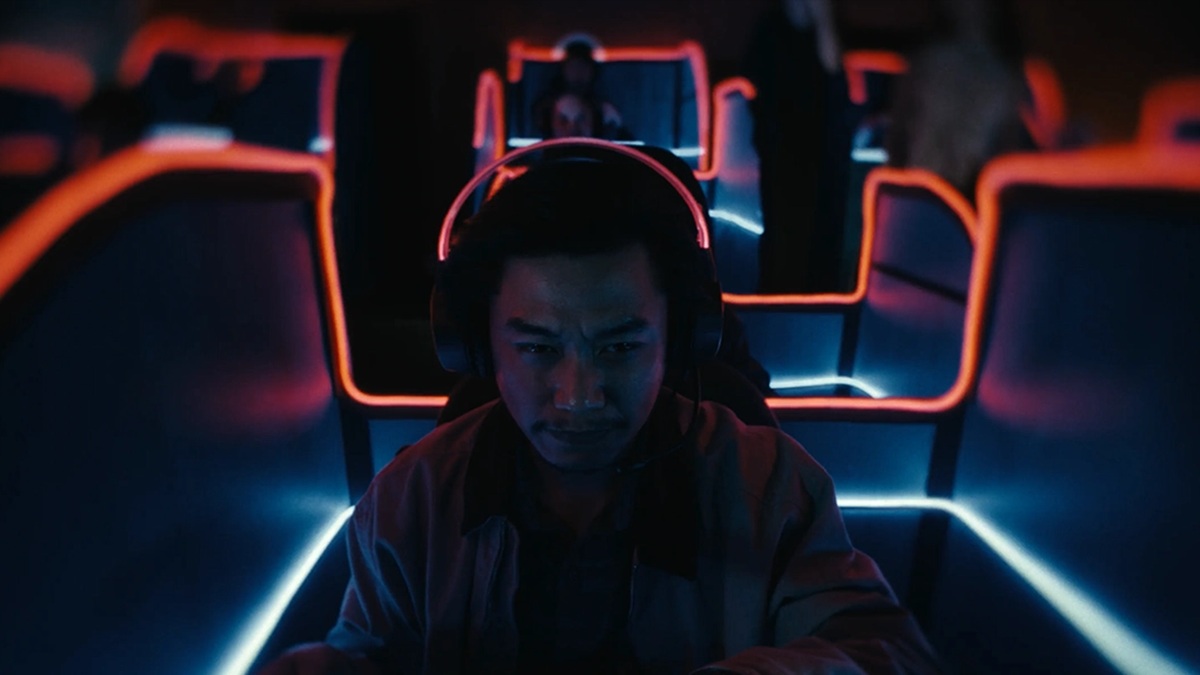
âCrash My Carâ
The most immediate reference point is David Cronenberg‘s “Crash.” Cars, collisions, alienated bodies moving through a city, technology changing the relationship between flesh and machine. I see it. But somewhere during one of Mijares’ many drives, a sillier shorthand occurred to me that eventually seemed more accurate:
Crash My Car. “Crash” plus Ryusuke Hamaguchi‘s “Drive My Car.”
Not because Torres shoots or structures his film like Hamaguchi, but because both believe that driving can give grief an activity. Keep moving and you postpone arrival. Mijares turns mourning into work, then work into investigation, then investigation into something close to obsession. The destination matters less than having another road in front of him.
Dominic Bekaert‘s “An Errand” also kept coming to mind. That film follows a driver across long stretches of road for a task whose mundane nature makes the hours spent completing it increasingly strange. Both films understand the peculiar mental space a car creates: physically enclosed, constantly moving, alone without ever being still.
Except Mijares isn’t entirely alone. Navigation software is already an odd relationship if you think about it for longer than we usually do. You operate a machine capable of killing you while a disembodied voice calmly instructs you where to turn. Most of us have used GPS often enough that the arrangement no longer seems remotely uncanny.
âThe Remotesâ, and the Cost of Outsourcing Control
I once rode to a screening in an unfamiliar part of the metro while the driver followed Waze. The app told him to turn left, so he did. Almost immediately, a traffic officer flagged us down: the turn apparently violated a traffic rule. The driver ended up paying rather than risk further trouble. What stayed with me wasn’t whether Waze had technically been wrong. It was how automatic the decision had been. The instruction came, and we followed it.
That small everyday surrender is where “The Remotes” becomes much more interesting than another warning about malevolent technology.
Filipinos certainly aren’t alone in outsourcing decisions to screens, though the extent to which apps have worked themselves into everyday life here makes Torres’ premise especially familiar. We summon rides through them, order meals, transfer money, find dates, navigate cities, buy groceries, watch movies, and allow algorithms to choose what comes after them. Convenience accumulates until mediation becomes nearly invisible.
The film doesn’t wag a finger at any of this. It asks a creepier question: once being directed becomes habitual, how much does the identity of the voice matter? After all, control doesn’t always arrive sounding authoritarian. Sometimes it politely tells you there’s a faster route.
And “The Remotes” complicates that further by tying technological obedience to grief. What happens when the voice sounds familiar? What if the machine addresses an absence you haven’t learned to live with? If technology could reproduce someone you loved well enough to make you listen, turning it off might feel less like resisting an algorithm than losing that person for a second time.
That’s also where the film’s political unease begins to surface without needing to announce itself. Institutions, police work, automated systems, and private grief begin sharing the same language of instruction. People are directed, watched, rerouted. The chilling possibility isn’t simply that authority can force obedience. It’s that obedience can become comforting.
The Future Looks Worn Out
Tristan Salas‘ cinematography keeps that idea away from the usual visual language of science fiction. “The Remotes” spends much of its time in gray-blue nights, murky interiors, weak artificial light, and occasional smears of red. Roads disappear into darkness. Windshields become barriers through which faces and landscapes are only partly legible. Nothing about the technology looks glamorous. This is a techno-thriller with very little techno-fetishism. No sleek interfaces, immaculate surfaces, or seductive vision of tomorrow. The world already looks exhausted. Whatever future has arrived seems secondhand.
Neo-noir is probably closer than cyberpunk, although Torres keeps contaminating one genre with another. Police procedural slides into ghost story. Romance rubs against science fiction. The movie occasionally seems to be reconstructing itself while you’re watching it. Sound is especially important to that instability because a voice has the ability to function as instruction, memory, threat, and consolation without changing its tone. (Kudos goes to Mikko Quizon, whose sound work here almost takes a complete 180 from his contributions in “The Mothering.”)
The actors have to inhabit that uncertainty without clearing it up for us. Gabby Padilla and Enchong Dee find the film’s odd frequency, but Alchris Galura and Julia Richards leave the strongest impressions. Richards makes Eva difficult to categorize even when circumstances seem to demand it. She can appear implicated, vulnerable, withholding, and lost within the same stretch of film. Galura has the heavier burden. His Mijares gradually stops looking like a detective investigating a mystery and starts looking like a man using the mystery to delay something he can’t solve.
For all the movie’s ideas, that exhaustion gives it a human pulse. It also became mine.
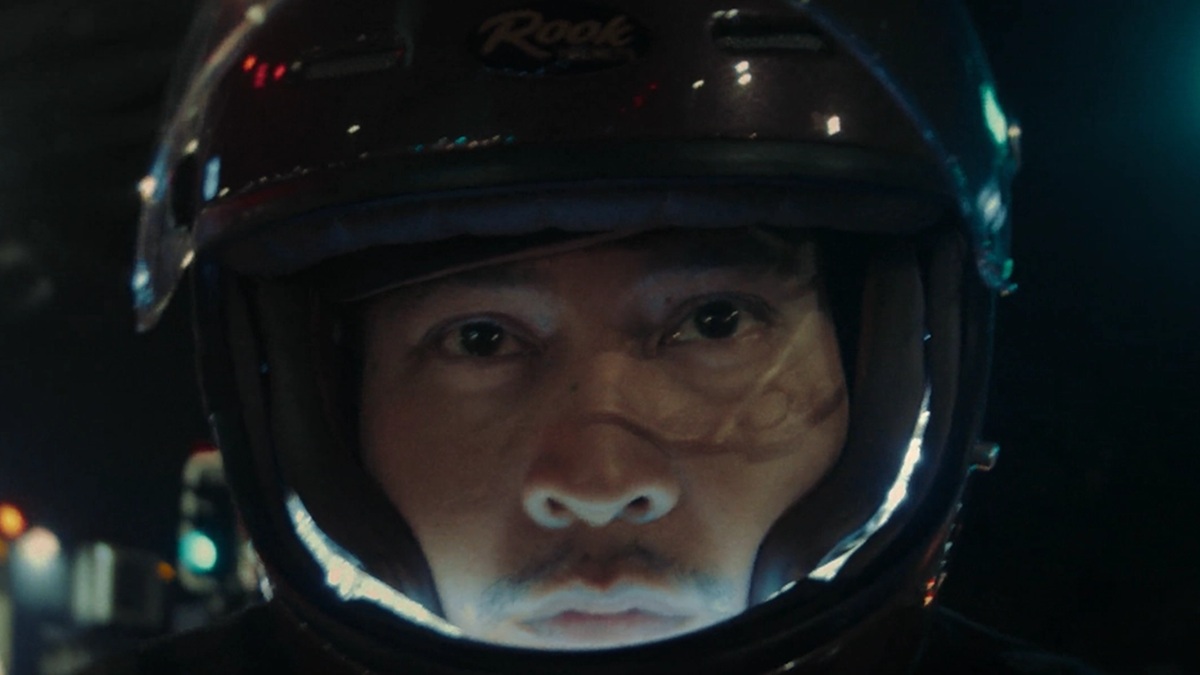
A Very Interesting Way to Start the Festivities
At 153 minutes, “The Remotes” is one punishing way to begin TIFF. Strangely, it runs almost half an hour shorter than “Drive My Car,” yet I felt the length considerably more. Torres starts the film at a low frequency and rarely raises it. Shots continue beyond the moment when their tension first presents itself. Conversations trail away. The four-part structure repeatedly hints that a new movement might reorganize what came before, then pushes us deeper into the fog instead.
There’s an amusing symmetry there. A movie about surrender demands plenty of it from its audience. Stop expecting propulsion. Stop insisting that a clue behave like a clue. Instead, submit to the duration, the repetitions, the nighttime driving.
And for long stretches, I did.
But surrender has limits. Sometimes Torres’ slowness creates an eerie suspension, as though the film has slipped loose from ordinary time. Elsewhere, duration starts calling attention to itself. The problem isn’t that the movie refuses clarity â I wouldn’t want a third-act explanation telling me who controlled whom and why. It’s that opacity and repetition don’t always deepen one another. There are stretches where the trance thins before the scene ends.
A tighter “The Remotes” wouldn’t necessarily be an easier one. Nor should it be. Cutting into those 153 minutes might simply give its mysteries more pressure and its best images more room to haunt one another. Even so, I’d rather wrestle with Torres’ strange object than reduce it to whether I could follow the plot. “The Remotes” works in fragments of grief, surveillance, authority, memory, and technological dependence, and some of those fragments remain stubbornly separate. That untidiness is definitely aggravating.
But for what it’s worth, it can also be the point where the movie starts resembling the state of mind it depicts. John Torres sends a detective through a nocturnal maze of technology, memory, and the strange comfort of surrendering control. Mijares keeps looking for somebody or something behind the wheel. By the end, the more unsettling possibility is that control may not require anyone to take it from us. Sometimes all it needs is a voice we trust enough to follow.


John Torres’ “The Remotes” had its world premiere at the 51st Toronto International Film Festival under the Wavelengths program. The festival runs from September 10 to 20, 2026. Follow us for more coverage.




