





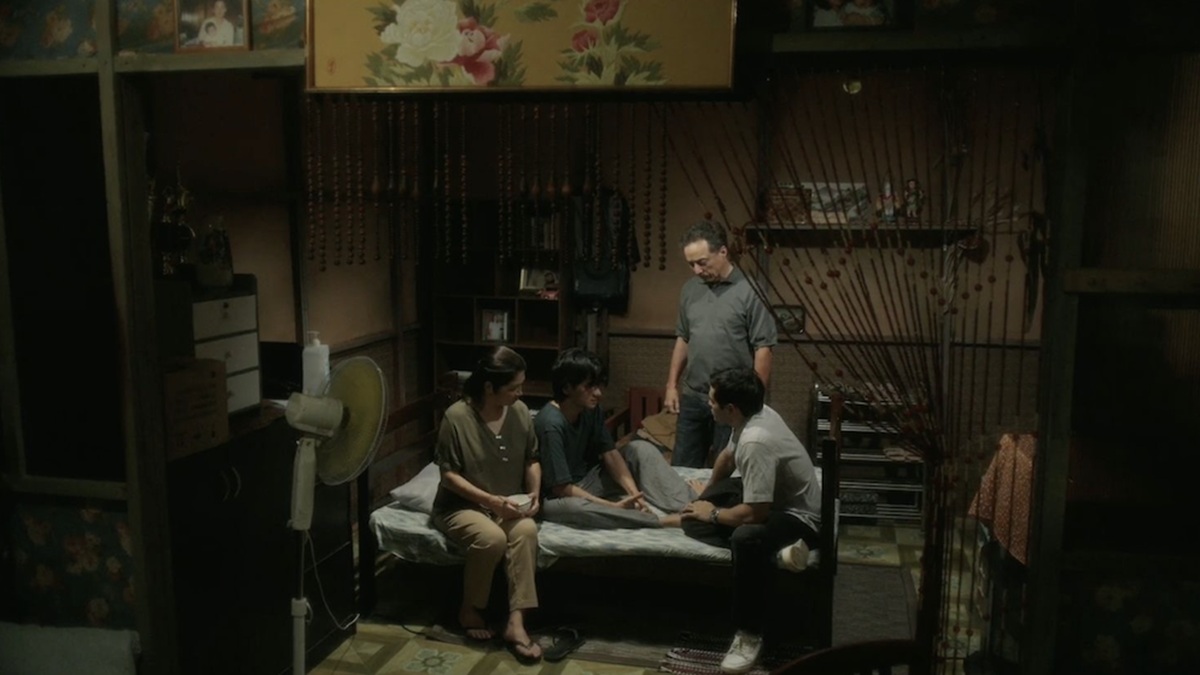
David Corpuzâs “Tayo Lang ang Nakakaalam” (Lit. Only Known to Us) begins by letting us get a family wrong.
Inside a hospital ward, Gloria (Yayo Aguila) talks with Neil (Martin del Rosario) about Bong, the sick man theyâre caring for just outside the cameraâs attention. Corpuz holds on the two of them long enough for an assumption to settle in. Gloria looks like Neilâs mother; Bong could easily be the husband, father, or kin theyâre both worried about.
As their conversation plays out, a Catholic Mass plays softly over the radio because Gloria, a deeply religious woman, canât attend church while staying at the hospital. As the priest prays about sin and forgiveness, Neil gently tells her about having to hear Mass this way for now. Looking closely, the frame features a cross hanging prominently in the room.
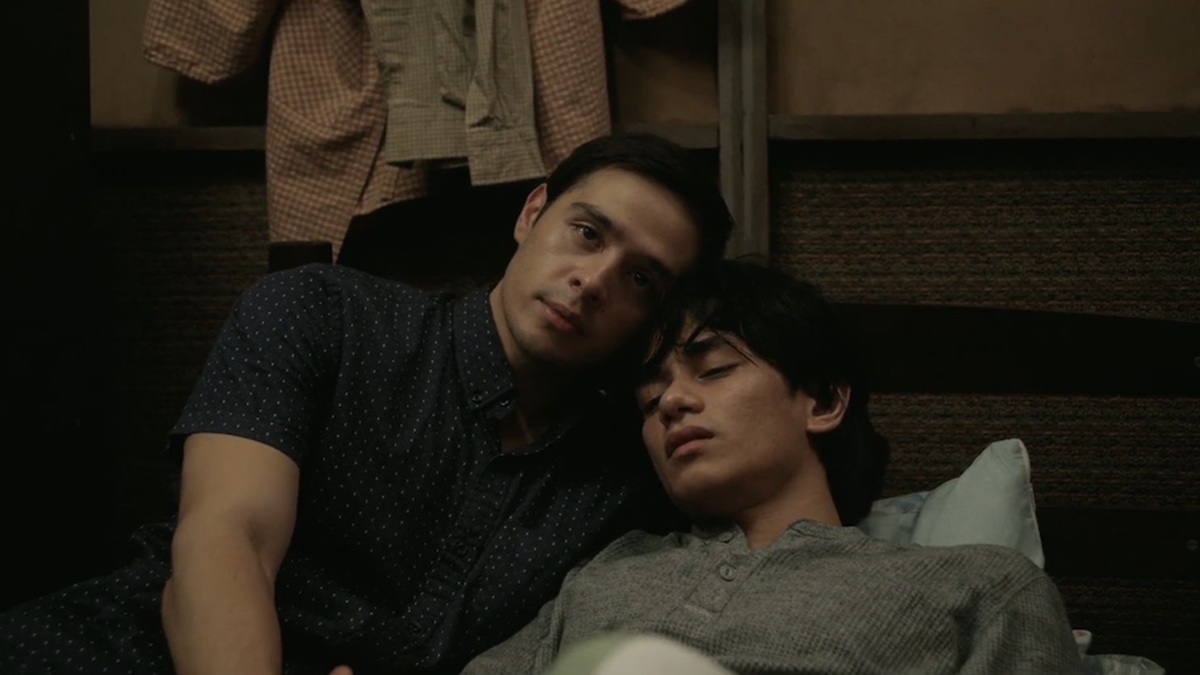
Then Corpuz gives us the missing piece: Bong (Miguel Odron) is Gloriaâs son, while Neil is Bongâs partner of nearly five years.
Itâs a terrific piece of direction because almost nothing about the scene changes except our understanding of it. Corpuz hasnât tricked us by hiding some outrageous revelation. He has simply allowed familiar ideas about what a family looks like to fill in the blanks. The Mass and the cross take on another charge once we realize who these people are and how naturally Neil already belongs beside them.
That quiet subversion establishes the language of “Tayo Lang ang Nakakaalam.” Neil and Bong have been together for years, and their relationship isnât hidden from the people closest to them. Gloria and Bongâs father, Benji (Epy Quizon), accept Neil, as does Neilâs mother. But when Bong becomes seriously ill just days before the coupleâs anniversary, something the two men have kept between themselves begins bearing consequences far beyond their relationship. Love has already made Neil part of this family. The crisis forces everyone to confront what that membership actually entitles him to know, protect, reveal, and endure.
When Acceptance Meets Something It Canât Fix
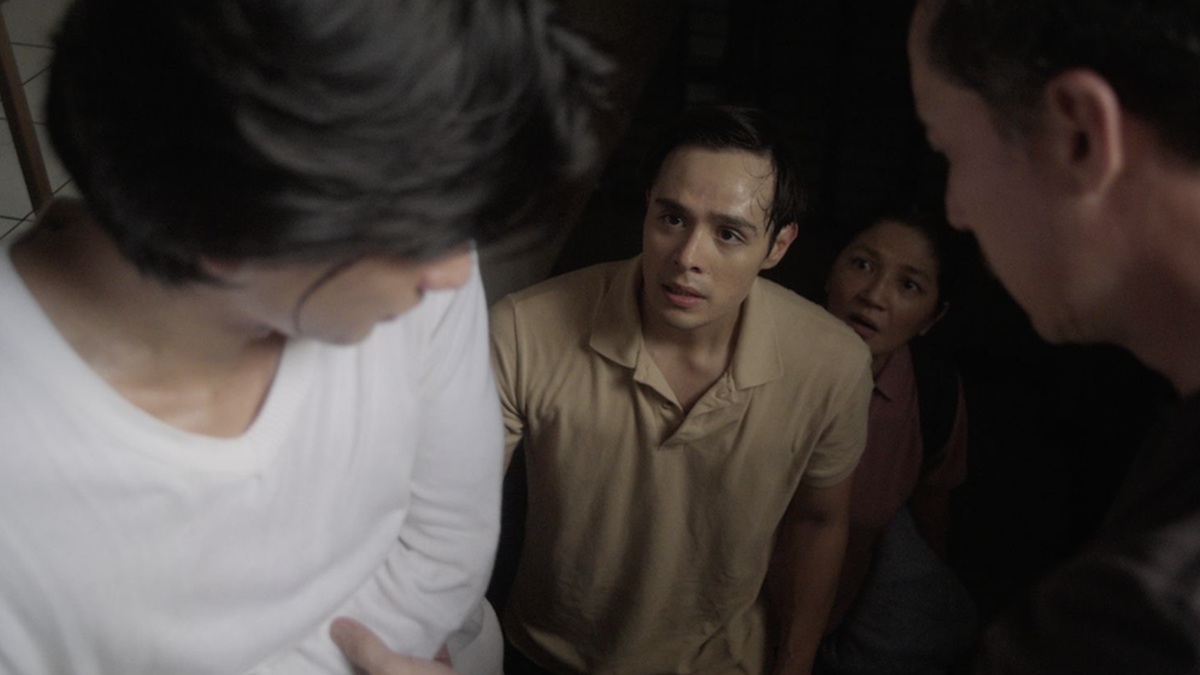
Corpuz doesnât construct Bongâs parents as obvious homophobes waiting for an excuse to reject their son. Their acceptance is genuine. So is their affection for Neil. The conflict instead grows from what happens when a private decision between partners collides with the fears of parents who love the same person.
The title gradually changes meaning along with that conflict. “Tayo Lang ang Nakakaalam” initially sounds almost romantic, the sort of phrase lovers might use for something belonging only to them. Corpuz eventually makes those words considerably heavier. Some knowledge remains between two people not because their love must be hidden, but because trust sometimes asks one person to carry something he never wanted to carry.
Setting the story in 2012 gives that secrecy a larger social context. News reports heard in the background refer to the increasing number of HIV cases in the Philippines, placing the characters inside a moment when the countryâs growing public-health crisis was becoming harder to ignore. While Corpuz doesnât turn the film into a history lesson, the period matters. Fear around HIV was bound up with the stigma attached to homosexuality, especially in a predominantly Catholic country where genuine compassion could coexist with deeply ingrained assumptions about queer lives, sex, illness, and morality.
That makes the Mass in the opening more than religious set dressing. Its language of sin and forgiveness hangs over a story filled with secrecy and hurt but no easy sinner to identify. The movie also understands how readily stigma can confuse behavior with identity. Sexual risk isnât uniquely homosexual, yet illnesses associated with queer men have long been treated as though homosexuality itself were the diagnosis.
Related Cinemalaya Reviews: âOpen Endingsâ, âWarlaââMessy, Tender, Unapologetically Queer
That âCinemalayaâ Blend of Visual Direction and Blunt Dialogue
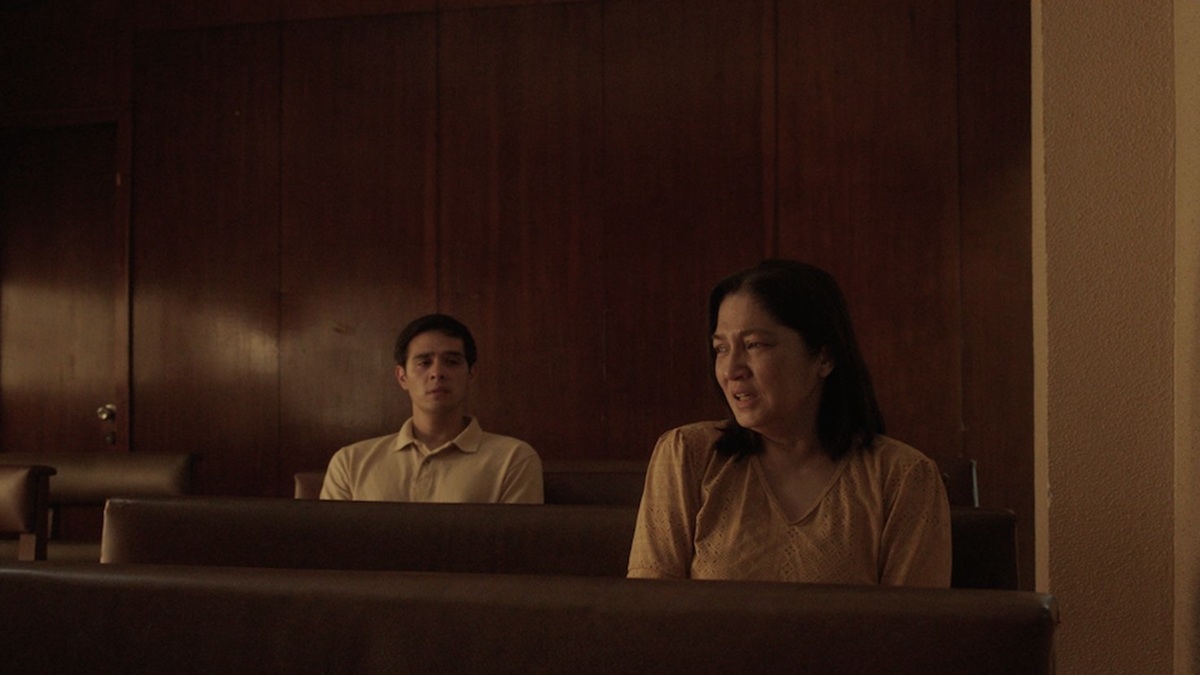
Corpuz is often strongest when he trusts images rather than dialogue to make these connections. The hospital itself gives him and cinematographer Adam Dumaguin plenty to work with. Several patients share the ward, separated only by curtains, and in later scenes the camera catches those partitions from angles that make the beds resemble a row of confessionals. When Neil and Bong want to talk privately, or steal a little intimacy from the circumstances around them, they have to draw those curtains shut, even as other people try their darnedest to peer through the thin curtains or eavesdrop on what the two are talking about.
Another minor detail: staircases recur as Bongâs health worsens, turning the simple act of getting someone home into physical labor. Each step makes caregiving visible as exertion: someone has to carry, support, stop, wait, then try again. These are simple visual touches for a movie preoccupied with what lovers disclose to each other, what they keep from everyone else, and the judgment that can surround both.
Unfortunately, the screenplay (which Corpuz co-wrote with Iar Arondaing) doesnât always have the same confidence. Some conversations explain emotions or implications that the actors have already made perfectly clear, and a few lines come with a melodramatic bluntness that even this veteran cast canât entirely smooth over. There are moments when Corpuz has already found the right image, only for the dialogue to underline what we understood the first time.
What Neil Doesnât Say
The performances are precisely why that over-explanation can frustrate. Aguila gets the movieâs most openly wrenching material as Gloria, and she knows how to play a mother whose grief has nowhere sensible to go. Her anger doesnât cancel out the love she has shown Neil; if anything, that affection makes the hurt more complicated.
Quizon brings something gentler to Benji. Having spent years at sea providing for the family, he returns to discover that financial responsibility hasnât spared him from emotional distance. His awkward small talk with Bong and Neil never suggests an uncaring father. Heâs a man trying, rather late, to figure out how to be present in ways earning money couldnât teach him. Thereâs regret there, but also a genuine desire to understand his son and support him with whatever emotional vocabulary he has.
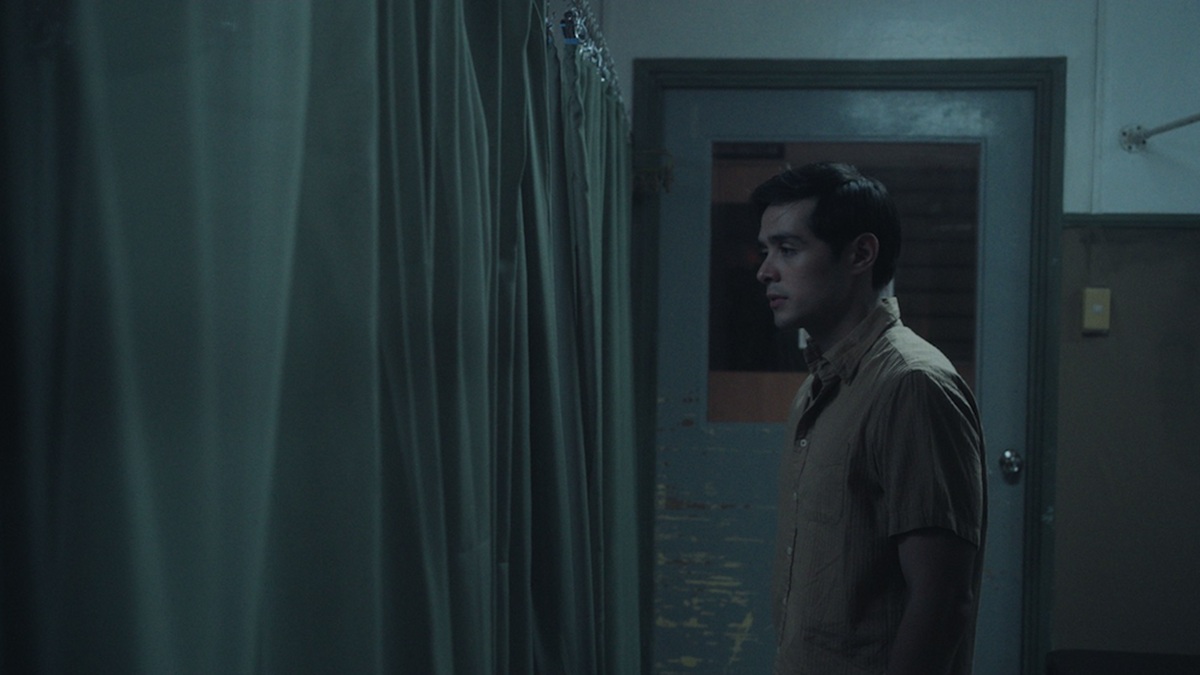
Martin del Rosario, though, does much of the movieâs hardest work.
Neil is caring for the man he loves while his job begins demanding explanations for the absences, tardiness, and early departures that caregiving requires. Del Rosario lets exhaustion accumulate in his posture before dialogue ever names it. Around Bong and his family, Neil keeps moving. He helps, waits. He answers questions, absorbs frustration. And he tries not to let anybody see how much the situation is taking from him.
Whenever heâs alone, the body gives him away.
Del Rosario captures someone already running on fumes but unwilling to behave as though caring for the person he loves has become a burden. Thereâs guilt even in being tired. He allows it to register in tiny changes in his face and shoulders before Neil gathers himself again and returns to whatever needs doing next. Glenn Baritâs score supports that performance. It appears only in small doses, rarely forcing emotion onto a scene, which makes its most aching passages all the more effective.
âOnly Known to Usâ Evokes a Personal Favorite Film
And then thereâs a tiny moment involving a shirt.
Late in the film, Neil stands before a closet wearing a polo whose pattern recalls one Bong had chosen earlier. He stares at himself in the mirror for only a few seconds, and Del Rosario allows the faintest, broken little smile to cross his face. I donât know whether Corpuz intended the visual rhyme, but I immediately thought of the closing moments of “Brokeback Mountain”: clothes, a closet, and an ordinary object suddenly carrying the unbearable weight of the person attached to it.
That did me in.
“Only Known to Us” can be predictable, and its screenplay sometimes says aloud what Corpuzâs direction has already expressed more gracefully. But those shortcomings matter less once the film settles into the everyday work of loving someone through fear, illness, exhaustion, and grief.
Its most painful question isnât whether Neil belongs to Bongâs family. Everyone already knows that he does. The harder question is whether loving someone gives us the right to break their confidence for their own good, and what happens to the person left carrying that confidence when keeping it begins hurting everyone around him.
Some things are kept between two people because theyâre ashamed. Others stay there because one person asked the other to protect them. “Only Known to Us” shows how devastatingly difficult it can be to know when love requires keeping that promiseâand when everyone left behind will wish you hadnât.


“Tayo Lang Ang Nakakaalam” currently screens at the 22nd Cinemalaya Independent Film Festival. The festival runs from August 6 to 18, 2026. Follow us for more coverage.




