David Wain has always approached genre parody with an unusual mixture of half-affection and half-contempt. “Wet Hot American Summer” took the language and clichés of the ’80s summer-camp comedy and pushed them beyond the point of logical coherence. “They Came Together” did the same for the glossy studio romantic comedy, understanding those movies well enough to lovingly recreate their pleasures while mercilessly exposing the absurdity of their formulas.
With “Gail Daughtry and the Celebrity Sex Pass,” Wain turns his attention toward the high-concept sex comedies and road-trip movies of the 2000s. The result is the funniest movie since last year’s “The Naked Gun.” It’s a proudly stupid yet unexpectedly sophisticated Hollywood fairy tale that understands genre conventions primarily as rules waiting to be broken.
Assembling the Motley Crew
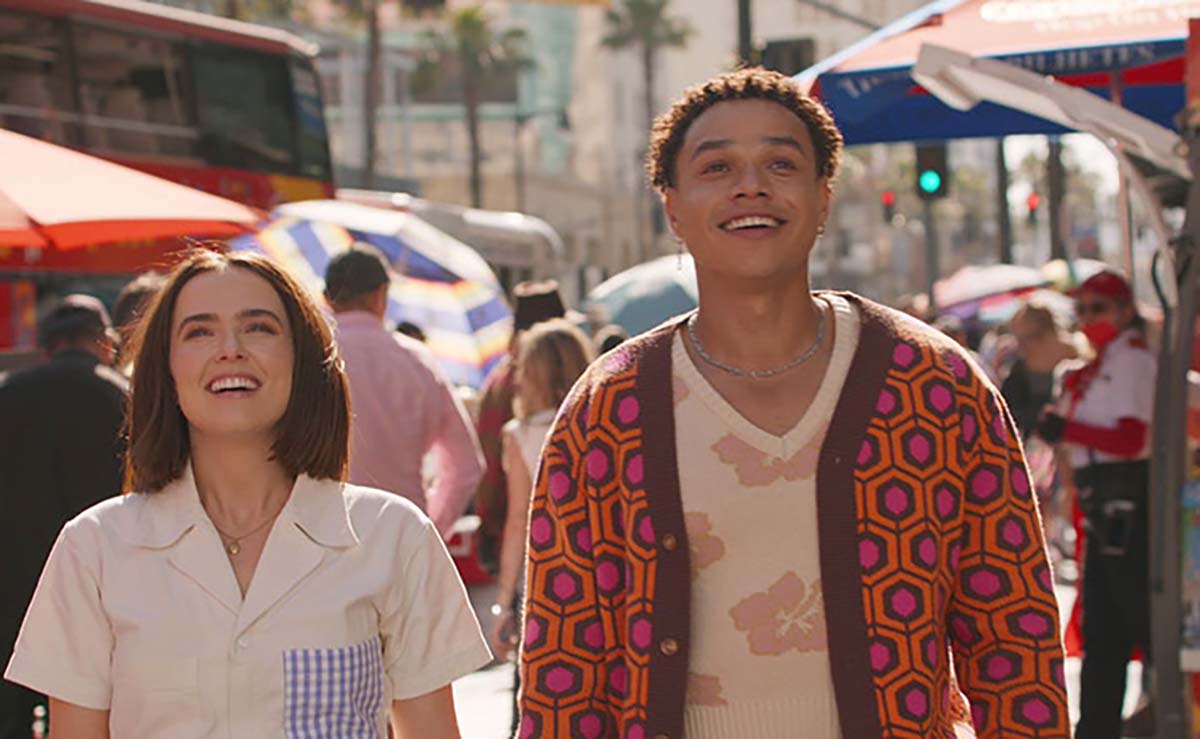
The premise sounds like the logline for a studio comedy that could have opened in 2,500 theaters sometime in 2004. Gail Daughtry (Zoey Deutch) is a Midwestern bride-to-be whose fiancé blithely and guiltlessly sleeps with his A-List celebrity “sex pass.” Gail decides turnabout is fair play and leaves Kansas for Los Angeles to cash in her own celebrity sex pass: Jon Hamm.
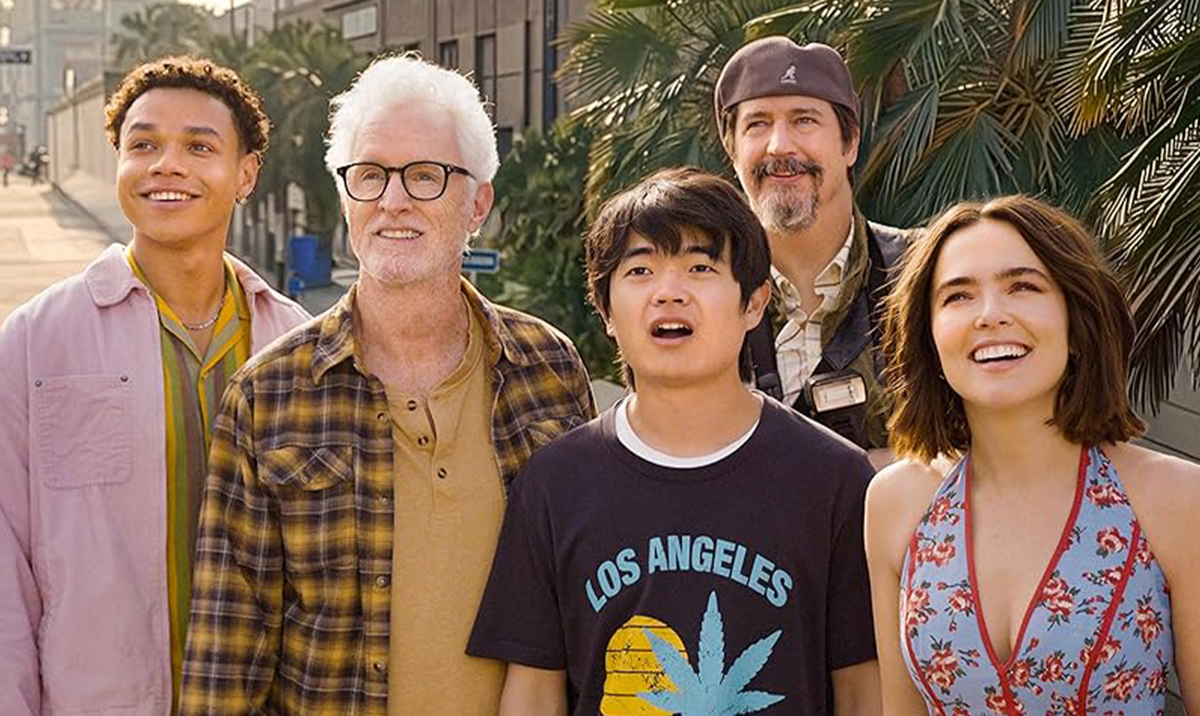
Accompanied by her flamboyant — and “Schindler’s List”-obsessed best friend Otto (Miles Gutierrez-Riley) — Gail embarks on an increasingly ridiculous journey to meet — and sleep with — one of the most famous and handsome TV actors in the world.
Along the way, Gail assembles a motley group of companions who all seem to be searching for something they lack. There is Ben Wang as a sweet but dim aspiring talent agent hoping to ascend the Hollywood ladder and impress his mother; Ken Marino as a coldhearted short tempered former paparazzi photographer whose elusive “white male whale” just happens to be Jon Hamm; and Hamm’s “Mad Men” co-star John Slattery, playing a cowardly, bitter and bedraggled version of himself who has apparently spent years resenting his status as the second-most-desired man from that show.
Echoing 2000’s Sex Comedies
As if Gail’s quest were not complicated enough, she accidentally swaps briefcases at the airport with two low-level mobsters carrying information for their boss (Sabrina Impacciatore), whose wicked — and deliberately vague — plan involves dismantling the United States government.
The entire setup feels assembled from a collective memory of “Road Trip,” “EuroTrip,” “Sex Drive,” and countless other raunchy studio comedies built around a premise simple enough to summarize in one sentence. There is a clearly defined sexual objective, a cross-country quest, a loyal best friend, eccentric strangers, celebrity cameos, increasingly arbitrary detours and, somewhere beneath all the vulgarity, the promise of a heartfelt lesson.
But Wain is not simply standing outside these movies and pointing out how stupid they are. As with “Wet Hot American Summer” and “They Came Together,” he loves the genre enough to understand exactly why it is ridiculous — and finds it ridiculous enough to understand exactly why it is lovable.
That tension between affection and contempt is essential to Wain’s comedy. He does not merely reference the formulas of 2000s sex comedies; he rebuilds the entire machine, sincerely participates in its pleasures and then begins loosening screws until it collapses into absurdity. Characters follow arbitrary genre rules with complete emotional conviction. Narrative logic disappears whenever it gets in the way of a joke. Minor inconveniences are treated with enormous dramatic importance, while potentially life-altering developments can be casually discarded without explanation.
Pulling Comedically from ‘The Wizard of Oz’
Wain’s comedy exists in a universe where continuity is optional, realism is actively discouraged and no joke is too stupid to become profound through sheer commitment.
Beneath the clothing of a forgotten 2000s sex comedy, however, “Gail Daughtry” is structured like a fairy tale — specifically, “The Wizard of Oz.” Gail comes from Kansas. Her name reverses Dorothy Gale. Her best friend Otto is a play on Toto. The companions she collects along the way echo the Scarecrow, the Tin Man, and the Cowardly Lion, while a mob boss serves as her Wicked Witch.
Los Angeles becomes a modern Oz: glamorous, artificial and populated by strange characters who operate according to their own irrational rules. At the end of Gail’s “yellow dick” road is Jon Hamm, the elusive Wizard she believes can grant her wish and restore balance and return her home after her fiancé’s betrayal. Like the Wizard, Hamm exists for most of the journey less as a human being than as an idealized projection: a distant, seemingly all-powerful figure onto whom Gail places the promise of fixing what has gone wrong in her life.
Deutch Gives a Fearless Performance
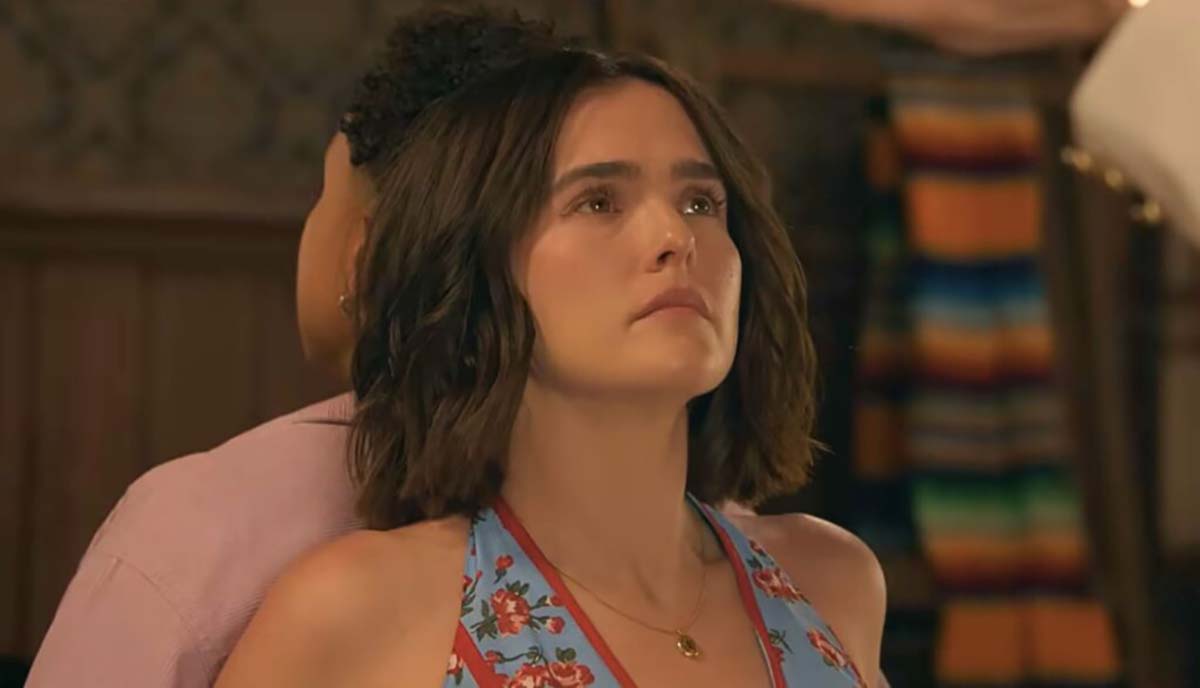
But the further Gail travels into Hollywood, the stranger and more human its supposedly magical inhabitants become — and the closer she gets to the man behind the celebrity curtain, the more complicated that fantasy becomes. “The Wizard of Oz” references are not treated like an elaborate academic exercise or a point-by-point parody. Wain and co-writer Ken Marino seem more interested in using the story as a half-remembered structural skeleton.
Holding all of this ridiculousness together is Zoey Deutch, who gives the kind of fearless comic performance that makes an absurd movie feel strangely human. Deutch understands the central rule of David Wain’s comedy: the more ridiculous the material becomes, the more sincerely everyone has to play it. She never treats Gail’s mission as a joke, even when every person she encounters seems to have wandered in from a different movie. She remains wholesome and earnest even as the world around her becomes increasingly detached from reality.
More importantly, Deutch is not merely the sensible straight woman reacting to a collection of bizarre supporting characters. She throws herself into Wain’s comic wavelength with complete abandon. She grounds the movie without sanding down its weirdness and humanizes intentionally stupid writing without behaving as though she is above it.
Has the Reckless Energy of a First Feature
Like so much of Wain’s work, “Gail Daughtry” is populated by members of his longtime comedy repertory company, including Ken Marino, Thomas Lennon, and Joe Lo Truglio. Their presence gives the movie the loose energy of old friends who have spent decades developing their own private comic language. Everyone understands that the funniest possible response to something completely irrational is to behave as though nothing unusual has happened.
That familiarity contributes to the movie’s shaggy, handmade quality. Despite Wain’s decades of experience across film and television, “Gail Daughtry” has the reckless energy of a first feature made by people uncertain whether anyone will ever allow them to do this again. It feels thrillingly unpolished — not careless, but unconcerned with sanding away the strange rhythms and rough edges that give the comedy its personality.
At times, it feels like Wain and his collaborators are getting away with something.
Aggressively Paced Humor
That quality feels especially refreshing at a moment when broad theatrical comedies have become increasingly rare. “Gail Daughtry” is not embarrassed to be silly, vulgar, episodic or aggressively specific. It is willing to risk alienating half the audience in pursuit of a joke so bizarre that the other half cannot believe anyone was allowed to put it in a movie.
Not every joke lands, but consistency has never been the primary goal of Wain’s comedy. His anything-for-a-laugh mentality favors a relentless barrage of visual and verbal gags: incessant puns, absurd non sequiturs, quasi-vaudeville routines and jokes repeated long after a more reasonable filmmaker would have moved on. Others are buried so deeply that they may not become funny until several scenes later — or a second viewing. A few seem deliberately engineered to create the sensation that the joke has failed before somehow finding humor in the awkwardness of that failure.
Wain treats comic timing less like a science than an opportunity for sabotage. Rather than relying on the loose, improv-driven rhythms that have defined so much modern studio comedy, his humor is densely constructed and aggressively paced. The movie rarely waits for one joke to land before throwing several more into the frame, allowing throwaway lines, background details and completely superfluous visual flourishes to compete for attention.
An Affectionate and Contemptuous Fairy Tale
The movie’s willingness to miss may ultimately be inseparable from what makes it so funny. Wain would seemingly rather risk five dead jokes in pursuit of one gag so strange, specific, and perfectly committed that it feels unlike anything another filmmaker would attempt. There is an almost vaudevillian quality to the way he stretches certain bits beyond their natural endpoint, repeating or escalating them until exhaustion becomes part of the punchline.
The result is not a carefully calibrated laugh machine so much as an absurdly dense one: relentless, digressive and willing to try almost anything for a laugh. It is something messier, more personal and more alive.
Comedy is subjective, and Wain’s work has always depended on whether an audience is willing to meet it on its peculiar wavelength. If you are not, the movie’s intentionally broken logic, prolonged non sequiturs and cheerful stupidity may feel exhausting. But if you are, “Gail Daughtry and the Celebrity Sex Pass” feels like discovering an entire room full of people who share the same deeply stupid sense of humor.
The Funniest Movie Since ‘The Naked Gun’
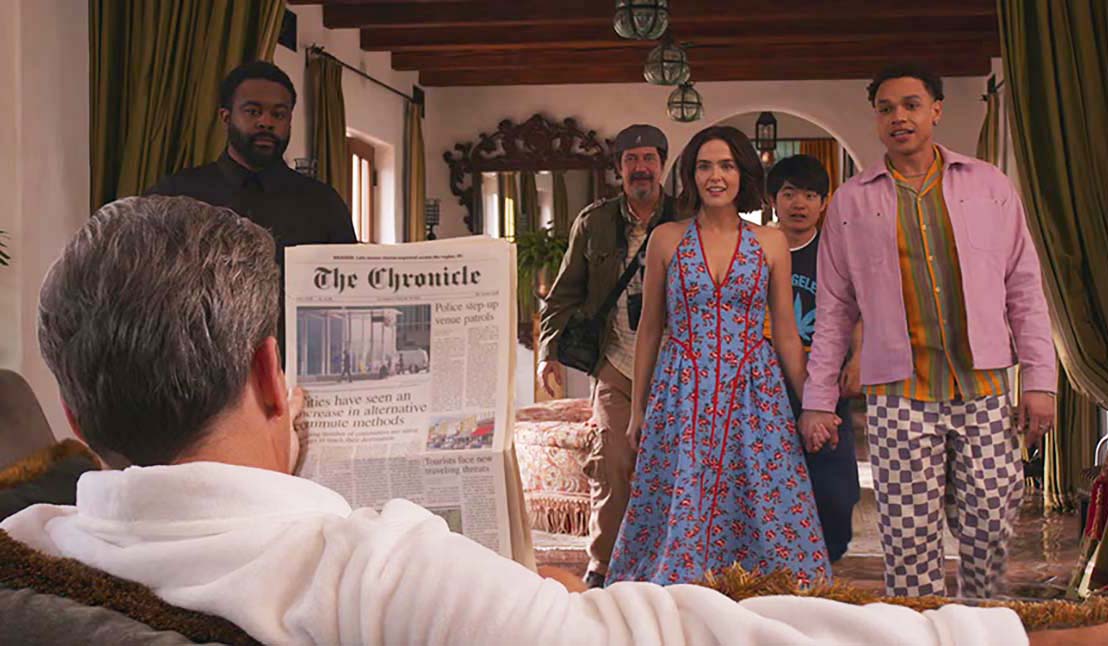
If “Wet Hot American Summer” was Wain’s warped love letter to the ’80s summer-camp comedy and “They Came Together” was his gleeful demolition of the studio rom-com, “Gail Daughtry and the Celebrity Sex Pass” transforms the high-concept sex-and-road-trip comedy of the 2000s into an equally affectionate and contemptuous Hollywood fairy tale.
It is proudly stupid, deliberately inconsistent, and almost pathologically committed to jokes no reasonable filmmaker would pursue. David Wain remains one of the few comedy directors willing to follow a ridiculous idea long after common sense has begged him to stop — and thank the Comedy Gods for that.