





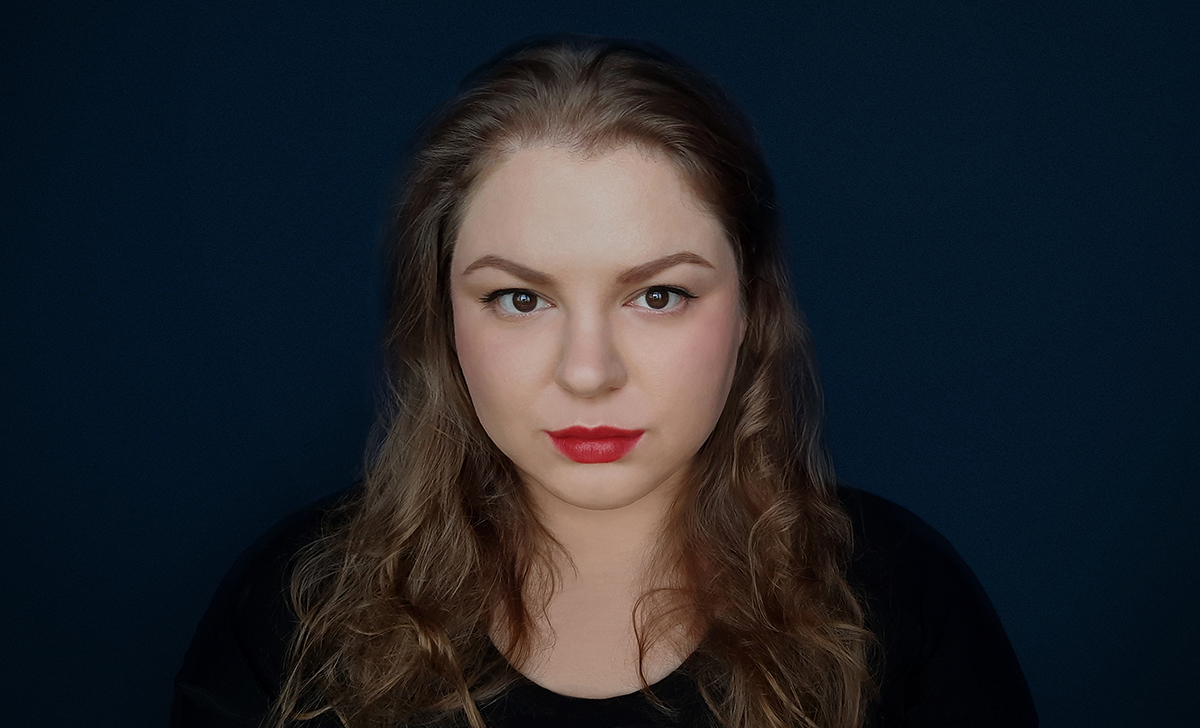
One of my favorite films of this yearâs Tribeca Festival was the animated short âEeny, Meeny, Miny, Moe!â from Writer/Director Andrea Szelesová. Animation was the perfect medium to tell the story, and the film â centering on acceptance, inclusion, and even mental health â is relatable to kids and adults alike. At 12 minutes the film is very palatable and uses animation not as a crutch; it uses the graphics and abilities of the medium to create an entire world that is both rapturous and sublime. The film, from the Czech Republic, Slovakia, is originally titled âEn, Ten, Týky!â and is distributed by Miyu Distribution. Â
At The Movie Buff, we recently had the chance to speak with director Andrea Szelesová and the filmâs producer, Kristina Husová. The duo talked to us about what it took to make the film, what they hope viewers will take away from it, how it was received at Tribeca, and more.Â
A Film for Both Children and Adults
Note: this interview has been edited for clarity.
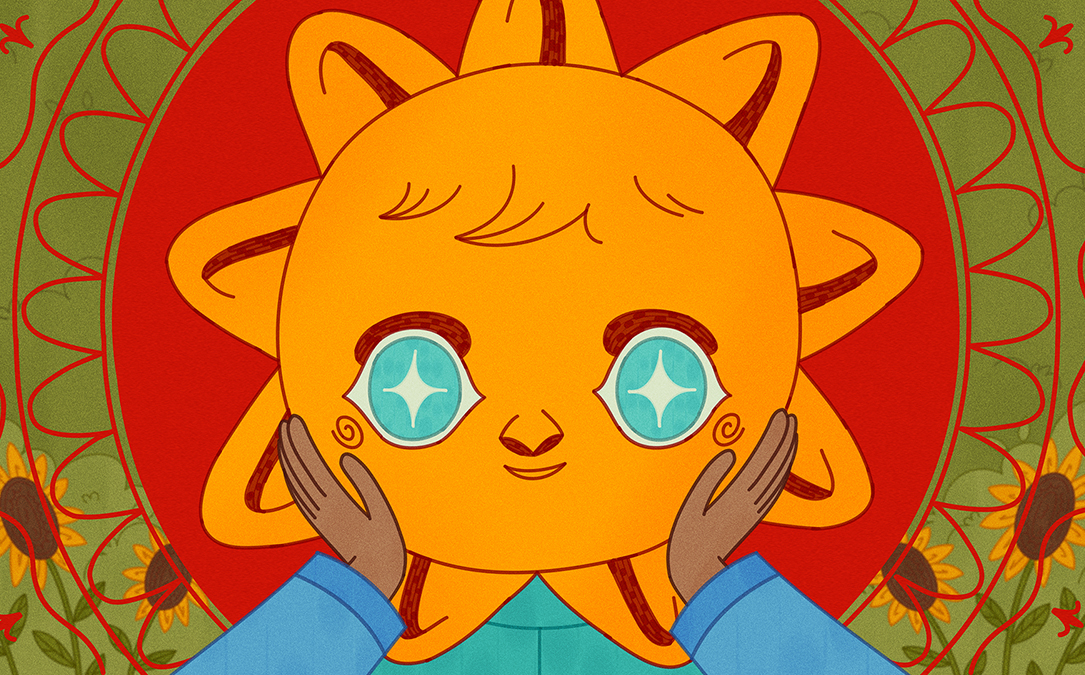
The main character of âEeny, Meeny, Miny, Moe!â is a young boy named Yios and he has a peculiar predicament. His head shines like the sun, but sometimes a flare will blast off in one direction. Not only is it erratic and sudden, it can also hurt other kids on his cloud-like world. His father has this same sun/flare head â however his is under control. And while the short never touches on that, I took it as a stage Yios must go through â perhaps mirroring the awkwardness of growing up, puberty, etc. â before he can stabilize it. However, it makes him different from the others, which is the last thing anyone wants when theyâre trying to fit in.Â
Szelesová understands this. And, speaking with her this past Monday from Slovakia, she highlighted the imprint she worked to leave behind.Â
âI strived to create a film that is entertaining both for children and adults,â she said. âAll the while the central theme of this film is loneliness and isolation, the pain of not being accepted amongst others. [Yet] I believe this feeling is something that many of us have lived through and little of us ever get over,” she said.
A Personal Journey of Acceptance
And while Szelesová stated that the film was created with a youth audience in mind, at Tribeca â screening to mostly adults â she received thunderous applause. It shows the applicability of the material. After all, how many of us have conquered all of our demons from childhood?Â
âI strived to create a film that is entertaining both for children and adults.”
Andrea Szelesová
What works about âEeny, Meeny, Miny, Moe!â is that the whole story can be told through visuals. Like the other short animated film I reviewed at the festival, âSaba,â Szelesováâs film uses the full gamut of the medium. Thereâs no dialogue to speak of, and the Szelesová and Producer Husová spoke of the difficulty of translation during our interview. But yet, the film is the better for it. What Yios goes through â and his journey â is understandable through visuals alone. During this interview, I learned that while Szelesová directed and wrote this film, she has spent time working as an animator, as shared by Kristina Husová. She knows what to look for.Â
Yet, during the interview, I also learned about the personal journey Szelesová went through and how much of herself she put into it. In the filmâs press notes from Miyu Distribution, Szelesová shares that Yios is a âpersonification of a past self,â and itâs not hard to note how anxiety and acceptance factor into the picture. âAs I was making this film,â Szelesová said, âI only realized that it was about me. It was a journey to learn about myself and understanding myself and it was the key⦠understanding what are my needs and communicating it to other people.âÂ
The Power of Short Films
And, talking about the main character, Yios, and his struggle to fit in, she had positive words to say as well: âit can get better,â she said. âIt does get better.â
Since âEeeny, Meeny, Miny, Moe!â has so much to say â and does such a good job at it, I was curious if Szelesová has future plans for more shorts, a full-length film, or something else. She elaborated: âI want to keep in shorts,â she said. âItâs the format I understand most.â She also stated that she was encouraged to expand this world/story into a series. And itâs not hard to see how that is possible. Szelesová stated (speaking directly of the Medusa child in the film) that, âYios is not the only one thatâs different,â and exploring more backstories could be ripe for analysis.Â
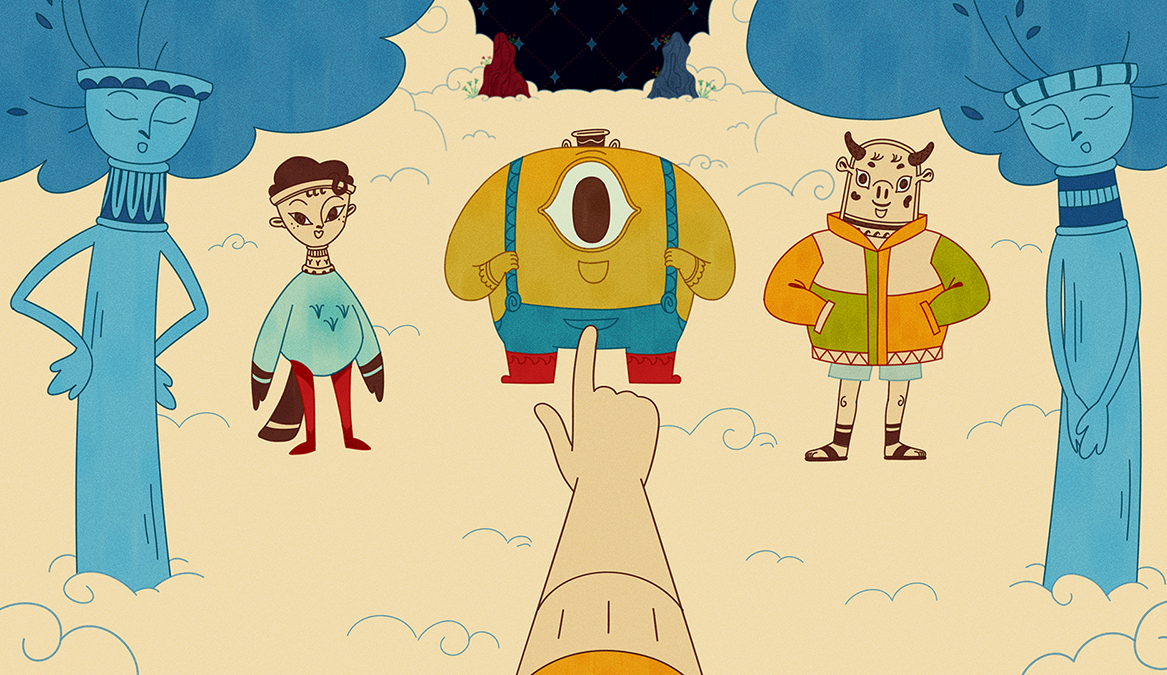
One of the reasons for this is the filmâs focus on mythology, and how ripe that is for more exploration. To me, the main characterâs father represented someone like the god Apollo. The film also has Cyclops, Medusa, and others. And while Szelesová stated itâs unlikely that these mythological figures would all coexist together, the film had a strict story, beginning, and end, and she didnât want to change it to fit in other ideas she had.Â
More Tribeca Coverage:Â Tao Zhangâs âAgainst the Flowâ is Artistic and Introspective Yet Bleak and Abstract
âWeâll see in the future if we expand it or not,â she finished.
Szelesová also talked about how the Czech Republic has a different view of âfeature films,â and she likened doing a full length feature to âlike a short, only longerâ as features can be very artistic.
The Bright Colors of Mythology
Mythology played a huge part in Szelesováâs film, and it shows. As mentioned before, several of the characters were pulled from mythology. Szelesová stated that she wanted it to be very visual. Yet she was pulled between being historically accurate or, as she put it, let it âjust play.â And since ultimately the target audience for her film is children, she decide the latter. âI wanted to have the most interesting characters,â she said. âI wanted to make it more exciting, and maybe then they will be more interested.âÂ
The film was a journey to learn about myself and understanding myself and it was the key.”
Andrea Szelesová
Szelesová also added: âItâs [mythology]is really colorful and really made for animation.â
On a more personal note, Szelesová shared that one of the characters in mythology and her film, the Minotaur, she saw during her downtime in New York City as she went to the Metropolitan Museum of Art. She saw the Minotaur there and laughingly stated, âI cried for 15 minutes.â It was a powerful moment for Szelesová. And while it was a miniature statuette, she felt it was bringing her story to life. And the connection from a story written in Slovakia, brought to Tribeca, and then experienced that intimately in Manhattan is hard to overlook.Â
More Information
For those that are interested in learning more about Szelesováâs film, information is available at the following link.Â
âEeeny, Meeny, Miny, Moe!â Had its world premiere at Berlin International Film Festival. At Tribeca, it received a Special Jury Mention. You can read our review of the film here from our Tribeca coverage. We thank both Andrea Szelesová and Kristina Husová for their time and wish them well in the future. You can access all of our Tribeca coverage at the following link.Â
You can follow the film’s production company, Pure Shore Films and Andrea Szelesová on Instagram.


