I have to admit that BDSM-themed films rarely interest me. Not because of the subject matter, but because too many of them treat kink as either shock value, shorthand for damage, or a naughty accessory for a more conventional romance. The psychological terrain is often right there, waiting to be explored, and the movie walks past it wearing leather cuffs.
Madison Youngâs âBy the Rootsâ does not exactly move mountains on that front, but it does move the needle. It has honesty, heart, and, in Emily Robinson, a lead performance that gives the film much of its pulse.
Pleasure, Memory, and the Life Left Behind
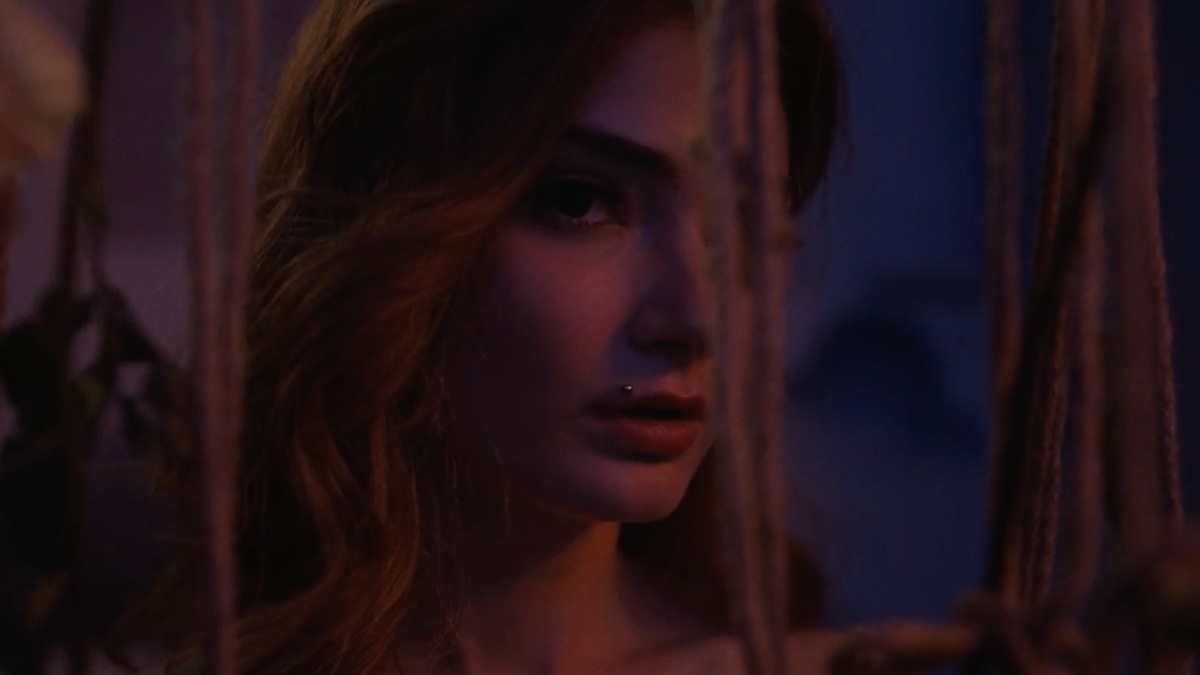
Written and directed by Young, and adapted from their memoir Daddy, âBy the Rootsâ follows Madison (Robinson), a San Francisco gallerist and sexual revolutionary whose life is built around art, queer community, and a loving BDSM dynamic with her dominant partner, James (Brant Daugherty). Young is not approaching this world as a tourist. In fact, their work has long moved through feminist porn, performance art, queer spaces, sex education, and curation, which is why the filmâs erotic scenes feel less like provocation than autobiography finding another form.
That lived-in familiarity matters because âBy the Rootsâ is trying to do something more fragile than simply ârepresentâ kink onscreen. Madisonâs sexuality is not presented as a secret wound, nor as a rebellious costume she puts on to offend her family. Instead, it is part of how she moves through the world. It informs her art, politics, friendships, sense of safety, and her relationship to her own body. In San Francisco, she appears to have built a life where nothing in her has to be packed away tightly.
And then, inevitably, the past calls.
An Unavoidable Reckoning with the Past
When Madison returns to Southern Ohio with James for her motherâs birthday, the freedom of her chosen life starts rubbing against the repression of the home she left behind. The visit also carries the heavier threat of the childhood house being sold, which gives the homecoming a more unsettling charge. Madison isnât simply going back for a family obligation; sheâs asked to look again at the place that made her before it disappears into someone elseâs memory.
The setup has a familiar shape: the queer adult goes home, the conservative family does not know what to do with the person who has returned, and old wounds get a second life. Even so, Youngâs film is more specific than that outline suggests. It understands sex not as a detour from Madisonâs emotional life, but as one of the ways she thinks, creates, performs, and survives. At its best, âBy the Rootsâ is sex-positive without sounding like it has prepared a lecture on sex-positivity. The film does not ask us to approve of Madisonâs choices as some badge of liberal sophistication. It simply lets those choices exist as meaningful, negotiated, sometimes messy, and fully human.
Robinson is terrific here. She gives Madison a wonderful mix of confidence and exposed nerve endings. In the San Francisco scenes, she moves like someone who has fought hard for the right to take up space. Back in Ohio, though, her body seems to remember old rules before her mind can reject them. A glance tightens. A pause lasts a little too long. Her posture shifts almost imperceptibly, and suddenly the woman who seemed so fluid in her chosen world has to make herself legible to people determined to misread her.
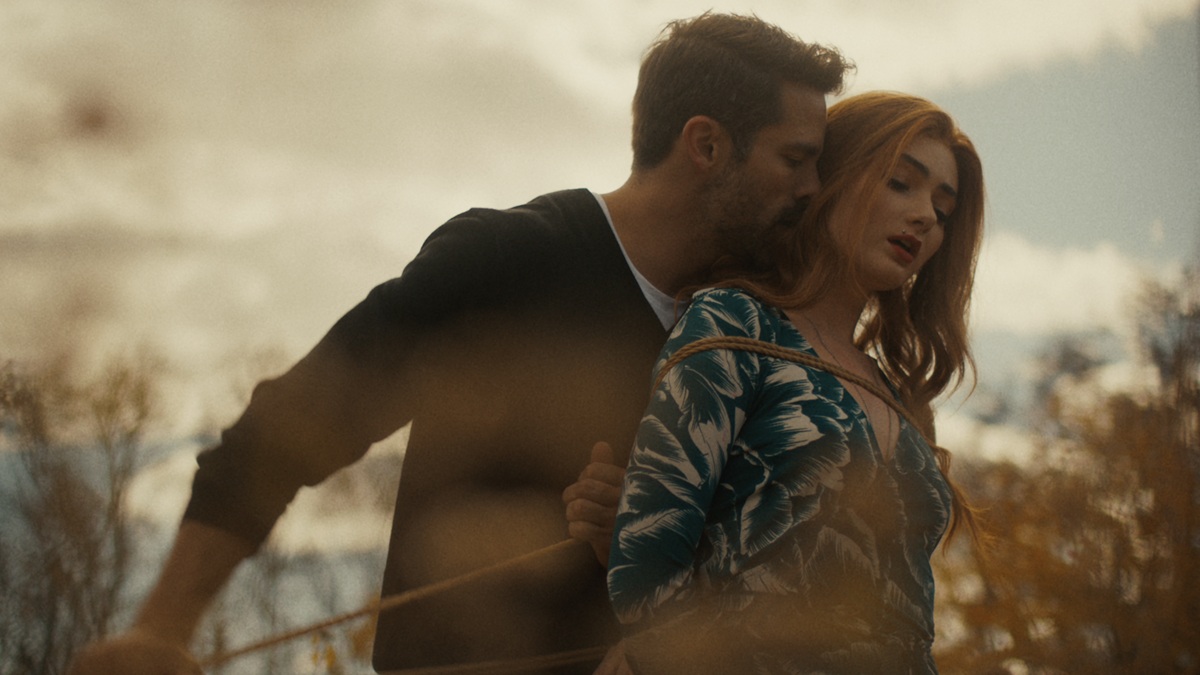
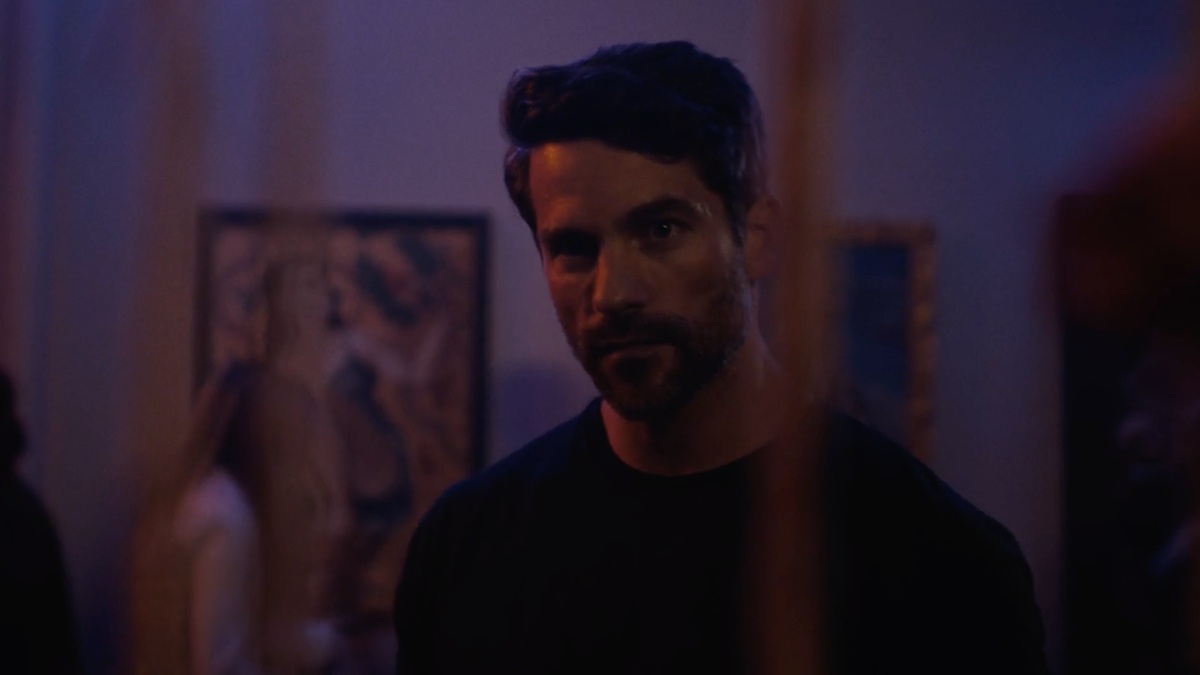
Daugherty is also quietly effective as James, playing dominance not as macho posturing but as patience, attention, and care. This is where the film sidesteps one of the lazier traps of onscreen BDSM. The ropework is not filmed as danger with better lighting. It is filmed as communication: pressure, release, trust, and the body learning where it feels safe. Because of that, the erotic scenes do not feel detached from the family drama. They become part of the same question: what does it mean to surrender when surrender has not always been safe?
The Title That Might Have Cut Deeper
The title is apt, of course. After all, this is a film about origins, buried pain, and the stubborn pull of the land that made you. Still, I kept thinking Daddy might have been the stronger title, and maybe even the braver one. âBy the Rootsâ explains the movie. Daddy complicates it. It names the filmâs most difficult overlap: father, dominant, protector, absence, desire, and the old ache of wanting to be held without being diminished.
That complication is also where the film sometimes comes up short. Young clearly understands that Madisonâs erotic life, artistic life, and childhood wounds are tangled together. However, the film occasionally loosens that knot just when I wanted it pulled tighter. For a story so tied to memory and desire, I wanted a deeper excavation of how childhood scars shape adult choices, whether those choices look conservative, liberated, or something in between. The movie brushes against that idea often, and sometimes beautifully, but it does not always stay there long enough to draw blood.
Some scenes also have the slightly arranged quality of theater, with dialogue that lands more like confession than conversation. There are moments when characters say the thing the scene needs them to say a little too neatly. Even so, the filmâs clumsier patches rarely feel cynical or false. If anything, they feel like the byproduct of a filmmaker trying to hold too much at once: memory, sex, family, art, abandonment, chosen community, and the frightening possibility that oneâs past is never as far away as one thinks.
The younger Madison passages help give that past some shape. They do not explain everything, thankfully, but they suggest how early a person learns which parts of herself must be hidden. Those sections give the film some of its most bruised images, and they also clarify why Madisonâs adult life cannot be reduced to rebellion. She is not merely running away from Ohio. She is also building a language for the self that Ohio could not hold.
âBy the Rootsâ: A Tender and Sincere BDSM Film
That sincerity matters, and so does the tenderness. âBy the Rootsâ is not a definitive BDSM film, nor is it a perfectly formed family reckoning. It is more uneven and more personal than that. But in its best moments, it understands something many cleaner films miss: freedom is not always a clean break from the past. Sometimes it is a return, a confrontation, a rope burn, a remembered room, a body insisting it deserves care.
Madison Youngâs film goes back to the place that hurt its heroine and asks whether she can leave with more than pain. And for what itâs worth, that question stayed with me longer than the filmâs rough edges.


Madison Young’s “By the Roots” had its world premiere at the 2026 Beverly Hills Film Festival on April 18, 2026. The film will be playing both the US and international festivals throughout the year. Follow us for more coverage.