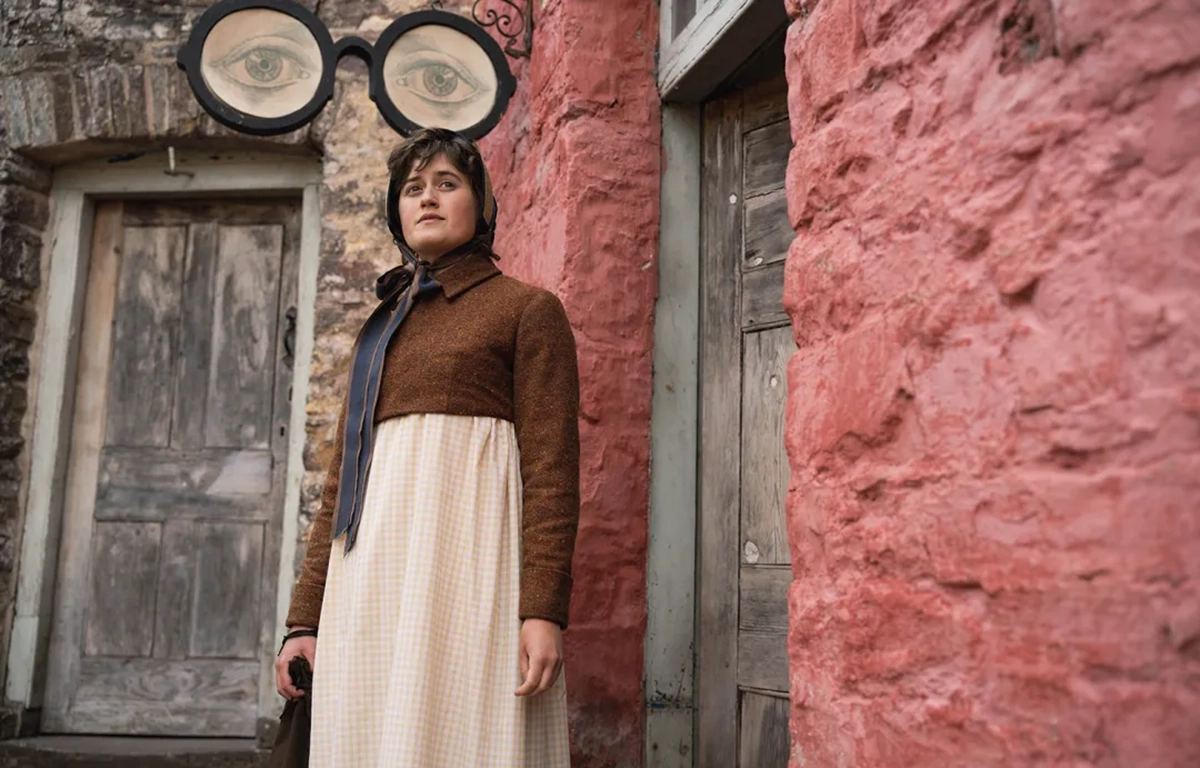
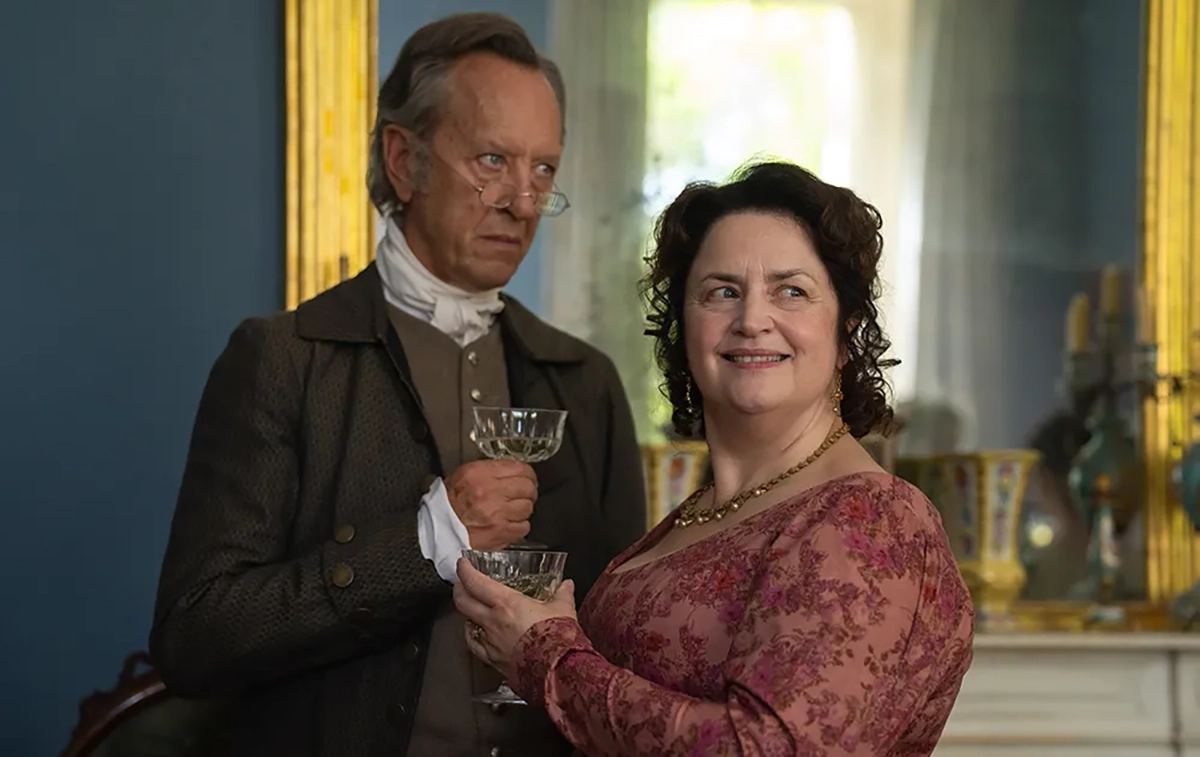
Based on the novel by Janice Hadlow and adapted for the screen by Sarah Quintrell and Maddie Dai, “The Other Bennet Sister” picks up where Jane Austen’s “Pride and Prejudice” left off. While the romantic pair from the aforementioned classic, Mr. Darcy and Elizabeth Bennet do feature in this series, they are merely background players (in fact Mr. Darcy and his signature sideburns only appear fleetingly). Instead, this coming-of-age set during the Regency is led by the titular other Bennet sister Mary (Ella Bruccoleri) who is plagued by an identity crisis after her sisters are wed off. She faces endless scrutiny from her overbearing mother Mrs. Bennet (Ruth Jones) who belittles her for not being pretty or sporty enough, and even for wearing basic necessities such as reading glasses.
However much like a thunderstorm that eventually leads to clear, cloudless skies, mother dearest’s reign and Mary’s thankless servitude both are bound to end soon. When Mary is offered a position as a governess—resulting in her moving from the stifling countryside to larger-than-life London—she uses the same to escape the routine of ridicule. This singular decision opens doors to self-discovery, new friendships, and run-ins with old frenemies—as well as a second shot at finding the love and validation that eludes the young Miss Bennet but which she truly deserves.
Shares a Likeness to Austen’s Source Material
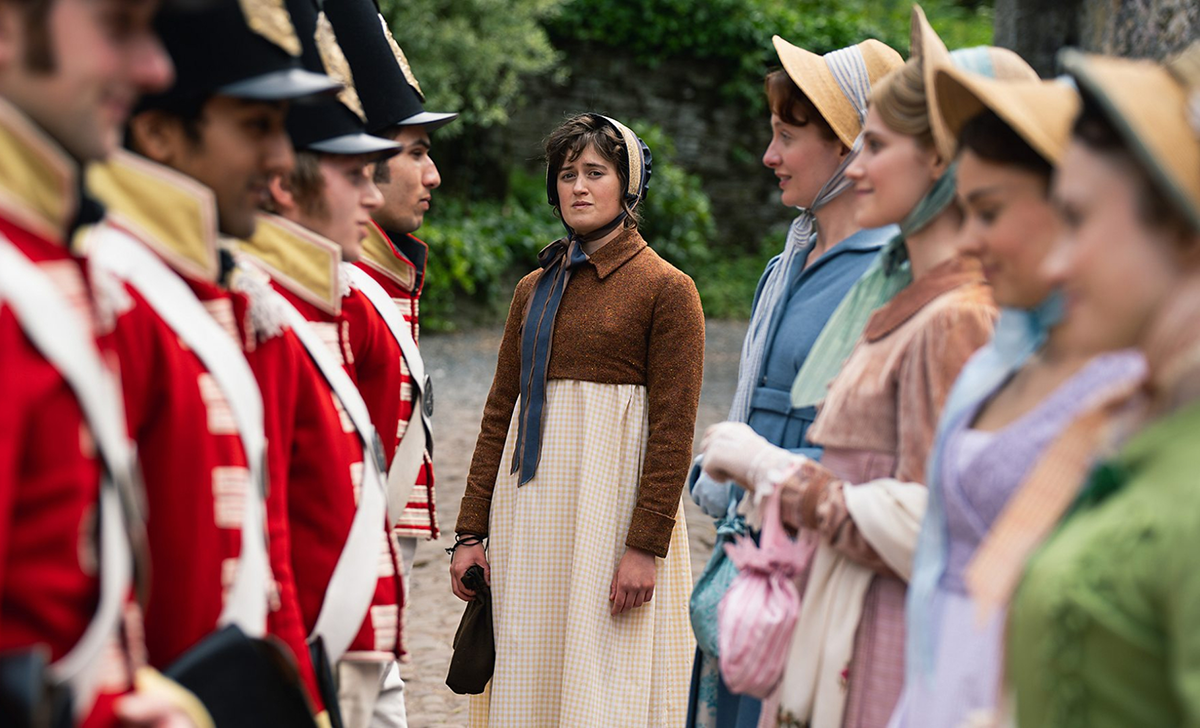
The BritBox series takes some creative liberties with the personalities of the characters, mainly Mary’s parents and sisters. Audiences view them through Mary’s perspective, which is heavily laced with cynicism, and stems from middle child syndrome due to formative years spent as the punching bag of the family. The phrase ‘comparison is the thief of joy’ is also applicable here, as Mary is measured up to her sisters, resulting in rifts and often a sense of bitter rivalry creeping in. A visual of Elizabeth, Kitty, Lydia and Jane Bennet linking arms and skipping along enthusiastically, while Mary lags behind and is largely ignored by her siblings highlights the growing distance between them.
However, thematically it shares a likeness to Austen’s proto-feminist ideologies and would have earned the author’s stamp of approval too. It is hardly updated for the 21st century since the archaic mindsets of the Regency period, such as confining young women to the tradwife role, are unfortunately still making a comeback in the present day. It offers razor sharp critique on the elitist prudes of high society who cloak prejudices under their finest garments, rank women according to class and marital status, and reduce certain individuals to pariahs due to their socio-economic status.
A Proper British Production
One of the primary love interests in the show, Mr. Ryder (Laurie Davidson), rightfully points out the unfairness and indignity of the spectacle known as assembly balls /‘marriage marts,’ where daughters are paraded for the sole purpose of being wed off. Already viewed as an inconvenience by parents, these young ladies seldom have a say in their personal choices, are forced to bear the weight of their parent’s lofty expectations, and once they’ve reeled in a groom from a sufficient socioeconomic background, are no longer perceived a burden by their families. It thus comes as no surprise that Mary has steeled herself to romantic sojourns, appearing almost aromantic at times, and is someone who prioritises career rather than careening blindly into matters of the heart. She is also someone who doesn’t wish to rush into marriage to merely survive, satiate or settle as dictated by the norms of the period.
The men in this Austenian spin-off boast of major green flag qualities, and this is a refreshing change, offering a stark contrast to the more aloof Mr. Darcy, who has a habit of beating around the bush. Mary is thus spoilt for choice with far better options such as the jovial globetrotting voice of chaos Mr. Ryder, the practical minded voice of reason Tom Hayward, and the scholarly Mr. Sparrow. Hence, it is even more so heartbreaking when Mary doesn’t end up with the gentleman whom I ship her with, no thanks to the darned man-made hierarchy!
A Breath of Fresh Air
Furthermore, the series draws parallels between the male characters and the fairer sex, such as the sympathetic Mr. Collins and Mr. Ryder, both of whom mature as the series progresses despite leaving a first impression as kooky, carefree klutzes. Later they open up about being ignored and estranged from their respective narcissistic parents who projected their ambitions on their progeny rather than letting them follow their own hearts and desires. It’s a lived experience shared by Mary, too.
Considering it’s a proper British production (helmed by BBC), authenticity is to be expected from “The Other Bennet Sister.” It is a breath of fresh air in a sea of recent Austenian fare that trades the flowy prose for vocabulary more suited to contemporary tastes, despite the ‘bonnet drama’ setting, leading to poor results (looking at you, Netflix’s “Persuasion”). Call me old-fashioned, but I prefer when period pieces retain the witty repartee and beautiful production values one associates with this genre, neither dumbing down the dialogue nor tossing in random anachronisms. In fact, even when Mr. Ryder suggests a concept as scandalous as a ‘live-in’ arrangement (one might refer to it as a situationship nowadays) to Mary, he doesn’t resort to using any modern terminology, yet we still understand his intentions. This feels befitting of the overall message of the series too—that one can have it all, sans compromise.
A Masterclass in Subtle Storytelling
The incorporation of poetry to depict nature eventually taking its course when the humans can’t take simple hints, such as Mr. Ryder’s recitations of Wordsworth’s “Daffodils” and “Resolution and Independence” during a trek in the Lake District, serves as yet another masterclass in subtle storytelling. The tender and empowering pep talks by Mary’s confidante/cook Hill and her guardian in London, Mrs. Gardiner feel like a warm embrace, lending a “Ted Lasso”-adjacent vibe to the show. It is also layered with symbolism, as Mrs. Gardiner suggests that Mary choose fabric colours that bring out her true self rather than fitting a label, and not forcing curls while styling her hair.
“The Other Bennet Sister” also slips in fan service and some tongue-in-cheek references to both the 1995 and 2005 adaptations of “Pride and Prejudice.” These range from men drenched to the bone in wet white shirts or Mary practicing her pouts before a ball, which felt reminiscent to Keira Knightley’s tic of pursing her lips. This shines through even in the casting of Hill, played by veteran actor Lucy Briers, who originated the role of Mary in the 1995 “Pride and Prejudice.”
Ella Bruccoleri Shines
As a fellow introvert with parents who tend to overstep boundaries and micromanage in a similar vein to Mrs. Bennet, I greatly resonated with the reserved but not altogether subservient Mary. She fits neither the archetype of a Plain Jane nor a Mary Sue, but is written as a real flesh and blood individual willing to learn and unlearn. Ella Bruccoleri’s performance is BAFTA-worthy, with the promising young actress effortlessly depicting this character’s stoicism, awkwardness and a once dormant defiance through her mannerisms. To quote Mary herself, “liberties are only to be reaped by men, whereas consequences are borne by the women.”
This turn of phrase plays a key role in humanising Mrs. Bennet, who is herself trapped by circumstance and due to the absence of a male heir and with time slipping away she is forced to turn to suitors who will provide for her daughters instead. Ruth Jones brilliantly captures the intense pressures piling up within a matriarch who is at once firm and commanding, yet frustrated, but ultimately fettered to the all-consuming patriarchy.
A High Recommend for Period Lovers

Richard E. Grant is cast perfectly in an extended cameo as the indifferent Mr. Bennet who chooses to distance himself from any familial responsibility, thus worsening Mrs. Bennet’s dilemma. Even if Mr. Bennet doesn’t pull his weight as a husband, Grant still manages to infuse the character with a touch of likability, particularly with his no-nonsense glares aimed at the youngest Bennet sister, Lydia who seems to derive great pleasure from humiliating Mary at the dinner table. The character of Mr. Ryder is best described as a Regency era Jake Peralta, and Laurie Davidson is a sheer delight to watch, as complex as he is colourful in his portrayal. Indira Varma, Dónal Finn, Varada Sethu, Tanya Reynolds, Poppy Gilbert, Aaron Gill, Anna Fenton-Garvey, and Ryan Sampson are also worth mentioning, since despite limited screen time, they still leave an impression in their respective big and small roles.
Regardless of whether you love or loath period romances, or simply wish to wash out the taste of atrocious ones, “The Other Bennet Sister” comes highly recommended. It teaches the audience that happiness and validation lie in one’s own hands, and if we just try, can be discovered in the mountains, by the lakeside, by conquering both literal and metaphorical summits or simply by turning the pages of a book. It also shows that the foolproof way to gain access to a woman’s heart is obviously by gifting her murder pamphlets and books on poetry.
“The Other Bennet Sister” is streaming on Britbox and BBC iPlayer