





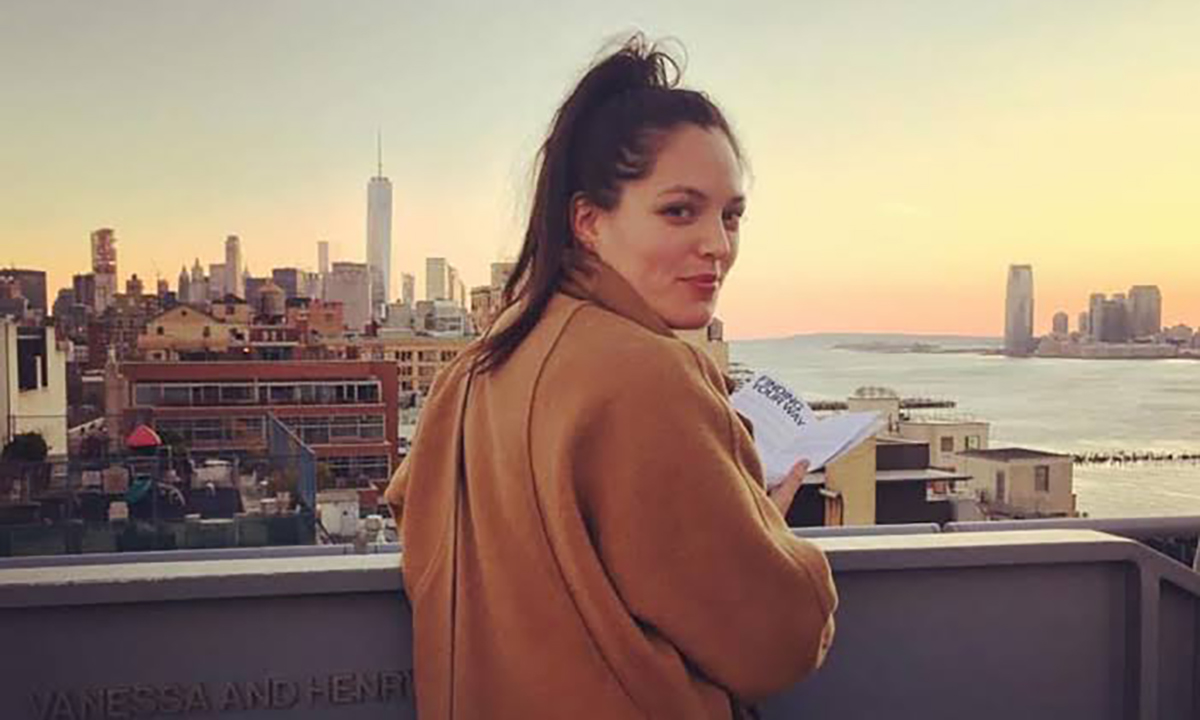
Best described as “Girls Will Be Girls” but from a MÄori perspective, screenwriter and cartoonist Maddie Daiâs feature length outing “We Were Dangerous” incorporates prejudiced/regressive legislation that left an unerasable stain on Aotearoaâs history. The film was directed by debutante filmmaker Josephine Stewart-Te Whiu and backed by Oscar-winning filmmaker Taika Waititiâs Piki Studios.
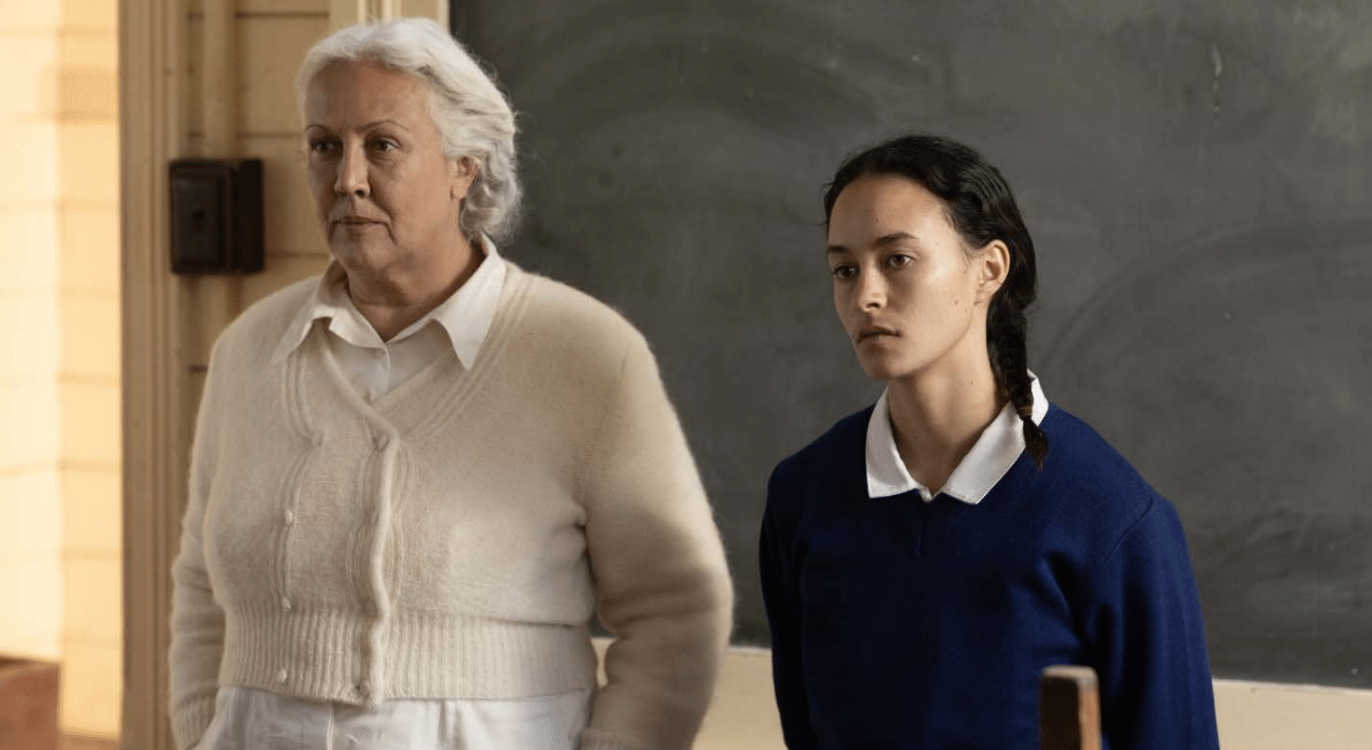
Dai’s screenplay especially holds up a mirror to toxic, normalized socio-political/cultural themes such as post-colonial mentality, queerphobia, and internalized misogyny. These prevail not just amidst the setting of the movie (the befittingly named fictitious ‘Te Motu School for Incorrigible and Delinquent Girls)’ but also which extend beyond its four cold walls and the craggy isolated island where itâs located. The film is also a call for community rife with complex and sympathetic characters crafted by Dai. These include the stone-faced, internally conflicted Matron, played by NZ actress and household name Rima Te Wiata. This is as well as a dash of typical Kiwi humour that doesnât overshadow nor water down the complexities either.
Maddie Dai was good enough to speak with The Movie Buff about her feature, filmmaking, and more. In this interview, Dai (whose writing credits also include a stint in the writers room of another Taika Waititi venture, the critically-acclaimed “Our Flag Means Death”) offers a deep dive into her creative journey. She speaks about the overlap between her dual careers and the driving forcesâand historical eventsâthat compelled her to write this hard-hitting tale of outgrowing reform and ushering rebellion. Her compelling film just took home the ‘Dramatic Feature Award’ at imagineNATIVE 2025. This was after earlier also receiving the coveted SXSW ‘Special Jury Award.’
*This interview has been edited for clarity.
Vidal D’Costa for The Movie Buff: You wear many hats, one of which is also a cartoonist and illustrator featured in ‘The New Yorker.’ Could you take our readers through your journey as a creative? Where/when/how did it all begin, and how do these creative fields overlap?
Maddie Dai: I came to screenwriting in a roundabout way. I dabbled in animation in university, then an uninspired, newly-invented job called âvisual storytellerâ (mostly designing Facebook ads), ill-advised stand-up on the brink of pandemic, evening classes in cartooning, sketch comedy, and graphic novels. After winning a Lovie and a Webby award, and still feeling empty inside, I left behind my former life as an Art Director. I got my first taste of creative fulfilment cartooning for The New Yorker, and have contributed over 100 cartoons for them since 2017. Eventually, the limits of the single panel gag (and the economic reality of being a cartoonist) made me look to other forms of stories, visuals, and avenues for comedy. I figured that a caption was dialogue, enough pieces of dialogue strung together became a screenplay.
Edward Steed is my favorite New Yorker cartoonist, and, thrillingly for me, he’s just getting started…”
Maddie Dai
I like having a lot of different creative endeavors on the go, and each one seems to inform the other. If an idea is a premise and a punchline, itâs a cartoon. If it has horses in it, Iâll resist turning it into a cartoon, because I canât really draw horses. And if it has a character I want to spend time with, itâs possibly a story. We canât waste them on a cartoon. If it has two characters in it with something to say, as opposed to one with a clever line and one staring dumbly, itâs at least a scene. If it has a beginning, middle, and end fully formed, itâs a movie (this has never happened to me but Iâm willing into existence⦠from my lips to Godâs ears.) And if it has a beginning and a middle with no end in sight, itâs a beloved sitcom.
VD: Who are some of your creative influences? Any writers or artistes you look up to or who inspire your own work?
MD: So many. Novelists, painters, filmmakers, cartoonists, illustrators, people I knowâthey all inspire and fuel me. Park Chan Wook, Sylvain Chomet, Greta Gerwig, Charlie Kaufman, Nora Ephron, Hayao Miyazaki, Hirokazu Kore-eda, Alfred Hitchcock to name some filmmakers of many who I love.
If there’s a trend in my influences, it’s anyone who has combined words and pictures for a laugh. The surface or medium is irrelevant to me. Maira Kalman’s illustrated series for The New York Times, particularly “The Pursuit of Happiness,” was the first time I had seen journalism, storytelling, and illustration combined in such a way, and I loved them. She makes small things feel monumental and the chaotic human condition somehow approachably humorous. And writes without identifying as a writer. What a neat trick.
Grayson Perry does it on everything from vases to tapestries. I particularly love Perry’s maps, funny and beautiful ways to organize everything from social phenomenon, cultural trends, neurosis, habits, and subconscious thoughts. As someone who moved to London a few years back, I use the maps to assimilate myself into the particulars of British “prejudices, fashions and foibles.”
Edward Steed is my favorite New Yorker cartoonist. Thrillingly for me, he’s just getting started (in cartooning terms, which blessedly appears to be decades/as long as you can hold a pencil.) He can move between dark, sharp and witty, like a group of mobsters politely asking for an outlet so they can do some torturing. Then turn on a dime and depict humans at their simplest and sweetest. Like a cinema worker who has pulled out his favorite six pieces of popcorn, and labeled them “staff picks.”
Other cartoonists I love include: Ollie Harrington, Zach Kanin, Saul Steinberg, Liana Finck, and Charles Addams.
VD: What were your motivations behind writing âWe Were Dangerous?’ Any personal experiences or stories that shaped the script or served as inspiration for the characters, setting, etc.?
MD: I was living in London in lockdown and desperate to go home, and writing a movie set in [New Zealand] seemed at least one way to get there. This delusional attitude works best when you know nothing about the film industry, as I did. I was a dilettante stuck in my bedroom, and it was my first film script. I emailed it to my favorite production company⦠and truly it is wild that it worked. Homesickness is such a powerful creative force.
It seems fascinating to me that young women can simultaneously be the victim and the threat.“
Maddie Dai
I wanted to write about a period of NZ history I didn’t know much about (the 1950s). [It was] after the initial period of colonization but when the process was still quietly happening. [It was] cemented into institutions, social mores, hearts, and minds. I wanted to explore this time more. Another thing that interested me about the time was how young women were simultaneously vulnerable to corruption, and the ones believed to be doing the corrupting. The Mazengarb Report was sent to every household in 1954 and features in the film. It blamed the perceived promiscuity of the nationâs youth on âworking mothers, the ready availability of contraceptives, and young women enticing men to have sex.â It seems fascinating to me that young women can simultaneously be the victim and the threat. They have so much âpower,” and yet need protection within the âsafetyâ of marriage, homes, and institutions.
Then I was inspired by some version of a buddy comedy with spirited teenage girls at the center. The kind of funny, generous, irreverent, women I grew up with; my sisters, cousins, aunts and peers. I felt teenage girls get a bad rap in film and TV. Often petulant, whiny, overly self-conscious. If theyâre opinionated itâs often snarky and rude. If theyâre friends itâs often short lived. I suppose we all have the capacity for a little petulance here and there. But I also felt that when the teenage girls I was surrounded by growing up were also so brilliant, funny, capable of such depth of feeling and a sense of adventure. I was more interested in trying to capture that.
Additionally, I had a great-great-grandfather who was imprisoned on Matiu/Somes Island in Wellingtonâmy home town. That seemed interesting to me; both so close to civilization, yet entirely removed. And I loved the movie “Chicken Run.” Those were the main ingredients.
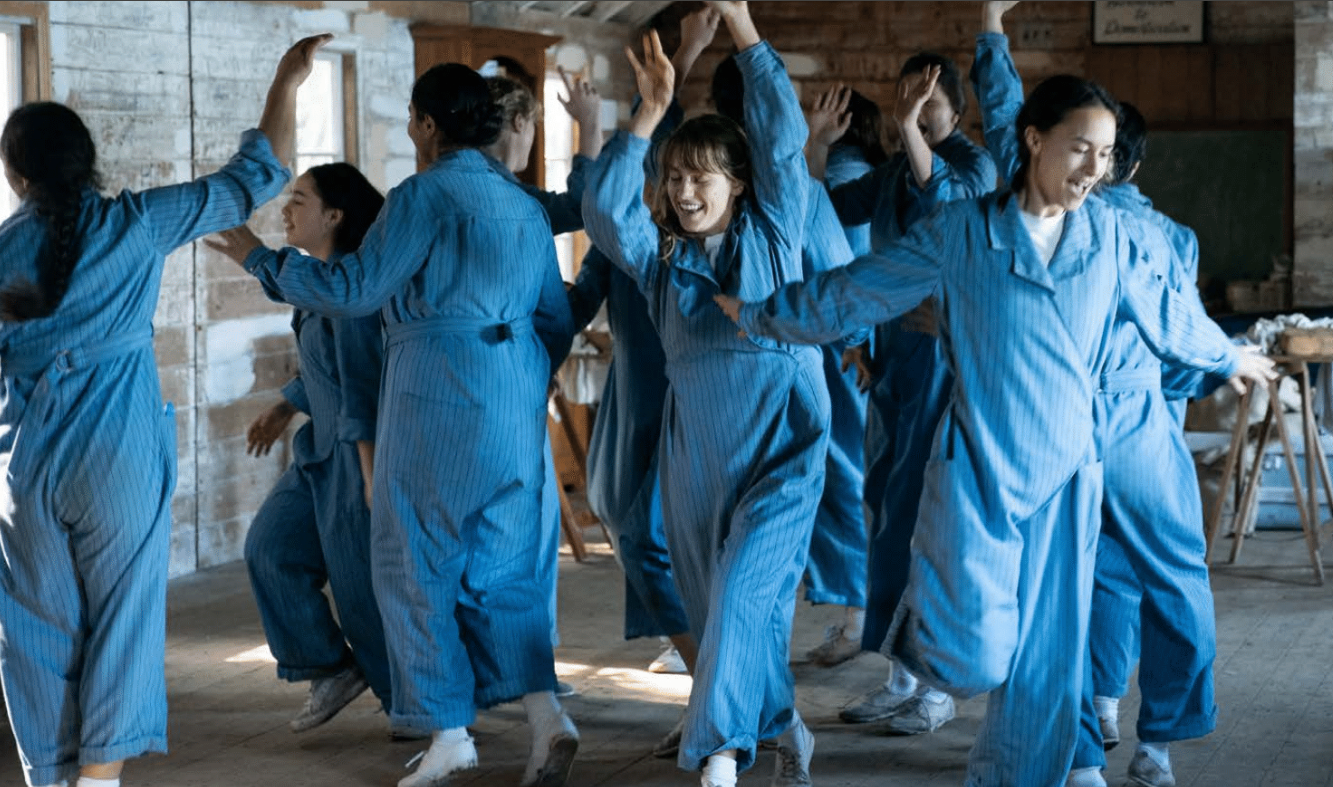
VD: What is your favourite scene in this film?
MD: I love the dance scene. Seeing the girls so free and unrestrained is always such a joy to me. In that scene, theyâre so young, and joyful, and utterly themselves. Itâs so simple, but it makes the paradigm theyâre stuck in seem so absurd.
VD: Lastly, any advice that you have for to budding creatives who wish to tell stories in their own words?
MD: I think being an outsider is a useful experience. Try and force yourself into places and spaces that are less known to you. It makes you observant. It means you take nothing for granted about your own point of view. And it can also be such a good trick to improve your own life. Small interactions that might feel mundane or tiredâoffice encounters, domestic monotony, a trip on public transportâare suddenly brimming with possibility.
“We Were Dangerous” is available digitally on PVOD and TVOD across Canada on the following platforms: Rogers, Xfinity, Apple, Amazon. You can watch then film’s trailer in the window below.


