





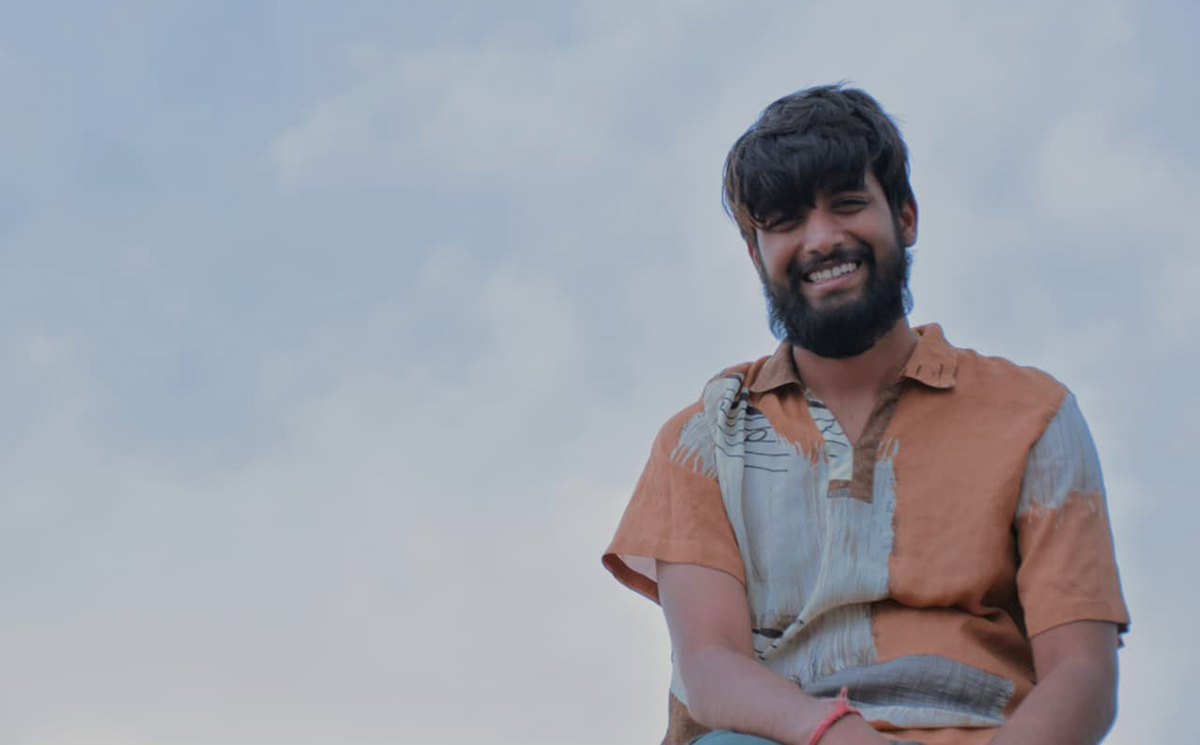
With 15 years of experience as a choreographer and multidisciplinary artistry under his belt, Mukul Kumar now ventures into the field of filmmaking with his debut film “The Farming Land.” In addition to writing, directing, and producing it, Kumar also stars in the film which follows a man and a young child attempting to escape a weary world.
In this interview, he discusses his movement-based drama, particularly his motivations behind incorporating dance, color and a direction technique known as âEmpty Bridge Method.â He uses these to convey themes of self-discovery, existential dread, inner-peace and the pursuit for authenticity in a society built on facades.
*This interview has been edited for clarity.
Vida’ D’Costa for The Movie Buff: Could you offer our readers a glimpse into how you got your start in the industry and a bit about your creative process?
Makul Kumar: I wouldn’t really say that I am part of the âindustry.â But I do feel that I live through art. I love art, I love creating, and I love becoming a medium through which something can emerge. Sometimes it simply comes through and creates itself.
As an art lover, I have always been curious to explore different mediums of art. My journey began with dance. I started studying ballet when I was around twelve years old. Through dance, I slowly realized that what I truly loved was not just the form itself, but the expression within it. Dance, in a way, is storytelling.
Over time, I began to see that no matter which medium we choose in art, in the end we are always telling a story or expressing something. Sometimes we are even telling stories only to ourselves. So rather than seeing myself as part of an industry, I feel that I am part of a much larger art universe that exists beyond it. And I feel that I will always live within that.
During my journey in dance, I realized that my love was not limited to dance alone. I started discovering how much I loved music, visual art, and many other forms of expression. Eventually, filmmaking became a very exciting medium for me, because it feels like a playground where many different art forms come together. So many languages and mediums collaborate toward a shared vision.
…no matter which medium we choose in art, in the end we are always telling a story or expressing something.“
Mukul Kumar
When I was in film school, this realization made me feel deeply inspired. I understood that art is not always about creating alone. In many forms, it is about collective creation, a huge collaboration. And today, I teel that creation itself is always a collaboration. It is almost like a co direction with the universe. I am not just creating on my own; something larger is always moving through the process.
VD: Apart from acting and directing, you also double as a dancer and choreographer trained in ballet, Butoh, and various other dance forms. The graceful movements in “The Farming Land” feel heavily rooted in dance. How integral is dance to filmmaking, acting, and cinema? Are there any key figures or peers from the field of dance and film who’ve shaped your own work?
MK: For me, everything is already interconnected because everything is movement. Even when something looks still, there is always something moving within it. In dance, a single movement may look simply, but in reality, there is a whole teamwork happening inside the body. Breath, emotions, memories, sensations, the nervous system. In many ways, it is similar to filmmaking, where many layers and people come together to create one expression.
Because of this understanding, I developed my own method called âEmpty Bridge.â I share it with actors, artists, and even non-artists around the world to help them reconnect with their bodies and their authentic expression. I also worked with the actors of this film through this approach so that we could arrive at the same space of understanding and expression.
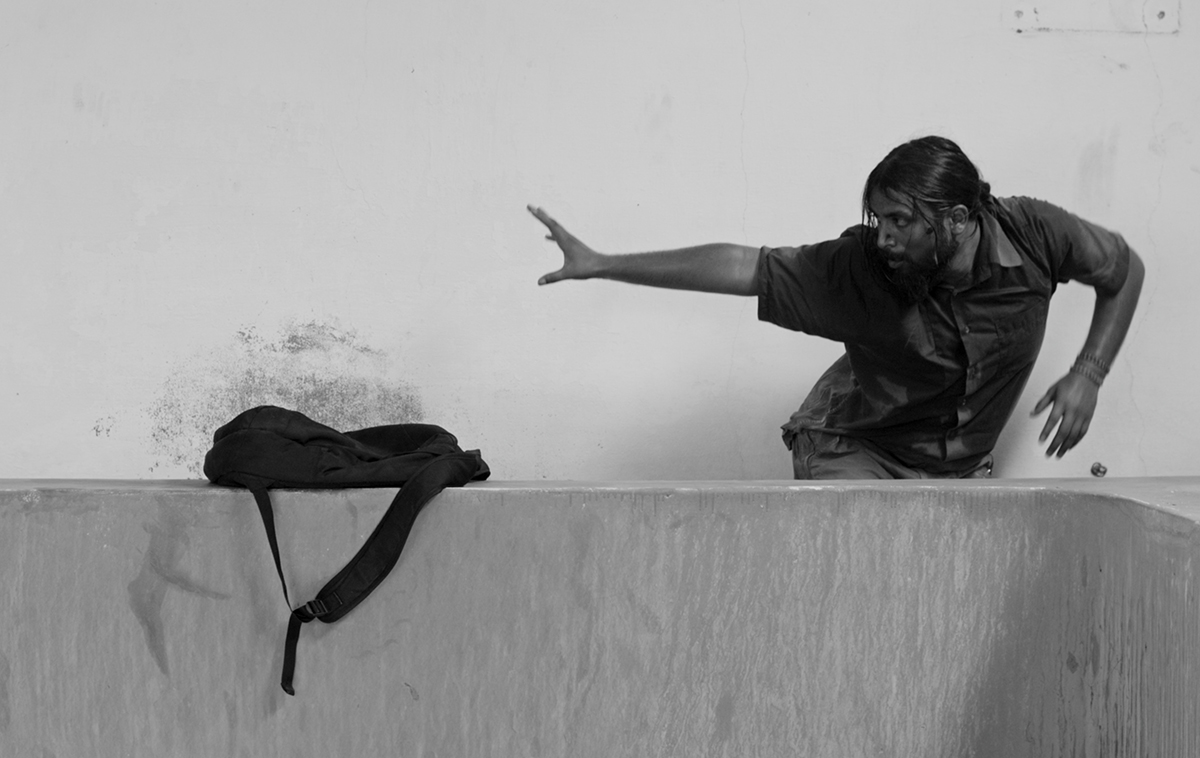
For me, dance and filmmaking are deeply connected because even speaking is a form of movement. In dance, we create dialogue through the body. And the beautiful thing is that the body never lies. The mind can be clever, but the body always reveals the truth. That is why I find movement so powerful in cinema. Sometimes the most meaningful things are expressed without words.
As for inspirations, my biggest inspiration is always nature. The movement within nature and the rhythms of the universe. In dance, I have been deeply inspired by Ohad Naharin and Pina Bausch. In cinema, Maya Deren has been very influential for me because of how she merged dance and film, and Andrei Tarkovsky completely changed my life.
VD: You used an innovative technique âThe Empty Bridge Methodâ while directing your actors. This is the first I’ve heard of it. Did you come up with this method? Could you delve more into it? How is it similar or different to tried and tested styles of direction/filmmaking especially?
MK: Yes, the “Empty Bridgeâ method is something I founded and developed myself. It emerged from my own spiritual journey as a seeker, together with my background in movement and body-based practices. Through my sadhana and personal experiences, I began to understand how deeply the body carries our memories, emotions, and conditionings. From those realizations, this method slowly took shape.
Empty Bridge works by moving through different layers of a person’s being. Through various exercises and stages, it helps people become aware of what is stored in the body, Suppressed emotions, memories, traumas, patterns, and the way the nervous system responds to life. Because the body never lies, it begins to reveal things that the mind often hides. When people start seeing these layers clearly, something begins to shift in their expression and in their presence.
[Empty Bridge] emerged from my own spiritual journey as a seeker, together with my background in movement and body-based practices.”
Mukul Kumar
Although I use it while working with actors, it is not only about art or performance. Over time it has become a wider spectrum of healing and awareness. I have worked with actors, voice artists, psychologists, and also with people going through serious health challenges. I worked with cancer patients, people dealing with IBS, and other conditions. It continues to surprise and move me to see how reconnecting with the body can support people not only in their creative expression, but also in their healing.
When I was directing this film, I used this approach with the actors so we could arrive at the same emotional and physical space. Instead of directing only through words, we worked through awareness, presence, and the intelligence of the body.
What makes this method different from many traditional techniques is that it does not belong to one specific school or system. It is very universal and human. In a way, I see it like water. It can take many forms, but its essence remains the same. If you are alive and in a human body, you can access it.
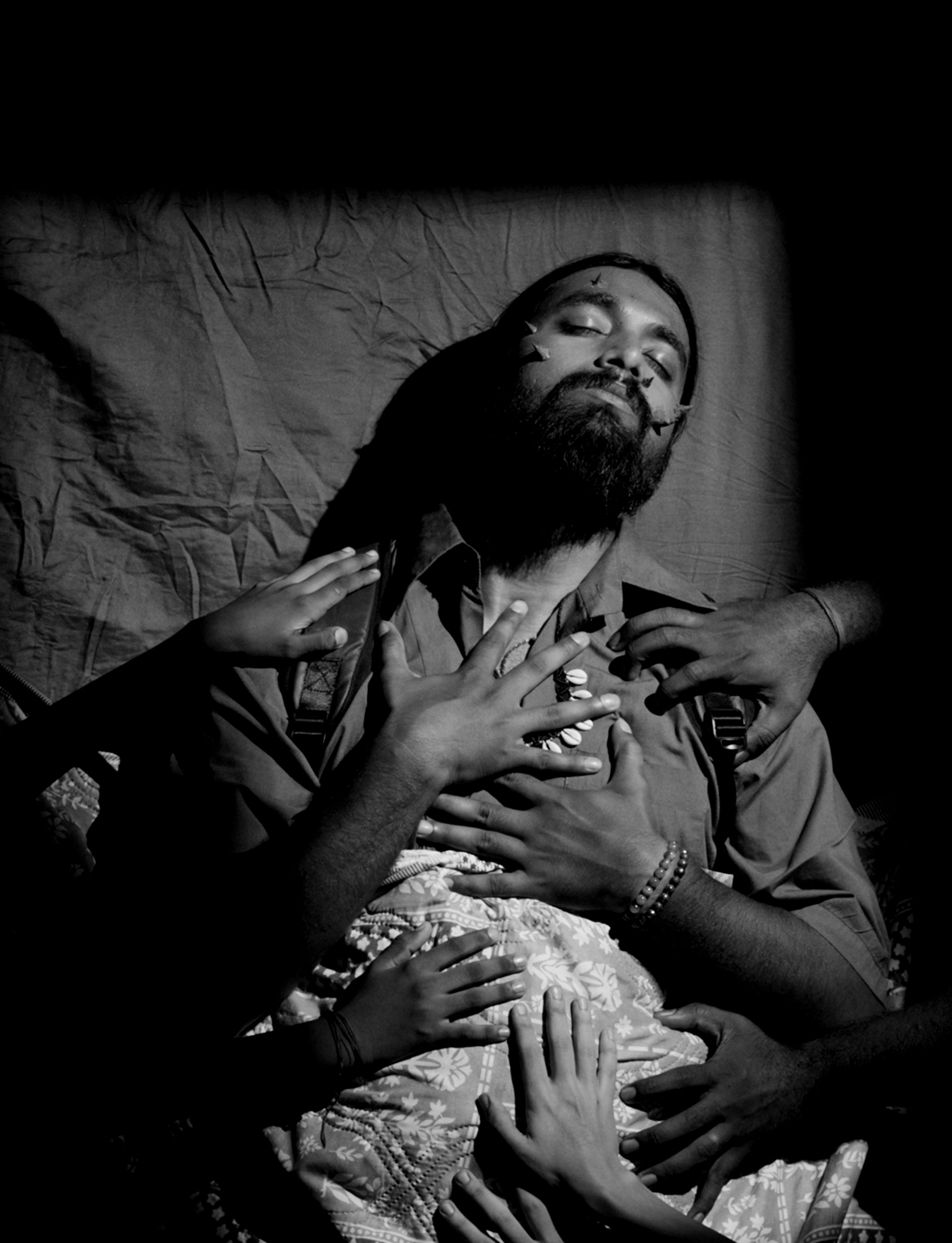
VD: “The Farming Land” is a visually-enticing piece. The transition from monochrome to technicolor towards its final act stood out in particular. Could you share your experience working with cinematographer Jeremy Carroll? Were there creative differences or were you both on the same wavelength? Were there any creative contributions from the rest of the cast/crew as well?
MK: Thank you for noticing that transition. It was very important for me, and I’m really happy that it resonated with you. The shift from monochrome to color was something that felt very intuitive and meaningful for the emotional journey of the film.
Jeremy Carroll is like a brother to me. Of course, we sometimes had different ideas, which is very natural in a creative process. But he has always been open to the ideas and the vision I have, and to the things I want to express. I have worked with Jeremy before, and I really enjoy collaborating with him. We have a good understanding.
I’m also very grateful to the entire cast and crew. Many of the actors had never worked on a movement-based film before, but they were very open and supportive throughout the process.
My assistants Sai Krishna and Kritika Jolly were incredibly helpful during the production. I would also like to mention Zorawar Singh Grewal, who worked as an assistant cinematographer and all actors. Later, during the editing process, I had meaningful discussions with Sai Krishna and Logeshwaran while shaping the final cut of the film.
I’m truly grateful to everyone who supposed the process and helped bring the film to life.
VD: “The Farming Land” has eared various awards on the film festival circuit, but what’s next? Any projects you are currently working on which our readers can look forward to?
MK: There are quite a few things happening at the moment. A few projects are already in production, some are close to completion, and others are still in the process. Hopefully, audiences will start seeing some of them soon, especially on the film festival circuit.
Alongside filmmaking, I’m also continuing my work with physical theatre and workshops. Some performances and workshops are coming up at MAP Festival in Malaysia and the BIPAF Festival in Jakarta, Indonesia, as well as in India.
I’m truly grateful to everyone who supposed the process and helped bring the film to life.“
Mukul Kumar
Recently, I also worked with the State University of Film and Television at Pandit Lakhmi Chand State University of Performing and Visual Arts in Rohtak. I was invited there to share my method “An Empty Bridge” and conduct workshops with the actors, and later returned as a visiting faculty member to create three movement-based films with their students. It was a very meaningful experience, and I’m looking forward to sharing those works soon.
So yes, there are many things unfolding, and I’m grateful for the journey. Hopefully the audience will be able to see some of these projects soon.
We thank Mukul Kumar for his time. “The Farming Land” will be screened at the Cinedans FEST 2026 at Amsterdam on March 28 and 29. Prior to this, the film had its world premiere at the Manifest Dance Film Festival 2025 held in Pondicherry, where it won the Outstanding Film Award and was also screened at the Auroville Dance Film Festival 2026.


