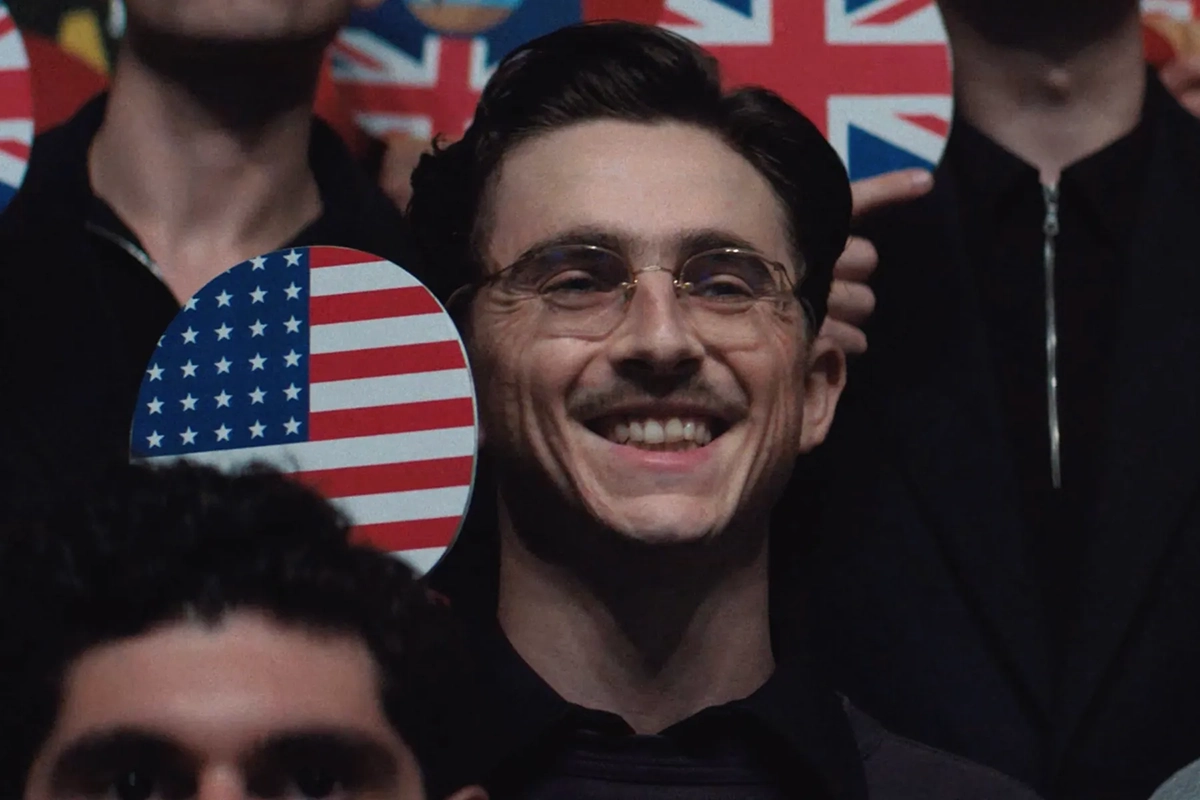
Josh Safdie’s “Marty Supreme” is a frenetic, breathless look at the life of its title character, played with unrelenting vigor by Timothée Chalamet. It’s an acting masterclass by Chalamet, and various bodies have already nominated him—and the film—aplenty. “Marty Supreme’s” un-abating anxiety and flawed characters make following its feverish look at a man’s life (the titular Marty Mauser, loosely based on a real person) and 1950s New York mostly intoxicating. Yet there’s something amiss in Safdie’s picture, not to mention the film’s misleading trailers. “Marty Supreme” is not a sport film, nor a hero’s journey. It’s a delirious look at its lead as he dives headfirst into whatever it takes to accomplish his dream. The films grabs our hand and runs through a period piece packed with egotism, crime, pregnancy, family strain, and more.
When we first meet Mauser (Chalamet), he’s working for his uncle in a shoe store. It’s here Safdie and Cinematographer Darius Khondji are quick to drop us into ‘50s New York. This is a period of well-dressed men and fashionably-appointed women, where the idea of ‘casual’ we have today is not on the radar. We quickly learn that Mauser is a good salesman and has an infectious charm. A woman, Rachel (Odessa A’Zion) comes in asking for shoes and the two make love in the backroom.
Ping Pong, Hustlers, and 1950s New York
Mauser’s not concerned with the customers left on the sales-floor, his uncle, or, at this juncture, I feel, even Rachel. He’s only concerned with $700 his uncle owes him that will get him to London to play in the Table Tennis championships. This is his dream, his drive. He motorboats like a used car salesmen on steroids to follow it. But, as he plays in London, losing the final match to Japan’s star, Endo (Koto Kawaguchi), the film takes a b-line into Marty demanding another chance at what he feels is his birthright.
It’s at this point that “Marty Supreme” takes a hard turn, and we realize the film’s trailers propping up table tennis as its major modus operandi were a red herring. Mauser is great at the game, poised to be a major player, and a quick IMDb search reveals Chalamet practiced the sport for more than six years to prepare for this role. But playing ping pong takes second fiddle to Mauser’s drive. He needs a second chance to defeat Endo (the match was rigged, it was his title to win, etc., etc.), and he eyes making his way to Tokyo for a rematch his joie de vivre. Along the way, “Supreme” hustles us through a journey filled with scams, con artistry, affairs, and relentless lies and ass-kissing.
The film stumbles a lot. And I’ve not read in the film’s accolades many critics remarking that Mauser—for most of the film’s run—is really very unlikable. There’re a lot of self-serving characters here, and sometimes the film blends into an insane fever. Marty reminded me of Leonardo DiCaprio in two films: “Gangs of New York” and “Catch Me if You Can. Mauser adopts this anxious schema. He rambles and squeezes so many things in each breath it’s often hard to tell his lies from the truth. He uses who he can. This includes Rachel—when it suits him (she’s 8 months pregnant when the film jump starts)—, a struggling actress he meets (Gwyneth Paltrow), her businessman husband (Kevin O’Leary), and his friends and relatives.
Chalamet Dominates Alongside A’Zion and Paltrow

Yet along the way, the film itself becomes impossible not to follow eagerly. This is in part due to Safdie’s direction, along with co-writing by Ronald Bronstein. The camerawork by Darius Khondji underlines the film’s bizarre happenings, and “Marty Supreme” truly never comes up for air. Chalamet utterly becomes Marty, and truly deserves awards and accolades for this performance. You can tell he really enjoys this role and gives it his all.
“Marty Supreme” throws in some other characters, some likable, and some throwaways. Fran Drescher makes an appearance as Marty’s mother who’s also something of a con. However, I felt she was more or less lost amidst the noise. Larry ‘Ratso’ Sloman plays Marty’s uncle—who owns the shoe store—and he’s really just as opportunistic as Marty. A scene where he has Marty arrested for ‘stealing’ the $700 that was owed to him, couched under ‘saving’ Marty, is particularly absurd. Mauser also gets caught up with a blind gangster who lost his dog (Abel Ferrara). He’s a vicious man Marty and Rachel try to extort for $2,000 in an attempt to get to Japan and claim his glory. Tyler Okonma (aka Tyler the Creator) plays a fun role as Marty’s friend who comes along for the ride. He helps Mauser con people at a bowling alley, hustling ping pong like you mostly see people hustling pool.
However, the film’s biggest ask is following Mauser and he hustles and cons, alongside getting hustled and conned, all because he believes he is the best at something. The film often leaves the audience wondering what the point of any of this is. Marty’s ego is so large there’s nary room for anyone else in his life. This could be his family, his friends, his ex-girlfriend Rachel—who’s now married to an insecure and toxic husband (Emory Cohen)—, and even Paltrow’s Kay Stone, though the two have great chemistry here. Safdie paints so many characters along the way it becomes hard to grab onto any one. And the portrait is so broad—and the film so completely about Marty—that they often disappear into the background. However, Paltrow and A’Zion are great throughout. Both actresses deserve award recognition for the work they give here.
‘Marty Supreme’ is a Big Ask
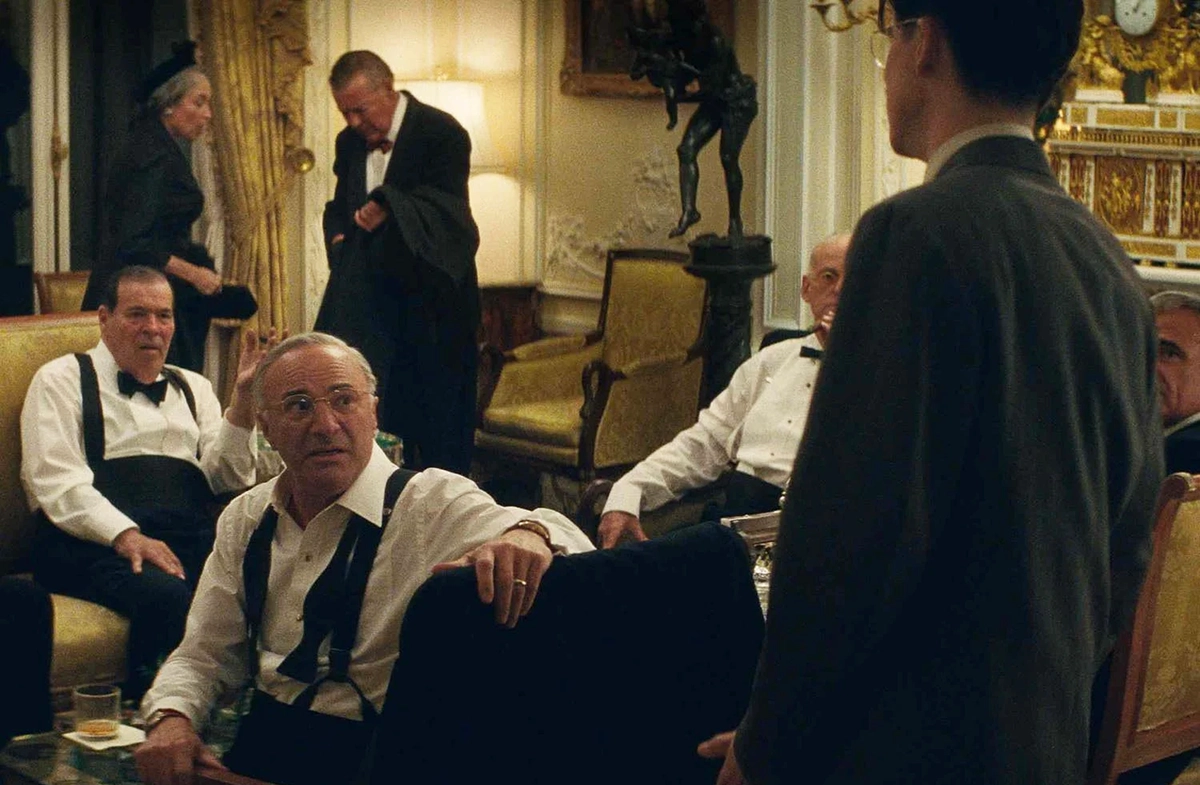
Yet the hardest thing to buy is the film’s thesis. I’ve seen it compared to American exceptionalism and its toxic business culture, and those comparisons aren’t wrong. Marty thinks he’s the best at something (note: he’s really good at table tennis; his only hiccup to greatness is the aforementioned Endo), so therefore he is. The film is also about a post-war era and people trying to grind out a living. But amidst Marty’s utter egomania, Safdie and Bronstein are saying something about passion, even if it plays secondary to the self-serving nature of the character. Unlike films like “Rocky” and “Invincible,” Marty’s passion doesn’t lift others up but often brings them down. It’s next to irrelevant to Marty as he goes after his dream. However, I feel the film’s ending—as Mauser finally realizes what’s important—is the character’s true awakening. The film rolls credits at that point, almost negligently. A story from that point might have made a better film and a character we could have loved.
“Marty Supreme” is a zany film. It’s nothing like its advertising, which is something to know before you go into the theater. The film’s also overlong, clocking in at 2 hours and 30 minutes. It’s Chalamet at his absolute best. It also features a thorough, engrossing look at 1950s New York, which I’ve never seen this well done. Its mixture of time period and music makes it intriguing (the credits roll to “Everyone Wants to Rule the World” by Tears for Fears), and the film’s camerawork is intoxicating. Along the way you’ll be led by Marty, forced to overlook unscrupulous actions, and asked to follow many unlikable people. But under it all, maybe Marty’s got a good heart. The film’s great failure is it takes until it’s final scene to give us—and Marty—the tiniest glimpse of this fact.