





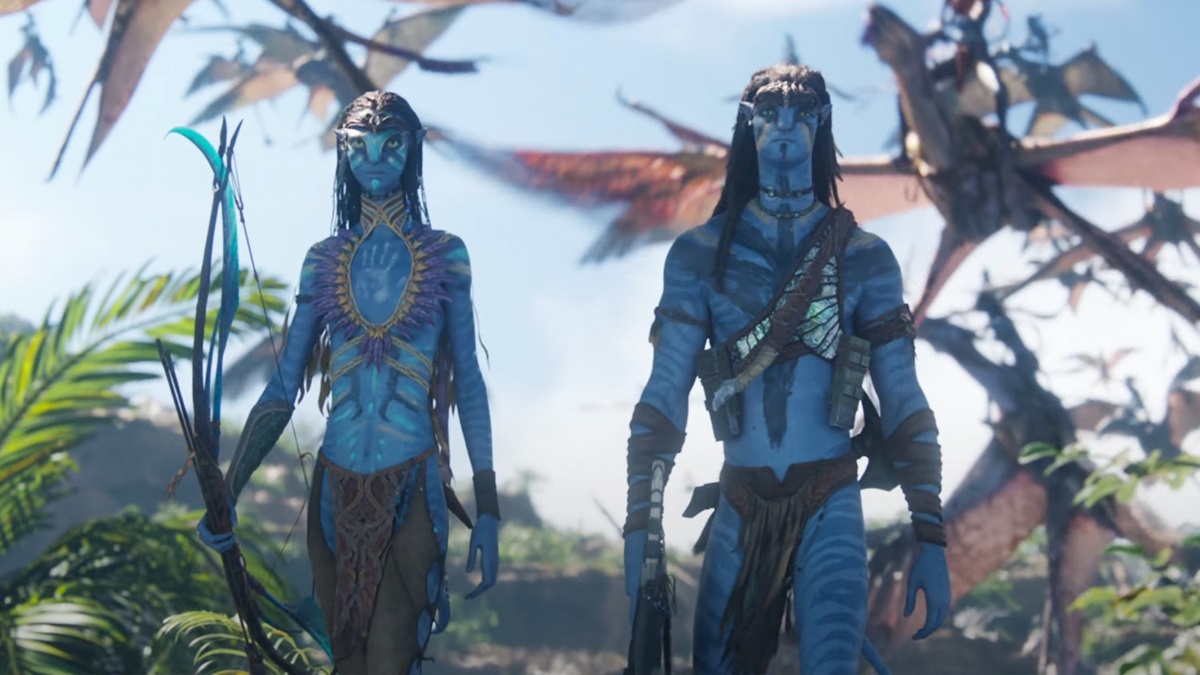
Sixteen years after âAvatarâ became the highest-grossing film of all time, James Cameron‘s return to Pandora continues to be less about singular masterpieces and more about sustained worldbuilding. The franchise has always operated on its own logic, prioritizing sensory immersion over narrative elegance. âThe Way of Waterâ doubled down on that approach, spending much of its runtime simply existing within its environments. Now, with this yearâs âAvatar: Fire and Ash,â Cameron pushes further into the margins of spectacle filmmaking, delivering a film that’s simultaneously his most confident and most narratively uncertain entry yet.
I guess what has fascinated me with âFire and Ashâ is how comfortable it seems with its own contradictions. It’s a film about grief that often sidelines emotional complexity for action set pieces. It’s a technical marvel that occasionally forgets why we should care about the characters caught in its digital splendor. And yet, there’s something undeniably compelling about watching Cameron operate at this scale, fully committed to a vision that few other filmmakers would dare attempt. This is blockbuster filmmaking as an endurance test and visual symphony, often at the same time.
Grief as Ground Zero
From the moment the film began, we hear Lo’ak’s (Britain Dalton) voiceover narration. Set right after the events of âThe Way of Waterâ, the film’s narrator clues us in on the exploration ‘Fire and Ash’ would take.
“I killed my brother…whatever happens, I’ll have to live with it for the rest of my life.”
That opening lays bare what Cameron wants the movie to be about: Grief. It establishes a more emotional ground in terms of storytelling, with Lo’ak blaming himself for older brother Neteyam’s (Jamie Flatters) death. Neytiri (Zoe Saldaña) and Jake (Sam Worthington), meanwhile, process their grief differently. The former takes a much more outward expression of it. The latter, on the other hand, busies himself by retrieving arms from the detritus of the recent war, which he believes the Metkayina clan can use to protect themselves from the inevitable attack and colonization the humans will eventually attempt.Â
This choice by the filmmakers to differentiate the two emotional journeys becomes evident when Lo’ak later on states matter-of-factly, “Everyone mourns in their own way.” It’s a strong emotional hook, and for large stretches of its 197-minute runtime, âFire and Ashâ genuinely works as a grief narrative. Cameron understands loss doesn’t vanish on a timeline. It nags. It festers. And it reshapes how people see the world around them.
The Back-to-Back Advantage
What helps is that âFire and Ashâ greatly benefits from having been shot back-to-back with âThe Way of Waterâ. With the over-exposition out of the way, Cameron is free to tell a darker and more expansive story since the worldbuilding doesn’t need to be re-explained. We already know the Metkayina and their ways. We understand the dynamics of the Sully family. Cameron can skip past the setup and dive directly into complication.
Am I enjoying this because of its cinematic storytelling, or because of its spectacle?
That doesn’t mean the film is free from expository tendencies. Voiceover narrations? Characters taking turns explaining to other characters what they would anticipate? These habits persist. But here’s the thing: among the three films, this is the messiest, most head-scratching, and yet I treat these qualities as a win. It gave me the feeling that Cameron and his team (including co-writers Rick Jaffa and Amanda Silver) actually cared to tell a decent story, even if their predilection for visual spectacle over proper storytelling was undeniable from the get-go.
Enter the Ash People
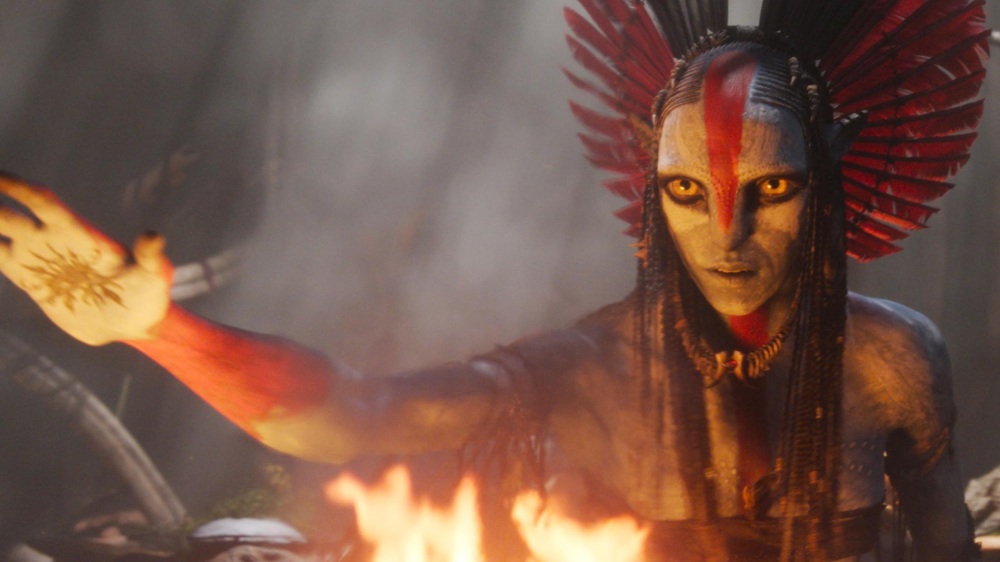
The introduction of the Ash People marks a tonal departure for the franchise. Where âThe Way of Waterâ was all blues and flowing serenity, âFire and Ashâ is scorched earth. The Mangkwan Clan, known as the Ash People, live in a volcanic environment that’s harsh, unforgiving, and visually stunning. A land of charred rock, drifting embers, and suffocating heat. Fire isn’t just a visual motif here. It’s a philosophical one.
Leading the Mangkwan is Varang, portrayed by Oona Chaplin in what is easily the film’s most electrifying performance. Varang is not subtle, and thank Eywa for that. Chaplin leans into the operatic nature of the role, delivering a villain who is deliciously wicked, faintly theatrical, and visually terrifying. She embodies Cameron’s thematic obsession: what survival looks like with empathy stripped away. Varang rules through fear and spectacle, and the Ash People reflect that ethos in their viciousness. This is the most violent Na’vi culture the franchise has introduced, and Cameron does not shy away from depicting their cruelty.
Her alliance with Quaritch (Stephen Lang) provides one of the film’s most intriguing dynamics, even if it ultimately feels underexplored. Lang continues to chew scenery with gusto, but Quaritch’s arc treads familiar ground. The internal conflicts he grapples with were already introduced in âThe Way of Waterâ, and the film doesn’t complicate them in ways that feel meaningfully progressive.
Familiar Rhythms and Diminishing Returns
That sense of narrative déjà vu becomes one of âFire and Ash’sâ biggest issues. Structurally and thematically, the film often feels like a remix of ideas we’ve already seen. Once again, the Sully family is forced into conflict with an antagonistic faction. Once again, Jake must balance his instinct to fight with his desire to protect his children. And once again, Pandora finds itself threatened by militarization and exploitation. These aren’t inherently bad ideas, but the film rarely complicates them in ways that feel genuinely new.
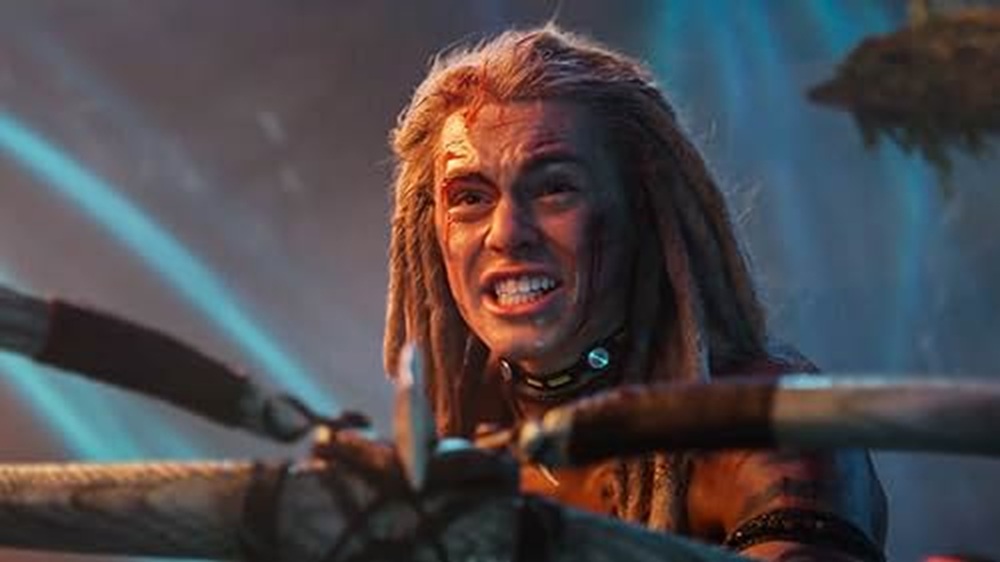
And yet, it feels much more confidently paced compared to âThe Way of Waterâ, despite being a tad longer than its predecessor. I caught myself thinking at certain points, “Am I enjoying this because of its cinematic storytelling, or because of its spectacle?” That’s an important distinction. Try as he might, Cameron seems to have hit a snag in terms of narrative storytelling, and âFire and Ashâ encapsulates that. Apart from its opening themes of griefâand a middle act between Jake and Spider (Jack Champion) that for me is arguably the best part of the movieâoftentimes the film resorts to action sequences that, dynamic and not overindulgent as they are, can feel emotionally empty.
Also, on a sidenote: Do watch out for Easter eggs in dialogues, including one involving Kiri and Neytiri). Who would have ever thought Cameron would be playful somewhere along the road and do some fan service?
Visual Mastery, Narrative Shortcuts
I’d wager that this film, because of how it benefited from its predecessor’s focus on worldbuilding, managed to get comfortable in its own skin and just play the story out as a visual treat. Some minor characters (such as David Thewlis‘ Peylak, the Na’vi leader of the Wind Traders) are introduced only to get sidelined and discarded. They seem to serve as mere cameos for what looks like more prominent roles in the upcoming movies. It gives the impression of a film juggling too many ideas at once, confident that visual grandeur will smooth over any rough edges.
The aerial and action sequences are eye candy, though. Credit goes to cinematographer Russell Carpenter working alongside Cameron to execute the latter’s vision using the technology available at their disposal. Fire becomes a living, breathing threat, consuming landscapes and bodies alike. The contrast between flame and water, ash and ocean, is visually poetic. The film frequently takes your breath away through sheer craftsmanship.
Cameron reframes Pandora as a place no longer defined by wonder alone. Earlier films leaned heavily into discovery, into the awe of encountering something pristine and untouched. Here, Pandora feels bruised, scarred, even hostile. That tonal shift subtly changes how the franchise operates. The world no longer exists to be marveled at, but survived.
There’s also a noticeable shift in how it stages the action sequences. Where âThe Way of Waterâ favored fluid movement and balletic combat, âFire and Ashâ embraces chaos. Battles are messy, disorienting, and frequently brutal. Cameron seems less interested in elegant choreography and more invested in conveying the terror of overwhelming force. The violence carried out both by the Ash People and ‘Sky People’ is especially confronting, not because it’s graphic, but because it feels cruel and intentional.

Performances That Anchor the Chaos
Amidst the chaotic, dynamic action scenes, Zoe Saldaña continues to be the emotional backbone of the series. Portraying Neytiri’s grief with devastating intensity, Saldaña’s performance is raw, feral, and deeply physical, especially in scenes where Neytiri’s rage collides with her sorrow. However, the script doesn’t always give her the narrative focus she deserves, often sidelining her pain in favor of larger plot mechanics.
Sam Worthington, meanwhile, is solid but familiar. Jake Sully feels increasingly defined by duty rather than growth. Worthington sells the character’s internal conflict, but the writing rarely challenges Jake in ways that feel genuinely transformative.
Apart from them, other performances get their fifteen seconds of brilliance (Sigourney Weaverâs mystical Kiri and Kate Winsletâs no-nonsense regal Ronal are two examples), only to get relegated to the bench once their moments pass. The film occasionally struggles to balance its many moving parts. With so many characters spread across different emotional and physical spaces, momentum sometimes comes at the cost of depth. The film introduces certain story threads with intriguing promise, only to sideline them as the narrative barrels toward its next major set piece.
‘Fire and Ash‘: An Ambitious, Middle-of-the-Road Spectacle
At this point, enjoying James Cameron‘s âAvatarâ movies needs its own perspective. If you’re looking for a deep, emotional, and resonant story that doesn’t regurgitate earlier themes and just plaster new skin on them to look new, then this isn’t for you. But if you treat it as an experience, a visual demonstration of what the proper use of technology can do to elevate the cinematic viewing experience, boy have I got news for you.
What âFire and Ashâ ultimately feels like is a transitional chapter. There’s a sense that Cameron is positioning pieces for something larger, darker, and more complex down the line. He has stated that this film is about “greater character depth,” and you can see traces of that ambition in Spider’s arc, in Kiri’s growing connection to Eywa, in the moral complexities introduced by Varang’s worldview. But whether that patience pays off will depend entirely on where the saga heads next. The film ends with resolution, but not catharsis. Questions remain deliberately open, arcs deliberately unfinished.
Ultimately, I feel like this is one of the better-earned three-hour films in years. Not because it’s perfect, but because it commits fully to its vision. Even when that vision stumbles narratively, it never stops being visually arresting or emotionally sincere.
This is not the most narratively ambitious âAvatarâ installment, but it remains an impressive, immersive, and often thrilling cinematic journey. It’s a film that dazzles, frustrates, and ultimately satisfies more than it disappoints. A visual triumph with a story that could have burned hotter, âAvatar: Fire and Ashâ may not shine as brightly as it wants to, but it still leaves an undeniable glow in its wake.
James Cameron’s “Avatar: Fire and Ash” had its world premiere at on December 1, 2025, and is scheduled for release in the United States on December 19, 2025. Follow us for more coverage.




