



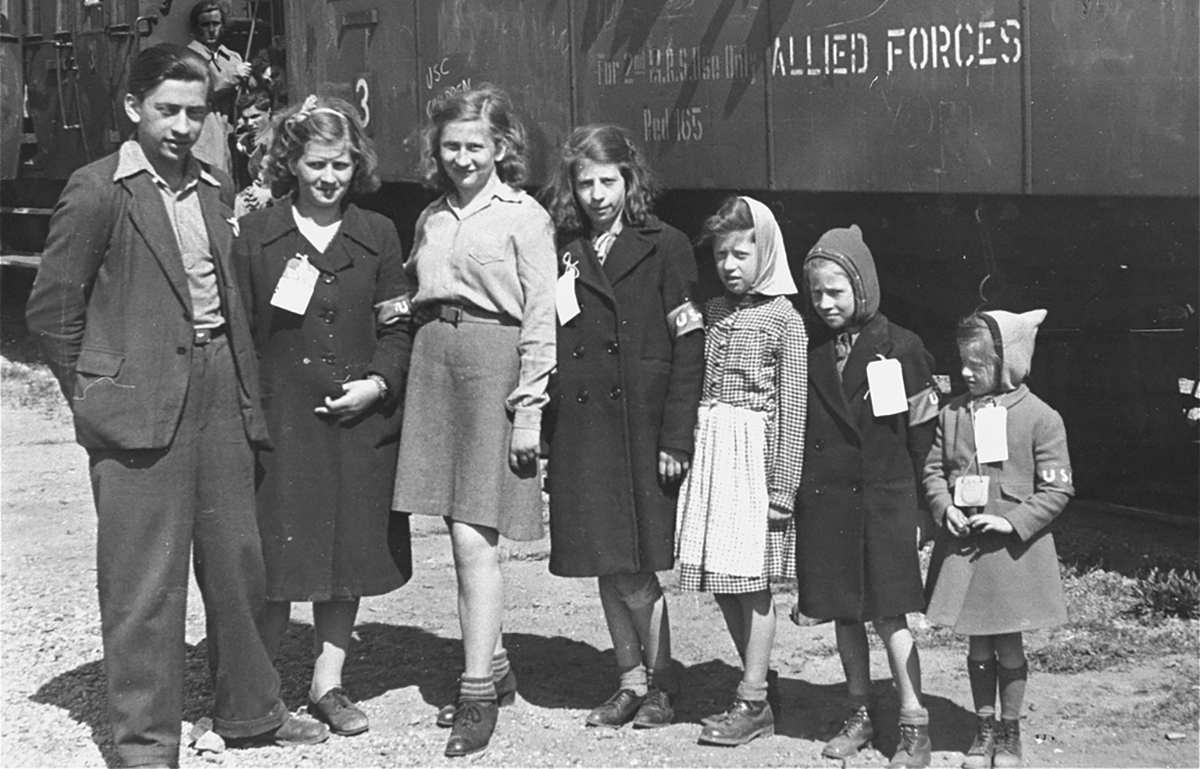
With many dramatic films about the Nazi Holocaust (“Schindler’s List,” “The Pianist”), perhaps it takes a documentary to do its survivors the justice they deserve. Focusing on drama can make us feel the events. However, listening to survivors and their family—as is the case in Beth Lane’s “UnBroken”—has a more harrowing impact. With Lane’s documentary (her debut), we see the impact is even greater as Lane’s mother, Ginger Lane, was one of seven siblings who survived living in Nazi Germany together throughout the horrific ordeal. This is where “UnBroken” gets its name: not from their sibling’s spirit (still intact), but from becoming noteworthy for being one of the largest whole families to survive the holocaust.
“UnBroken” tells its story in mostly interviews; however, it also invites us in to a Holocaust story we haven’t heard before. If you’ve seen the aforementioned Holocaust films, they often take place in large Polish cities (Krakow, Warsaw), but seldom in Germany itself. We see the rounding up of the Jewish population into ‘ghettos,’ but not of individual family’s plights for extended periods. “UnBroken” tells the story of the Weber family living in Berlin. Their mother was Jewish, and their father was a Catholic who converted to Judaism to marry their mother. We meet members of this family, today, chiefly Lane’s Aunt Ruth (a lovable, grandmotherly woman) and Lane’s mother, Ginger. A crux of the story also involves Lane traveling, arduously, to the various locations that formed her mom’s story. It’s an impressive journey the film’s surviving members recall wistfully.
A Remarkable Story
As when I read Władysław Szpilman’s “The Pianist,” what struck me most about the interviews in “UnBroken” are how un-colorfully the horrors are depicted. Gas chambers and experiments in Auschwitz are well-known. But lesser-known atrocities such as summary executions of infants (“The Pianist”) and Gestapo roundups of citizens (“UnBroken”) make the events more horrific.
There’s no creative license shown here. Ginger, Ruth, and others explain first feeling afraid in their home in The Sheuneviertel, the then-poorest section in Berlin. The siblings’ mother, Lina—who was helping shelter escapees as the Nazi regime tightened—was arrested, questioned, and released on numerous occasions. As was her their father. This was an interesting point for me to learn. I mistakenly felt that in a situation like that, Lane’s grandmother would have been executed right away. The children also lament that they had to wear the star on their clothing during school. However, they would take it off when they left because other kids would make fun of them. It shows personalities and lives existing amidst a time period that tried so hard to snuff them out.
Eschewing Horror in Lieu of Hope
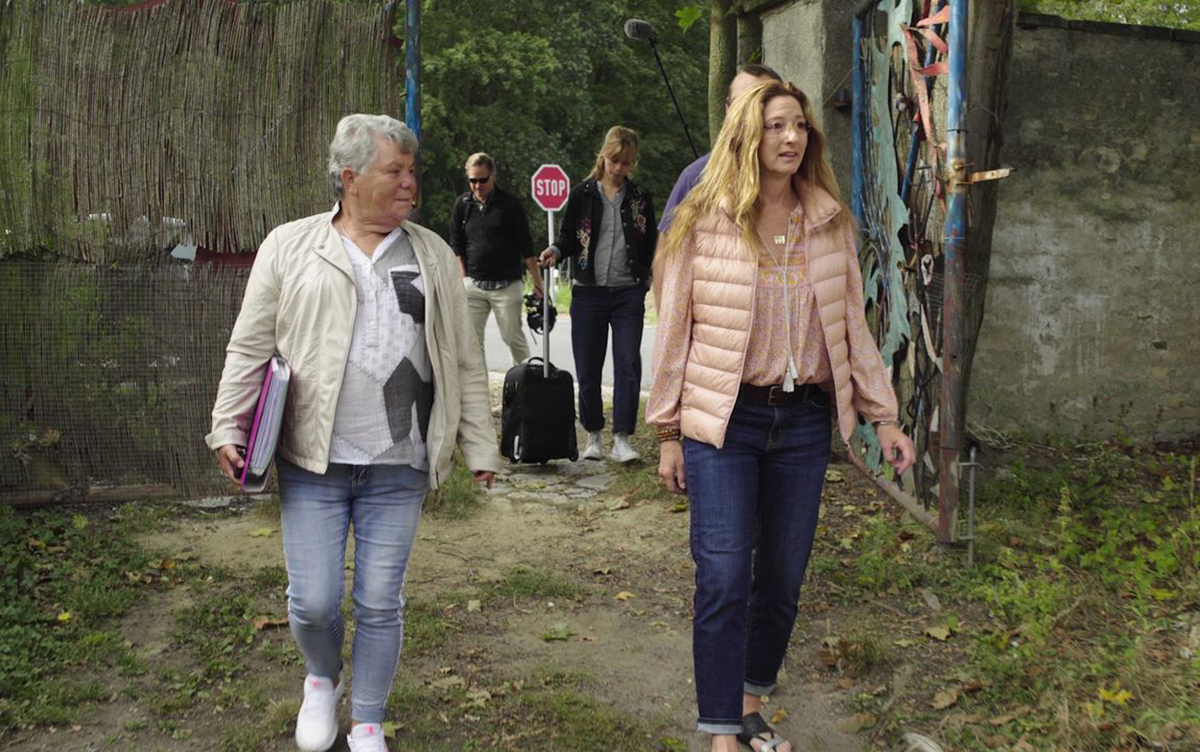
This is what strikes you most about “UnBroken”—its attention to detail and storytelling. Beth Lane travels to the various places her family hid or stowed away—a monastery, a farm, etc.—or the Catholic Church where they were baptized under cover of night to try and pass as Christians. It show a piece of the constant anxiety they went through. Yet, what I came away with after watching the documentary was not horror, but love. The Webers—particularly Ruth and Ginger—recall the events with distant memory. It almost feels like recalling a trip to the grocery story. One sequence as Ruth rode a bicycle amidst Russian bombs to meet her family was particularly striking. A bomb landed behind her, tossed her into a ditch, the bike landing on top of her. She felt God was protecting her. And when she pushed her bike—tires flat—the rest of the way to meet her family, she seemed to be shrugging it off as just another thing she had to do during that time period. The spirit of “UnBroken” is how nice this family is—how close they are to each other despite what they had to go through.
This was another piece of history too that American history books leave out, the barbarism at the hands of the Russians. “Schindler’s List” and “The Pianist” portray Russia as heroes rescuing Poland from the Nazis. Yet here, Russian soldiers are detailed as grabbing women—and even young girls (the siblings’ father, Alexander, saves Ginger from them)—and raping them. In fact, one of the sisters was raped. The worst thing about these details, again, is how commonplace and ordinary it seemed. It also feels more harrowing how Aunt Ruth talks about it as you might talk about a high school dance. It’s not detachment or cynicism, I feel. The siblings went on to live long and prosperous lives and view this as something terrible that just happened. There are now 67 additional members of their family due to marriages and children. One of their grandchildren remarks with awe how 72 people came to be by saving seven.
Beth Lane’s Debut is Inspiring
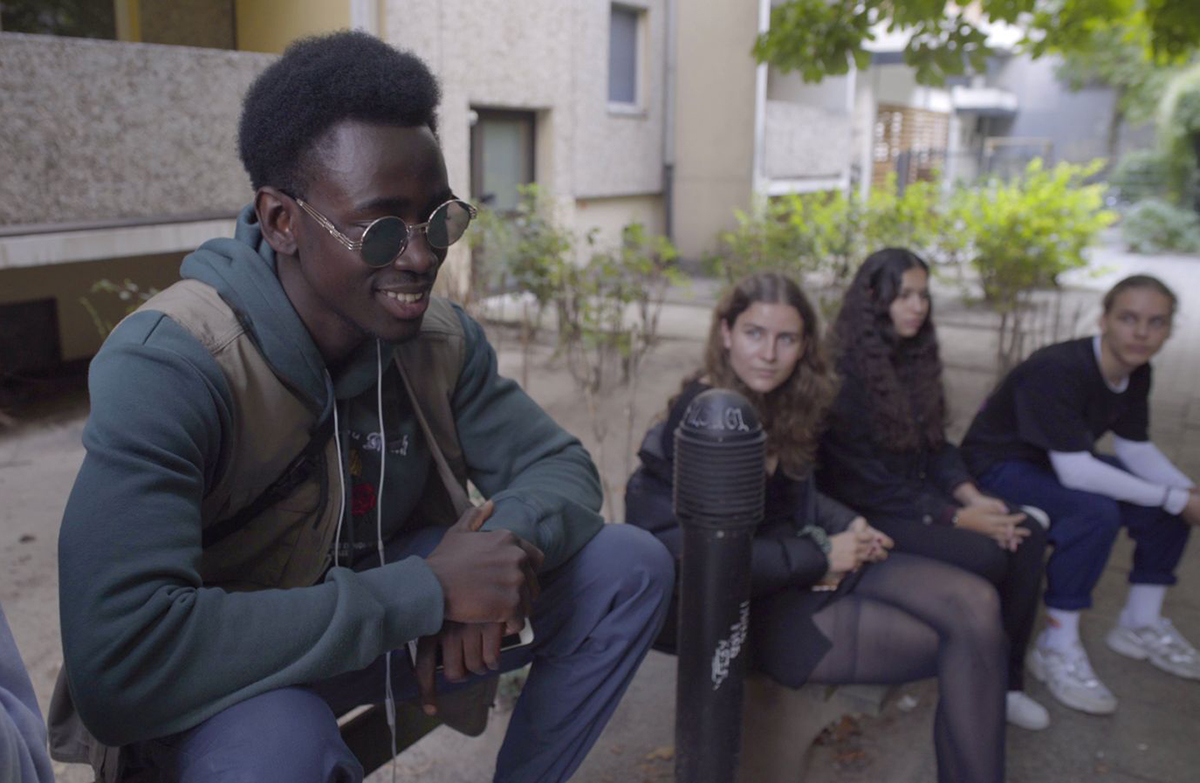
As a filmmaker, Beth Lane is wonderful here. I’ve seldom watched a documentary that flows so freely, nor a filmmaker that shares her emotion with the camera so. Lane has done her research here—this is obviously a passion project. Yet when she sees original source documents or photos in Germany, she tears up at the reality of it all. Collateral interviews with historians, journalists, and even a nun of the cloister the siblings hid out in paint an emotional picture. Yet my favorite scene comes as Lane interviews youth on the street in Berlin, listening to music and enjoying life. She asks if this had happened today, would they shelter her. Their answers—particularly one who is a refugee—create an empathy and realness that’s profound.
Lane also intersperses animation throughout the documentary that helps propel the emotion along. Talking to The Irish Examiner, she stated this was to help the audience experience the film through a child’s eyes. And it works. In fact, as Ruth talks in many scenes, I felt she was telling the story the way a child would. There’s an innocence to horror’s victims—the ones maybe lucky enough to get through—that makes the events seem all the more real. In reality, the siblings’ journey was so great, it would see them imprisoned in a hospital-turned-jail, protected by altruistic neighbors, hidden on a farm and a church, and taking an ocean liner to America. And while Lane shies away completely from editorializing or politics here, the fact that even after the war anti-Jewish sentiment was omnipresent in Europe shows the ramifications of a problem that started well before the Nazis.
Leaves Much to Ponder
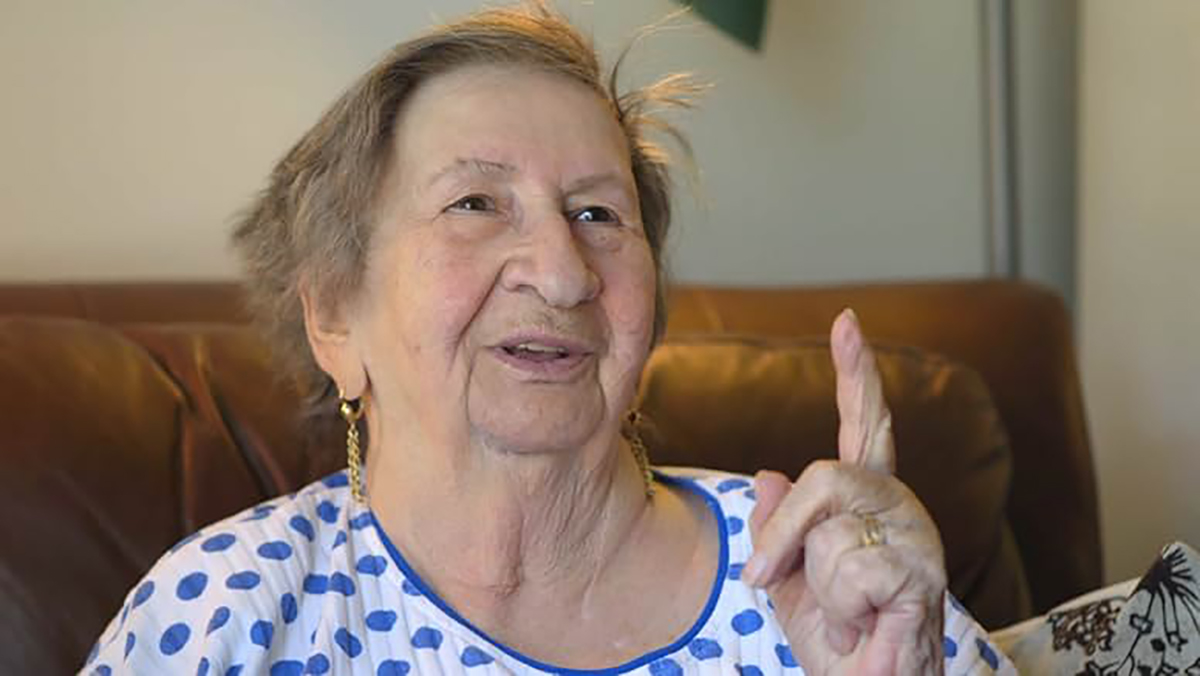
“UnBroken” is an unbelievable tale. Lane, with inspiration and passion, tells the story this extraordinary family that went through unforgettable odds to remain together. It details some sadness—as when the family was separated for decades once reaching America—yet focuses on the positives. The Weber family and their dozens of new family members opine at the documentary’s close that there is always “so much evil in this world, being overcome by so much good.” It’s an infectious spirit we can only hope will inspire us in modernity.

“UnBroken” is now available to stream on Netflix.




