





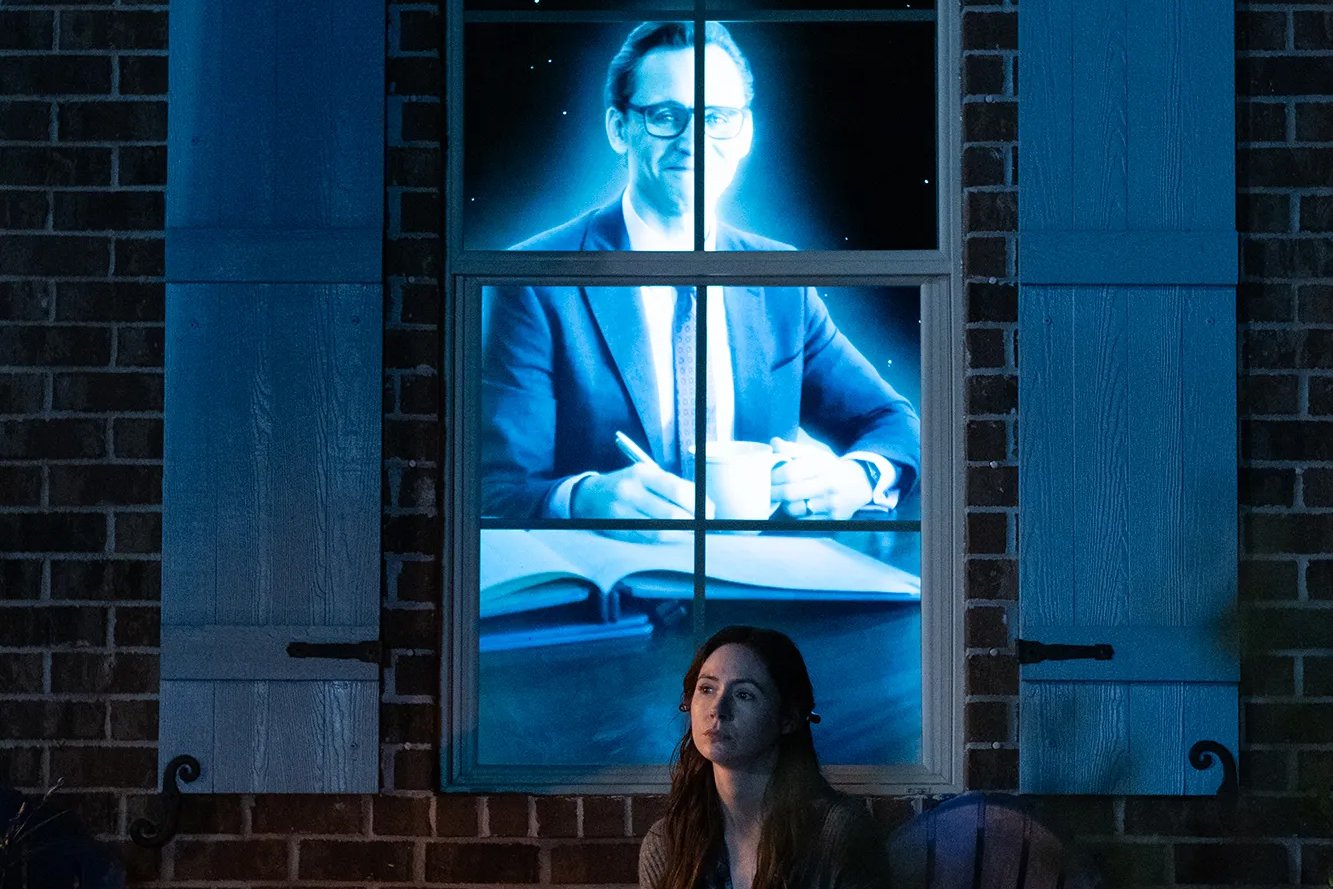
During the opening passages of Mike Flanaganâs adaptation of âThe Life of Chuckâ by Stephen King, panic and melancholy spread around the world as the end approaches. The reason this apocalyptic event is happening is not revealed until significantly later in the narrative, or even from the very beginning. Flanagan tells the story backwardsâfrom end to beginningâa mechanism that initially draws intrigue but later makes the film overwrought and sappy.
However, all we know is that everyone is panicking and trying to hold their heads high amidst the turmoil. They fail to do so as cities begin to flood entirely, suicide rates escalate rapidly, internet connections and power shut down, and earthquakes shatter the Earth. The only thing remaining intact are some billboards that read: âThank you, Chuck Krantz, for 39 Great Years!â
“Thank you, Chuck Krantz, for 39 Great Years!”
This disrupts the minds of everyone who comes across these signs. No one knows who he is. Chuck Krantz becomes the symbol of the apocalypse. The figure of a ghost consumes the last days of the world. This first chapter of âThe Life of Chuckâ has Flanagan tapping into a horror-adjacent territory, his territory. Existential dread and worry are all over the scenery. But Flanagan never transmits the feeling to the audience, having little effect or potency. The majority of the scenes convey a restlessness that stems from the inability to shake the thought that in days, everything will be gone.
The cast has the daunting task of lending strength to the weak images, and sometimes they do. Chiwetel Ejiofor, Karen Gillan, and Carl Lumbly lend the material enough weight for Flanagan to tug at some emotional strings. In this time of despair, they seek salvation through their loved ones, and their expressions and glances demonstrate that last-minute search for devotion and clarity. Although these scenes require more vulnerability and emotional openness, the first chapter of the film is the best one by far. Flanagan utilizes the mystery of Chuck Krantz and his billboards to add to the uncertainty of the void. While not as immersive as one would like, there is something rather fascinating about a mysterious figure being the catalyst for the worries of the living to intensify in the face of death, more so than the natural disasters that occur.
Unfortunately, when this chapter concludes with the impending damnation, âThe Life of Chuckâ traverses through syrupy and eye-rolling, âlife-affirmingâ scenarios that rid the film of any edge or food for thought with its inspirational quote calendar dialogue.
Manipulation Through a Simple Waltz
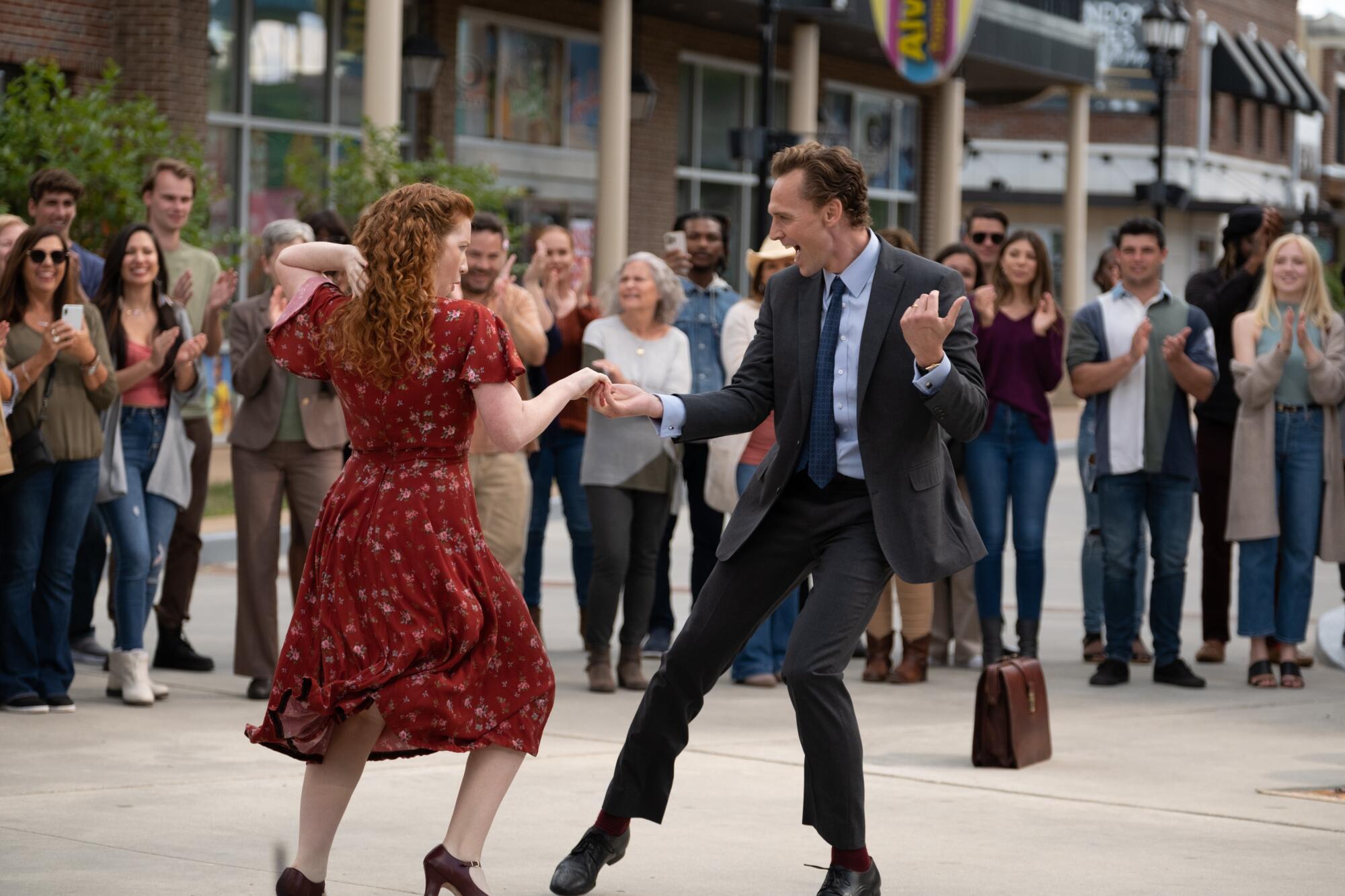
The rest of the film goes on to tell the story of Chuck through the ages, from adulthood to childhood. The second chapter sees Chuck (Tom Hiddleston) on a business trip with all expenses paid. As he is walking to his hotel room, Chuck notices a drummer playing a snappy tune. He randomly stops in front of her, later snapping into a dance routine that lasts nearly ten minutes.
The events that follow such a dance are what comprise this second chapter. Chuck contemplates what made him stop and dance right then and there in the plaza, and the limited time he has, with a brain tumor slowly killing him inside and out. These conversations Chuck has with the strangers he encounters are neither revelatory nor thought-provoking.
They are mild reiterations of previous discussions, which have been heard before in the film. And it comes with reason. In the first (and last) chapter, details are revealed about why the story is structured in this manner, even if you can piece the puzzle together earlier on. However, Flanagan wrote them with a schmaltzy tone that rids these conversations of any emotional fervor. It feels fake and manipulative. This is overwritten blather intended to engage the viewer, yet it has the opposite effectâit distances. Flanaganâs emotional manipulation becomes overbearing and noxious. It made me uncomfortable, not because of its faux existentialism and hopefulness, but because each scene feels like it’s being puppeteered. And it only gets worse as it goes.
A Loss, A Lesson, and Dance to Conclude His Lecture
The first (and last) chapter recounts Chuckâs (Jacob Tremblay, Benjamin Pajak) experiences as a kid. He learns about love, life, and that he contains multitudes. This last one comes from a revelatory scene that shows us, and Chuck, the wonders of the mind. He learns to appreciate life through the ups and downs of those around him. Everyone gives him advice on how to make each moment, whether sad or joyful, meaningful. Between each of these lessons and losses, some scenes emulate the style of movie musicals. It is quite a surprising move from Flanagan that he flips the switch in terms of the story’s structure. Where once dialogue dictated the flow, now it is driven by dance sequences and musical numbers. It is a division of loss, a lesson, and a waltz to conclude his psychological lecture.
Flanagan is now in a whole other territory. He has never worked on this type of drama, nor musicals. However, this is all part of the weird chasm of the filmâs dour hopefulness. For a movie that is all about living and loving life, I felt depressed. A feeling of disgust crawled through my spine. Flanagan covers the film in vivacious commentary that is so bland and face value that you feel talked down to, overwhelmed by every attempt at charm and ambition. âThe Life of Chuckâ is a tedious effort in crafting a life-affirming picture, with artificial pseudo-profound dialogue and hammered sentimentality.
âThe Life of Chuck” premiered at the Toronto International Film Festival on September 6, 2024. The film was released in select theaters in the United States by Neon on June 6, 2025, before expanding nationwide on June 13. Follow us for more coverage.




