In 1978, American filmmaker Richard Donner made people believe that a man could fly with âSupermanâ, starring Christopher Reeve as the Caped Crusader, who later became the beacon of the classic hero for years to come. Each time you think of Superman, your mind immediately goes to Reeve, flying up into the sky and beyond. Imagine what it would have felt like to be a kid seeing the hero up in the air, caressing the sky, and saving the world. It would have felt miraculous to some degreeâa sensation of wonder would have sparked in the minds of these younglings. Nowadays, it does not look as impressive as it did back in 1978. Of course, there have been significant advancements in technology, as well as the creation of visual effects.Â
These changes should pave the way for more fantastical and adventurous fares with a more ârealisticâ tone. But even so, when you see Supermanâs first flight in Donnerâs picture, it is breathtaking. The classic theme by John Williams helps the scene remain etched in our minds forever. Throughout the years, the experience of bringing Superman to the big screen has dwindled vastly. He has become a ghostly cinematic figure. Each reiteration attempts to capture the magic of the past in various ways, whether by taking a more serious and darker route or opting for a light and full-hearted experience. It never amazes to the same extent. Nobody surpasses the image of Reeveâs Superman.
How the Superman Spectacle Has Changed
For some, Zack Snyderâs âMan of Steelâ brought back the feeling. For me, the film that stood out was âSuperman Returns,” which remains my personal favorite Superman film. But collectively, it has not been the same. And, if you look at the trajectory regarding comic-book films, it never will be. The wonder, magic, and beauty of creating an experience at the cinema are lost with these types of films. Everything is now a void of its own, with zero heart, vision, and ingenuity. But that is where James Gunn comes in. His âSupermanâ aims to capture the essence of Donnerâs work while adding his unique touch.
Instead of giving us an overly serious âSupermanâ film, like Snyder did previously with his vision of the classic hero, Gunn opts for a comedic and zany tone, the corny yet internally fractured last son of Krypton. This is a return to basics. Yet itâs rid of the origin story that has been a part of every Superman film. All the while, Gunn is introducing an array of heroes and villains to pave the way for this universeâs future. Gunn tries to resurrect a dead franchise by overloading and unloading simultaneously, an incoherent contradiction that benefits no one. He packs âSupermanâ with tons of baggage to the same degree he complies with everyoneâs wishes and desires, ultimately leading to a lifeless cinematic experience.Â
Lex Luthor’s Leniency Towards the Removal of the Caped Crusader Symbol
The film begins with the aftermath of round one between the titular hero, Superman (David Corenswet, who brings the character a ton of charm), and the Hammer of Boravia, where Superman loses his first encounter ever, meeting his match. We see him batteredâbleeding from the mouth and noseâand with a couple of broken bones. He calls for Krypto to take him to the Fortress of Solitude to recover with a dose of the yellow sun. Inside Supermanâs hidden lair, trailed by some of Lex Luthorâs (Nicholas Hoult) crooksâThe Engineer (MarÃa Gabriela de FarÃa) and Ultramanâthere are Kryptonian service robots meant to help the hero with anything he needs.Â
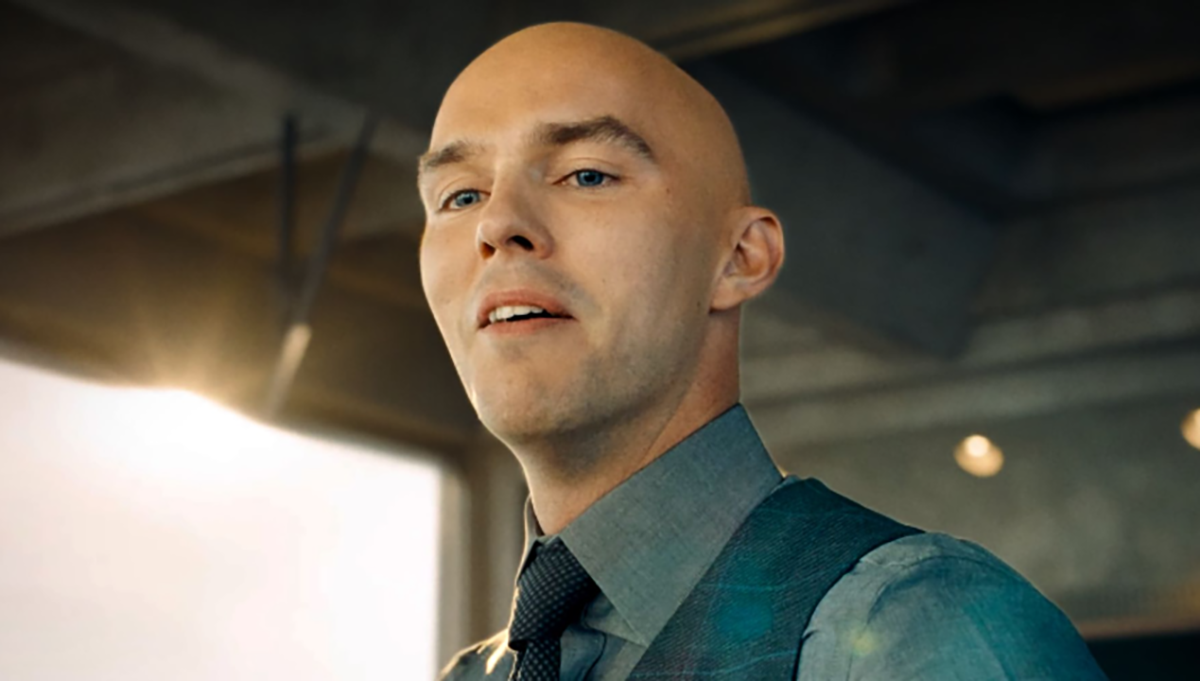
Their role is to keep Superman safe at all costs. And they do, up to a certain point. Narratively, they serve mainly to provide excessive plot exposition. And that goes for the rest of the characters the film has yet to introduce by this point in the picture. Nevertheless, Lex Luthor and his fellow villains go to the heroâs hidden sanctuary on a mission to frame Superman on whatever crimes they can fabricate. The goal is to remove Superman as the heroic symbol for hope and peace by any means necessary, so that Luthor can have his way in the treaties heâs doing with sketchy political advisors from other countries. Gunn presents Luthor as a man whose disdain fuels his daily malevolent actions, which involve behind-the-scenes deals and the supply of weapons to other countries.Â
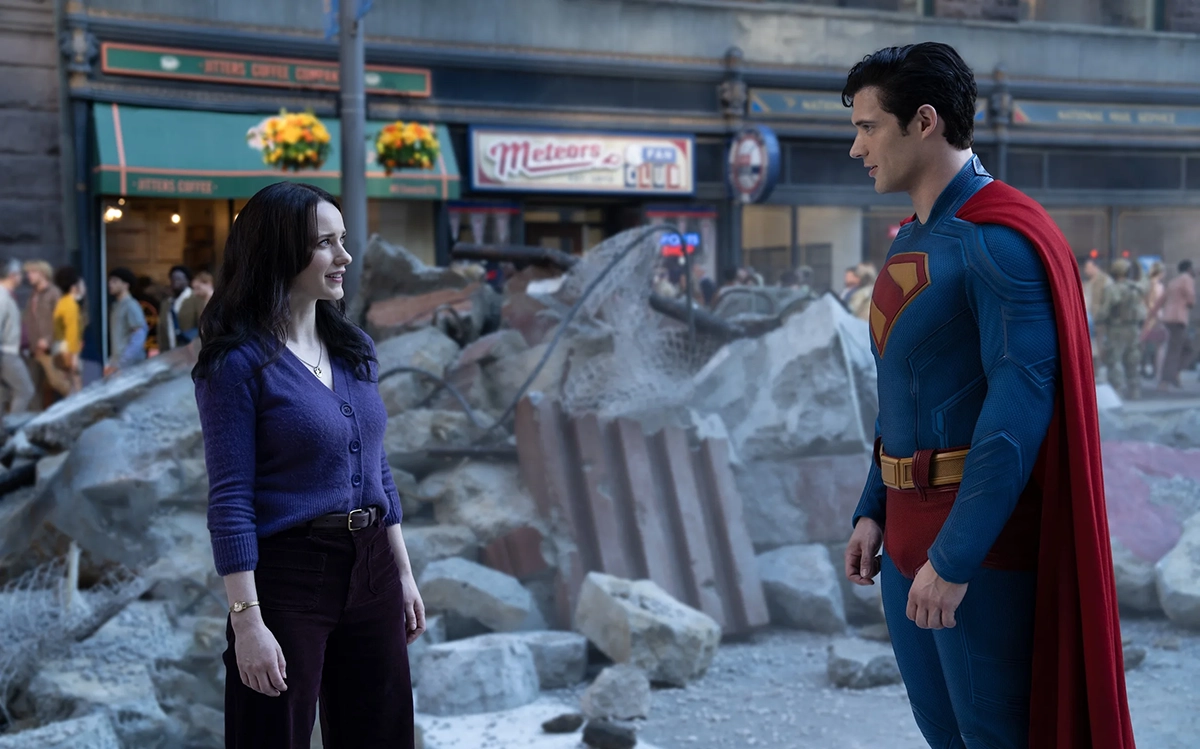
Much like his other villains, although this time more evident than before, Gunn takes inspiration from real-life politicians and corrupt one-percenters to paint the portrait of the classic Superman rival. And that is not all. The film also includes some political commentaries that draw inspiration from those who influenced his version of Luthor. It honestly took me by surprise that this was the direction he chose, especially in a blockbuster picture of this magnitude. Considering how big studios are nowadays, with the latest example being Paramount cancelling âThe Late Show with Stephen Colbertâ for “financial reasonsâ, never did I anticipate that Gunn would be bold enough to center his âSupermanâ around political scenarios.Â
Incessant Comedic Quips Create a Jarring Experience
Gunnâs strongest suit is not screenwriting. But it is interesting, at least, that he is trying to be militant about todayâs issues during his âmake or breakâ situation with DC and Warner Bros. The scenes and narrative arcs involving these political scenarios with Luthor and Vasil Ghurkos (Zlatko BuriÄ) only gesture at relevance rather than engage with it. While I appreciate the ambition of the act, this commentary is scattershot and scratches the surface. If free to do as he wanted, Gunn would have been more open to expanding on these moral and geopolitical issues. However, his hasty execution dilutes the project. He instead is driven by his (and the fans) own comic-book desires.
Although all of this sounds quite fascinating and thematically rich, the way James Gunn develops these ideas in the film renders them hollow, placing them in a void from which there is no return, where charm and comedy abound but substance is discarded. For starters, every character in the film drives their conversations through jokes and cheesy remarks, which tend to become annoying as the film progresses through its various plot strands. At least, since these robots are not living creatures, it does not matter that much. With the rest of the characters, it is entirely bothersome because it rids them of any amount of humanity. Since the film centers on these metahumans struggling with their identity and purpose in a cruel, cold world that seems to be destroying itself, it seems odd that they speak in such a manner, lacking any emotional depth or tonal consistency.
The dissonance between the filmâs heavy thematic aspirations and the charactersâ incessant quips creates a jarring experience. Sincerity, constantly undermined, is set aside in favor of another joke or comedic remark, leaving behind a trail of attempts at humanism and vulnerability. This has been an issue with James Gunnâs films since âGuardians of the Galaxyâ, particularly evident in the second and third installments of the galaxy-racing team-up flick. In âGuardians of the Galaxy Vol. 2â, which is, in my books, the best film of the trilogy, you had poorly handled, yet interesting and ultimately human, emotional beats. And that element, which was a somewhat drastic change in comparison with the first one, gave the film a beating heart.
No Meaning or Strength in James Gunn’s Imagery
Not all the maneuvers Gunn used to construct that makeshift ticket were honest. Some were manipulative. However, it was effective enough to create and develop an arc for the characters he cared for plenty. That dilemma has crept into Gunnâs future projects. Superman and the other charactersâ existential crises are insubstantial in this screenplay. They often come across as superficial due to the comic-book caricatures that deliver punchlines when you need pathos or candor instead. So, when Superman steps up to Lex Luthor to reclaim his humanity in a speech meant to echo the filmâs thematic core, it comes across as disingenuous.
This is why the potential for meaningful introspection, involving one of the most complex âmain cardâ DC characters, Superman, gets lost in forced, excessive humor and cheap camp tactics. If the character work is a lost cause, youâd expect âSupermanâ to fulfill its popcorn promises with grand spectacle and visual wonder. However, even in that department, it is entirely lacking. It suffers from the same issues (and more) as the great majority of superhero pictures released this decade. The problems range from questionable blocking and editing to unfulfilling visual effects that make everything look like a blue-screen-covered set rather than a believable real-world location. My main complaint is the lack of care for the imagery.
Imagery that Doesn’t Stick

The majority of films that stick with me the most feature potent imagery that I replay often in my mind. Sometimes, I think about a random thing or while discussing a topic. And then Iâm reminded of that image. The thought sometimes even moves me to a point where I remain silent for a moment while I ponder it. Recently, a friend of mine called me while she was constructing a little scrapbook of her trip to Italy. During the conversation, she began talking about some statues she had seen. Some of them honored the dead. They had different postures and designs, and one even featured a veil of some sort etched into the stone design. For some reason, our minds went to Julia Ducournauâs âAlpha.”Â
This is a personal project by Ducournau, in which a blood-transmitted disease causes the infected to slowly transform into marble statues. The statues in the film are the French directorâs way of talking about her fear of death and honoring those who passed during the AIDS crisis. My friend and I spent quite some time discussing these Italian statues she saw and Ducournauâs, both of which are struck by tragedy. In the case of âSuperman,â I recall no single image that has a piercing or moving factor. None carries any meaning. This is a collection of empty pictures featuring blank canvases of peopleâa collective erasure of individuals we only know through empty statements. Ultimately, this film preaches humanity and seeks to rekindle its pulsating heart. Yet the canvas is hollow. Itâs a manufactured project that never lives up to its charming or lively reputation.Â