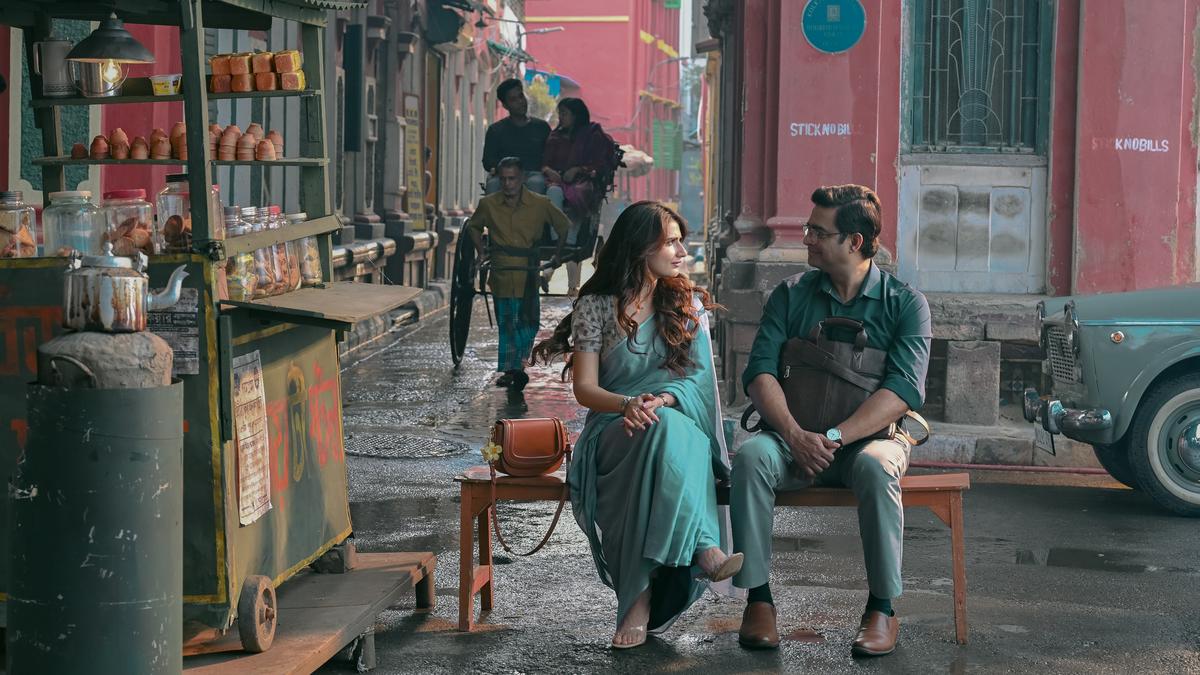
Shrirenu Tripathi (aka Shri, played by R Madhavan) is a Sanskrit teacher whose love life is as dead as the language he teaches. As he believes he’s approaching his shelf life (he is in his early 40s), he meets his match in Madhu Bose (Fatima Sana Shaikh), a French teacher. Despite cultural barriers, the pair share a lot in common, from kinks to their tea preference, musical skills, and emotional baggage. Being a progressive, independent woman, Madhu also replaces the chip on uptight Shri’s shoulder with a (literal) hair clip. However, will Shri muster the courage to unlearn his patriarchal, conservative upbringing and learn to treat his lady love as an equal?
“Aap Jaisa Koi” (translation:â”Someone Like You”) draws similarities to a Jane Austen novel, carrying forward the same progressive themes one finds in the beloved authorâs literary works published centuries ago. However, their themes still ring true in contemporary times. A prominent one is limited agency and the pursuit of autonomy. This comes across not only through the male protagonistâs plight of breaking free from his patriarchal mindset, but also the lack of independence of the women within the family. We see this most starkly with Shriâs ambitious niece and a sister-in-law. The family patriarch “allows” them to work, but they are primarily meant to cook and clean.
Subverting Expectations
Yet “Aap Jaisa Koi” also handles the central theme of oppressive male gaze in a subtle manner via the song “Jaadu Wali Chimki” picturised on Shriâs lady love. Initially harmless, whimsical, and almost fantasy-like, it simultaneously reduces Madhu to a manic pixie girl and the product of a male fantasy. In a later scene, Shri is also quick to express disgust upon discovering Madhu’s ‘secret life,’ resulting in the shattering of his image of the ideal, virginal woman.
Speaking of âvirginal,’ the film also challenges the redundant social concept of virginity, particularly the insecurities it leads to in men and women alike. We see Shri (who his students deride as a ’42 Year Old Virgin’) audibly gulp at just the mention of the term virgin. Meanwhile people look at Madhu as a âprovocateur.’ This raises doubts over her chastityâas well as her decencyâ when she lets on about her non-virginal status. “Aap Jaisa Koi” also touches upon toxic masculinity, which has led to Shri conforming to outdated norms. He surpasses his love of pressing flowers inside books to preserve them as he fears ostracism for a ‘feminine’ hobby, eventually opening up to Madhu who doesn’t laugh at nor mock him for it.
Meta Humour and Some Nostalgia
A majority of the film’s screen-time also allotted to depicting family influence and the effects of snobbish family members on a characters’ decisions or their romantic prospects. This is in addition to the roles played by strong, supportive family bonds. We see wholesome conversations between an uncle and his niece, the latter of which goes a long way in cutting through the shackles of a rigid, regressive and hypocritical social hierarchy. The movie also ends on a note that will appeal to the hardcore rom-com aficionados, proving love is a driving force against all odds, despite its Austenian trope (do stick around for the charming and folksy animated end credits too).
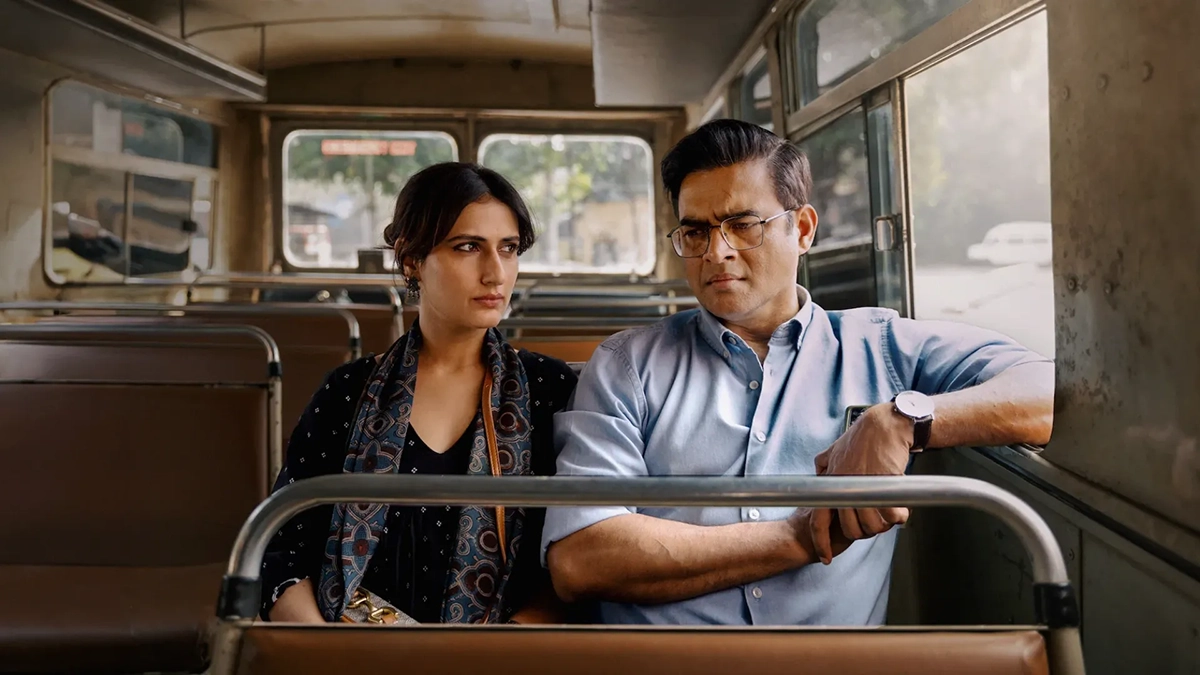
The film’s dialogue features meta humour, even taking sly digs at ’90s Bollywood romances like “Kuch Kuch Hota Hai,” which havenât aged well despite the nostalgia factor. For reference, “Aap Jaisa Koi” is also produced by Karan Johar, the director of the aforementioned ’90s classic, and is equal parts corny as well as thought provoking. The monologues especially stand out. A lonely Shri seeks validation from a faceless stranger on a dating app who expresses interest in his intellect, which results in him then cultivating an unhealthy obsession reminiscent to the Hollywood movie “Her.” It further comments on the alarming rise in real-life cases of GPT addiction, bringing a modern touch to this timeless romance. It also includes a final monologue which is heartfelt.
However, while “Aap Jaisa Koi” delivers a sweet dose of romance, it is far from perfect. It sidelines somewhat with family drama faced by the lead pair, resulting in contrived or rushed conclusions. It can also become overstuffed with secondary subplots involving Shriâs estranged family members. Thus, it occasionally ends up as weak tea due to a somewhat muddled message.
R Madhavan and Fatima Sana Shaikh Have Good Chemistry
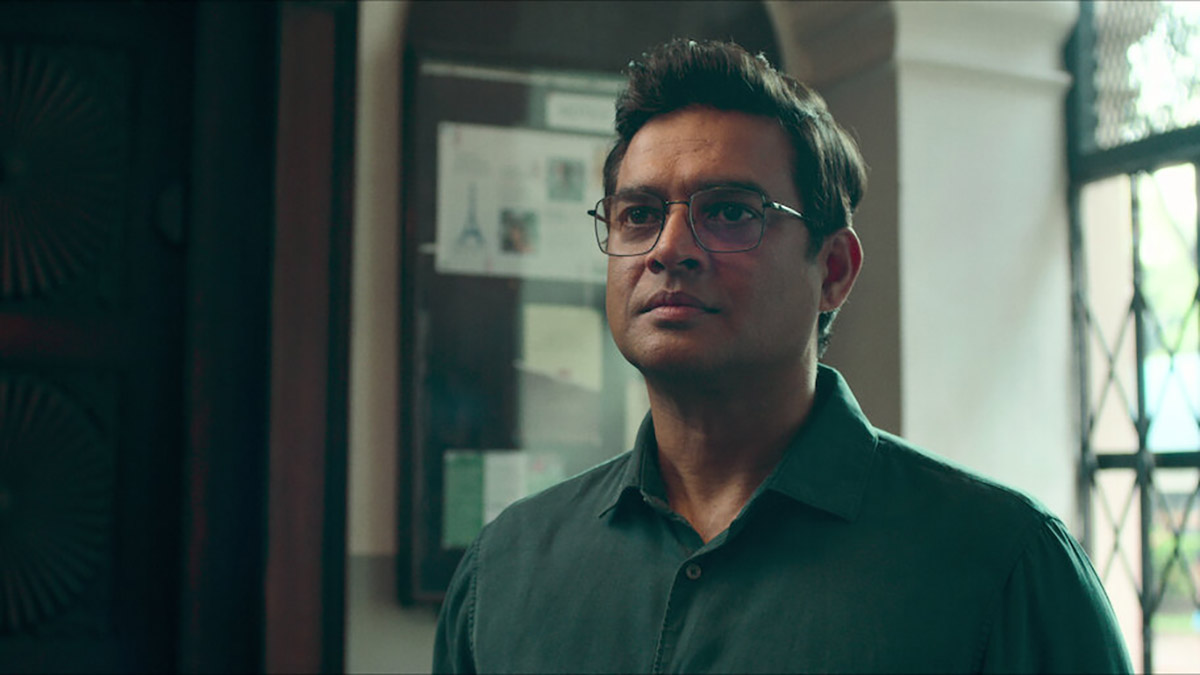
However, the performances are anything but muddled, with the ensemble turning in consistently strong performances. Fatima Sana Shaikh radiates elegance as Madhu, the heroine who is direct in matters of the heart, makes the first move, and remains unapologetically herself. She is supported by her co-star, the ever-expressive R. Madhavan, in a refreshing return to the romance genre as the amusingly shy but conflicted Shri. He plays a character who exhibits traits of a typical Austen hero (think a desi Mr. Darcy with a phobia of both women and rejection). This character also proves to be a slight improvement upon the toxic alpha/bad boy heroes the actor was usually noted for playing during his early years as a âreigning chocolate boy.’ He effortlessly balances his characterâs self-loathing and sexual repression, giving hints of vulnerability and gullibility.
The chemistry between the leads is nothing short of époustouflant (the French word for âbreathtakingâ used affectionately by Madhu to describe Shri). It lends itself to tender moments such as Shri lighting up when he receives the opportunity to wait on someone, and Madhu returning the favour. She treats him as an equal by arriving early on dates when he shows up late just so she too can share in this experience of waiting on somebody. Later the framing in a scene set at a library even pays homage to the iconic kiss from the Paul Thomas Anderson classic “Punch-Drunk Love.”
The supporting cast are compelling, especially Manish Chaudhari as Bhanu, a relic of the past and the family patriarch who is also Shriâs older brother. While the over-exaggerated family drama feels out of place in an otherwise grounded setting, it is a platform for Chaudhari to showcase his flair for the dramatic and more so a versatility. He switches to more subtle expressions in scenes with emotional depth later, such as a confrontation between Bhanu and his neglected, belittled wife Kusum (Ayesha Raza Mishra).
Worth the Effort
Like the characters themselves, there’s still room for improvement and fine-tuning in Radhika Anand and Jehan Handaâs screenplay. Yet even if the film’s finale remains stuck between the past and present, as a whole, this rom-com is nonetheless a noble effort with noble intent. It subverts the genre while paying homage to it. After all, eventually it’s the effort that counts.