





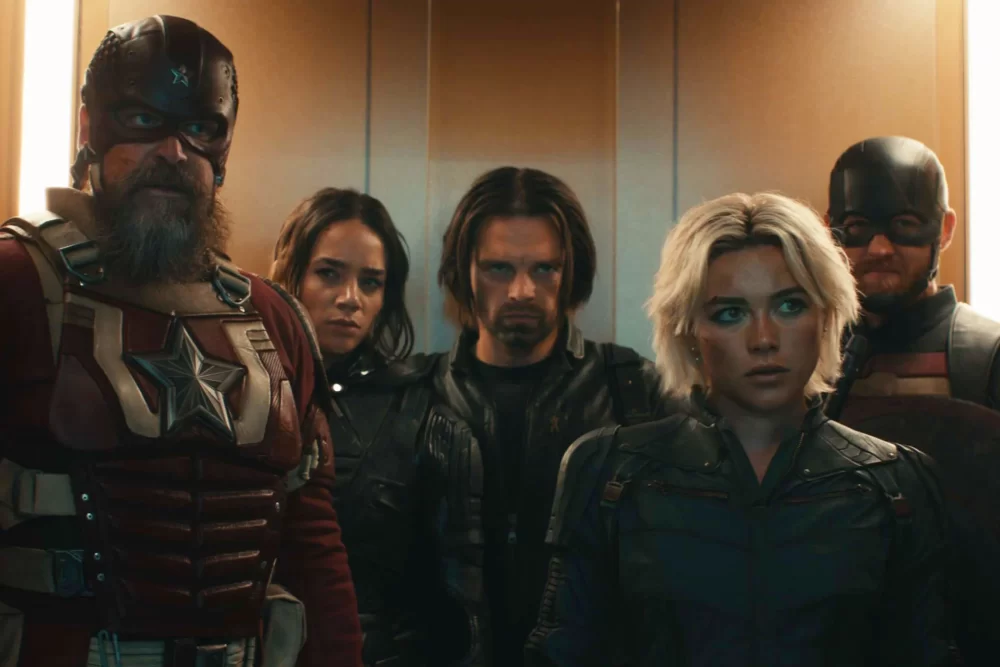
“There is something wrong with me.” Thatâs the first thing we hear in “Thunderbolts*”âYelena Belova (Florence Pugh) saying it flatly, just before she jumps off a rooftop. Itâs not a dramatic suicide attempt. Itâs work. Sheâs stealing classified samples from a lab and blowing the building up on her way out. But the emptiness in her voice is unmistakable. âOr maybe Iâm just bored,â she adds, as if boredom were easier to confess than despair.
That opening scene signals what this film really is. For once, director Jake Schreier and writers Eric Pearson and Joanna Calo eschew the stakes of the multiversal and galactic kind. This time, the stakes are personal. Theyâre intimate. “Thunderbolts*” is about what happens after the action movies end and the survivors are left to figure out who they are. Itâs about trauma without therapy. And more importantly, itâs about people whoâve spent so long compartmentalizing themselves that theyâre no longer sure whatâs behind the compartments.
A Dirty Job, Done by Damaged People
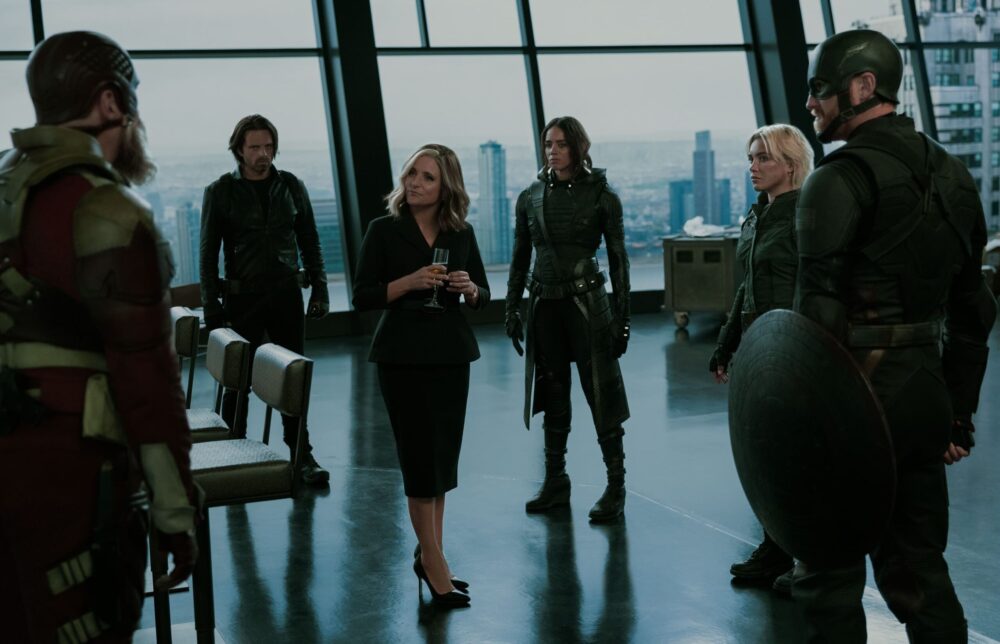
The premise is almost suspiciously straightforward. CIA director Valentina Allegra de Fontaine (Julia Louis-Dreyfus) is about to be impeached. To protect herself, she sends four operatives to a remote facility: Yelena, John Walker (Wyatt Russell), Ava Starr (Hannah John-Kamen), and Taskmaster (Olga Kurylenko). Each is told a different story, and each believes theyâre the only one there. The goal? Let them kill each other and burn the evidence.
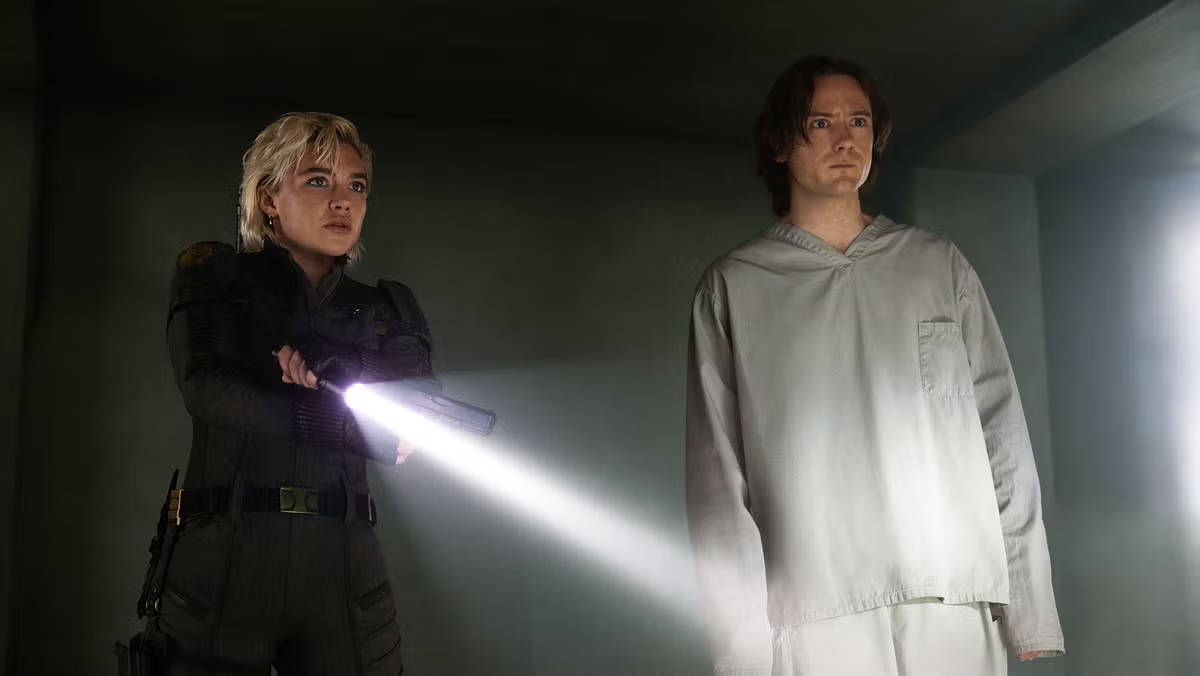
They donât. They survive, barely. And in the middle of the kerfuffle, a man shows up basically in his pajamasâBob (Lewis Pullman), gentle, dazed, and mysterious, dropped into the chaos like a sheep among wolves. He remembers little. And he might be something greater than all of the antiheroes combined.
Bobâs arrival shifts the tone. Heâs not a conventional superhuman; thereâs no bravado, no power stance. Heâs confused and apologetic, like someone whoâs walked into a room and forgotten why. Pullman plays him with a gentleness that makes his later transformation even more jarring. Thereâs something about the way he speaksâhesitant, carefulâthat suggests heâs trying not to scare even himself.
The film basically adheres to standard-issue Marvel plot mechanics: team-ups, betrayals, action set pieces, a CG-heavy final act with collapsing towers and dark dimensions. But somewhere inside all that, the filmmakers sneak in a movie about mental illness, vulnerability, and the exhausting work of pretending youâre fine. Bob, whose transformation into the unhinged god-figure Sentry (and later his other self, the Void) anchors the second half, speaks of life in âpeaks and valleys,â a painful metaphor for a mind that wonât stay still. And when he breaks, it isnât into villainy. Itâs into isolation, into numbness. His scenes land like a punch if youâve ever been close to someone with a mental illness.
The Anti-Avengers (and Their Sad Little Soccer Team)
Yelena sees that, maybe too well, even; because sheâs been circling the same void herself. Her arcâsubtle, unsentimentalâis the filmâs emotional center. Pugh plays her with restraint, showing us a woman trained to kill who canât even decide what living looks like. Her reunion with Red Guardian (David Harbour, as delightfully and toe-curlingly awkward as ever) sparks some of the filmâs best scenes, a sad-funny rhythm of forced camaraderie and real yearning. He names their group the âThunderboltsâ after Yelenaâs elementary school soccer team, which went a whole season without scoring a single goal. Itâs funny. Until itâs not.
Sebastian Stanâs Bucky Barnes re-enters here, tooânot as a soldier, but a Congressman. That alone feels like a punchline Marvel is barely suppressing, but it leads to some unexpectedly grounded moments. Bucky, too, has become a shepherd of the broken. Watching him try to corral this bunch into doing the right thing, not out of duty but out of mutual pain, gives Stan more to do emotionally than heâs had in years.
Call them misfits, call them Marvelâs answer to “The Suicide Squad“âValentina calls them âantisocial tragedy in human form.â And yes, the comparison is inevitable, but “Thunderbolts*” is doing something more fragile than its DC counterpart. The humor here doesnât come from chaos; it comes from sadness. These arenât big personalities crashing into each other for laughsâtheyâre broken people trying, and often failing, to connect. And when theyâre laughing itâs not because things are funny. Theyâre laughing probably because they were busy unlearning how to cry.
âThunderbolts*â: Too Simple to Be Clever, Too Honest to Be Dismissed
Of course, as it has been with the latter entries in the Marvel Cinematic Universe, not everything clicks. The pacing stumbles in the middle, leaning too heavily on exposition while the characters tread water. And while Pullman is terrificâtrembling, warm, eerieâthe Sentry/Void plot leans on comic book logic that can feel a little too neat, especially given how heavy the emotional metaphor is trying to be. It works emotionally, if not narratively.
And yes, itâs simple. If you boiled it down to beats on a whiteboard, itâs not far off from any of the other entries: introduce team, stir chaos, insert larger-than-life threat, cue redemptive moment. But this oneâs self-aware about that structure. It doesnât pretend to reinvent the wheel. What it does do, and well, is pare things down enough to let character breath win out over fan service.
Because what lingers isnât the plot. Itâs a scene where someone admits they miss being told what to do. Or the way Barnes, now a junior Congressman, tries to save people by dragging them into accountability. Itâs the way Pughâs Yelena breaks into a smile at the endânot triumphant, not victorious, justâ¦with a newfound sense of purpose. And instead of being bored, maybe this oneâs more than okay.
“There is something wrong with me.”
To quote Yelena’s voiceover in the beginning: yes. I also think thereâs something wrong with me. Because for all the justified criticism Marvel has earned in recent yearsâcreative nadir, superhero fatigue, safe plotting, diminishing returnsâI left “Thunderbolts*” feeling something I hadnât felt in a while: not just entertained, but moved. I canât even remember the last Marvel film that hit me like this. Was it “No Way Home“? “Shang-Chi“? I honestly donât know. Which tells you everything about how forgettable this franchise has become.
But this one isnât. “Thunderbolts*” may be modest, weird, and messy all over. But itâs sincere. It’s honest in a way thatâs rare for a studio this massive. It doesnât pretend these characters are heroes. Quite the contrary, it just shows us what it looks like when broken people try, even a little, to fix themselves.
And watching that unfoldânot with fanfare, but with discomfort, awkwardness, and the occasional joke that hits a little too close to homeâis the kind of Marvel we could get used to again.


“Thunderbolts*” will be released in the United States on May 2. Follow us for more coverage.




