





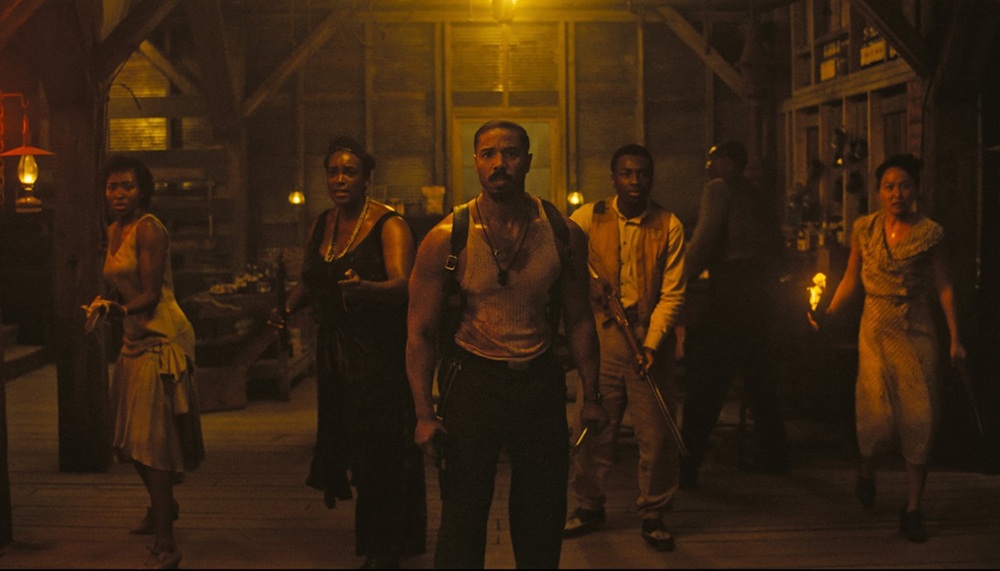
“You keep dancing with the Devil⦠one day heâs gonna follow you home,” a preacher admonishes his guitar-slinging son in “Sinners,” Ryan Cooglerâs thunderous return to personal storytelling. It hangs over the film like a specterâboth a warning and an invitation. Itâs the spine of the entire film; and, as Cooglerâs Southern Gothic gumbo of vampire flick, gangster tragedy, resurrection tale, and musical fever dream, it also happens to be his best since “Fruitvale Station.”
“Sinners” opens in 1932 Clarksdale, Mississippi, with a young manâbloodied, hollow-eyed, clutching only the neck of a busted guitar like itâs an exorcised relicâstaggering into a Mississippi church mid-sermon. Discordant blues licks from Ludwig Göransson score the scene, suggesting something unholy in the air. The preacher, voice trembling, implores the young man to drop the guitar neck and leave the sinful world behind. Itâs a cliffhanger that says everything, then cuts sharply to the day before.
From Chicago to the Delta
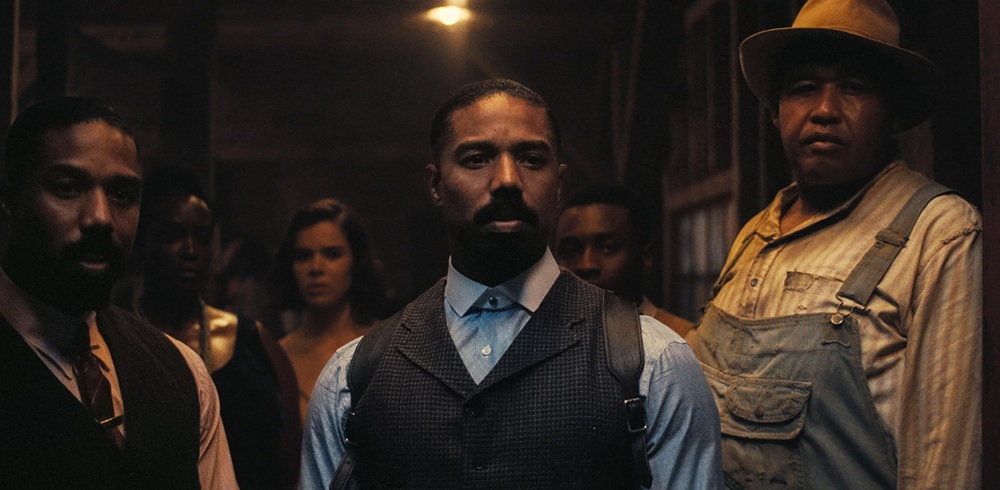
In the shadow of postwar trauma and fading Prohibition, our guides through this tale are identical twins Stack and Smoke Moore (both played by Michael B. Jordan), returning from a Chicago bootlegging stint with a truckload of liquor and personal demons with them. There’s chatter that they worked for Capone. There’s also talk about their exploits in World War I. It doesnât matter. They roll into town with style and scars, and purchase a sawmill from a racist landowner to turn it into a juke joint for the local Black community.
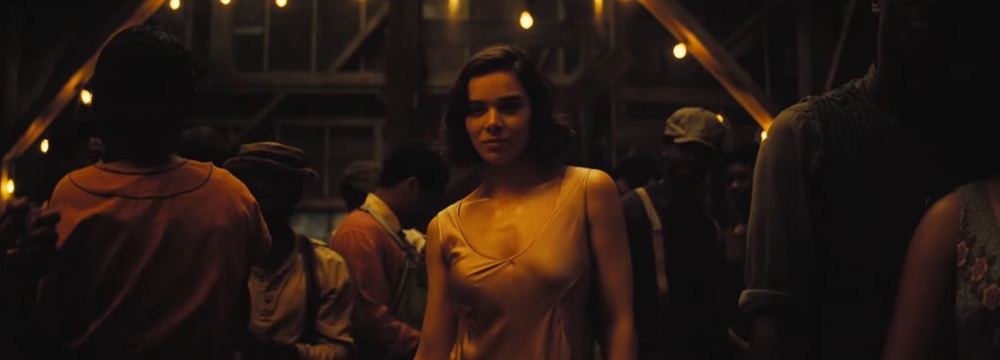
Between the twins, Stack is the smoother one, the talkerâall swagger and cash. In their return to the Delta, he reconnects with his ex-girlfriend Mary (Hailee Steinfeld), who is secretly one-eighth Black and passes for white. Mary resents Stack for abandoning her for Chicago; Stack argues that society wouldn’t accept their interracial relationship. On the other hand, Smoke is quieter, battle-worn, wrestling with something darker. His estrangement from his wife Annie (Wunmi Mosaku) reveals the coupleâs unresolved grief. The twinsâ presence brings more than just liquor and rhythm. Old debts linger. New enemies surface. And with them, something ancient.
As the grand opening of the juke joint requires music, Stack and Smoke commission pianist Delta Slim (Delroy Lindo), singer Pearline (Jayme Lawson), and the twinsâ aspiring guitarist cousin Sammie âPreacher Boyâ Moore (Miles Caton)âthe same young man we see at the beginningâto perform that night. That Sammie would join, in particular, comes much to the opposition of his preacher father, who warns Sammie that the pursuit of worldly music holds dangerous, supernatural power.
A Genre Gumbo that Shouldnât Workâand Somehow Does
The film blends about five genres before you can blink: Western, horror, gangster saga, spiritual drama, and, of course, a loose musical biopic of American Blackness. Theoretically, it shouldnât work. But in Cooglerâs hands, it almost always doesâan ambitious, serrated beast of a film that feels both stitched together and spiritually whole.
Cooglerâs script is built like a sermon and a fever dream. Even so, humor, thankfully, isnât absent. Thereâs a deliciously awkward scene where three seemingly white musiciansâin reality, villains looking to prey upon the crowdâtry to âauditionâ so they can be let inside the juke by playing something between Appalachian gospel and a murder balladâless Robert Johnson, more “O Brother, Where Art Thou?” and Gillian Welch with blood on her hem.Â
The absurdity of it plays like a joke about white co-opting of Black culture, but Coogler plays it straight enough to sting. The look on Stackâs face alone is worth the ticket price.
A Twisted Gospel of Inclusion and Togetherness
But Cooglerâs ambitions go beyond aural pleasure. He threads racial tensions into the film with slow, deliberate cuts. Enter Remmick (a slithering Jack OâConnell), a smooth-talking monster with pale skin, sharper teeth, and even sharper ideas. His twisted gospel of inclusionâimmortality, for everyoneâattempts to sway the outcasts.
Itâs no coincidence that he preys on minorities: Black musicians, Asian merchants, poor white Southerners. His promise? Escape the chains of racism through unholy rebirth. Among his potential converts: Grace (Li Jun Li) and Bo (Yao), two local Chinese store owners who are friends with the twins. Their inclusion in the story isnât just a historical footnoteâitâs a reminder that anti-Asian sentiment ran hot in Depression-era Mississippi, too.Â
Coogler doesnât overplay their role, but their presence enriches the filmâs texture, especially when Remmick tries to lure them with talk of belonging. In a world where difference is dangerous, even monsters start to sound like liberators.
Of Music That Could Conjure Spirits, Both Past and Future
The music is more than ornamentâitâs theology. The film begins with a voiceover, telling the legends of those who possess the musical ability to conjure the spirits of the past and future. This, in turn, provides “Sinners” with a core thesis: music plays an integral role in Cooglerâs storytelling.Â
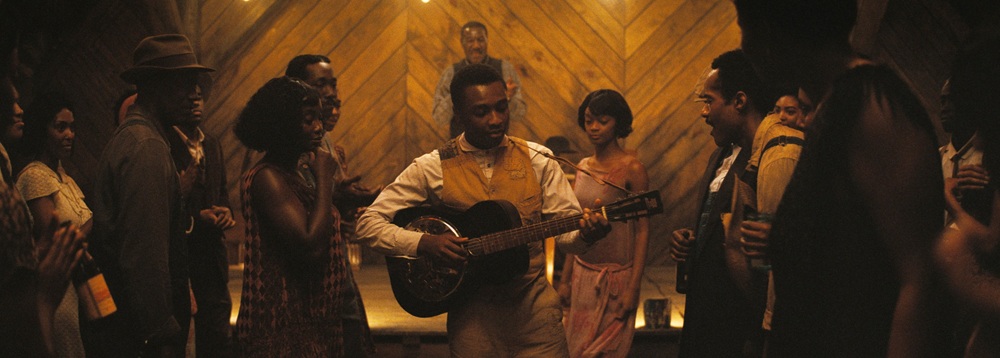
In line with this, Göranssonâs score nods to blues, funk, hip-hop, and Afrobeat, often within the same scene. Thereâs a transcendent moment where Sammieâs playing triggers something that feels cosmically Blackâtime folding in on itself, with the juke joint becoming an eternal space where the past and future harmonize. Itâs one of the few films where a character picks up a guitar and you genuinely believe the music could raise the dead.
Musically, Göransson is in rare form. But Iâd be lying if I said every cue works. One moment between the twins and Sammie feels overscoredâalmost like the musicâs trying to tell you how to feel. On the flip side, a deeply personal scene between Smoke and Annie plays without a single note, which works emotionally but might feel bare to those accustomed to cinematic swelling. Still, the highs far outweigh the lows, and the overall soundscape is rich, textured, and straight-up mesmerizing.
Of Music That Could Raise the Dead
Overall, the performances ground the operatics. Jordan, in a career-high double turn, nails the subtle distinctions between Stackâs weary magnetism and Smokeâs monk-like rage. His chemistry with both Steinfeldâs Mary and Mosakuâs Annie feels distinct and fully lived-inâlust versus loyalty, tension versus trust. If you told me the twins were played by different actors, Iâd almost believe you.
The supporting cast is no slouch either. Steinfeld makes the most of what I feel is an underwritten role, even if her disappearance in the middle third of the film disrupts the pacing. Conversely, Mosaku gives the movie its bruised heart. And OâConnell, as the antagonist Remmick, struts through the film like a Southern-fried Lucifer with a sales pitch: join me, and the marginal will never be marginalized again. Itâs seductiveâand very much the point.
Through all this, I want to save the loudest praise for Miles Caton, in his acting debut as Sammie. Caton exudes an aura and charm that reminded me of a young Derek Luke, with a touch of Jordan himself in his early days. The moment Sammie opens his mouth to sing the blues, weâre left mesmerized. Mouths agape. He wails, he croons, he confesses. The young man bleeds into the strings. Itâs not just a performanceâitâs a possession.
A Visionary Filmmaker in Full Control of His Craft, Flaws and All
Ultimately, “Sinners” lands its sharpest blow as a genre film about race that never once reduces itself to allegory. The way Coogler populates his film with characters quietly folded into the townâs cultural fabric deepens the historical context. Itâs 1932. The Klan still runs rampant. And yet, the filmmaker refuses to flatten the minority experience into mere suffering. He gives them agency. Heck, even Remmickâs twisted offerâimmortality in exchange for assimilationâfeels depressingly modern.
Letâs not overstate: “Sinners” isnât a perfect film. Itâs uneven, verbose, and at times indulgent. The pacing, especially in the first act, crawls at times. Coogler takes his time laying foundationsâperhaps too much. There are stretches, particularly in establishing Stack and Smokeâs return, where scenes feel a beat too long. Conversely, the final act rockets forward like itâs late to a funeral, tying up arcs that couldâve used another breath.
Despite these misgivings, itâs also the kind of swing you want filmmakers to take. Itâs Cooglerâs first great movie since “Fruitvale Station”âfree from the obligations of studio IP, blockbuster templates, or post-credit breadcrumbs hinting at endless sequels. This is what happens when a filmmaker gets a decent budget and creative freedom worthy of his visionâand uses it not to dazzle, but to dig.
The Blues That Outlived the Sinners
The final scene (a very powerful post-credit grace note, which I wonât spoil) left me dazed. Not because it was clever or cathartic, but because it was earned. Ryan Cooglerâs original blockbuster is a movie that, for all its supernatural trappings, believes most deeply in the endurance of memoryâand the songs that carry it. Whatever else “Sinners” isâa horror-western-gospel hybrid with teethâitâs also a love letter to music that refuses to die.
And Lord knows, it canât. Not while the Devilâs still dancing.

Ryan Coogler’s “Sinners” was released on April 18, 2025, by Warner Bros. Pictures. Follow us for more coverage.




1 Comment
Pingback: 'From Dusk Till Dawn' Review (1996) | The Movie Buff