





As my coverage of this year’s Santa Barbara International Film Festival drew to a close, I set my sights on three distinctly different documentaries: Tadashi Nakamura’s âThird Act,â Nova Ami and Velcrow Ripperâs âIncandescence,â and Howard Berry‘s âHer Name Was Moviola.â Nevertheless, I realized afterwards how connected those documentaries are. Their narratives focus deeply on preserving something valuableâwhether itâs the analog techniques of filmmaking, the cultural and familial history of an Asian American family, or the ecological wisdom of Indigenous fire management.Â
All three films grapple with legacyâwhat we preserve, what we discard, and who gets to decide. âThird Actâ and âHer Name Was Moviolaâ are love letters to fading worlds (analog film, the immigrant father as myth). On the other hand, âIncandescenceâ argues that some legacies, like fire, canât be contained. Together, they ask: How do we honor the past without becoming its prisoner? Each documentary highlights the importance of honoring and safeguarding knowledge, traditions, and practices that risk being lost. And while ultimately these films arenât flawless, theyâre nonetheless aliveâmessy, urgent, and unafraid to get their hands dirty. And for what it’s worth, isnât that what cinema is for?
Here are a few thoughts on “Third Act,” “Incandescence,” and “Her Name Was Moviola.”
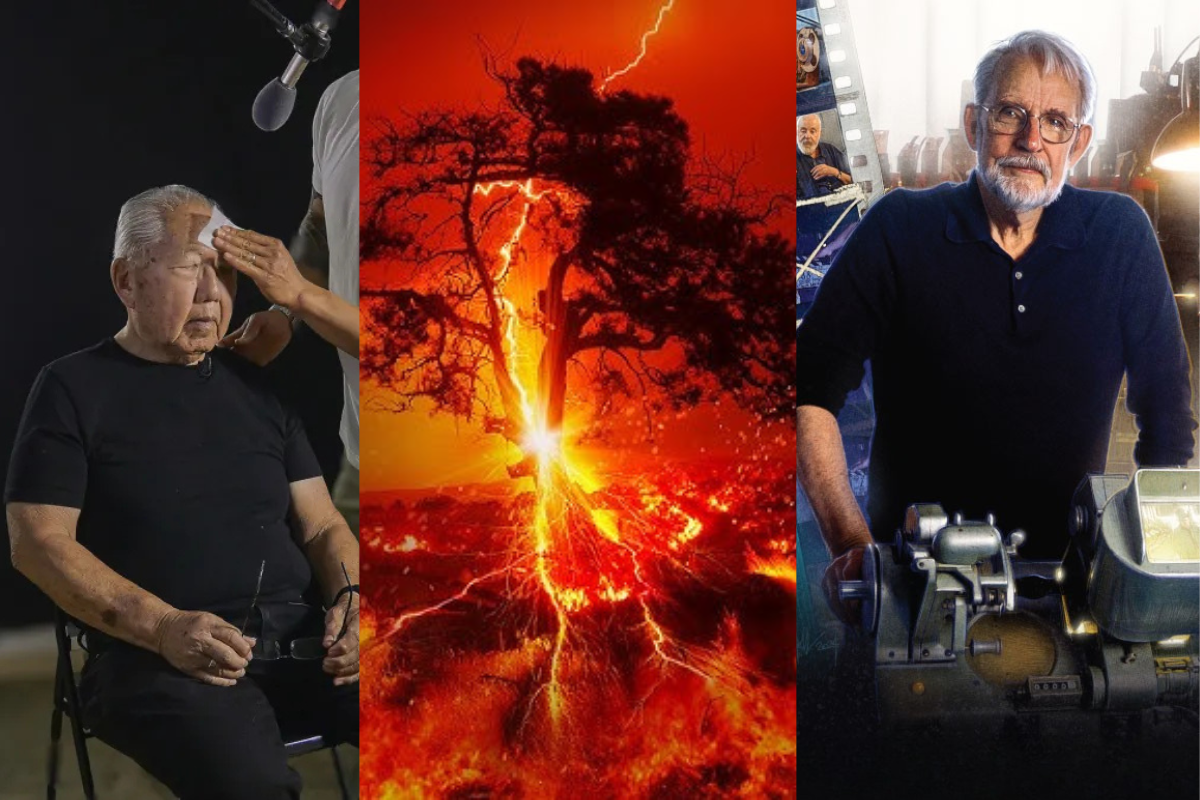
âThird Actâ: A Father, a Son, and the Frames Between
âMy whole life I always knew I had to make a film about my dad.â Tadashi Nakamuraâs opening line isnât just a mission statementâitâs a confession. The camera zooms in on grainy childhood photos of the Nakamura family: a toddler Tadashi in a UCLA onesie, his father Robert in a directorâs chair, and a clapperboard marked âPrinceâ (Tadashi’s son) that bridges generations. We hear Tadashi’s childhood voice, tinny and earnest, interviewing his father: âWhatâs the secret of success?â Â
Young Robert, ever the professor, replies: âYouâve gotta have a vision.â
But âThird Actâ isnât a victory lap. When Robert, the godfather of Asian American cinema, is diagnosed with Parkinsonâs, Tadashi’s film shifts from chronicling his fatherâs legacy to confronting mortality. Robertâs career is staggeringâhe co-founded Visual Communications (the first Asian American media collective), directed the groundbreaking âHito Hata: Raise the Bannerâ (the first feature film by and about Asian Americans), and mentored a generation of filmmakers. Yet Tad digs deeper, unearthing his fatherâs internment at Manzanar, his battles with depression, and the generational chasm between Robertâs stoic upbringing and Tadâs own search for identity.
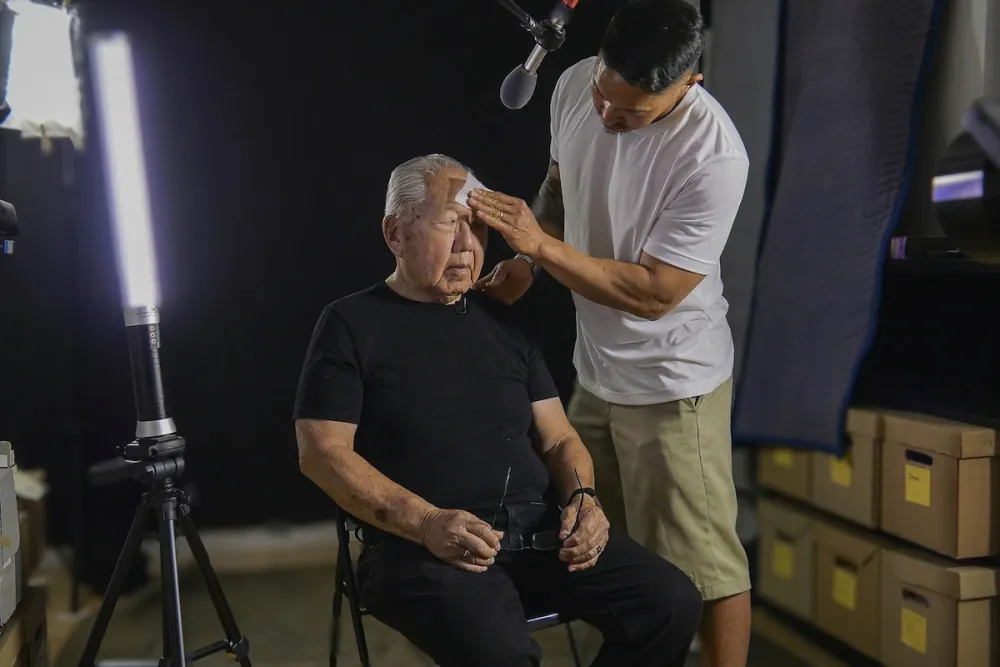
The documentary layers archival footage of Robertâs early workâlike his 1974 film âWataridori: Birds of Passage,â which documented Tadashi’s grandfatherâwith present-day scenes of Robert grappling with his fading health. A particularly raw moment shows Tad screening a rough cut of âThird Actâ to his father. Robert, now frail and slurring his words, critiques the pacing: âToo slowâ¦needs music here.â Tadâs face tightens; itâs a collision of filial duty and artistic pride.
An Intimate Documentary on Legacy and Intergenerational StorytellingÂ
The filmâs title comes from a question Tadashi asks his aging father: âWhatâs your third act?â Robert, ever the pragmatist, deflects with a joke. The answer, of course, is this filmâa final collaboration that spans seven years, capturing Robertâs decline and Tadashi’s evolution as a father himself. Â
Among the many strengths of this documentary is its honesty. Here, Nakamura avoids hagiography. When Tadashi’s son Prince asks about Manzanar, Robertâs silence speaks louder than any lecture. In another scene, Tad unearths old letters revealing his fatherâs suicidal ideation during the 1980sâa revelation that fractures the myth of the âgodfatherâ and rebuilds him as a man. The film occasionally leans on formula (archival montages, talking-head academics), but its power lies in the unsaid. When Tadashi films Robertâs trembling hands arranging family photos, the act feels less like documentation than communion. Â
âThird Actâ isnât just a film about a father and son; itâs about the stories we inherit, the ones we rewriteâand the ones that slip through our fingers.
Grade: B+
âIncandescenceâ: When Fire is a Cure, and Not the Curse
âWhat will the world be without fire?â That question lingers like smoke over Nova Ami and Velcrow Ripperâs âIncandescence,â a documentary that reframes wildfires not as apocalyptic spectacles but as ancient, necessary rhythms. With its showing coinciding with the catastrophic January 2025 Southern California wildfiresâwhich torched 1.2 million acres, displaced 200,000 residents, and turned Malibu into a charred moonscapeâthe film feels less like a warning than a eulogy. Â
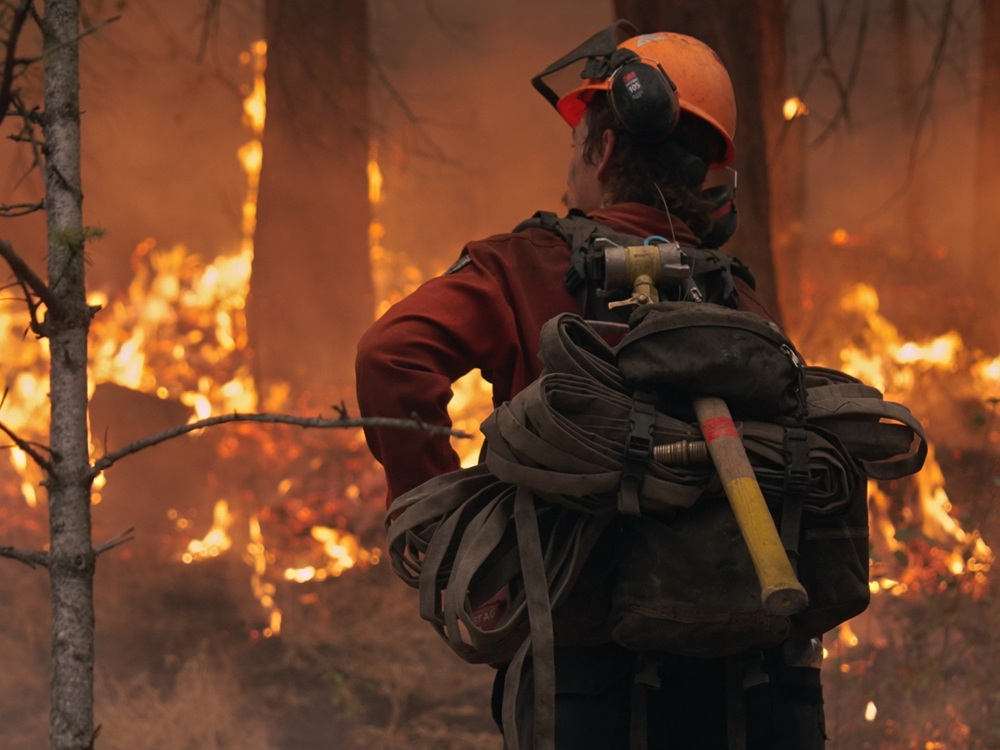
What I find refreshing with the documentary is how the directors avoid the usual disaster-porn visuals. Instead, they train their cameras on the fireâs aftermath: beetles carving patterns into charcoal, ospreys nesting in skeletal trees, and Indigenous firefighters reigniting controlled burns. A Karuk elder explains how her ancestors used âgood fireâ to cleanse the land, a practice outlawed by colonizers. The irony stings: modern fire suppression, designed to âprotectâ forests, created tinderboxes. Now, as megafires rage, weâre scrambling to relearn what Indigenous communities never forgot.
However, âIncandescenceâ isnât content to dwell on the past. The film pivots to the present, where communities are redefining resilience. We see a retired firefighter turned permaculturist whoâs transforming his scorched property into a fire-adapted homestead. He plants fire-resistant native shrubs, creates defensible zones, and even builds a âfire gardenâ to educate neighbors. âFire isnât the enemy,â he says, raking dried brush.Â
âIgnorance is.âÂ
An Incisive Exploration of Fireâs Duality of Destruction and RebirthÂ
Personally, I feel that the filmâs boldest choice is its soundscape. Thereâs no scoreâjust the crackle of flames, the hiss of embers, and the eerie quiet of a forest floor post-fire. Itâs immersive, almost uncomfortably so. When a survivor describes fleeing her home, her voice merges with the roar of a blaze until you canât tell where the memory ends and the present begins. We also follow firefighters battling the infernos, their faces streaked with soot and exhaustion. At the end of the day, these arenât heroes in capesâtheyâre ordinary people navigating a world on fire. Â
But hereâs the rub: âIncandescenceâ isnât really about fire. Itâs about hubris. We see drones mapping burn zones, politicians spouting empty rhetoric, and a tech bro peddling AI-powered fire predictions. None of it masks the truthâthat weâre guests in a world that doesnât need us. The filmâs most haunting image isnât a burning house but a single sprout piercing ash. Itâs a reminder that Earth endures, with or without our permission. Â
What lingers isnât despair, though; itâs defiance. The final act shows a prescribed burn on the mountains, where Indigenous rangers and white landowners collaborate to clear underbrush. Flames creep, not rage, across the landscape. Itâs a searing acknowledgement, one that Ami and Ripper manage to convey: fire is a partner, not predator. As a call to action, âIncandescenceâ yearns to light a path forward: to survive this era of flames, we must stop fighting fire and start learning its language. Â
Grade: B-
âHer Name Was Moviolaâ: Love, Grease, and the Analog Ghosts of Cinema
Letâs get this out of the way: âHer Name Was Moviolaâ is a film nerdâs paradise. Itâs also a eulogy for a machine that revolutionized cinemaâand a middle finger to the digital age. Â
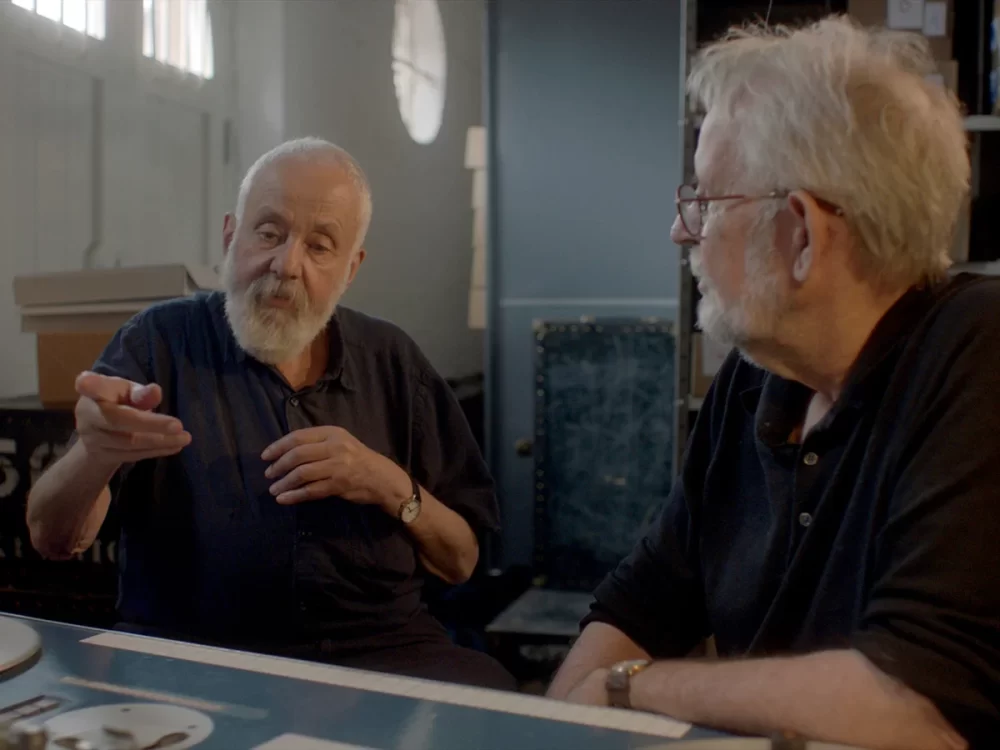
The Moviola, invented in 1924, was the first machine that let editors physically cut and splice film. Itâs clunky, loud, and smells like grease (according to Walter Murch, who should knowâhe edited âApocalypse Nowâ on one). Director Howard Berry and Murch embark on a quixotic mission: take a scene from Mike Leighâs âMr. Turner,â convert it back to 35mm, and edit it the old-fashioned way.Â
The process is absurdly laborious. We watch Murch squint at film strips, hand-label reels, and wrestle with a machine that looks like a cross between a sewing machine and a tank. At one point, he jokes that editors used to get âfilm rashâ from handling nitrate. Â
The Tactile Grit of Analog Toolsâand How Modernity Renders Them ObsoleteÂ
But hereâs the thing: the Moviola mattered. Before digital editing democratized filmmaking, the machine was a gatekeeper. Only those with the patience (and calluses) to master its quirks could shape stories. Berry doesnât romanticize the pastâhe shows the Moviolaâs flaws, like its tendency to chew up filmâbut he makes a sly case for analogâs virtues. Digital editing is faster, sure, but whereâs the tactile joy of threading film through a machine? Whereâs the camaraderie of editors huddled over a Steenbeck? Â
The filmâs climax is a screening for Leigh, who grumbles about Murchâs edits. Itâs a delicious moment: two legends debating cuts like itâs 1975. âHer Name Was Moviolaâ isnât perfectâit drags in technical deep divesâbut its heart is in the right place. In an era where films are âprocessedâ more than crafted, Berry and Murch remind us that art isnât just about the final product.Â
Sometimes, itâs about the grease under your nails.
Grade: B
“Third Act,” “Incandescence,” and âHer Name Was Moviolaâ screened at this yearâs Santa Barbara International Film Festival. The festival ran from February 4 to 15, 2025. Follow us for more coverage.




