



Unfortunately, America isnât the only country in the world where women have struggled to get the right to vote. In 1928, after a long fight, women in Italy gained the right to voteâbut it was limited to only local elections. It wasnât until 1945, shortly after the end of World War 2, when women in Italy gained the right to vote in all elections. And the timing couldnât have been better, because the following year, a referendum was held to determine whether the monarchy of King Victor Emmanuel III would continue or whether the country would abolish the monarchy for a Republic. The outcome? The King got the boot and went into exile as Italy became a Republic, the Italian people desperately trying to shake off the damage and stench the fascists had left behind.
Women could vote out the countryâs monarch, but sadly many of them were still at the mercy of their dictator-like husbands and boyfriends. Keep all this in mind while watching âThereâs Still Tomorrowâ (directed by and starring Paola Cortellesi with a script by Paola Cortellesi, Furio Andreotti, and Giulia Calenda). The film is set in Rome in 1946 and references to womenâs suffrage subtly pop up throughout it.
Abuse and its Casualness
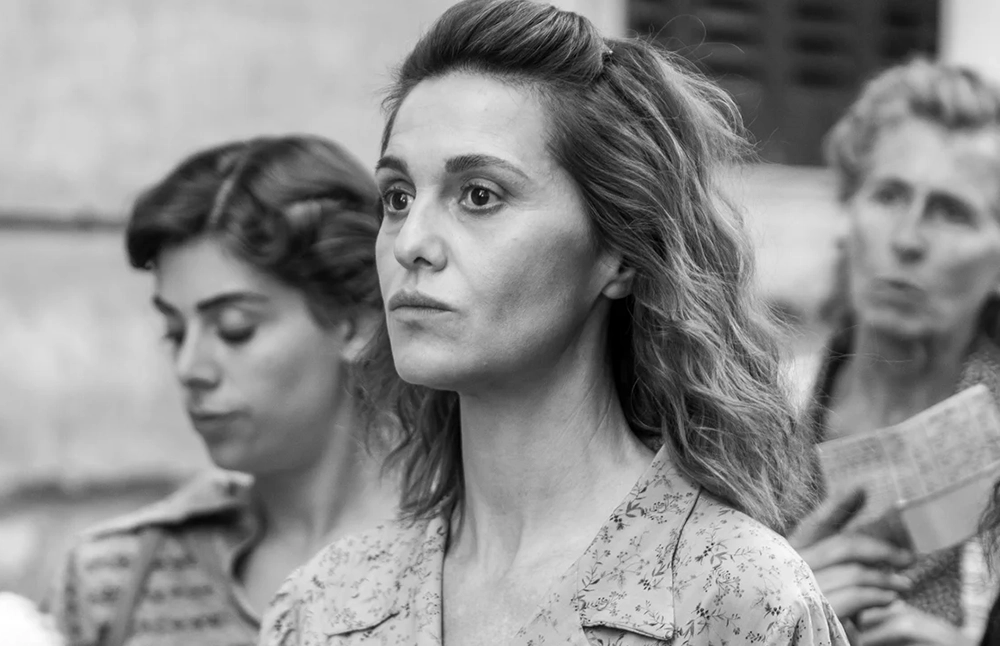
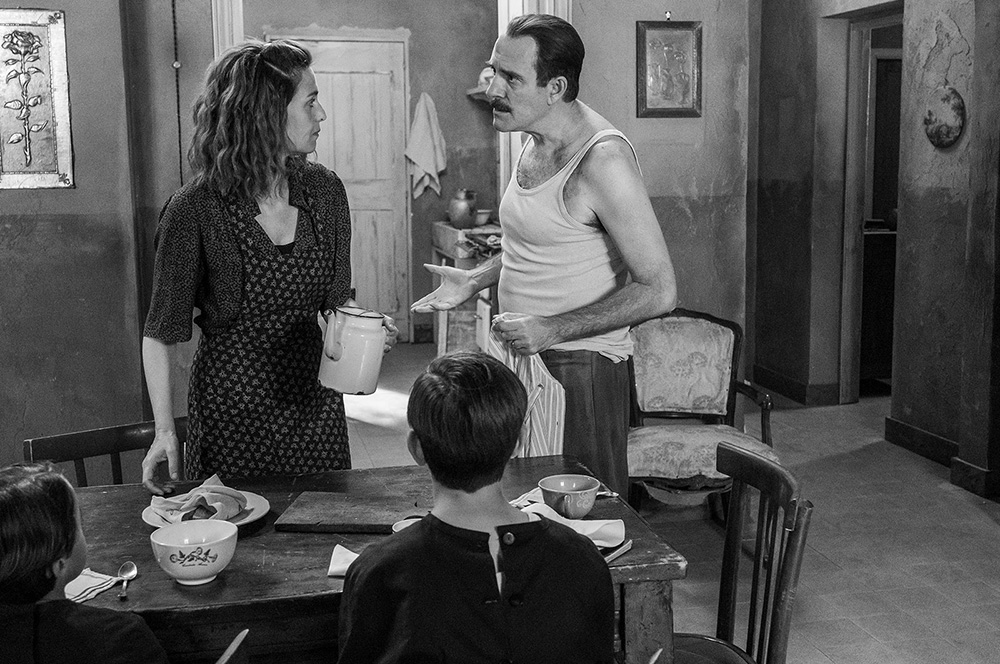
Delia (Paola Cortellesi) is married to brutish Ivano (Valerio Mastandrea). To say Ivano abuses her is like saying rain is wet. In the first 60 seconds of the film, as morning dawns and Delia and Ivano wake up to a beautiful sunrise, Delia says âgood morningâ to Ivano. He instantly responds by giving her a harsh backhand slap to the face. Whatâs so jarring about Ivanoâs abuse is the casual way he dispenses it. Whenever he slaps, punches, or chokes Delia, thereâs no rage in his features. He does it casually, as if itâs as involuntary as a sneeze. Delia accepts the abuse because she feels thereâs nothing she can do about it.Â
The couple have three children: teenage daughter Marcella (Romana Maggiora Vergano) and two young sons (Mattia Baldo and Gianmarco Filippini), whose names are never given but who reap all the benefits of being maleâ including going to school and getting an education, which Marcella has not been allowed to do. Even though Ivano never physically abuses his daughter the way he abuses his wife, heâs still quite content to limit Marcellaâs life options simply because sheâs female.
Director Cortellesi (with Cinematographer Davide Leone) captures the life of poor and working class Italians of that era perfectly, shooting the film in crisp black and white and making it feel at times like a lost Italian neorealism film from the late 1940s. Eat your heart out Roberto Rossellini!
The Old and the New
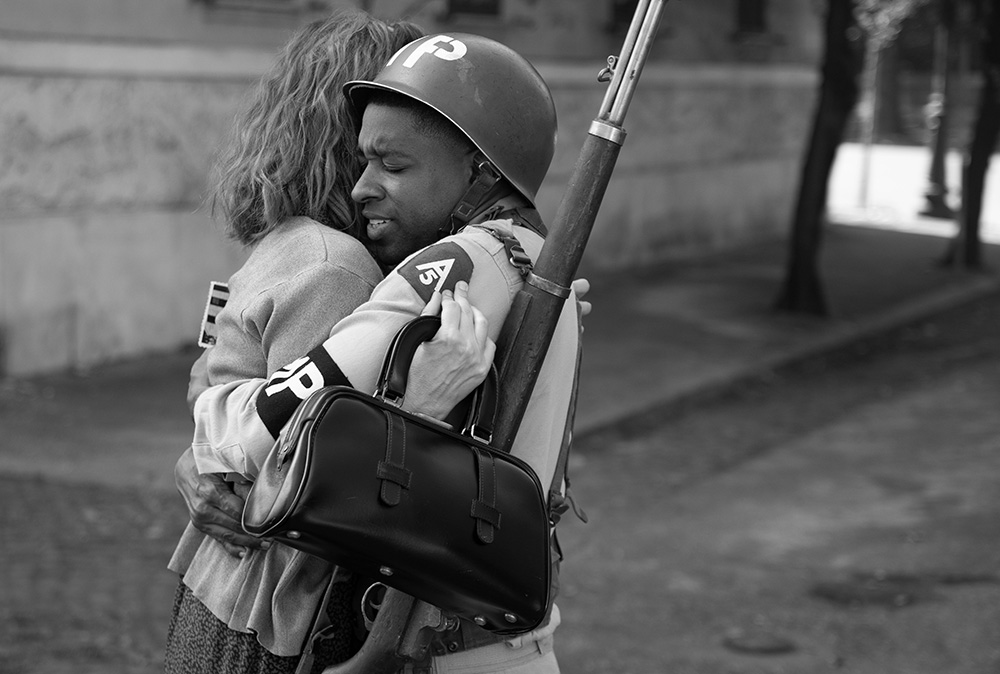
However, Cortellesi throws in some modern touches also, including the use of anachronistic music that gives the film a dynamic energy. In the opening credits sequence, Delia leaves her gloomy prison of a house and walks to the nearby tailorâs shop. As she strides past cafes, crumbling buildings, and graffiti-filled walls, a funky song plays. The song sounds akin to something out of a 1970s Blaxpoitation film like âFoxy Brown,â and it’s delightful. Itâs so funky that if Quentin Tarantino heard it heâd start drooling.
Delia moves throughout the film with impenetrable dignity, never succumbing to despair as she works odd jobs to make extra money for the family. She keeps some of it for herself, hiding it from Ivano so she can use the money to eventually buy a fancy wedding dress for Marcella, whoâs set to be married to the son of a rich restaurant owner. There are few bright spots in Deliaâs life and Marcella is one of them. Her two sons are beyond obnoxious, always fighting with each other, destroying things, and cursing. Itâs guaranteed theyâre going to grow up to be the same awful adults their father is. Delia tolerates themâmaybe she even loves themâbut itâs Marcella she truly dotes over.
Sheâs determined to make Marcellaâs life better than her own, despite the fact Marcella occasionally lashes out at her for taking abuse from Ivano, for being a âdoormat.” When Delia learns something horrible about Marcellaâs fiancé, she has to figure out a way to cancel Marcellaâs wedding and risk Marcella hating her for the rest of her life.
Romance Under its Dark Layers
The other bright spot in Deliaâs life is Nino (Vinicio Marchioni) an old flame of Deliaâs whoâs a car mechanic. She passes by his auto shop every day to speak to him or just get a glimpse of him… and who can blame her? Nino has the rugged good looks of a Roman warrior but a gentle vulnerability in his manner that makes you wonder why every woman in Rome isnât queuing up at his station to âget their motors fixed.” Â
Thereâs a moment between Delia and Nino with a piece of chocolate thatâs one of the most romantic scenes Iâve ever seen in a film. And no, itâs not pornographic or obscene, but is erotic and sweet, proof that under Delia has a passionate heart beating under all the numbness she shows toward the world.
A Very Lovable, Yet Hard Film
One day, Nino tells Delia that heâs going to have to close his shop and move hundreds of miles north to help his brother. He wants her to come with him and heâll be leaving in a week. Again, it puts Delia at a crossroads. Should she go with him and leave her family behind? Both these subplots play out through the film as Delia works to make a happy ending for both Marcella and herself.
Despite some scenes of Delia being abused that were hard to watch, I loved “There’s Still Tomorrow,” and especially Deliaâs character. Throughout the early parts of the film, I found myself getting as frustrated by her as Marcella. Why doesnât she fight back? But as the film rolls on, you realize Deliaâs playing the long game. Sheâs far smarter and stronger than most of the people around her. And Paola Cortellesiâthrough some masterful narrative sleight of handâdelivers a fantastic twist ending to the film that may not be what you expected, but it sure is satisfying.