The unofficial Catholic-themed film canon can welcome a new entrant. Joining such esteemed expressions of paradise lost as âMean Streetsâ (1973)âor, really any Martin Scorsese film ââDiary of a Country Priestâ(1950)â or any Robert Bresson filmâand, yes, âGroundhog Dayâ (1993), Alain Guiraudieâs âMisericordiaâ (2024) is a delightful, naughty puzzle that eschews as many expected narrative symbols (no visible fire or brimstone) than it deploys (a priest, lots of wine) in this sub-genre. While it invests perhaps an excess of screentime to philosophical dialogue and religious moralizing, âMisericordiaâ (French for mercy) is a fresh, frank and deceptively-cozy maze. Set in a sleepy, woodsy village in Guiraudieâs native region of Occitanie, âMisericordiaâ spreads the sacrifice and guilt deliciously thick and wide, trapping the entire town in a cage of its own making, amounting to a crowdsourced flogging that not one of them is eager to escape from willingly.Â
Arriving into his hometown bewildered yet mysteriously resolute, Jérémie (Félix Kysyl) greets the widow Martine (Catherine Frot) or his former boss, the townâs only baker. Accepting his sincere condolences, Martine makes way for her son Vincent (Jean-Baptiste Durand) to welcome his old friend and Yahztee pal, the extra kiss on Jérémieâs cheek proves itself to be less a French ritual of affection than a sly suggestion that thereâs some imbalance in this shaky relationship, and itâs not just because theyâre all in mourning. Guiraudie may repeat certain plot points (unrequited queer lust) or character types (lonely, horny rural men), but he hasnât made the same film twice. Of course, âMisericordiaâ does share common ground with âThat Old Dream That Movesâ (2001) and the brilliant âStranger By The Lakeâ (2013), but it ultimately stands alone as a bizarre sort of anarchist, Atheist romp rather than an elliptical cautionary tale.Â
Subtle and Visually-arresting
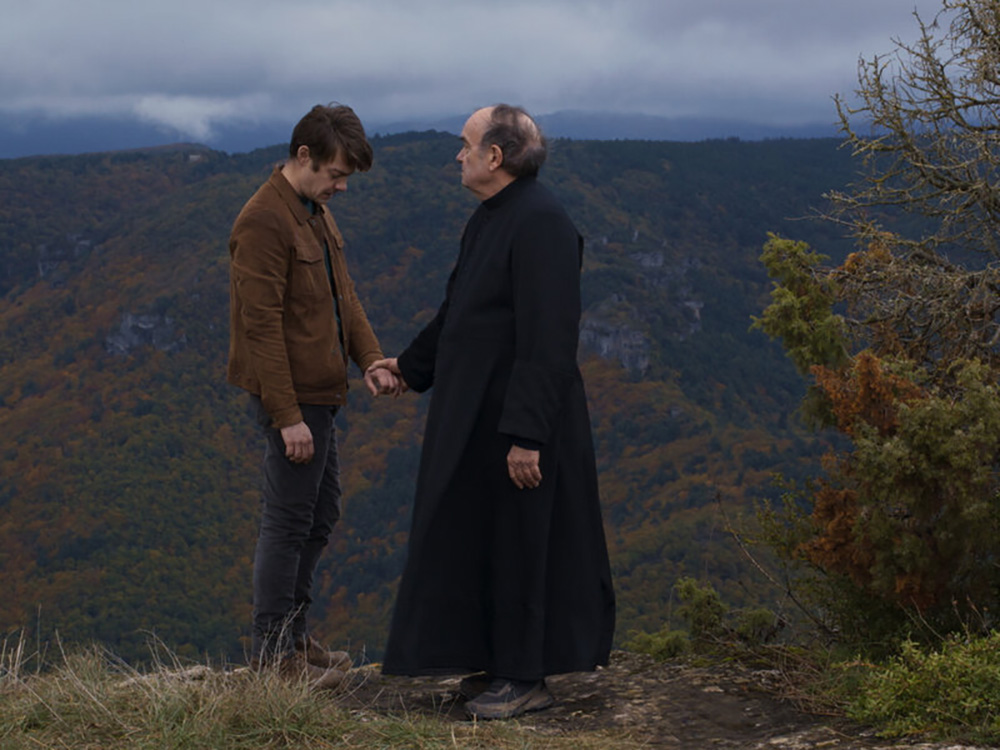
Guiraudie (who directed and wrote the original screenplay) has publicly acknowledged that his rural Catholic upbringing inspired âMisericordia,â which loops from sin (murder) to repentance (in a whip-smart reverse-confessional scene) to forgiveness (for whom, and from whom, remains unclear). And if this narrative arc wasnât clear enough, the townâs priest (a rock-solid Jacques Develay, whoâs also rock-hard in the filmâs funniest moment) says as much, coaching Jérémie quite literally off the ledge, after the aimless boyâs rage ran amok. The chemistry between Father Phillipe and Jérémie is thrilling and credible in the same way that Jérémieâs boyish, freighted antagonism with Vincent is foretelling, but this destabilized tone is never all hot or all cold. In Guiraudieâs cinematic universe, every scene and person matters, and even though Jérémie is a wandering, lost soul, thereâs ample humor and pathos in the searching.
Father Phillipeâs monologues might tread towards heavy-handed sermonizing, but the film overall is so subtle and visually arresting (the great Claire Mathon handled the cinematography, as she did on âStrangerâ) that its rare expository missteps are forgivable. And, itâs possible that we are so trained to observe Guiraudieâs most exacting details that the filmâs modest over-investment in telling over showing calls an outsized amount of attention to itself like an imperfect, deformed mushroom in the forest. Still, like Jérémie, âMisericordiaâ pursues redemption in some treacherous, exhilarating places and finds it thanks largely to a sturdy ensemble of wounded, weary neighbors like Walter (David Ayala) who gently guide the collective from crime to punishment to recovery.Â
Expressing Love and Bewilderment
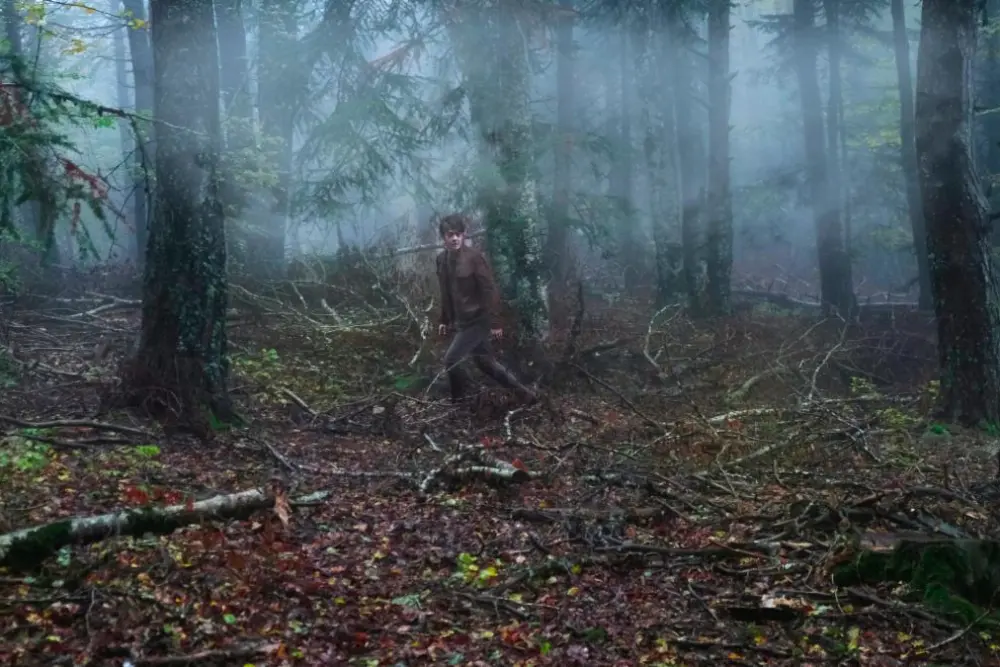
And it must be said that for all of Guiraudieâs oft-cited makerâs marksâmost reviews mention the middle-aged male bodies and their dicksâone deserves special mention here: the faces. From Walterâs (who could be a character actor from âThe Bakerâs Wifeâ (1938) pouty mug to Vincentâs (his cleft lip evokes a bald Joaquin Phoenix) menacing gaze, each face has its own complex, withheld story, neither all torment nor all happiness. The wear and tear of life is visible, and even the stolid Martine struggles to smile or frownâperhaps the years have taught her to hide extreme emotions. And so the fresh, unfamiliar Teorema named Jérémieâyouth undimmed after all these yearsârouses and arouses the townspeople the most, inciting unexpected sexual awakening and, perhaps inevitably, irrevocable violence.Â
Despite an uncertain alignment with the more obviously Catholic-obsessed films, the filmâs strangest bedfellow is âGroundhog Day.â When Vincent shocks Jérémie awake at 4 a.m., the camera lingers on the alarm clock, personifying itâand timeâas a giggling antagonist. Repetition is the enemy of these burnt-out lifers and it takes the death of a baker and resurrection of Jérémie to liven the community, forcing everyone see their own shadows but walk away from their protective yet suffocating shelter. Father Phillippeâs best line is that âDeath is a good thing,â and that could function as the filmâs tagline, suggesting not just that dying is inevitable, but that it makes room for life and rebirth. Expressing love and bewilderment at these flawed folks, Guiraudie places his arm around the entire community and saysâ to quote Sunny, who sang out from Philâs alarm clock in âGroundhog DayââI got you, babe.Â