





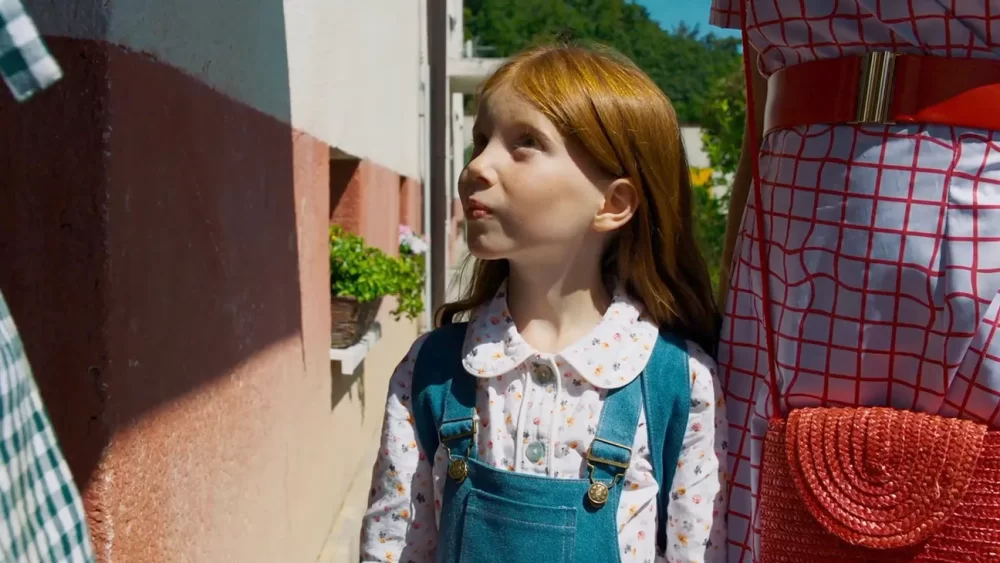
Beata Parkanováâs âTiny Lightsâ (Czech: SvÄtýlka) captures a dissolving family from an unusual perspectiveâthat of a six-year-old girl. Rather than directly confronting the turmoil, the film filters it through Amálkaâs (Mia Bankó) limited understanding. The result is a quiet, observational piece that leans into childhood innocence while hinting at the adult conflicts just beyond her comprehension.
The opening scene establishes this dynamic beautifully. Amálka presses her ear to a door, straining to catch words exchanged in hushed but heated tones. She hears her grandmother dismissing her motherâs pursuit of happiness as a fairy tale, but the meaning eludes her. Rather than reacting with sadness or concern, she plays with the family cat, clutches a childrenâs book, and opens the door to the room where the adults are talking. Asked to return to her room, Amálka matter-of-factly states, âIâm bored.â This moment sets the tone for the filmâshe exists within her own little world, even as that world is on the verge of change.
More SBIFF Coverage: âA Missing Partâ is a Heartbreaking Story of a Fatherâs Love in a Foreign Land
A Thoughtfully Crafted Perspective Portrays the Weight of Unspoken Tensions
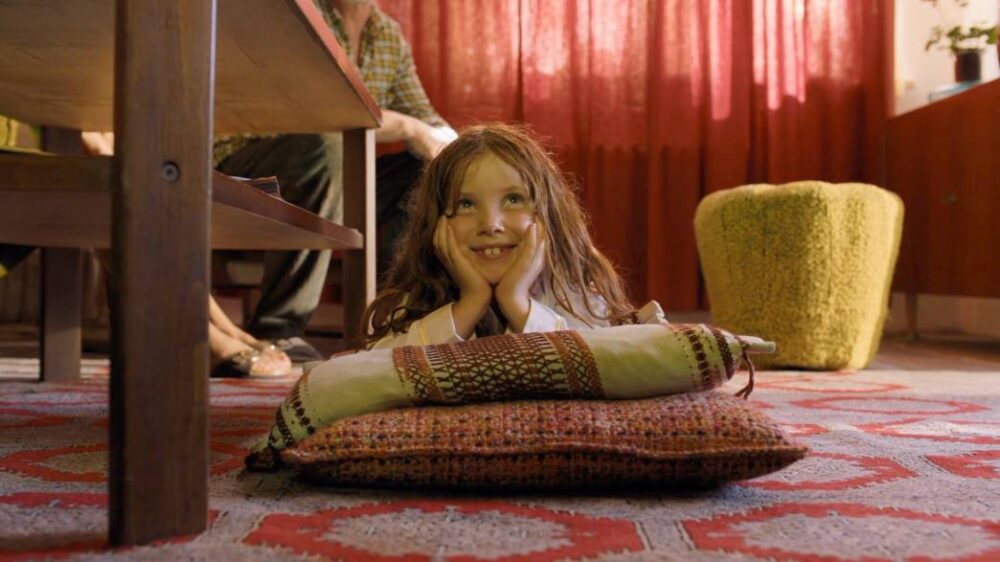
Parkanováâs approach to storytelling is immersive, keeping the camera at Amálkaâs eye level and presenting the narrative as she experiences it. The cinematography by Tomáš JurÃÄek enhances this, using rich, saturated colors that make each moment feel like a vivid childhood memory. The visuals are strikingâwarm tones of sun-drenched fields contrast with the cooler hues of her home, reflecting the comfort she finds in nature versus the unease of her domestic life.
Bankóâs performance is remarkable. She embodies Amálka with an effortless mix of curiosity, mischief, and quiet contemplation. Thereâs a naturalism to her acting that makes her feel like a real child rather than a scripted character. She doesnât over-explain or react in ways that feel staged. Instead, she simply exists within the frame, absorbing the world around her.
The core of âTiny Lightsâ revolves around the strained relationship between Amálkaâs mother (Elizaveta Maximová) and grandmother (Veronika Žilková). The tension between them is palpable, yet Parkanová never directly exposed Amálka to it. Instead, the young girl catches glimpsesâa sharp remark from her grandmother, her motherâs quiet frustration, the way conversations shift when she enters a room.
These small moments build a sense of unease. Amálka loves both women, but she senses the discord. A telling scene shows her playing with other kids her age, as she mutters to herself, âMummy, Granny, Mummy, Granny,â as if trying to balance their presence in her life. Meanwhile, her grandparentsâ attempts to distract herâtaking her swimming, picking blueberriesâfeel like a quiet effort to maintain normalcy, even as things unravel around them.
A Double-Edged Strength
Parkanová excels in capturing the innocence of childhood, but this strength is also where âTiny Lightsâ stumbles. By committing so fully to Amálkaâs perspective, the movie risks feeling too clinical, and thus emotionally distant. The lack of a clear adult lens means the story unfolds without the emotional framing that might give weight to the familyâs conflict. While this detachment mirrors how a child would experience such eventsâuncertain, floating between momentsâit can also leave the audience grasping for something deeper.
The film also flirts with artifice. Abstract insertsâshot on what looks like Super 8 filmâadd a dreamlike quality but donât always feel essential. They hint at deeper themes but remain just that: hints. Similarly, the pacing, though deliberate, sometimes meanders. At just under 80 minutes, itâs a short film, yet some sequences stretch longer than necessary, making the emotional core feel thinner than it should.
More SBIFF Coverage: âTo Kill A Wolfâ: A Haunting and Atmospheric Tale of Trust, Trauma, and Redemption
âTiny Lightsâ: A Fractured Family as Seen (and Overheard) by a Child
Despite its occasional detachment, âTiny Lightsâ is an evocative, beautifully crafted film. Parkanová understands childhoodâits small joys, quiet fears, and its way of absorbing the world without fully grasping it. The filmâs greatest achievement is how it places us in Amálkaâs shoes, making us feel the uncertainty she doesnât yet have words for.
While the filmâs commitment to perspective is impressive, it also limits how deeply it resonates. The absence of a more defined adult viewpoint makes the familyâs unraveling feel observed rather than felt. Still, thereâs something haunting about watching a child sense the shift in her world, even if she doesnât yet understand why.
Ultimately, this delicate film demands patience, and its minimalism can be frustrating for those looking for a more traditional narrative. But for those willing to sit with its quiet moments, it offers a visually stunning meditation on the things children see and hearâlong before they fully understand them.


“Tiny Lights” screened in the “Eastern European Cinema” section at this year’s Santa Barbara International Film Festival (SBIFF). The festival ran from February 4 to 15, 2025. Follow us for more coverage.




