





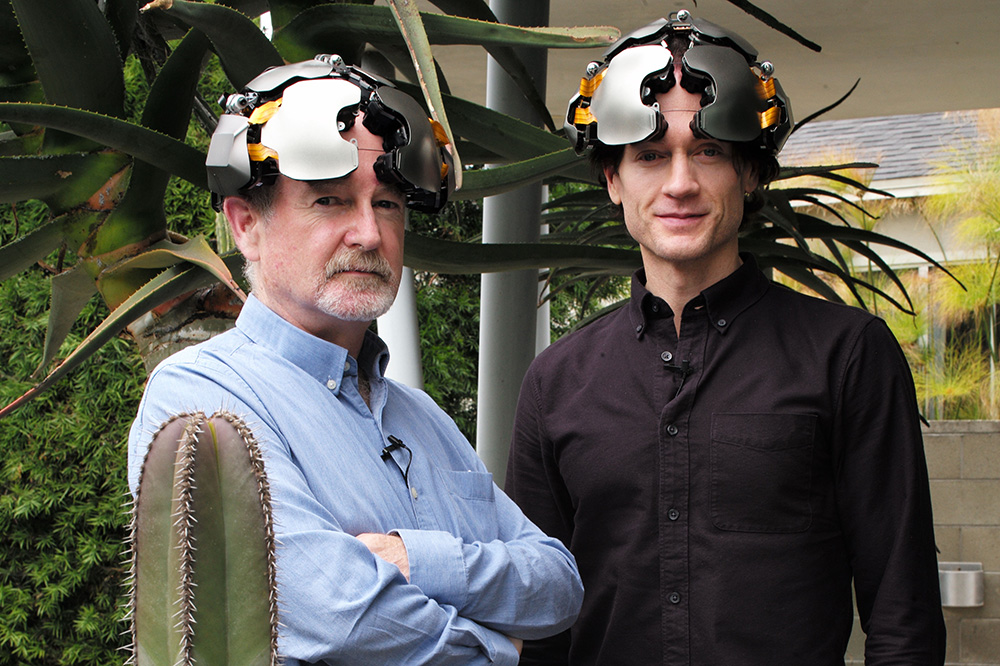
Before a potentially perilous moment captured in Les Blankâs âBurden of Dreams,â Werner Herzog rallies the cast and crew of âFitzcarraldo,â encouraging them to âtake that risk!â Herzog, a legendary artist, personality and voice, has spent much of his fifty-plus year career fixated on chasing outsized risk, energizedârather than dauntedâby the odds against him. His latest documentary âTheater of Thoughtâ (2022) makes its U.S. theatrical debut at Film Forum on Friday, December 13th, and, characteristic of his best work (fiction and nonfiction), Herzog emits a contagious curiosity aimed at an elusive, often misunderstood subject: the brain. And while Herzog isnât dodging arrows in the jungle, heâs chasing answers as always. Trying to understand what advancements in technology means for the brainâs future, Herzog asks necessary ethical questions in addition to expressing profound (and justifiable) optimism for this intrepid medical research.Â
Ever the prolific workhorse, Herzogâs output has been especially varied in recent years. Since 2019, Herzogâwho turned eighty-two in Septemberâhas completed five feature films, a memoir (âEvery Man for Himself and God Against All,â 2023) and his first novel (âThe Twilight World,â 2021). And, according to Argot Pictures, which released a restoration of âBurdenâ this summer as well as âTheater,â Herzogâs currently finishing a film about ghost elephants in the jungles of Angola while working on a new feature to shoot this spring in Europe with Rooney and Kate Mara. If Werner Herzog didnât exist, Werner Herzog would have had to invent him.Â
Serious and Searching, Yet Playful
Still, for all of Herzogâs fervent energy and endless passion, âTheaterâ does contain some traces of his own singular brand of âlateâ style. Itâs wonderful that technology could help cure mental illness and itâs heartening to see a man with Parkinsonâs walk thanks to experimental technology, but if all of this is in the early stages, it means some of us might not be around to witness the full benefits. Herzogâs pursuing answers that would help all of us understand the limits and potential of these life improvers and extenders, but heâs still resisting the concept that mortality is inevitable. So, itâs bittersweet when he asks one expert of the mind if itâd be possible for a deceased personâs brain to communicate with the body. The interviewee, a little baffled yet very much down to Herzog, laughs, admits that itâs unlikely, but offers to continue the conversation over beers.Â
That sequence represents âTheaterâ at its core: serious and searching, yet playful. Early in the film, Herzog even interjects (via voiceover) to acknowledge to the audience that heâs totally lost, trying to follow Dario Gil, IBMâs Director of Research, scribbling complex equations on a dry-erase board. Herzog is both out of his league and totally in the lane heâs made for himself all these years. But, heâs not the authority on matters of the brain, so the pleasure is in sitting back and joining him like a fellow student, eagerly raising a hand from the back of the class instead of lecturing in the front. Itâs heady material, to be sure, but Herzog permits us to put pencils down and enjoy the tour.Â
Herzog Invites Us In
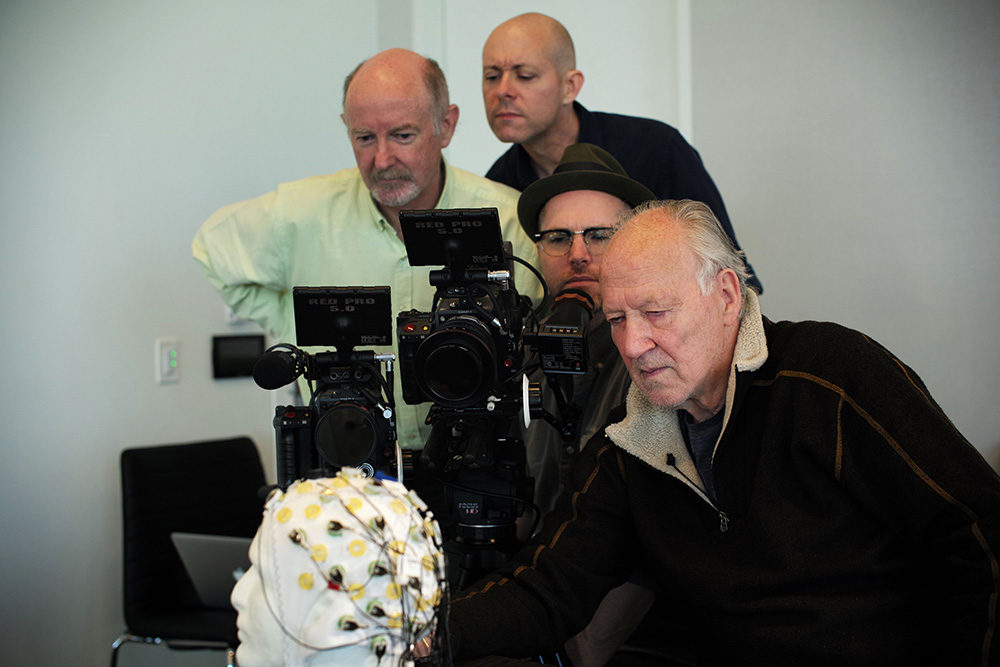
And of course, there are detours. Not quite non-sequiturs, more curious swerves deeper into Herzogâs busy skull. Amid the PhDs, neurologists, venture capitalists and AI enthusiasts, Herzog grants some airtime to Phillipe Petit, the man who high-wire walked between the Twin Towers of the World Trade Center in the early 1970s. Itâs no great shock that the two men are personal friends; itâs more surprising Herzog has never made a movie involving Petit beforeâbut Robert Zemeckis and James Marsh have. Including Petit is a reminder that this is Herzogâs film, and despite partnering with The Neurorights Foundation, âTheaterâ is far from a PSA for that organizationâs work and principles. Herzog has spent a career studying the mind in different ways, and presenting Petit is a form of support, how to show while the scientists and geniuses tell, in their own words, how a brainâs complexity is beyond simple explanation.Â
That doesnât stop Herzog from asking pointed questions about artâs function and impact on the human brain, revealing his direct path to seek meaning at the late stages in life. Absent in these interview sequences is Herzog the meme-worthy philosophical madman, and maybe itâs time to retire that trope after all. For he remains a singular risk-taker and generous creator in an industry in which the maverick auteur has fallen out of favor. Commercial validation has eluded Herzogâin recent years especiallyâbut fortunately for us, he forges ahead, sharing the appetites of Francis Ford Coppola (âMegalopolisâ) or Catherine Breillat (âLast Summerâ), contemporaries of Herzog who continue to push boundaries with thoughtful, personal work that promises to prod and provoke beyond a given awards season or any arbitrary expiration date. Sharing his brain, Herzog invites us all to bear witness to its thorniest burdens and most fanciful dreams.Â
Werner Herzogâs âTheater of Thoughtâ opens on December 13th at Film Forum in New York. Argot Pictures is releasing the film in select markets throughout 2024 and 2025.




