





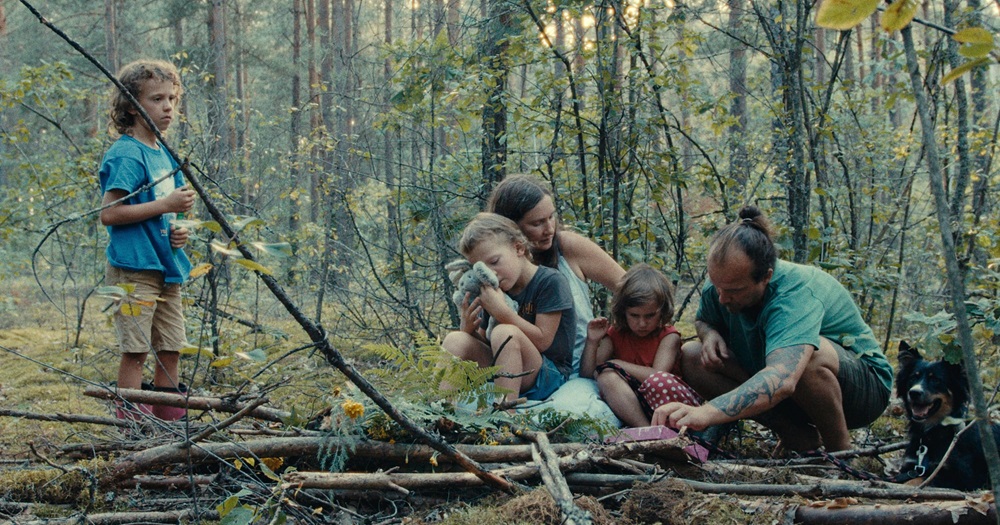
The BiaÅowieża Forest, a sprawling wilderness straddling the Polish-Belarusian border, is a place of ancient beauty. For Asia and Marek, it offers a chance to escape the trappings of urban life and raise their three childrenâMarysia, Ignacy, and Franekâin harmony with nature. Their days are filled with tending bees, observing bison on trail cameras, and savoring the serenity of a world removed from modern chaos. But in Lidia Dudaâs âForestâ (Polish: “Las”), this idyllic retreat becomes a battleground for moral choices when the European refugee crisis infiltrates their quiet existence.
Dudaâs incisive documentary paints an intimate yet unflinching portrait of a family grappling with the collision of their dreams and a humanitarian emergency. As the forest becomes a crossing point for refugees fleeing violence in the Middle East and Africa, the family finds themselves facing questions of law, humanity, and the cost of doing whatâs right.
âBelarus Pushes Them Out, and Our Government Pushes Them Backâ
The crisis unfolding at the Belarus-Poland border stems from a calculated political maneuver. In 2021, Belarusian dictator Alexander Lukashenko began luring refugees with promises of easy access to the European Union, turning them into pawns in a geopolitical game. Caught in this cruel trap, these individualsâmany of whom acting out of utter desperationâfind themselves stranded in the unforgiving forest. Polandâs response has been equally harsh: a pushback policy that forces migrants to return to Belarus, where no safe haven awaits.
Asia and Marekâs home lies at the heart of this fraught borderland. As refugees pass through the woods near their property, their presence disrupts the familyâs perception of the forest as a sanctuary. Near the end of the film, one of Asia and Marekâs children comments on this grim observation that encapsulates the futility of the situation: âBelarus pushes them out, and our government pushes them back.â
Duda wisely resists sensationalizing this crisis. Instead, her focus remains on the human stories unfolding in its shadow. Through her lens, we see the family struggling to reconcile the laws of their nation with the more immediate laws of compassion. The children, in particular, bring clarity to this moral conundrum with their unfiltered reflections:
“You can only help them.”
“Illegally.”
“You have to obey the law butâ”
“It depends [on]what law it is.”
“âIt’s really sad that there’s a law that you can’t help.”
“It depends on you whether they will survive.”
This exchange of dialogue, delivered with the directness only children can muster, cuts to the heart of the filmâs themes. âForestâ underscores the innate human understanding that helping those in need is not just a choice but a duty, regardless of bureaucratic obstacles.
A World of Contrasts: Compassion Versus ConvenienceÂ
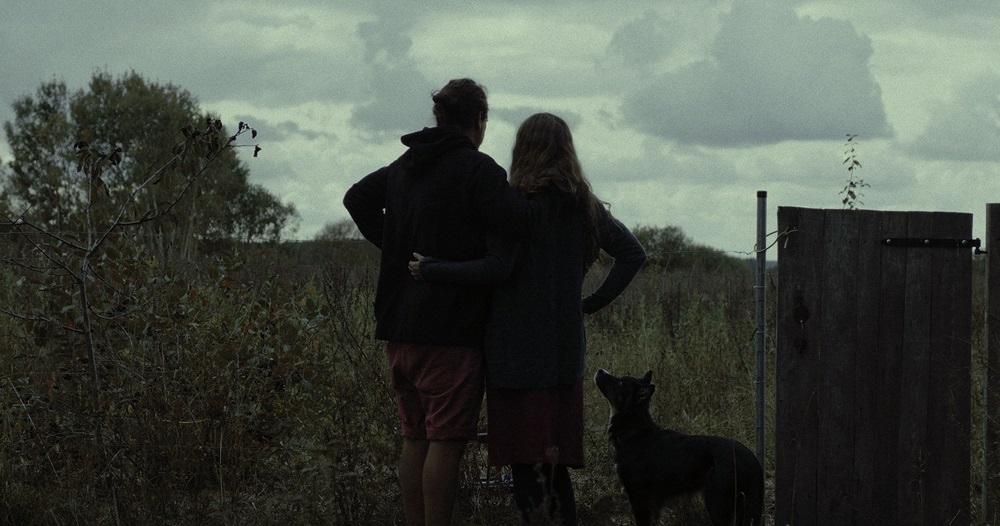
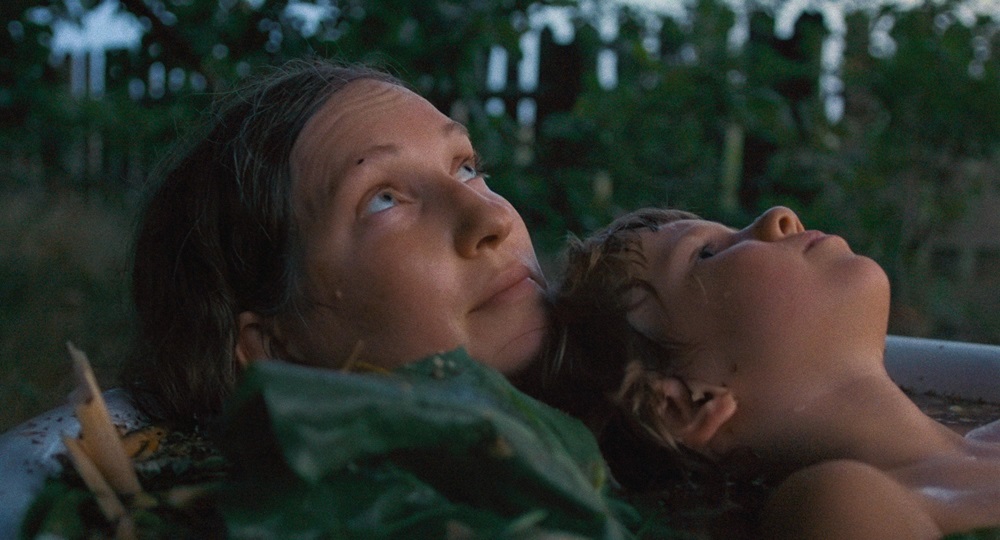
One of the documentaryâs most effective tools is its visual storytelling. Cinematographer Zuzanna Zachara-Hassairi depicts the dual nature of the forest with striking precision. Daylight scenes glow with a dreamlike warmth, emphasizing the familyâs connection to the natural world. By night, the tone shifts dramatically. Refugees emerge as shadowy figures, their movements captured in stark, handheld footage that conveys both urgency and vulnerability. This visual dichotomy mirrors the familyâs inner conflictâbetween the tranquility they sought and the chaos they can no longer ignore.
The forest itself becomes a metaphor, a place that offers shelter but also hides danger. For the family, it transforms from a sanctuary into a contested space where ideals of freedom and safety clash with harsh realities. As Marek solemnly notes, âSuch places no longer exist.â
What elevates âForestâ beyond a mere chronicle of events is its insistence on moral introspection. Through the familyâs journey, Duda challenges her viewers to ask themselves difficult questions: Are we willing to act on our principles when doing so comes at a personal cost? Can we uphold our humanity when the rules of society demand otherwise?
Asiaâs arc is particularly poignant. Initially envisioning a peaceful life for her children, she comes to realize that her paradise is irrevocably changed. âI thought they would grow up in the heart of nature,â she laments. Yet even as her dream fades, her actions speak to a deeper commitmentâto raise her children not just as stewards of the earth but as stewards of humanity.
âForestâ: A Crisis Close to Home
âForestâ offers an undeniably intimate glimpse into a family caught between their ideals and the unrelenting reality of a humanitarian crisis. But for all its profundity, I couldnât help but wonder whether Dudaâs restrained approach might leave some viewers wanting more. Thereâs an understated beauty in focusing on the immediate, human-level story, yet the broader geopolitical forces shaping this crisis sometimes feel like an unseen specter lurking just beyond the frame.
Would a more direct engagement with the larger political machinery behind the BelarusâPoland border crisis have added weight to the narrative? Maybe. One can even be excused for feeling that the film misses an opportunity to indict the systems perpetuating this suffering, instead zeroing in on the familyâs moral dilemmas. And while this lens is undoubtedly powerful, it risks leaving the bigger picture incomplete for those unfamiliar with the context.
The pacing, too, may test some audiences. The meditative rhythm of life in the forestâso evocative and essential to the filmâs atmosphereâat times slows to a crawl, which counters a documentary filmâs usual urgent, immediate pacing. Certain scenes linger, as if holding their breath, which might frustrate those eager for momentum or resolution.Â
Then again, isnât that precisely the point? âForestâ challenges us to sit with discomfort, to reflect on the tension between action and stillness, law and conscience, safety and humanity.
More DOC NYC Coverage: âMy Sweet Landâ: The Weight of Inherited Wars Seen Through a Boyâs Eyes
Beyond the Forest, a Reckoning
Where âForestâ resonates most is in its insistence that no one is untouched by this crisis. Asia and Marekâs evolution from dreamers of an idyllic life to reluctant participants in a moral reckoning is both heartbreaking and inspiring. Their childrenâs innocent yet deeply probing dialogues about the refugees highlight the weight of their decisions. Their unfiltered questions echo with moral clarity, forcing both the characters and viewers to confront what it truly means to do the right thing.
In one particularly striking moment, Marek declares, âSuch places no longer exist,â acknowledging that their once-idyllic haven has been irreparably altered. This realization extends beyond their familyâs story and into a broader contemplation of our world. Can any of us claim a paradise untouched by the crises of our time? And if not, how do we respond?
Ultimately, Lidia Dudaâs âForestâ doesnât offer easy answers. Instead, the filmmaker leaves us with a challenge: to confront our own role in a world where bordersâliteral and metaphoricalâshape the lives of so many. For what itâs worth, the film is a very timely affirmation that while compassion is never without cost, it is always worth the price.


Lidia Duda’s “Forest” had its North American premiere in the International Competition at this year’s DOC NYC. The festival runs from November 13 to December 1, 2024. Follow us for more coverage.




