





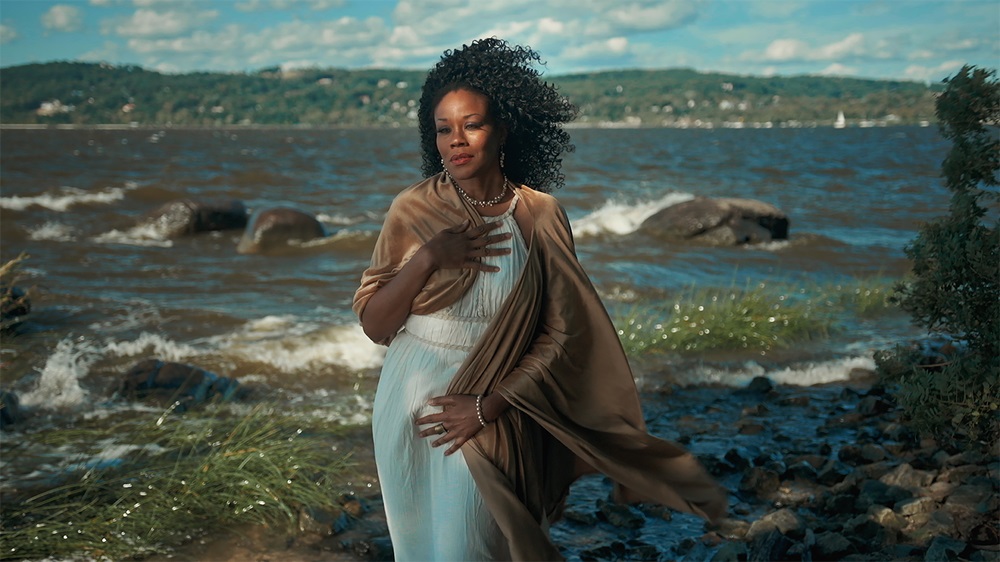
âAll things living transform,â begins Emily Packerâs documentary film âHolding Back the Tide.â The opening statement succinctly captures the importance of the docu-poetic movieâs timely themes. At its core, the film audaciously connects the humble oysterâa gender-fluid organism with deep roots in New Yorkâs ecological and economic historyâand queer identity.
And while the documentary sometimes struggles under the weight of its stylistic ambitions, Packerâs storytelling and the movieâs message more than make up for the choice to favor visual poetry over a more grounded and substantive exploration.Â
Related Review: âEmergent Cityâ: An (Oftentimes) Objective Take on Contemporary Urban Development
An Impressionistic Documentary of a âDish as Old as Timeâ
“Holding Back the Tide” traces the oysterâs life cycles in New York, once the worldâs oyster capital. The film positions the oyster not only as a crucial figure in the cityâs ecological restoration, but also as a symbol of resilience and queerness, with much to teach about survival in a world facing environmental and societal challenges. Through Packerâs vision, the oyster becomes entangled with human lives, myth, and nature, as queer characters embody ancient stories and discover the overlooked history and biology of the bivalve that once built New York.
In between the explorations and stories, Packer interjects philosophical musings and reflections about human existence and our connection to our surroundings.
We build, break, morph, become, and become ourselves again.
The tides rise and fall.
A rock turns to sand.
An island is made, remade, and made a city.
I find Packerâs approach here refreshing, as she eschews the traditional talking-head interviews and expository structure that often dominate the genre. Instead, “Holding Back the Tide” offers a more immersive, free-flowing experience that blends documentary realism with abstract recreations, poetic narration, and staged moments of visual beauty.
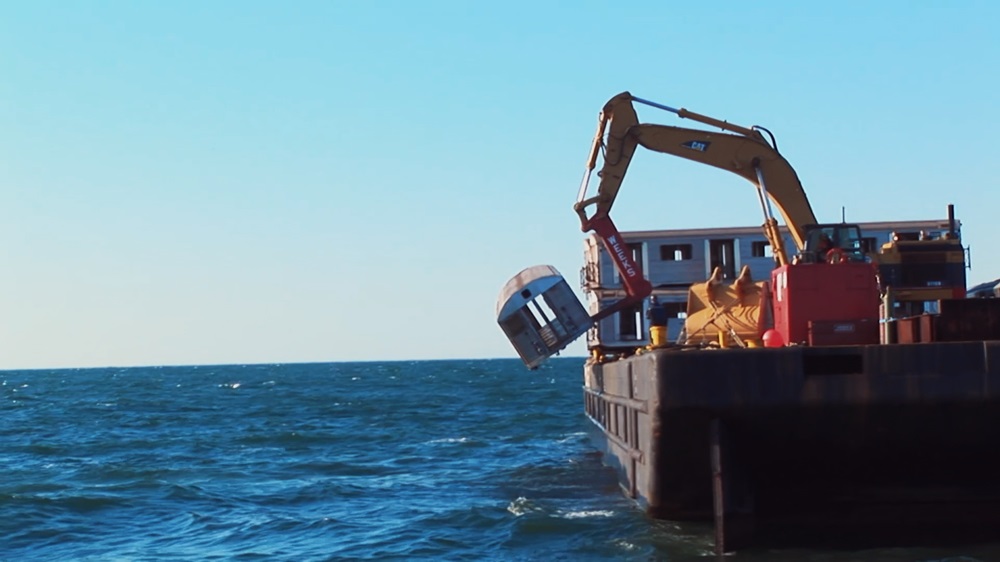
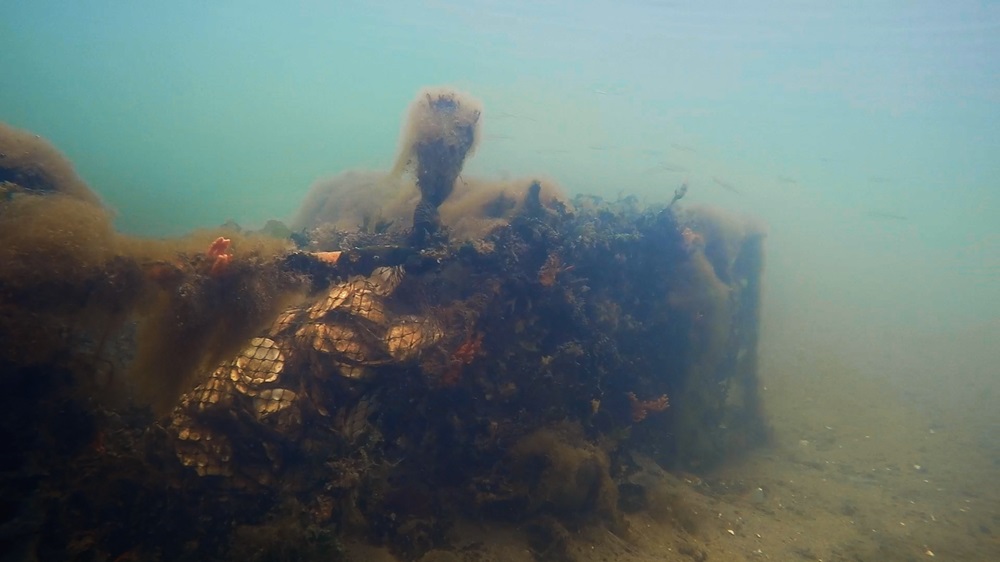
The cinematography by John Marty is frequently stunning, capturing New Yorkâs shores, subway systems, and fish markets with an eye for the interplay between the synthetic and the natural world. In these instances, the film really excels, particularly in sequences where urban and aquatic worlds collide. These include shots of old subway cars dumped into the ocean to form artificial reefs, and New Yorkers trying oysters for the first time to varying reactions. The oyster-tasting scene alone, to me, is cinema.
Neither Didactic nor Expository, but a Little too Experimental
Yet for all its visual splendor, “Holding Back the Tide” suffers from a lack of narrative focus. While Packer acknowledges the hybrid nature of the project, the filmâs structure feels meandering, often playing a little too experimental. The transitions between the ecological history of the oyster and its metaphorical connection to queer identity can feel strained at times, leaving both subjects only superficially explored.
The movie spends considerable time on artistic recreations, such as presenting artist/activist Dragonfly as a mermaid-like figure drifting through New Yorkâs waters, or queer actors recreating old oyster-related paintings and narratives. While these scenes are beautifully shot, they sometimes feel like affectations that distract from the more grounded, compelling moments with real-life figures like Sue Wicks, the oyster farmer who serves as the filmâs visual and expository anchor.
In Packerâs defense, she probably saw the need to explore ideas that pure documentary footage couldnât capture, leading her to incorporate fictionalized sequences for the film. And I think thatâs fair. Her choice to craft a more immersive, experimental documentary is something that documentaries today need to embrace more. As a result, at the same time that it immerses the audiences, it veers away from a didactic approach that proves harder to swallow in the end.
A Tug-of-War Between Style and SubstanceÂ
Nonetheless, there are instances when the filmâs abstract flourishes feel more like stylistic indulgences than narrative necessities.
One particularly illustrative example of this tension is the filmâs recurring scenes featuring Sue Wicks. Grounded and straightforward, her scenes, set against the gray waters and overcast skies, provide a welcome contrast to the movieâs more playful, fantastical elements. Wicksâ discussions of oyster farming and the gender fluidity of oysters create a compelling throughline that connects the filmâs lofty themes to real-life experiences.
However, these moments of clarity and insight are often interrupted by symbolic, aesthetic sequences that, while visually captivating, can feel emotionally distant and disconnected from the filmâs core.
Related Review: The Conservation Doc âDeep Risingâ Points Some Fingers, but Ultimately Holds Back in its Soft Peddle Approach
âHolding Back the Tideâ: A Story of Renewal and Rebirth, Identity, and Connection
Ultimately, the abstract recreations, though visually arresting, often detract from its potential to engage the audience more deeply with its central themes. The oyster-as-queer-icon metaphor is interesting, but itâs not explored with the depth or complexity that would make the connection truly resonate. At times, the documentaryâs experimental nature feels like itâs pushing the boundaries of docu-filmmaking for the sake of doing so, rather than in service of a more coherent, impactful narrative.
Make no mistake, though: I enjoyed âHolding Back the Tide.â I appreciate how Packer managed to weave together so many disparate elements into a 77-minute film. The title itself suggests a call to action, emphasizing the need for people to be resilient and take initiative. However, for all its ambition, it often feels more like a beautiful collage than a cohesive narrative.
That said, Packerâs willingness to take risks is commendable. âHolding Back the Tideâ is far from perfect, but it offers a bold vision that challenges viewers to think differently about the relationship between ecology and identity. And in a time when many documentaries feel formulaic, this is a refreshing change.


Emily Packer’s “Holding Back the Tide” opens at LA’s Laemmle theatres Friday, Oct. 4, 2024. Follow us for more coverage.




