





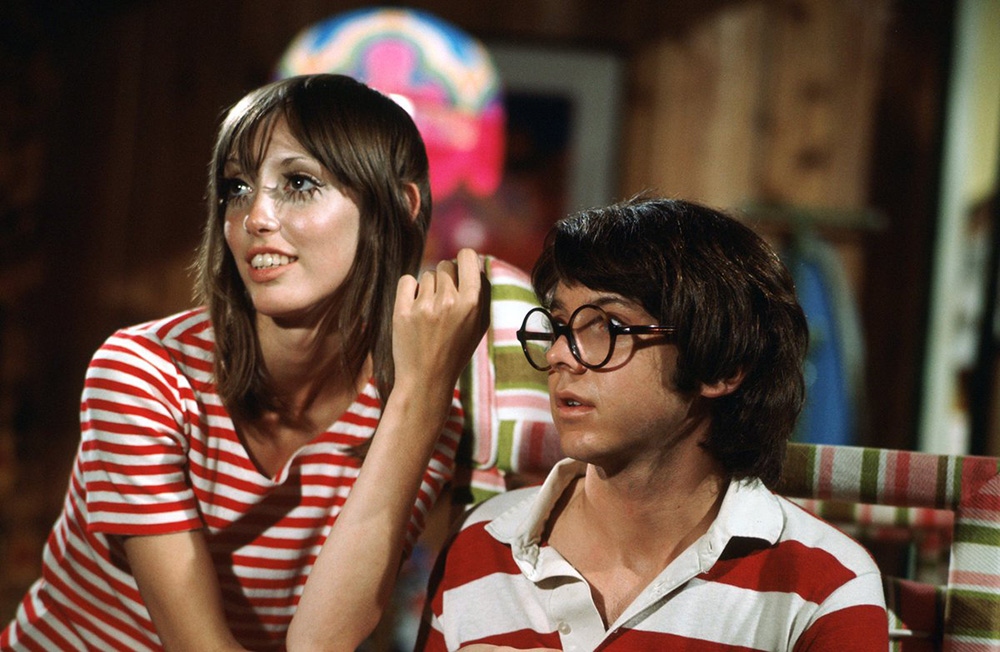
The best role Shelley Duvall played was herself. No one could do it better. Plenty have tried: I recently rewatched âThe Accidental Touristâ (1988), in which Geena Davis played Muriel Pritchett playing Shelley Duvall. Muriel’s a dog trainer and gig-workerâbefore the latter term existed. She speaks in run-on non-sequiturs, has an unplaceable accent, and a dreamy wardrobe that exudes manic pixie-hipster dream girl. In the 1970s, Duvall wouldâve owned that role, generating a tiny, cult-like critical following and eschewing commercial appeal. When Davis played it, she won an Oscar.Â
Shelley Duvallâwho died on Thursdayâwas never nominated for an Oscar or a Golden Globe. In her greatest performance, as Millie Lammoreaux in Robert Altmanâs â3 Womenâ (1977), the bobbed-haired (a year earlier, as Bernice, she also bobbed her hair in Joan Micklin Silverâs âBernice Bobs Her Hairâ) delusional, hopelessly-romantic nurse, Duvall shared the ‘Best Actress’ prize at Cannes. That same year, she spoke a few unforgettable lines and slept with (â… a Kafkaesque experience.â)Â Woody Allenâs Alvie Singer in âAnnie Hall.” Brief though her appearance was, Duvall was, of course, transplendent, a consummate scene stealer.Â
DuvallâA Consummate Scene Stealer
Altman had plucked her from obscurity into the starring role of his unloved and underrated âBrewster McCloudâ (1970), and from there she was a core member of the directorâs singular stock company. She played a mail-ordered bride turned prostitute to Julie Christieâs madame in âMcCabe & Mrs. Millerâ (1971), a lover-on-the-lam in âThieves Like Usâ (1974), and a roadie named L.A. Joan in âNashvilleâ (1975). Whether or not it was a Shelley Duvall role to begin with it became oneâwho else could play the restless, fickle L.A. Joanâ because Duvall didnât look, talk or act like anyone else. The collaboration with Altman, a freewheeling ideas man who took chances on non-actors (Cher, too, had her first acting role in one of his films), Duvall was often the highlight of the sprawling âAltman partyâ ensembles.Â
So, Duvall might have seemed then an unconventional fit to pair with a cold, perfectionist tactician such as Stanley Kubrick. Much has been said about Duvallâs treatment on âThe Shiningâ (1980), to the extent that overshadows her performance in the film. And, since itâs her most famous role, it looms over her more nuanced triumphs, relegating her New Hollywood ascension to the margins. Add to it all that her private life became an item of curiosity, if not outright mockery, and the Duvall we reflect on today resembles more of a cautionary tale than an artist to cherish and celebrate.
Giving What No One Else Could Have
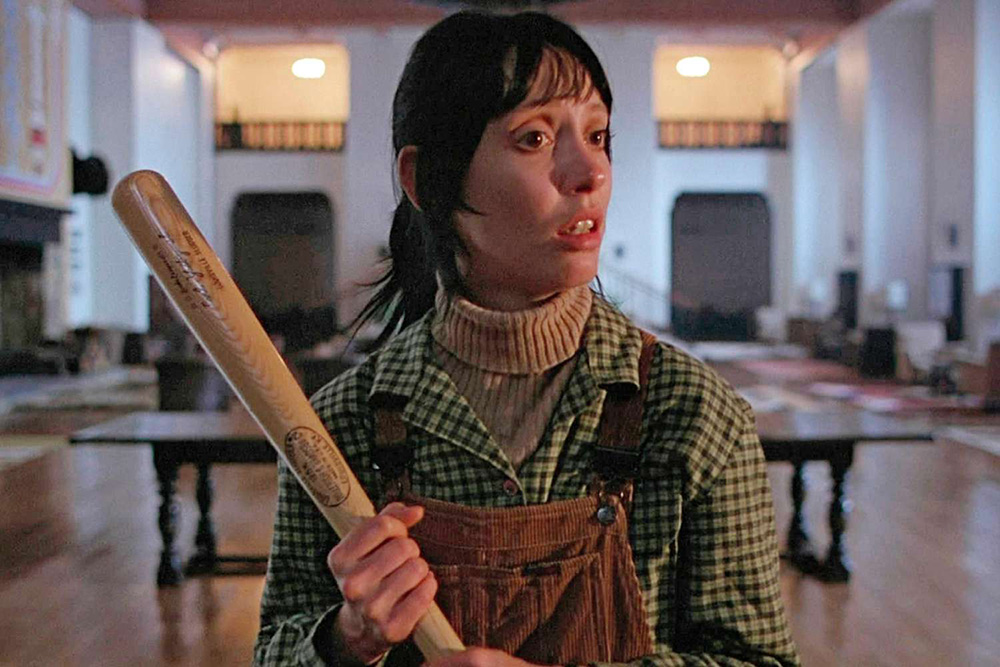
But, the rush to categorize is a foolish impulse, and itâs bound to sell short a beguiling performer such as Shelley Duvall. A simple classification is often a trap, a convenient crutch which allows the public to hold onto a narrative, accept it as true, lock it in a safe box and forget about until some event (i.e. death) catalyzes a broader reconsideration. Duvall was a star on her own terms, and measuring her career against a peer of that era, or, worse, against modern expectations for what a movie star should be, shrinks her offbeat yet undeniable talents to fit within the confines of an obituary.Â
Shelley Duvall starred in some of the best movies of any era and was missed as soon as she left the screen. But now that sheâs passed, the tributes flow, and itâs hard to differentiate honest connections (Geena Davis …) and those made with the benefit of hindsight. I do see her there though, and in the âmumblecoreâ independent film movement, and her wardrobe or eyelashes in âBrewsterâ on social media and Pinterest boards. No one could have invented Shelley Duvall. Just because she deserved better from us in life doesnât mean posthumous appreciation will compensate for that. To paraphrase Olive Oyl, in âPopeyeâsâ finest momentââPunch-Drunk Love,â tooââUntil the day I die, I wonât know why â¦â they needed me. Belated words won’t do her justice or earn her an Oscar; but already her death has spurred a better understanding of what Duvall gave which no one else could have.




