





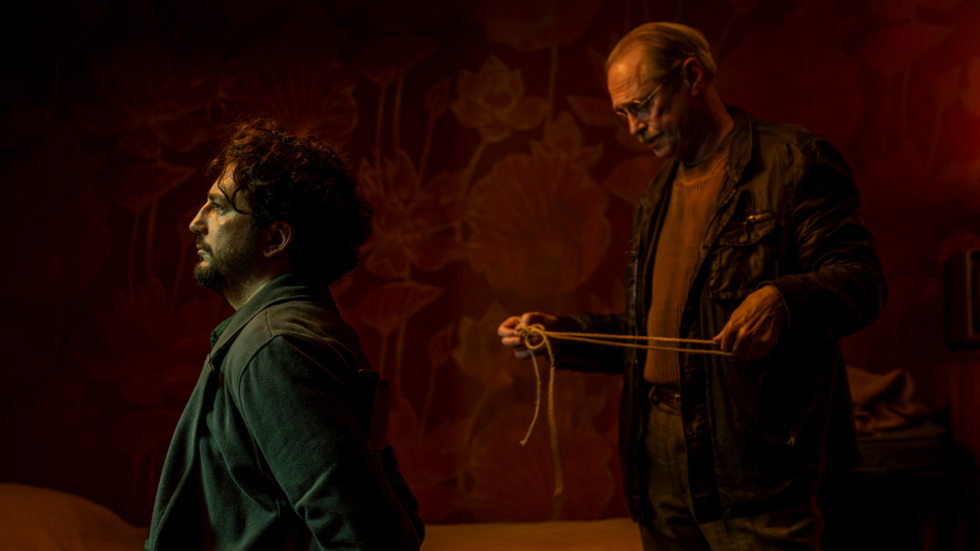
Director Tolga Karaçelikâs âThe Shallow Tale of a Writer Who Decided to Write About a Serial Killer,â at its core, is a straightforward and self-explanatory film. As Karaçelikâs English-language debut, this dark comedy provides everything you need to know about the plot; and itâs up to the filmâs execution to make a worthwhile story out of such a chaotic premise.Â
Alas, such straightforwardness also meant that the film makes good on its title. For a cast of this caliber and a story this promising, itâs disappointing how the film ends up feeling shallow.
[More Tribeca Coverage: âEternal Playgroundâ Evokes Saccharine Nostalgia from a Devastating Loss]
A Struggling Writer and His (Quietly) Resentful Wife
âThe Shallow Taleâ introduces us to Keane (John Magaro), a self-absorbed writer who shares to his friends over a dinner party the plot details of the latest book heâs working on. Thereâs an air of obliviousness to him that we immediately see. His friends laugh at him even as he passionately tells them that the next book would be about a forbidden love story between a Homo sapiens woman and the last living Neanderthal man in 40,000 BC somewhere in the caves of Slovenia.
It doesnât take long for audiences to realize that even Keane himself doesnât know where heâs going with his idea, something that his wife Suzie (Britt Lower) quietly resents, and which resentment would play an integral role throughout the entire movie. On their way home from the dinner party, they almost get into a broadside collision when Suzie mistakenly tells Keane that the light is green.Â
During the first few minutes of the film, we already see cracks in their marriage that Suzie wants Keane to notice, but something the latter seems incapable of doing â from Keaneâs four-plus years of writerâs block to her being the breadwinner for the two of them. All these come to a head one evening when Suzie calmly informs Keane that she wants a divorce.
âLike Don Quixote and Sanchoâ
Earlier that day at a diner, Keane meets an unusual man (Steve Buscemi) by chance. A fan of the writerâs previous book, the man â who goes by the name of Kollmick â discloses his secret as a self-retired serial killer. He then proposes a strange idea: that Keane’s next book should focus on the lives of serial killers, with Kollmick serving as his mentor, teaching him the techniques of stalking and kidnapping.
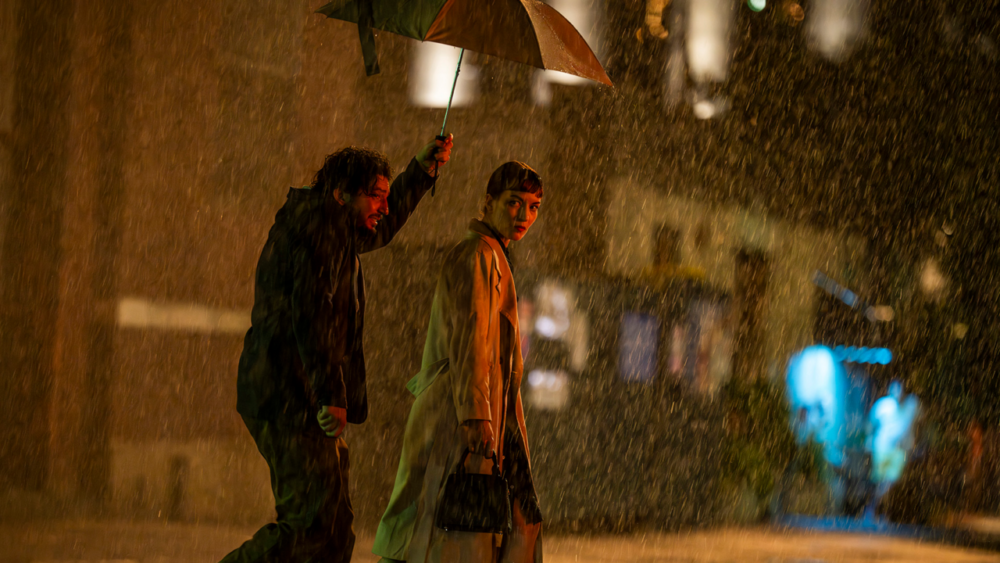
As Keane gets drunk at a bar that night after Suzie announces her intentions of getting a divorce, he considers Kollmickâs offer. Suddenly, the man appears, reiterates the proposal, and promises a best-seller as the two of them venture âlike Don Quixote and Sancho.â Keane, wanting to be a gracious host, invites the man to his house for whiskey, where Suzie discovers them. To cover up the situation, Keane improvises that Kollmick is an unorthodox marriage counselor, a story that the retired serial killer reluctantly goes along with.
A Wasted Potential Almost Saved by the Performances
Magaro does his best to make Keane a memorable character, but itâs less of the actorâs performance and more of Karaçelikâs screenplay that is the culprit here. The film adds its main character into a growing list of âself-absorbed struggling writerâ movie tropes, but doesnât provide more dimension to its characterization that helps leave a distinct mark. Think of someone like Eddie Morra who packs a boatload of charisma, or Calvin Weir-Fields whose timid introversion can be endearing.
Keane, on the other hand, is simply egocentric: a legend in his own mind who doesnât give two craps about what his wife thinks and has compromised for their marriage.
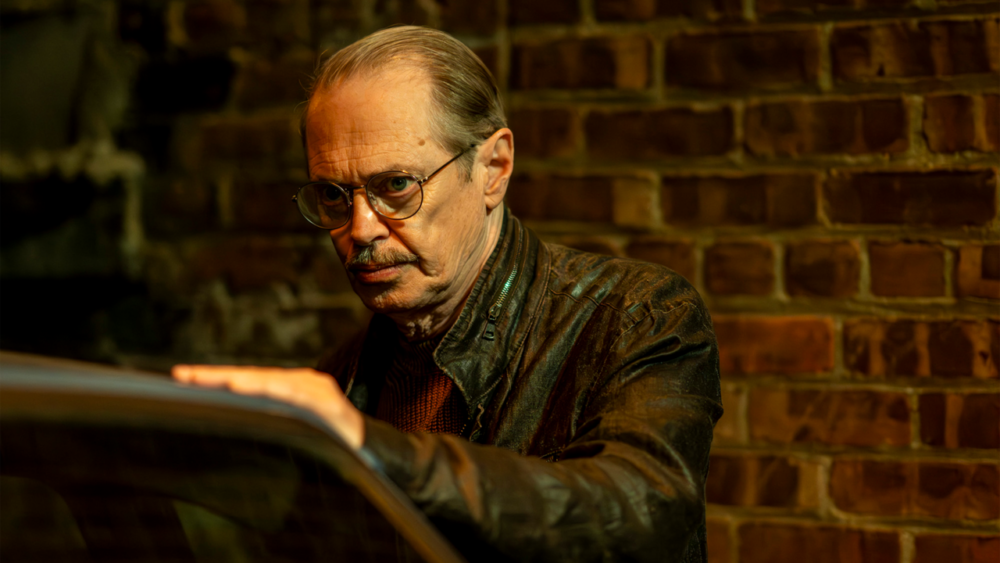
Buscemi and Lower hold their own, too, with the formerâs Kollmick providing natural comic relief just by keeping a straight face even when his frustration with Keane grows by the minute. Itâs fun to see Buscemi portraying Kollmick as a clueless therapist by day and Keaneâs trainer at night. I feel like âThe Shallow Taleâ is at its best when the filmmakers key in on this duality; especially when Lowerâs Suzie remarks that their marriage counselor, despite the unusual methodologies, looks like âhe knows what heâs doing.â
Without warning, the film then sharply cuts to Kollmick and Keane debating whether to use chloroform while staking out the latterâs agent to kidnap him. All this, as Kollmick defends his routine of listening to a very specific song on loop (Baccaraâs âYes Sir, I Can Boogieâ) before doing his hits because it helps him focus and gets him in the mood.
âThe Shallow Taleâ Underscores a Lack of Nuance in Direction
All those offbeat scenes and the nuances the charactersâ situations present wouldâve made for a very good dark comedy. And it should. And yet, âThe Shallow Taleâ is indicative of Karaçelikâs lack of nuance in direction.
There are a few scenes where Kollmick embodies narrative exposition to speed up the audienceâs background in serial killing, autopsies, and getting away from murder scot-free. Easter eggs and namedrops such as Erle Stanley Gardner, Charles Hirsch, and Milton Helpern (âthink of him as the American equivalent of Sherlock Holmesâ) abound here, which do little to nothing in the service of the story.Â
Thereâs also the problem with the over-reliance on the storylines to generate laughs, instead of simply fleshing out the characters and their quirks. What history does Kollmick have? Why has Keane not matured emotionally in the relationship? What do Suzieâs behaviors tell about her personality and her character moving forward? These are questions that the film could have explored throughout its 100-minute runtime. Instead, weâre treated to botched attempts at abduction, backup plans when the original plans went awry, and an ending so abrupt that even its surprising luridness couldnât offset the filmâs frustrating midpoint.Â
âThe Shallow Tale of a Writer Who Decided to Write About a Serial Killerâ presents a unique perspective on well-known movie tropes with its innovative approach. Itâs just too bad that the overall energy of the performances doesnât quite line up with that of the screenplay, resulting in a disjointed movie experience thatâs all lethargic and half-baked.





