





Leave it to Ken Loach, that grizzled realist, a seven-decade surveyor of the British working class, to make a sly pivot to melodrama, emitting fury and compassion in âThe Old Oak,â his latestâand reportedly lastâfilm. Itâs the work of someone whoâs seen too much, and wants to bare all, and so Loach navigates trigger-warning terrainâracism, suicide, dead animalsâwithout flinching, sparing no man, woman or beast. While the charactersâ suffering (both individually and collectively) reaches a fever pitch, Loach and Writer Paul Laverty nail the mark in zeroing in on these people, deemphasizing the external forces which trap them. Buzzwords (e.g. Brexit) are avoided so these imperfect characters are allowed to take over, full of their imperfections, biases and grief. Itâs a public service announcement long on ideas and short on finger-pointing, a self-aware polemic which pairs unsparing monologues with equally impactful silent protests.Â
Meeting new Loach, itâs same as the old Loach, and âThe Old Oakâ tips its hat not just to his recent filmsâthe searing âSorry We Missed Youâ (2019) and Palme dâOr winner âI, Daniel Blakeâ (2016)âbut also, âKesâ (1968), the first international triumph which announced a singular cinematic voice, joining wounded humans who are cruel to each other with a beatific animal which offers a shot at redemption. Loach and Laverty lay it on thick, as if to assure viewers that this is, we promise, the final film, so buckle up. Taboo topics strike like lighting and, viewed as the content of one film, it tempts excess, but seen within the context of a late-career trilogy, âThe Old Oakâ is a striking, fully-realized statement in favor of solidarity. Â
Tension Simmers Before the First Frame
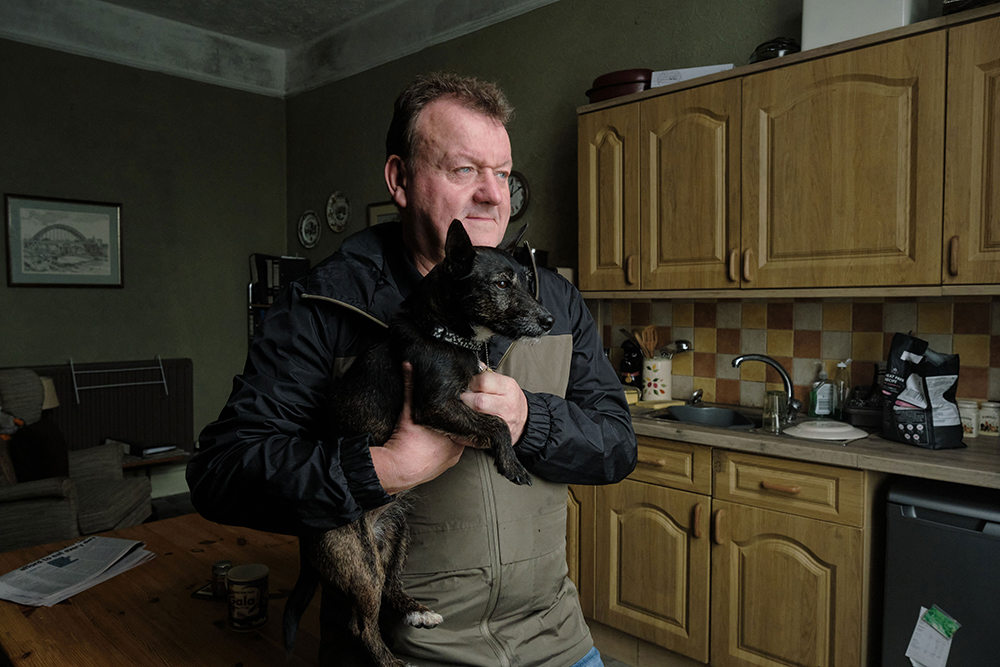
Whereas the main character in âSorryâ was the gig economy, and âDanielâ the U.K. health systemâs grueling bureaucracy, the heartbeat of âThe Old Oakâ is County Durham. And for these Northeast England villagers, The Old Oak, the last pub standing, symbolizes the long, slow decline into obscurity for the town and its people. The locals gather at the pub to grouse and gripe with TJ (Dave Turner), whose family has owned the place for decades. His dad died in a mining accident, when mining was the local engine of economic growth. The people he sees everyday arenât so much friends, but partners, all sharing a lifetime of memories of witnessing the downfall of the town where they lived and worked. Now, few of its older residents have any place to goâa job or otherwiseâso they drink and whine in TJâs company.Â
Before Loachâs camera even rolls, the tension simmers according to a series of snapshots flashing on-screen. During an afternoon when a busload of Syrian immigrants arrives, locals take to the streets to protest, deploying the usual racist verbiage (âGo back to where you came from!â) to signal displeasure. Turns out these still images came from the camera of Yara (Ebla Mari), the only member of her family who speaks English. Sheâs frightened yet defiant when Rocco (Neil Leiper), drunk and donning his favorite football teamâs jersey, grabs hold of the camera and then drops it on the ground. Durham has a few good guys and galsâTJ among themâwho speak up amid the chaos (âTheyâre just children!â), but the anti-welcome party sets a line in the sand, the ultimate us versus them.Â
A Survey of Trigger Warnings
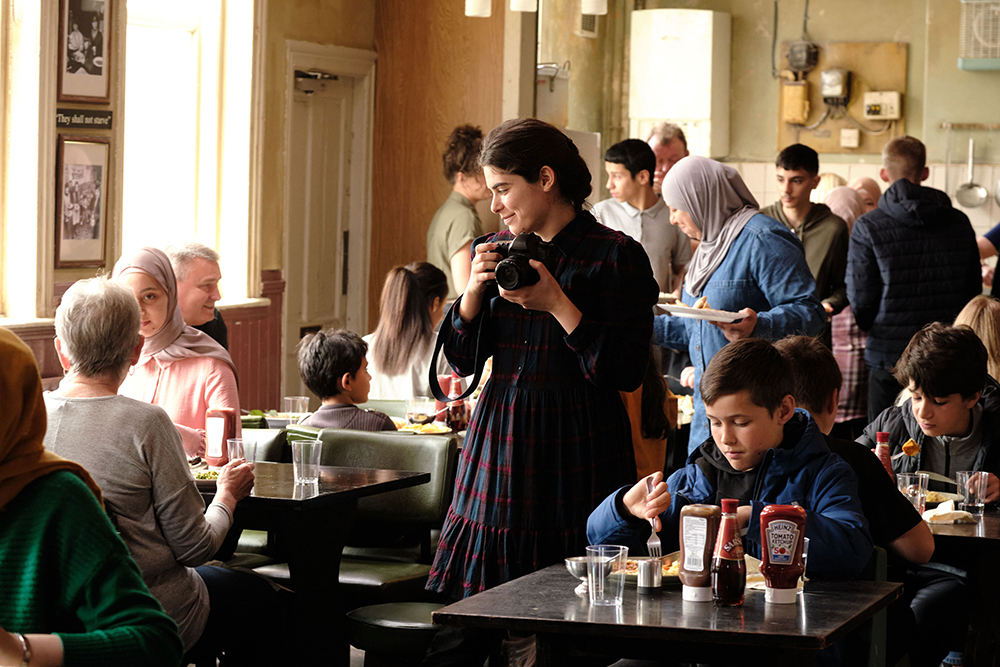
When Yara visits TJ at the pub, she is appreciative for the support, but also demands that he help find Rocco, who ought to pay for her camera. Coy at first, TJ offers to trade in two older family cameras in order to fund the repair of Yaraâs, and he delivers it (âItâs brand new!â) to Yaraâs home. There he learns that Yaraâs father is missing, and her mother and three siblings articulateâthrough Yaraâs translationâtheir appreciation and struggle. Back at the pub, Charlie (Trevor Fox) rallies his pals to hold a community meeting, but TJ shrugs off that advance with a mix of discomfort and technicalities (the back room isnât insured). Meanwhile, Yara and Laura (Claire Rodgerson) convince TJ to use that room to serve food to families in needâSyrian and Englishâinvoking TJâs late momâs motto that those who eat together, stay together.Â
That rallying cry falls on deaf ears among TJâs bitter, badgering male customers. And following the horrific death of TJâs beloved dog Marra, his tone has changed, reminding the town about when the mining workersâ strike in the 1980s brought everyone so close together. Yet, when word gets out that TJ favored Yaraâs please over Charlieâs, that clique strikes back in the most sinister manner possible, leading TJ to reflect on his own personal tragedies, dating back from the day when he first found Marra on the beach, where he had planned to drown himself. The film barrels towards one final tragedy, an offscreen death of someone who doesnât appear in the film, but whose invisibility represents the primary grievance that these discarded locals carry each day.Â
Hard, True-to-Life Storytelling
At the end, Loach allows for some reprieve, but itâs far from a cheery finale. Itâs a service to the film and these people that he doesnât put a bow on a sad story, because the ripped-from-the-headlines narrative is too familiar to be sanitized. All the backstories presentedâboth of the Syrian and English peopleâare hard to hear because theyâre true to life, and the stark, direct storytelling is complemented by Robbie Ryanâs smooth, roaming camerawork. Pathos and optimism walk alongside each other in the final scenes, depicting a town thatâs battered but never defeated, signaling toward the toll taken on the oppressed, who nearly cave but not quite under the unbearable heaviness of living.Â
“The Old Oak” is currently playing in theaters after an opening at the Film Forum.Â




