






Rare is the film that ought to be longer; bad films are often too long and the greatest are able to stick the landing in exactly the right amount of time. On the scale between bad and great, Katharina Lüdinâs âOf Living Without Illusion,â making its North American premiere at Film at Lincoln Centerâs New Directors/New Films festival, falls somewhere in the middle. But for such a busy, curious film, much of the narrative fault lines felt unresolved at the end. The multi-character study succeeds when it lets the people move freely and explain their pain or bliss with wordless rebellions, rather than hand-delivered exposition via sustained, static monologues. Lüdinâs got something here, though, ample material for a wider canvas which would allow her camera to observe instead of indict these flawed, fearful creatures of bad habits.Â
The betrayals, infidelities and high melodrama resembles Lüdinâs own take on Ingmar Bergmanâs âScenes from a Marriage,â which was both a 3-hour feature and six-part, six-hour Swedish TV series. And, ND/NFâs own description of the film suggests its âBergman-likeâ intensity, cueing the idea that Lüdinâs work could work in a different format. Here, Merit (Jenny Schily) is the primary antagonist, a persistent bulldozer whose charm and talent keeps her friends and family loyal, despite the darkest shades of her personality that blow past straight bullying into actual abuse. In the opening scene, Merit is in tears, staring out the window while an out-of-focus man consoles her. Turns out itâs play within the film, in which Merit stars alongside her ex-husband David (Godehard Giese). A director interjects, cutting the scene to a close, allowing Merit the chance to breathe, and even smile, which proves to be the most challenging performance.
Observing instead of Indicting Lüdinâs Characters
The budding tension and Meritâs unstable temper keeps the mood on edge, with Lüdin dipping out of Meritâs view and intoâor passing throughâthe perspectives of those in this force of natureâs orbit. Eva (Anna Bolk) is the dedicated and downgraded girlfriend, whose restraint and evident kindness (in her opening scene, sheâs caring for Meritâs son, and delivering fresh-cut flowers to a bar) is an exact contrast to her smirking, selfish partner. Opposites attract until they donât, but the wounds for both Merit and Eva cut deep, and yet so much conflict is elided over, or told to others, rather than revealed through their conversation, or naturally through action. In the most chilling scene, Eva is explaining to a man (Brother? Friend? Ex?) about why sheâs left Merit this time. She felt like a doormat. But how could this man understand?Â
Eva goes on to say that, at the height of Meritâs unruly rage, she dumped an ashtray on Eva at a nightclub. Rock bottom for Eva was when she âsmelled like an ashtray, and felt like a doormat.â Itâs an startling moment, but it also creates a vacuum of understanding. A visual of this event might have been too jarring (there are no flashbacks throughout), but it wouldâve exposed the emotional schism between this couple, while providing some guidance as to why these two put themselves through such extraordinary grief. Evaâs pain is so deep, and the closestâor most accessibleâconfidant is this man, who barely speaks in response. This small snapshot attests to the brutality that is living with and loving Merit, but itâs unsatisfying to the extent it tells us nothing more about Merit, whoâs a one-note monster.Â
History Repeats
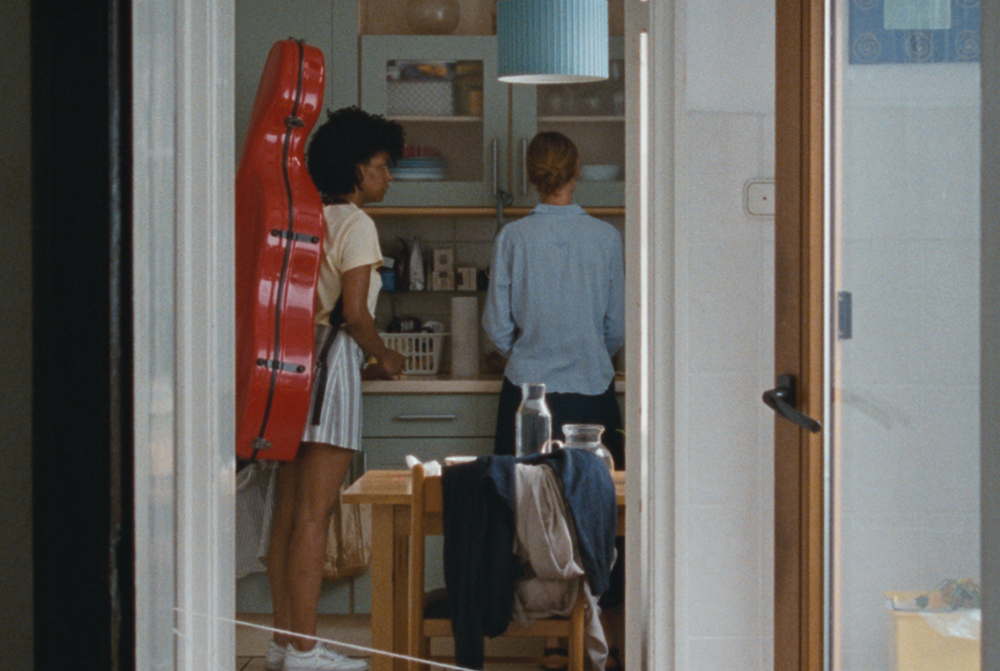
To guess at why Merit is so angry and tortured is to waste time projecting, and itâs a major shortcoming that Lüdin doesnât at least hint at why Merit defaults to insults and violence. The best sequence in the film, however, shows Merit in a state of absolute glee, engaged in a joyful, extended danceâbodies flailing around and into each other, a drunken kiss and eventually, off-screen sexâwith David, her former spouse and current co-star. The most anti-Bergman thing Ludin couldâve done would be to give Merit and Eva a happy end, which she doesnât. Yes, Eva returns home, but as a ghost might, a wordless entrance through the front door and then sneaking up on them (David included) at the dinner table. Reuniting them isnât a tidy resolution, though, instead it conveys the insanity of doing the same thing and expecting different results. History will repeat itself. Â

The New Directors/New Films Festival runs from April 3rd â April 14th.Â




