





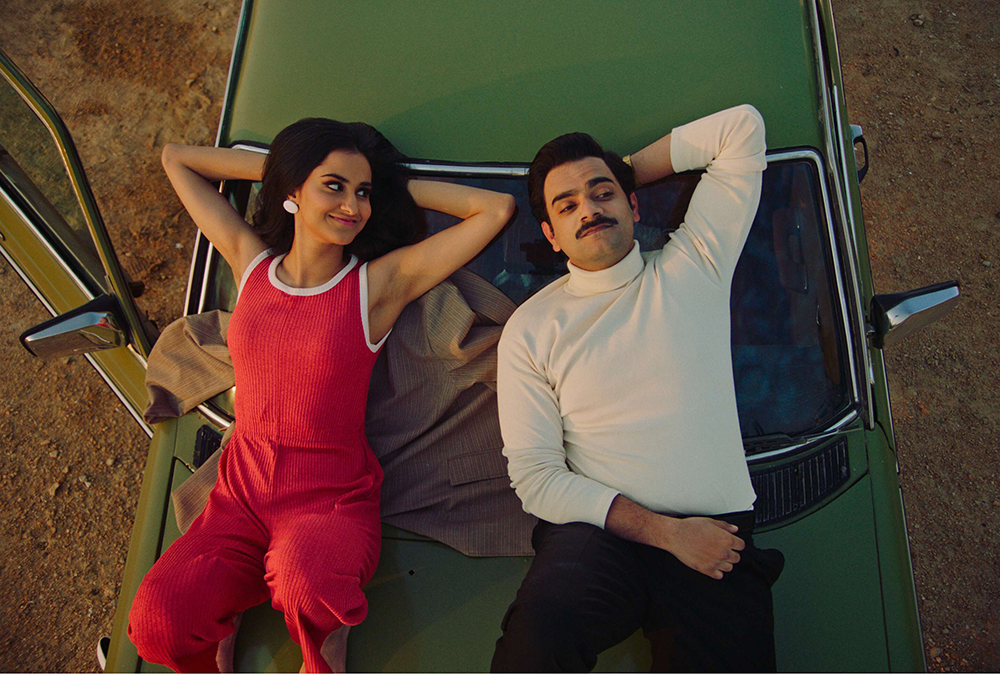
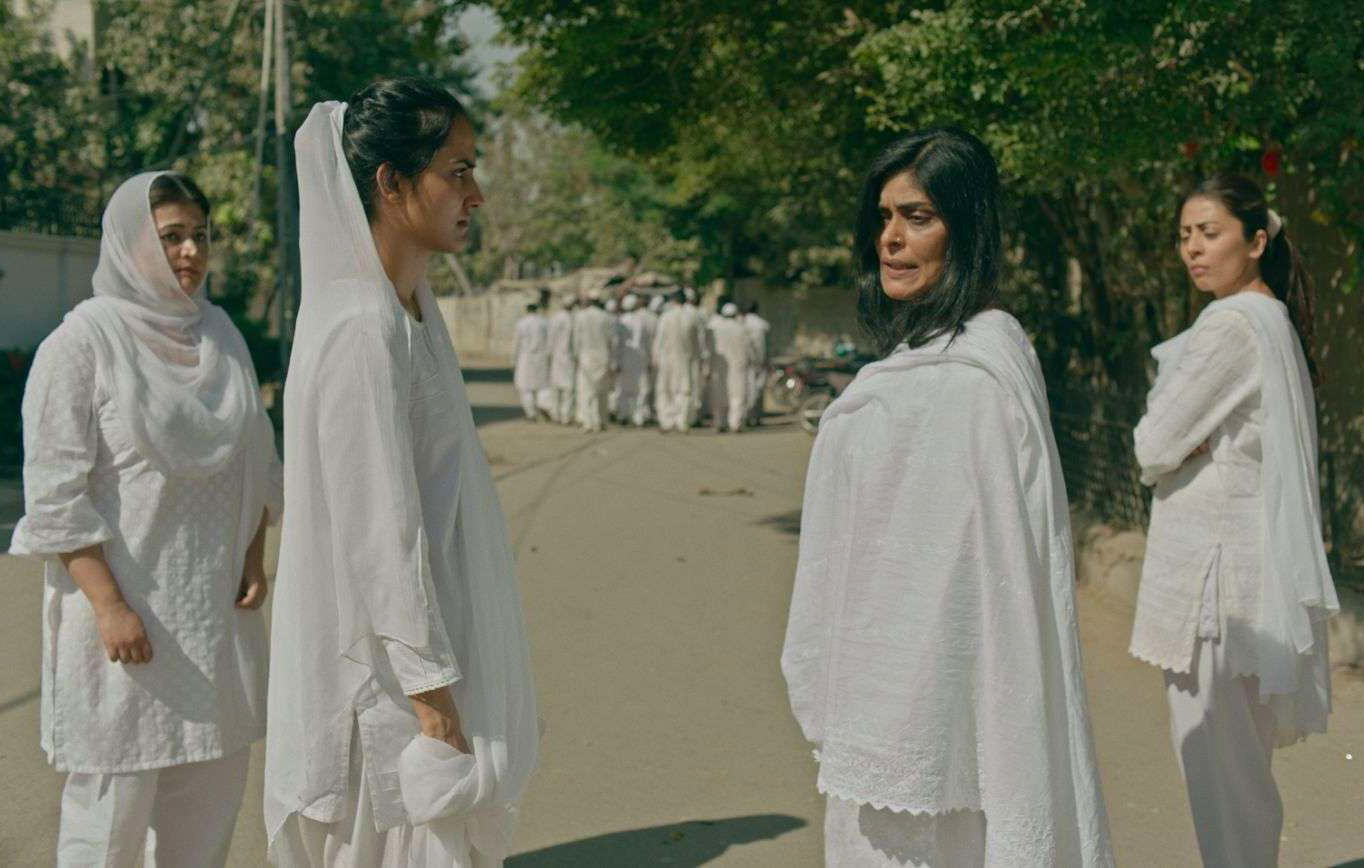
There’s a lid for every pot, but what happens when the lid is lost? Thatâs what happens in “The Queen of My Dreams” when Azra (Amrit Kaur), a young, queer, Muslim woman studying for an MFA in Canada discovers when she returns home to Karachi to attend her father’s funeral. Azra feels like a fish out of water back home, but attempts to make the most of this homecoming. First, she reaches out to her conservative and tightly-wound mother, Mariam. This act remains unreciprocated by the latter, who has sealed herself off to change. She’s also not the biggest fan of her daughterâs well-intentioned acts of attaining closure by bathing her deceased fatherâs body and attending the burial (for context, rituals which Muslim women arenât allowed to partake in). Mariam deems both of these acts as disrespectful and disruptive.
The rest of this bilingual indie plays out as a filmy reenactment of Mariamâs youth. It focuses on her more rebellious and free-spirited nature. Â This is as well as her less spiritual and non-conforming younger self living her best life in 1960s Karachi. Yet the film also addresses the similarities in the respective lifestyles of the mother-daughter duo who shared a lot more in common once upon a time.
Holding a Lens to Post Partition Pakistan
As an Indian myself, it was endearing to watch a movie wherein scenes from Bollywood classics are interspersed to spark nostalgia but also lend nuance to its proceedings. An instance being the title itself (a translation of the Hindi ballad “Mere Sapnon ki Rani” from the 1969 film “Aradhana”) that acts as the background score to Azraâs first sexual awakening as a queer teen growing up in ’90s Canada. However, it also acts as a bittersweet symphony that haunts her mum, who, just like the heroines of yore yearns for a âbeeti zindaganiâ (past life or a destiny thatâs passed her by) to return.
Apart from this fairly obvious reference, however, “The Queen of My Dreams” also feels like a companion piece to Shyam Benegalâs independent feature “Zubeidaa” (released in 2001). Both the titular character of the latter (played by Karisma Kapoor) and Mariam (Nimra Bucha) are portrayed as once-independent women finding their individuality, suppressed by authoritarian parental figures. These figures exert dominance by guilt-tripping both these young women and utilising the horrors of Partition to withhold them from fulfilling their innermost desires. This includes pursuing professions that are deemed as âsinfulâ and unbecoming, (i.e. a career as an air hostess and/or actress). In both instances, Zubeidaa and Mariamâs respective whirlwind fairytale romances also demand them to sacrifice their individuality and agency in the process, leaving both protagonists doomed for a life spent stewing in melancholia, resentment, and unaddressed insecurities.
Of First Loves and Stringent Rules
In her directorial debut, Actor/Filmmaker Fawzia Mirza also boldly addresses religious imposition, which sets in after the 1960s (an era once categorised as the Golden Period of Post-Partition Pakistan) and which is omnipresent even in airline rule books. Mirza, a queer Muslim raised in Canada and now based in LA, also showcases that allowing fixed norms and religion to dictate oneâs lifestyle isnât an issue thatâs only relegated to South Asian diaspora. She sheds light on the countless lives across the pond that are overruled by such, with Azraâs classmates and neighbours in Canada displaying a similar naivety in believing the laughable myths spread by the fear-mongering older generation. One such instance leads an impressionable classmate to warn Azra that dancing during oneâs menstrual cycle could potentially lead to teen pregnancy.
Furthermore, the imposition of stringent religious rules also proves to be a deterrent in adolescent Azraâs attempts to socialize at her new school. She is frequently barred from Bible study classes, only managing to strike up a one-off friendship with another ostracised classmate who is a practising Jehovahâs witness.
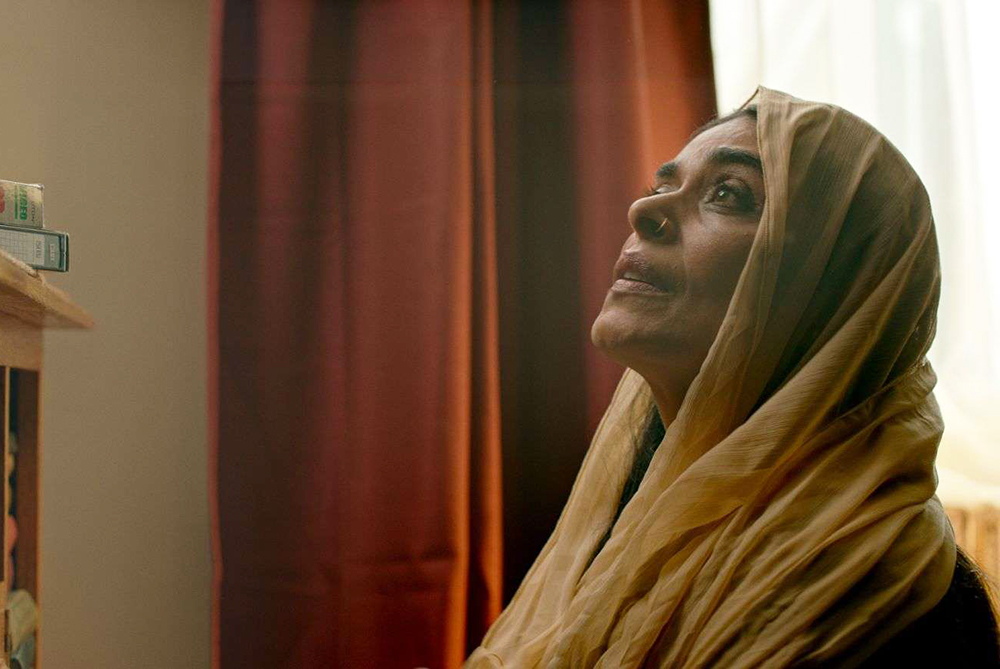
Even the rosy romance of Azraâs parents eventually falls prey to religious indoctrination, with older Mariam turning to a life of penitence when Hassan is hospitalised (even taping over a VHS of her all-time favourite movie “Aradhana” with a video of evening prayers. However, this is only because she wrongfully equates her husbandâs sudden illness to her rebellion against a protective mother during her youth and succumbing to temptation by revolting against her indoctrinated religious values as well as not adhering to the teachings of the Quran.
Mirza Paints a Realistic Portrait
This warped thought process also seeps into Mariamâs relationship with Azra, which progressively erodes and leads to a repetitive cycle of toxicity. Mariamâwho once upturned gender norms in her youth by playing the role of the male dancer opposite a female acquaintance at choreographed wedding dances, or who quoted Shakespearean sonnets to Hassan on their beachside datesânow lectures her daughter on rote-learning the teachings of the prophets. She fixes Azra with an unnerving glare when the latter deems the exclusion of Muslim women from the last rites as an archaic practice.
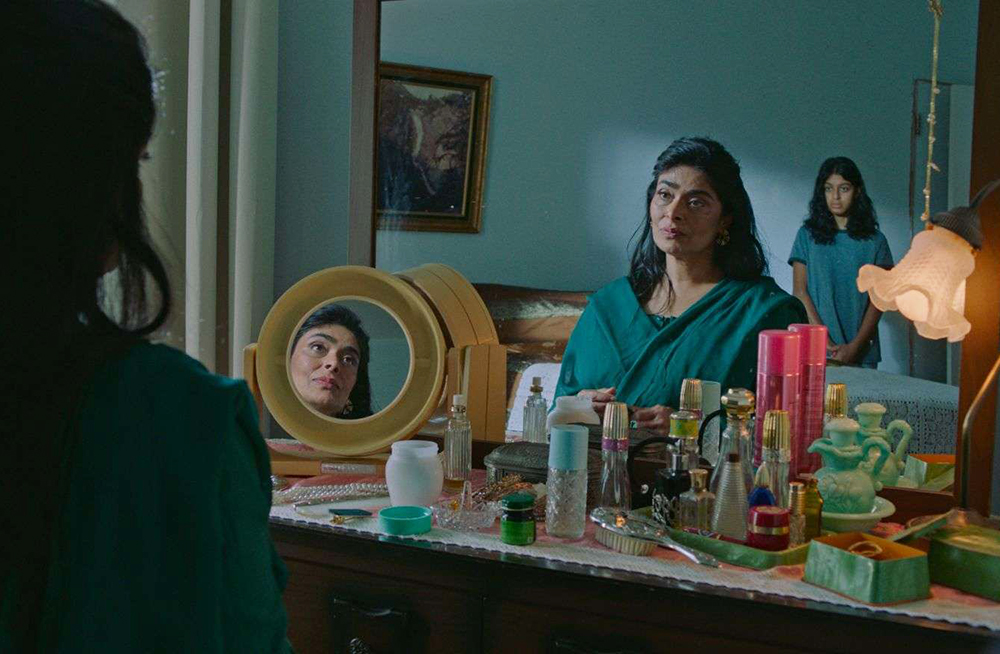
Director Mirzaâs use of her characters and settings, and situations as metaphors to interconnect the diverse themes in this movie also doesnât go unnoticed. One instance is the presence of the Qawwali folk singers, who are a regular sight at the roundabout in Karachi. They endure endless hours of sitting cross-legged at the intersection in the hopes that their honeyed voices will bring back the long-lost old world charm to the sleepy city. It all feels rather reflective of Mariamâs own struggles and sacrifices in making herself presentable to the public, but who is similarly âtrappedâ in a loop herself. The only difference that sets the Qawwali troupe apart from Mariam is that their harmonious voices are still more in tandem than the relationship between her and Azra.
Metaphors to Broken Countries and Hearts
Also, the prim and proper tea parties held at the twenty-something Mariamâs home in Karachi as her parents arrange for potential suitorsâand the judgmental gossiping of older women at weddingsâalso follow the older Mariam. It follows her all the way to Nova Scotia post-marriage as she acquires a new identity in a bid to impress judgmental suburban mums with personalities as plastic as the Tupperware containers in their kitchen cabinets. They only recruit Mariam to their clique due to her homely qualities as a housewife which fit their own standards, while also considering her as the token South Asian neighbour. She is then of course expected to feed them free curry, despite their arrogance in learning about her culture.
Mirza also paints a realistic portrait of Post-Partition Pakistan, still reeling from pangs of pain, sorrow and loss. She links this to Hassanâs (Hamza Haq)desire to become a trauma surgeon, only so he may put the pieces of his torn homeland back together, much like Humpty Dumpty. This feels all the more profound when connected to the death of the selfless Hassan, who was probably the only male in the household who could theoretically suture the open wound between Azra and Mariam. Lastly, the void left by the sudden separation of two nations that were once united by a blood bond and shared cultures itself feels akin to the grief of the displaced residents of both India and Pakistan. This is particularly true of the women like Mariam who are forced to conform to fill the void in their own hearts, which obviously isnât the best coping mechanism.
Kaur and Haq are Wonderful
Amrit Kaur brings an effervescent energy to the double role of Azra and the young version of Mariam (a tongue-in-cheek reference to “Aradhana” where actor Rajesh Khanna played the dual role of the heroineâs lover and later her son). She is a natural at effortlessly switching between the Westernised accent of the Canada-bred Azra and the eloquent Urdu diction of the young Mariam, who has spent most of her life within the confines of her native in Karachi.
Hamza Haqâs portrayal of Azraâs doting and progressive dad Hassanâwho inculcates his growing daughter with lessons on self-acceptance/self-affirmationâis equally charming. The overall characterisation harkens back to another supportive immigrant dad Ashoke Ganguli (remarkably played by the late Irrfan Khan in Mira Nairâs “The Namesake,” which is yet another tale on the immigrant experience dealing with similar themes such as displacement and belonging). Haq is also transfixing as the man of Mariam’s dreams during the film’s flashback sequences involving their tender love story, scenes that are frame-for-frame akin to Sharmila Tagore and Rajesh Khanna’s romantic interludes in “Aradhana.” Finally, Nimra Bucha is visceral as the older, heartbroken Mariam, particularly leaving a mark with her body language and dialogue delivery. This is evidenced by one gutting scene where her character collapses onto the kitchen floor after an argument with Azra, resulting in a further spiraling of her mental health.
Love Transcends All
“The Queen of My Dreams” also boasts a groovy soundtrack and immersive production values that transport viewers to both the Golden Age of Pakistan and the Golden Age of Bollywood. Editor Simone Smithâs incorporation of slide projector-esque transitions especially enhances its retro aesthetics when the movie shifts from one timeline and changing landscape to the next.
Overall, “The Queen of My Dreams” is sublime and unpreachy in conveying its pivotal message that each human is born with facets they keep, and other facets that are learnt or picked up as one grows. Many may consider these unchaste, but they still make an individual perfect, and which must be kept close to their hearts at all costsâas well as the imperfections or insecurities that change with time or mould us. Most importantly, it’s a timely reminder that during this turbulent rollercoaster known as life, love transcends above all elseâ¦as long as we let it.
“The Queen of My Dreams” screened at BFI Flare from 21-22 March and is also set to release theatrically in the UK and Ireland in Summer 2024.




