





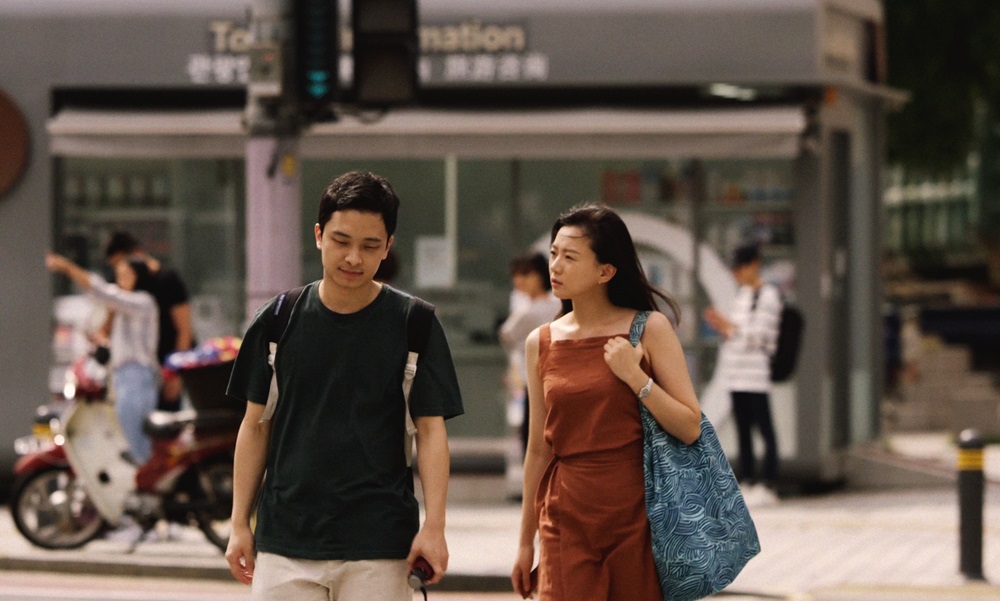
Itâs interesting that the Korean word âmimangâ (미ë§) literally means âwidow.’ With Kim Taeyangâs film âMimangâ (Hangul: â미ë§â), the director purposely uses the term to take on different meanings. He leans on semantics and homophones to tell a story in three distinct chapters, all of which bearing the title of âMimangâ.
Nonetheless, all three stories, while having different angles and motivations, revolve around the same theme: that of longing and loss, as well as the passing of time.
âMimangâ: Of Delusions, Remembrance, and Hopefulness
âMimangâ begins its first story (âWandering, Unable to Make Sense from Ignoranceâ) with a man (Ha Seongguk) getting off at the wrong bus stop. Looking around, he appears to have no idea where he is, in a street he doesnât quite recognize. While walking, he then encounters a woman from his past (Lee Myungha) by chance, and together they navigate this neighborhood that used to be familiar to them but now has changed a lot.
As they decide to take a walk to catch up on each otherâs lives, their conversations become context clues for the audience. Even without explicitly saying it, thereâs tension between these two; something that both consciously quell once it becomes too obvious to ignore. We learn that the woman is on her way to her work in film, while the man has taken up studying drawing. After their meetup, both go their separate ways, with nothing coming out of their chance encounter.Â
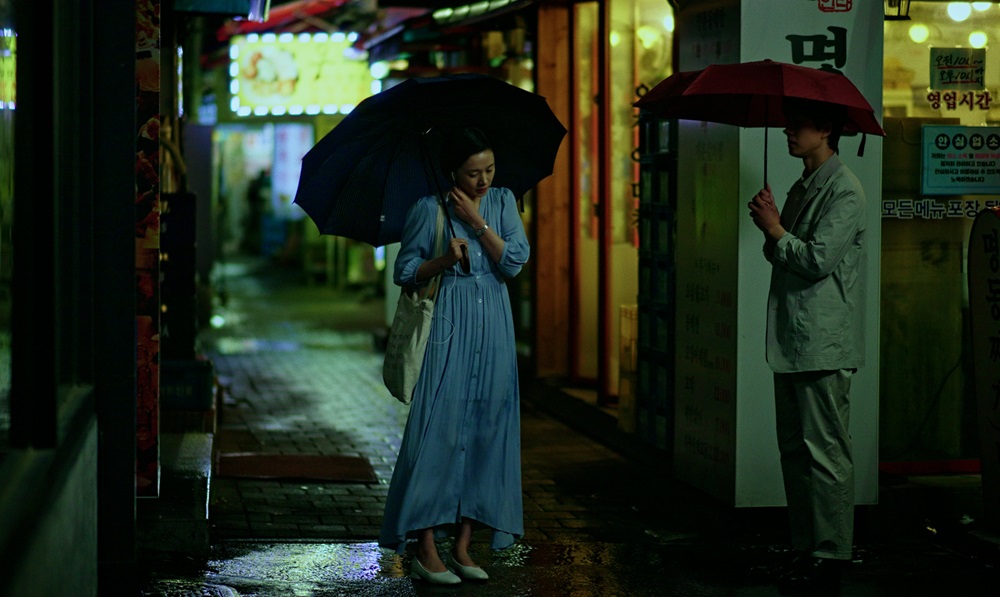
Kim would introduce the second part of the story (âUnable to Forget What One Wants to Forgetâ), where we see the woman, some few years after the first story, walking down the same streets she walked before with a different man. While sheâs with another company, the conversations still revolve around life, change, and the passage of time.
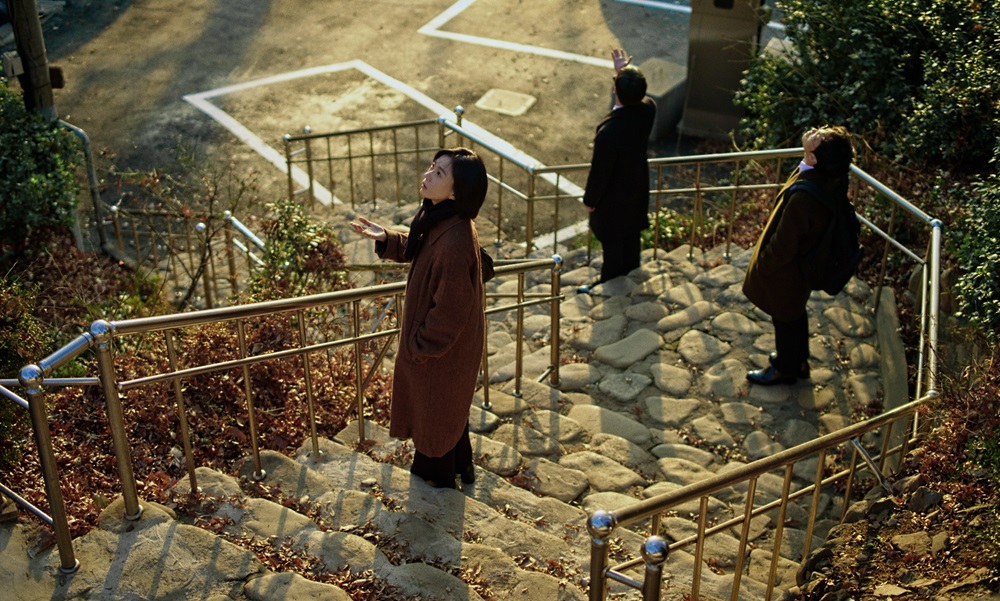
It would take yet years later for the third story to unfold (âSearching Far and Wideâ). This time, they reunite again at a mutual friend’s funeral. Now older and wiser, they seem ready to talk about their raw unadulterated opinions. But do they really?
Of the Passage of Time
Over the course of the filmâs timeline that spans a few years, the characters talk about their lives amidst the backdrop of an ever-changing neighborhood. That same neighborhood, from the streets to the store districts, essentially becomes a character of its own. Indeed, Kimâs screenplay and direction both make it clear that âMimangâ literally embodies the passage of time, as evidenced by the demolition of certain historical sites and construction of new establishments â most of which find their way into the charactersâ conversations.Â
While he tackles these themes, Kim pulls off a mumblecore that makes use of the white noise of the cityscape as his characters engage in walk-and-talks. And thanks to Kim Jinhyeongâs immersive cinematography and Lee Hoseungâs potent editing work, the film exudes an aura of spontaneity and guerrilla filmmaking. In effect, the viewing experience becomes more engrossing and interactive; making sure we get all the nuances of their speech and body language lest we make room for losses in translation.Â
[Related Review: Exigent in its Quotidian Subtlety, âRemembering Every Nightâ Peers into the Evanescence of Daily Life]
Rough Edges in Direction a Positive Sign of Promise
Iâve always found films like âMimangâ a little challenging to talk about, not because of their quality, but because of their unapologetic quietness. They possess enough confidence to slowly pace the narrative (if one could call it that) and slowly lure the audiences to join in on the meditation. And when not done right, it ends up feeling like an empty exercise, relishing its structure without giving extra efforts to its substance.
âMimangâ somehow lies in between. It neither transcends the genre nor offends the moviegoers who prefer natural and improvised dialogue over a proper plot. At its best it plays like a Richard Linklater production, and at its worst it presents itself like a low-budget film using a script reserved for plays.
This brings me to the filmâs verve. As noted above, comparisons to Linklaterâs âBeforeâ trilogy, as well as to Celine Songâs âPast Lives,â are inevitable. Truth be told, though, âMimangâ simply hearkens to those films without really achieving the same heights.
But is it a bad thing? Not really. As a counterpoint, the mere fact that a film around 90 minutes long invites comparisons to a beloved trilogy of films is, in itself, already a win.





