





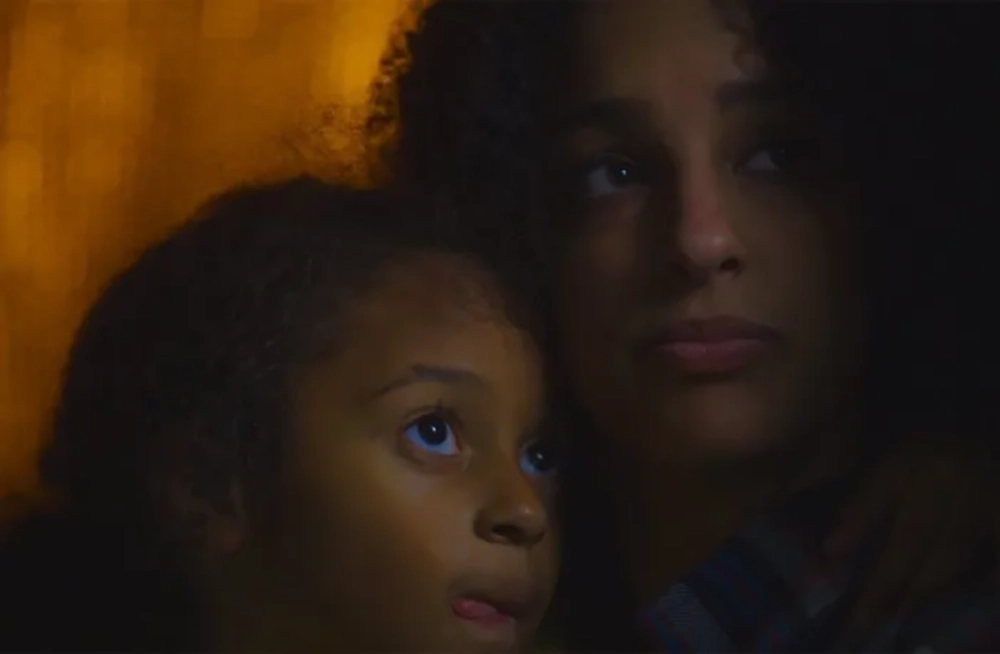
The short film by writer-director Derek Quick (Negane Meno), “Camping” begins with a ride-share driver dropping her passenger to their destination. Quick sneakily allows a few seconds to pass by before revealing that the driverâs daughter is sitting at the back of the car. Her daughter, Gia, asks if itâs already time for them to get pizza because sheâs already hungry; to which the mother, Emma, says to wait for just a little while.
âJust gotta get one more bonus.â
That bonus turns out to be a disaster: a would-be passenger, seeing the driverâs daughter at the back of the car, cries foul for the former’s unprofessionalism and potential endangerment of a child.
Canceled ride. No pizza for now.
The film chronicles a whole day, from that passenger drop-off to a tense scene at a parking lot in the wee hours of the following morning. By the time it closes with a couple of inter-titles, “Camping” emerges as an urgent call to action. With a brisk runtime that leaves audiences wanting for more, Derek Quickâs short film, sheds a light on the ‘working homeless,’whose struggles are often hidden from the public eye.
A Childâs Imagination Runs Wild and Free with a Motherâs Love
Despite their predicament, Emma does her best to provide Gia with a safe and loving environment. While she struggles to make ends meet, she supports Gia with the latterâs imagination. Gia for his part, incorporates elements of their everyday life in her storytelling. She tells Emma that sheâs roleplaying that she built a house for farm animals to live in. But even then, the barnhouse couldnât accommodate all the animals, so âthe duck has to sleep outside.â
Later on, Emma and Gia would cap off the night with an activity that gives weight to the meaning of the word âcampingâ. Audiences begin to understand the situation more vividly, lending sympathy toward Quickâs characters and wishing the best for them.
[Related Review: âThe Pursuit of Happynessâ]
âCampingâ: A Timely Story of the Growing Rate of Homelessness in the US
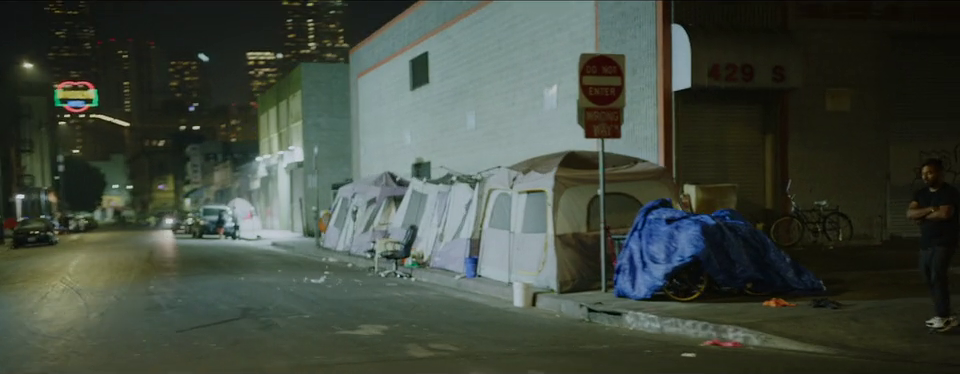
Homelessness in the United States has seen a spike as of late, with no signs of the federal government coming anywhere close to curbing it. In fact, in Los Angeles alone (where the film is set), tents by the sidewalk and vehicles doubling for makeshift shelters are commonplace. By casting African-American actors for the role (Raven Miles and Celeste Clark do great work as Emma and Gia, respectively), the Quick highlights how much harder the situation is to overcome for the homeless minorities and people of color.Â
More importantly, writer-director Quick acknowledges his own experiences of being a âworking homelessâ person as well. Experiencing the situation firsthand with his mother, Quick would become a âworking homelessâ person himself. When not working multiple jobs and attending film school by day, he was living out of his car in LA by night.Â
A growing problem that affects women more than men due to many economic and social factors, homelessness needs urgent addressing. And in its own smallâand shortâway, “Camping” is Derek Quickâs dedication to the tens of thousands of âworking homelessâ people who put on brave faces daily that show up to work and school without a home to go to at night.





