





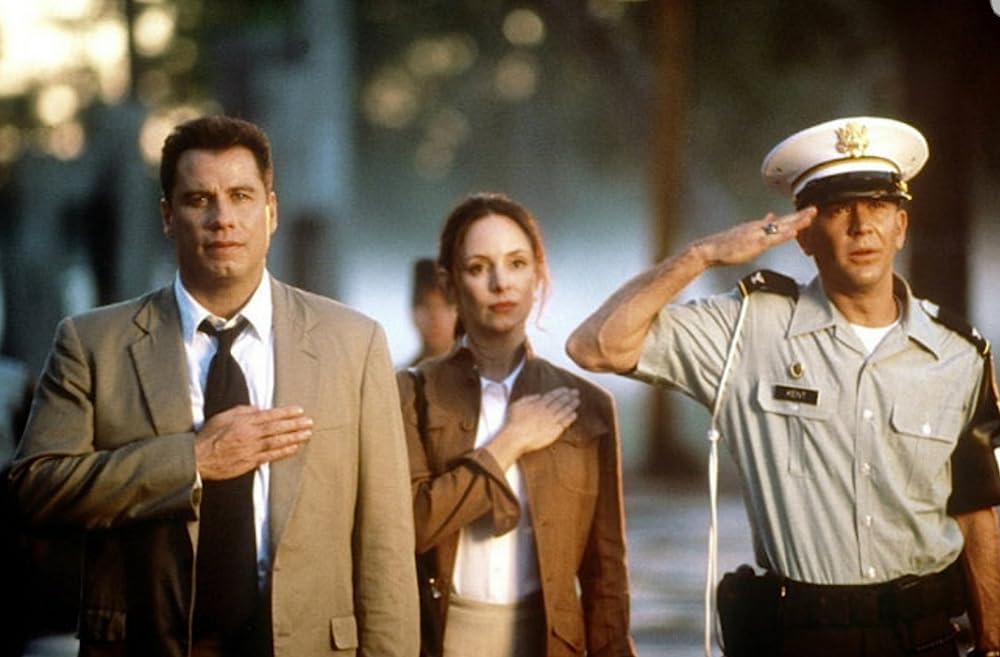
âThe Generalâs Daughterâ â the Simon West 1999 film â is interesting, if for no other reason than the murder of a prominent generalâs daughter isnât the filmâs most interesting angle. John Travolta is also interesting, playing both a holier-than-thou detective and soldier, sandwiching in-between his then-usual everyman quality (âPhenomenonâ) or megalomania (âBroken Arrowâ). The film plays like a police procedural (even drawing on the cop/outsider status seen in Sidney Poitierâs âIn the Heat of the Nightâ), but also shines a light on the Military, sexual abuse, and the devastating effects of protection codes for toxic male behavior.Â
Whatâs good about âThe Generalâs Daughterâ is the amount of character building it devotes to Travoltaâs Paul Brenner, even if some of it’s cumbersome. Early on we see him working a sting operation to catch an arms dealer, and his bravado is only checked by his intellect. But later â when he meets the Generalâs daughter (Leslie Stafanson, playing Elisabeth Campbell) â heâs charming, but balancing the fine line between flirtation and harassment. His early interactions with Elisabeth before she’s found dead sets up the kinds of culprits heâll come up against later, and in Westâs hands â based off a novel by author Nelson DeMille â is more progressive than late â90s thrillers were used to seeing.Â
Travolta Leads a Solid Cast
The actors are all par for the course, and play well here. James Cromwell plays the General â Joseph Campbell â and is eschewing that same type of âreal worldâ acceptance he played in âEraser,â released three years prior. Thereâs also Timothy Hutton and James Woods, playing different colonelâs, who propel the plot along. One interrogation scene between Woodsâ Col. Moore and Brenner is written so wittily perfect, youâll drink up every moment between the two intellectuals. Some ancillary characters â such as Colonel Fowler (Clarence Williams III) and a local police chief Yardley (Daniel von Bargen) â provide necessary commentary on the cultures here: both military and southern.Â
The film also enters Madeleine Stowe (âThe Last of the Mohicansâ) as a rape investigator who used to be romantically involved with Travoltaâs Brenner â and the comic relief their bickering offers â as well as the likability Stowe brings to the role â is palpable. Scenes where she and Paul discuss their relationship hint at both cheekiness and characters that are imperfect, and the way that West doesnât connect the dots for us at the filmâs conclusion is even more appreciated.Â

Addressing Institutional Corruption and all its Messiness
Stoweâs Sara Sunhill is also the brunt of much of the filmâs overt male aggression (âyouâre a rape investigator, maybe this will make you better at your jobâ taunts a group of soldiers threatening her with rape). And I appreciated the way that while she canât do much during that scene, Brennerâs over-the-top alpha male status is redirected to weed out and punish the perps that did it. And while the film doesnât say it explicitly, the event likely leads Brenner and Sunhill on a path to digging deeper into Elisabeth Campbellâs life to uncover the truth. West and DeMilleâs winning argument is that her murder isnât the worst thing she encountered in her life, and the closing scene â as Brenner addresses this â hits home with the necessity it should.Â
âThe Generalâs Daughter’âs not perfect, of course, and has some meandering moments, but it tries. Itâs a film that takes on an institution â in this case the Military â and highlights the damage of keeping secrets. It also questions the harm of the âcodeâ that keeps these institutions protected from justice because of tradition. A scene between Sunhill, Brenner, and a colonel who was Elisabethâs therapist (a great John Beasley) hammers this home. And the overarching point DeMille makes and West translates to screen is that abuse is not something to cover up, but to own, and that protecting the people we love trumps tradition, code, and career. In her brief screen-time as Elisabeth, Leslie Stafanson excels at showing the character’s charm and exuberant personality. She makes Elisabeth human. And Westâs winning argument is that the ensuing investigation â uncovering sexual fetishism and decadence doesnât demean Campbellâs character â it does the opposite.Â
A Thriller that Holds Up
All-in-all, âThe Generalâs Daughterâ is a good film. I watched it first when it came out all those years ago, and was pleased to see it holds up on re-watch. It works as a thriller, with plenty of misdirection and intrigue, but also holds more. Its empathy and assault on dangerous institutions is apropos, and certainly progressive for the time. With Travolta and Stowe leading a good cast, itâs a unique film, and one worth catching if you find yourself hopelessly scrolling through Netflix.Â

“The General’s Daughter” is streaming on Netflix.Â




