





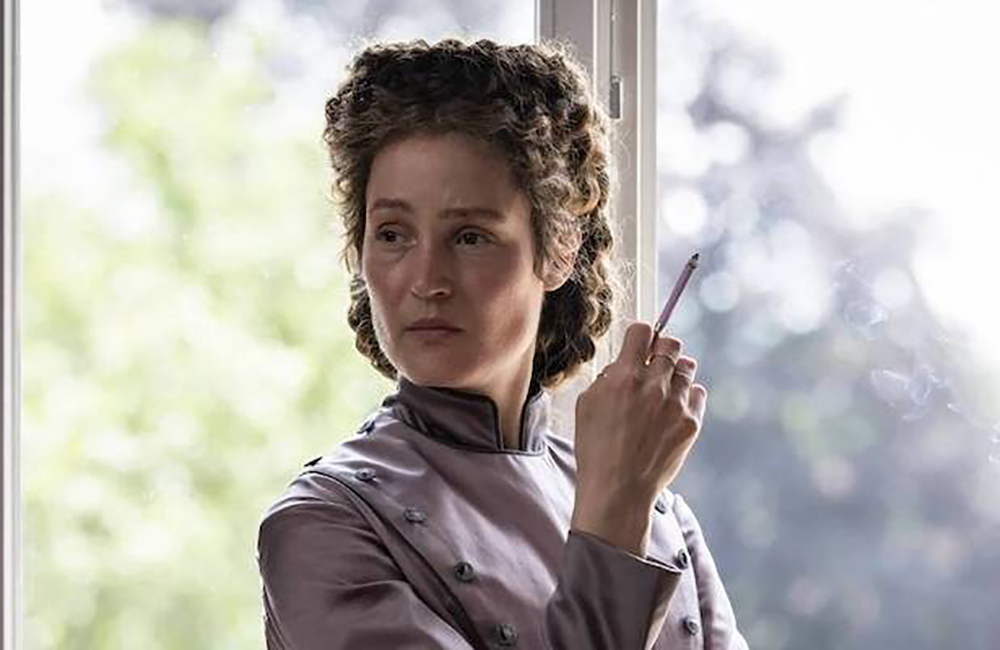
Vicky Krieps: how does she do it? Itâs tempting to call her effortless, since her characters tend to have such natural charisma (Alma in “Phantom Thread”) and palpable artistic sensibilities (Chris in “Bergman Island”). But her performance in Marie Kreutzerâs “Corsage” is a different animal. She inhabits her Empress Elisabeth with a physical, rebellious style that suggests what a Hepburn (Audrey or Katharine) might have done with this role in the present day. Hopefully, like Krieps, theyâd curse, smoke, and give the middle finger when exiting a formal dinner of buffoons.Â
Kreutzerâs filmâAustriaâs entry to the Academy Awards for ‘Best International Film’âis an unruly revisionist period piece which makes crafty use of music and movement to reimagine the life of someone who didnât so much take what she wanted; rather, she captured her free will and made sure no one could touch it. Some films set in the past invest too much in reinventing what the past looked like, and it detracts from character development. Here, Ridley Scottâs “The Last Duel” (2021) comes to mind, trying to depict a suffocating world in such great detail that itâs so stuck in that past, obsessing over the glory of battle and ye-thee-master language of the time. Not so for “Corsage,” which slides in iconoclastic touches (a middle finger, The Rolling Stones) to make this an indelible story about modern society, too.Â
Krieps Adds the Necessary Flavor to Reluctant Royalty
Thereâs plenty resonant about the Empressâs story, without Kreutzer or Krieps having to whack us over the head. Nicknamed Sisi, Kreutzer has said that the Empress is the main tourist attraction where the director grew up. The film isnât exactlyâor onlyâa biography of Sisi. Yet in depicting this tale as old as timeâa woman whoâs expected to be a doting mother and obedient spouse, and not much elseâKreutzer and Krieps provide a model for how things might have been. It ends tragically, but on Sisiâs terms, and her withdrawing from life as a royal and a mother is an exercise of free will. The most radical jump she makes is at the end, and itâs an appropriate, if bittersweet coda for Sisi.Â
Krieps gives a full-bodied performance, constantly in motion and always moving with purpose. She screams, jumps, and rides a horse with abandon. And her performance continues during the end credits, with a hypnotic dance routine that stands second only to “White Noise” for the best credit sequence of the year. Krieps is usually able to say so much with the slightest grin or subtle stare. And while thatâs still the case here, Kriepsâ Sisi is a force of nature acting out not to prove a point, but to build towards an escape. In one wrenching scene, she flies off her horse, landing with a thud. The camera briefly shows a horse, then fades to the next scene with the sound of a gunshot. Sisi is crying hysterically on the bed, wishing that it was she who died, and not her horse.Â
Calling to Mind Old Hollywood Starlets
The thing is, Sisi means that both because she loves her horse (and two dogs, who her husbandâs jealous of) and hates the ritualized life sheâs living. Falling off her horse might have been an accident, but jumping out the window (which earns only a minor calf injury) was not. Sisi eliminates any ambiguity about her motives when she tells her cousin that she tried to die, but lacked the expertise. Despite her rebellious nature, sheâs no radical per se. Sisi smokes, has affairs (she wonât sleep with her husband because she doesnât want another child with him), cuts her hair, and really just wants to be able to eat dessert. That sheâs expected to maintain a certain weight to fit into a corset is symbolic of the greater oppressionâlack of control and the need to conformâsurrounding her.Â
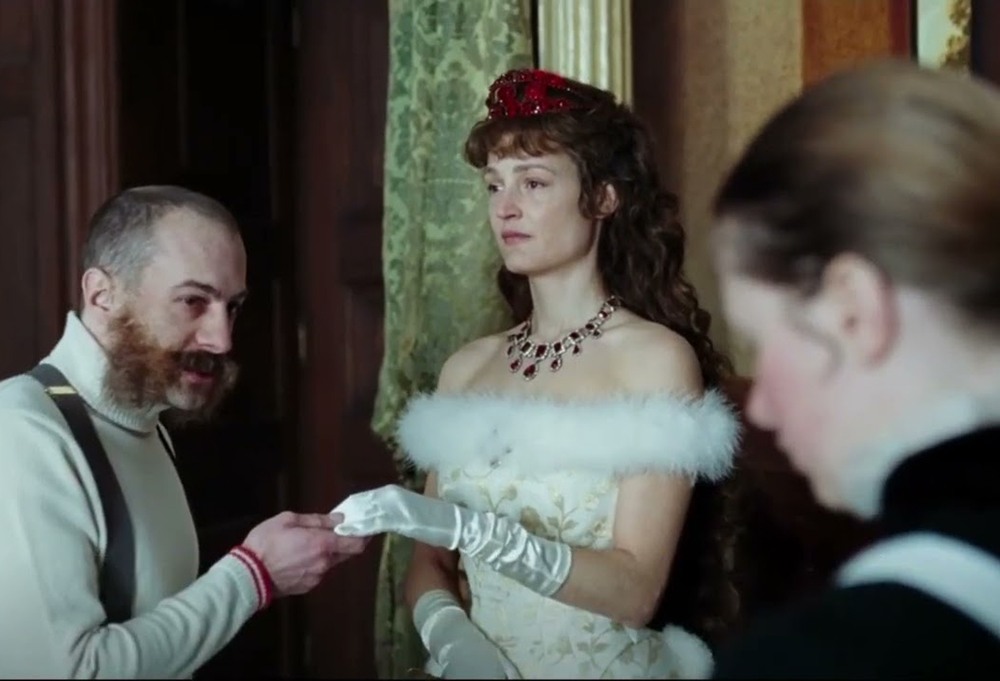
The nature of her protests calls to mind those Old Hollywood starlets whoâd go toe-to-toe with the boys and beatâor at least compete withâthem at their own game. Kriepsâ Sisi is a tough dame, a fighter like the razor-sharp Rosalind Russell in “His Girl Friday” (1940), fiercely-independent like Katharine Hepburn in “Woman of the Year” (1942). Sheâs reluctant royalty resisting companionship like Audrey Hepburn in “Breakfast at Tiffanyâs” (1961); and, above all, sheâs played by one of the most gifted performers on the planet. Hopefully she wonât need to wait another five decades for an Oscar nomination like the inimitable Isabelle Huppert, a fellow European arthouse stalwart finally nominated in 2017 for “Elle,” who shouldâve won decades ago. In a year when Cate Blanchette is earning justifiably rave reviews for her unscrupulous composer in âTÃR,” letâs hope Kriepsâ more playful, yet similarly-committed performance isnât overlooked.Â
Director Marie Kreutzer Retells the Story with Humor and Enthusiasm
Comparisons aside, Krieps is her own person, and her interpretation of Sisi is rich with paradox and bursting with life. The film, which opens in select theaters on December 23rd, doesnât sentimentalize Sisiâs struggles or her victories. What it does best is retell a tragic story with brash humor and giddy enthusiasm, revealing the power of fiction to rework history. Sisiâs life and death may be fixed in history, and in the minds of those who grew up learning about her. But modern audiences can now accept Kriepsâ Sisi, someone who lived and died on her own terms, listened to The Rolling Stones, and loved animals more than people. In other words, sheâs one of us.Â
“Corsage,” an IFC Films release, opens exclusively in theaters on December 23rd.Â




