





âFor the last 30 years, India had been projected to be the worldâs fastest-growing economy,â director Rahul Jain narrates in his documentary film âInvisible Demons.â
âBut I wonder, who objectively benefits from this growth?âÂ
Itâs a question that begs a deep diveâa closer look that demands a backstory for context, and later on presents tangible solutions to address the situation. Jain, for his part, manages to accomplish the first of the two-parter. But while the galvanizing aspect is nowhere to be found, how he presents his story is enough achievement to give the film a go.
Related Review: âCane Fireâ is a Compelling Examination of the Centuries-Long Exploitation of Hawaiiâand How It Continues Today
A Filmmakerâs Immersive and Visually Stunning âClient Change ExposéâÂ
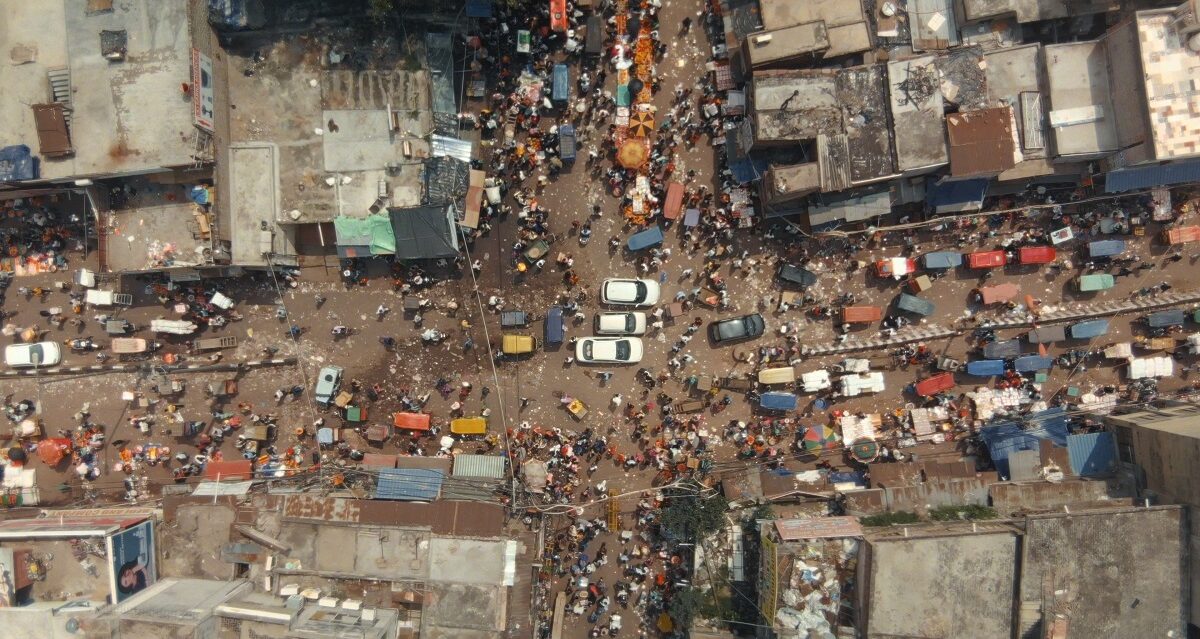
In the film, Jain returns to Delhi and explores the dramatic consequences of Indiaâs growing economy. Using stunning visuals, âInvisible Demonsâ captures the strides the country has takenâat the expense of the environment. Suddenly temperatures become too unbearable, prompting news outlets to exhort the citizens to lessen their activity that would contribute to the scorching heat. Jain himself doesnât get away with it scot-free, either. By his own admission, he grew up pretty much an âair-conditionedâ guy.
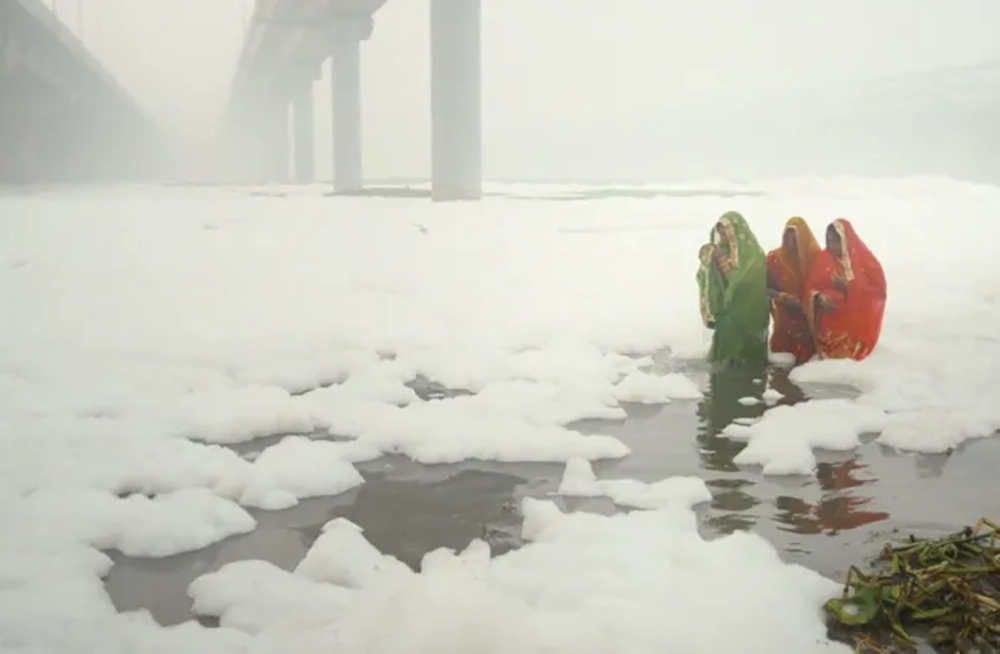
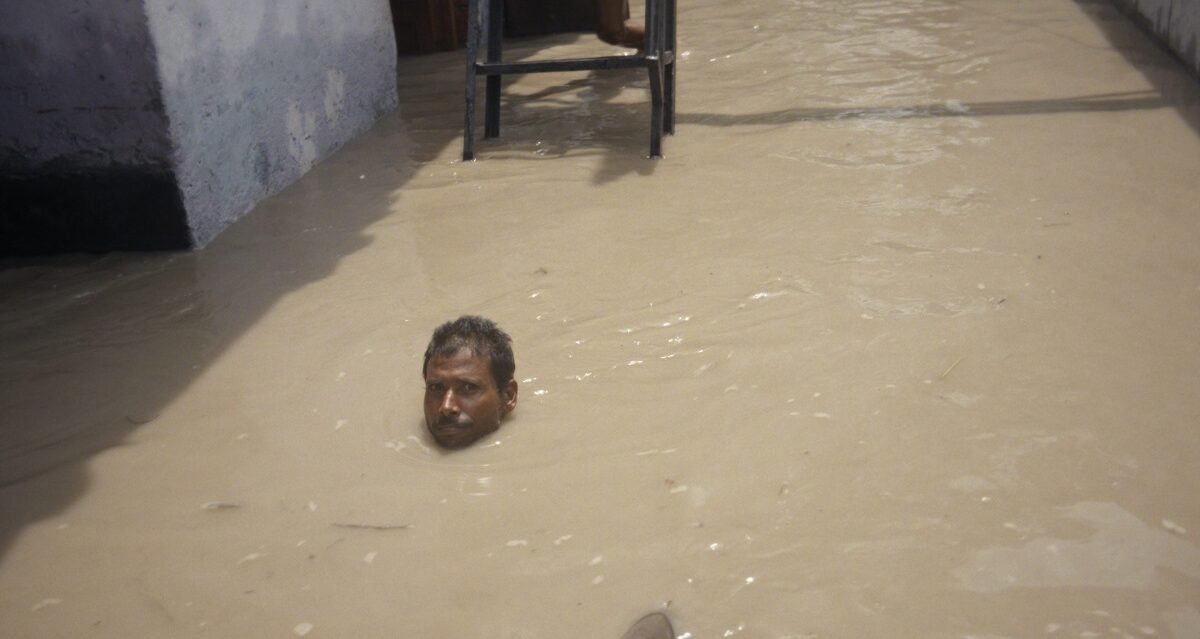
Aside from the rising temperatures, monsoons that occur each year now get stronger and stronger. Air has become too dirty due to pollution. The rivers, for so long a source of drinkable water, have become too polluted to even wash clothes in. Citing data from news and scientific findings, the film notes how pollution has become a major problem. In fact, the Times of India reported that in 2019 alone, pollution caused more than 1.7 million deaths. This staggering rate accounted for almost 18% of all deaths in the country.
Capturing the peopleâs collective climate realitiesâand making the audiences careâis a tall order; and Jain deserves credit for pulling it off.Â
Real-Life Accounts from Everyday Citizens
The film runs at a confident pace. It alternates between interviews with everyday citizens bemoaning the situation, and long-tracking, Malickian shots of the pollution and chaosâlargely with no words spoken. One young man states his frustration with the government for its inability to address the pollution that kills its citizens, saying that itâs the governmentâs duty to fulfill its job to serve the people.
Other interviewees acknowledge the problems at hand, but ultimately resign to their inability to take action, owing to their economic standing. After all, these are rickshaw and truck drivers who rely on people looking for transportation and businesses looking for logistics services, respectively. These are vendors who rely on pesticides to ensure twice as much produce, despite the dangers they pose. A slight decrease in demand would create a ripple effect that could mean the loss of their very livelihoods.Â
One of the interviewees sums it all up succinctly. âWhat the Lord has given us, we have totally destroyed that nature. It is us humans who have done it.â
Told through striking images and eye-opening accounts from everyday citizens, âInvisible Demonsâ is a visceral and immersive journey through the stories of these people. It invites the audience to engage using their senses, encouraging them to empathize with the plight of these citizens whose lives are at risk every day.
Related Review: A Tigress Finds Herself Trapped in the Crosshairs of Human Greed in the Hard-Hitting âSherniâ
âInvisible Demonsâ: A Call to Action that Stops Short on Providing Solutions
However one chooses to see it, Jainâs approach with âInvisible Demonsâ can be two things. One, it’s a stirring commentary that exposes an impending apocalypse no thanks to industrialization and environmental abuse. And two, it’s a half-baked eye-opener that vacillates between preaching and solving.
This critic, however, believes that while the film doesnât present a proverbial third act for a more powerful call to action; âInvisible Demonsâ nonetheless makes good both on its premise and promise.
The scene that struck me most happened near the end. A young man scavenges through a pile of rubbish, looking for scraps he could either trade or sell. The camera then slowly pans out, revealing the âpileâ to be a mountainous landfill, akin to something an animated film captured in great detail back in 2008. Jain remarks that the landfill is only one of four in Delhi alone, before adding, ââthe highest points around the city.â
If this is what a developed country looks like, he reflects, âLetâs imagine what a world without development would look like.â
This is an incisive documentary that goes for the kill, cleverly using imagery instead to tell the story. And yes, the lack of solutions to complete its arc can arguably be construed as an empty exercise of screaming into the void. For the majority of its runtime, nonetheless, âInvisible Demonsâ does its job, and then some. If anything, this solidifies Rahul Jain as a strong voice of modern world cinema.



Support the Site:Â Consider becoming a sponsor to unlock exclusive, member-only content and help support The Movie Buff!


