





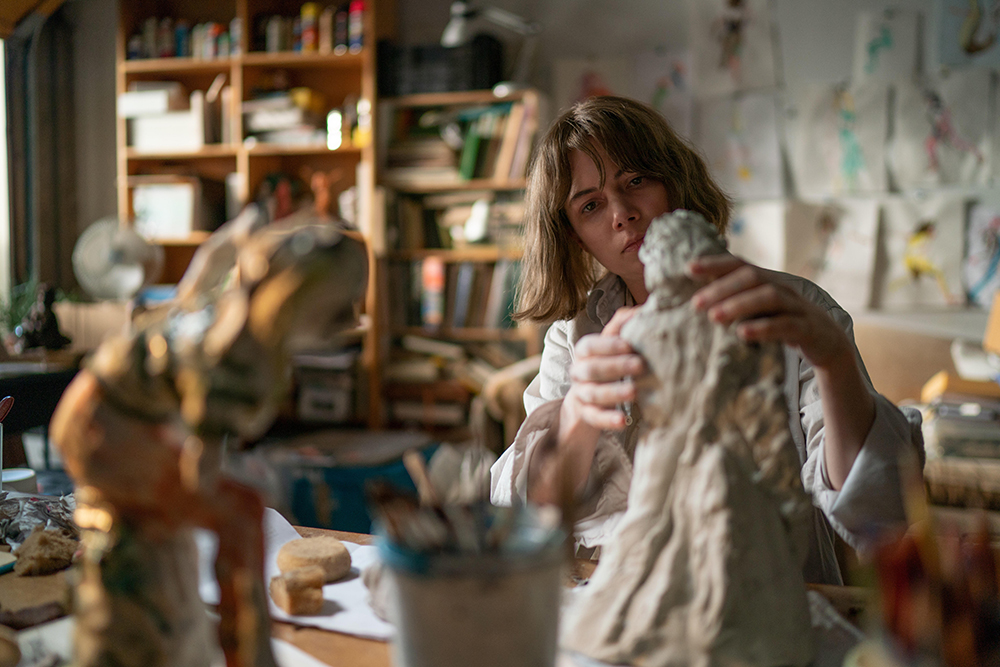
Raymond Carver bristled at the term âminimalism,â when it was used to describe his work. His prose, with its spare and direct language, was a microscope on the lives of real people, mostly set near his Klamath, Washington hometown. Kelly Reichardt is another Pacific Northwesterner who returns home every now and then to check in, surveying the locals and their troubles, acting more as an unbiased witness than storyteller. And yet, the end product is often luminous, larger-than-life. Reichardtâs latest, “Showing Up,” which debuted in the U.S. at the New York Film Festival is sublime, a dense and thorough study of characters and a community. Laid back as it might seem, Reichardtâs approachâlike Carverâsâagain yields a profound emotional impact, defying any other simplistic label that attempts to define her work.Â
The genre to which Reichardtâs films belong is her own, and “Showing Up” is a taut film that takes its time building tension and introducing the main players. Thereâs Lizzy (Michelle Williams), a sculptor at an arts collective in Portland whoâs constantly being pulled away from her work to tend to her day job (she works for her mother at the collectiveâs administrative office), family (her mother, father, and brother are complicated creatures), and life at home (she lives alone in an apartment with a violent cat and no warm water). The day of her show is approaching, and she canât seem to catch a break from anyone.Â
Showing All Sides to People; Reichardt at Her Best
Lizzieâs landlord Jo (Hong Chau) wonât have the new hot water heater anytime soon, and sheâs got a show of her own to prepare for. And Jo only adds to Lizzieâs travails when she finds a wounded bird outside, asking Lizzie to take care of it on her day off. Lizzie canât refuse becauseâas we knowâher cat Ricky is the reason the bird is injured in the first place. Already, thereâs so much at stake here: Lizzieâs creative life balanced against the demands (some reasonable, others absurd) that pull her away from doing what she loves. Sure, the bird bit is funny, but, in Reichardtâs hands, trust that thereâs more to it than a quick laugh or jolt of drama.
In fact, there are no jolts in this movie. The only background music that plays is during the beginning and end credits, although thereâs some playful flute interludes, transitioning from certain scenes, provided by Andre Benjamin (who plays Eric in the film). Setting the film in and around an artistsâ colony is a brilliant move because it challenges assumptions about the preoccupations of these people. These arenât kooky obsessives, theyâre passionate artists. Reichardt draws out these oddball characters without mockery, showing their full lives and devotion to their projects. Her appreciation for the workâand act of workingâis palpable, and in that respect Reichardt resembles the great Jean Renoir, a director fascinated with bitter human nature (“Rules of the Game”) and decency among rivals (“The Grand Illusion”).
All Characters Play a Role, and No One is Insignificant
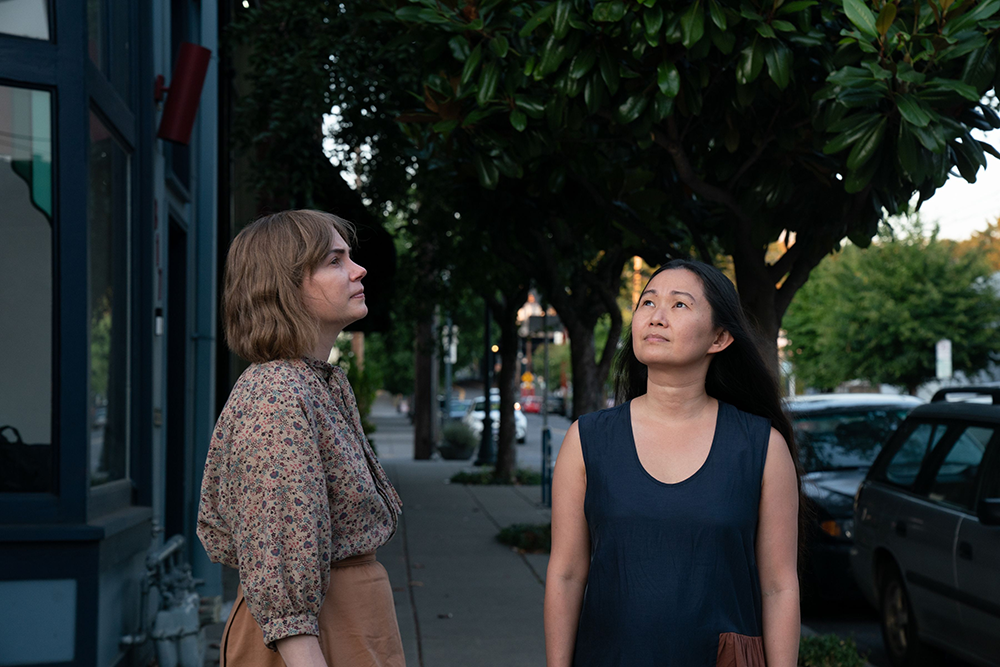
The rivalries depicted in “Showing Up” never rise beyond the level of an angry voicemail, from Lizzie to Jo. And it was in that scene, I was reminded of an oft-quoted Renoir truism: âThe truly terrible thing is that everybody has their reasons.â So, itâs hard to hold a grudge against Jo for not fixing the hot water, or Lizzieâs dad Bill (Judd Hirsch) for allowing squatters (Matt Malloy and Amanda Plummer) into his home. There are no easy explanations or outbursts; in “Showing Up,” people are mostly decent and behave humanely, even Lizzieâs brother Sean (John Magaro), who hints at instability and conspiracy theories in one scene, and displays kindness and restraint in another.Â
Reichardt never judges these people, giving enough depth and gravity so that we can draw our own conclusions. Similar to “Certain Women” (2016), she deploys a stellar ensemble to dissect the joys and misfires of a certain subset of people, defining what matters to them without any grand gestures or overexplaining. Some scenes are funny, some are sad, all true to life. Itâs like a 100-minute “Curb Your Enthusiasm” episode that takes everyone seriously and treats them equally. No detail or character is trivial, and even when the symbolism (hint: it involves the birdâs broken wing) hits hard, itâs understandable within the context of the story. And weâre grateful that Reichardt is telling it.Â
Reichardt is in Full Control of the Material
Working with trusted collaborators, such as Williams, co-writer Jon Raymond, and Director of Photography Christopher Blauvelt, Reichardt has made another thoughtful and stunning film that can only belong to her. Itâs a slow burn that layers tension through carefully constructed scenes and dialogue, heightening the anticipation for the payoff. To call it âquietâ or âminimalistââeuphemisms for low-budget or boringâmight reveal a particular viewerâs preference for a more invasive and showy style, and thatâs just not the Reichardt way. In her world, what matters to these characters is what matters to them, and with “Showing Up,” sheâs in full control of the material, operating at the height of her considerable talents.Â
“Showing Up” is part of our continuing coverage of the 2022 New York Film Festival (NYFF).
Support the Site:Â Consider becoming a sponsor to unlock exclusive, member-only content and help support The Movie Buff!


