While Christopher Lee often cited “The Wicker Man” as the best film of a busy career that spanned over 70 years and more than 200 movies, it was his performance as Count Dracula that undoubtedly made him a star. Other actors played the vampire between Universalâs famous adaptation in 1931 and Terence Fisherâs stripped-back Technicolour version for Hammer, but none had quite the impact of Leeâs portrayal, trading Lugosiâs stately allure for a creature consumed by an unbridled lust for blood.
Lust is the right word. While Lugosi quietly crept up on his victims, Leeâs Dracula lunges at them with glowing red eyes and fangs baredâthis was the Dracula that popularised the idea of elongated incisors as a method of sucking blood. As for the victims themselves, they are positively quivering with fear and anticipation of their nocturnal visits with the Count; diaphanous nightgowns flow and fall tantalisingly away from bare shoulders. One woman, an uptight housewife by day, returns from a good sucking by the vampire with a blissed-out look of post-orgasmic fulfillment radiating from her whole being. Vampirism has long had an association as a sexual act, penetrating and draining oneâs victims; but it was Fisherâs version that made it explicit.
Although Bram Stokerâs novel is mentioned prominently in the opening credits, Jimmy Sangsterâs streamlined script plays fast and loose with the names and incidents in the book. The character of Renfield is dropped altogether, as is the doomed sea voyage where the Count feasts on the crew, relocating all the action to Germany. After Dwight Fryerâs madcap antics as Renfield in the Lugosi version, I was sorry to see him go. Luckily, the performances of Lee and Peter Cushing as his adversary Van Helsing more than make up for it.Â
The story opens in 1885 with a familiar setup: Jonathan Harker (John Van Eyssen) arrives at Draculaâs castle to conduct some business with the Count. This time around, Harker is a vampire hunter posing as a librarian; he visits under the pretext of cataloguing the castleâs sizable collection of old books.
This iteration of Harker never makes it out of the castle. After encountering a frightened woman who begs him to help her escape, she bites him on the neck. Realizing his fate, he attempts to destroy the woman and the Count as they slumber in their coffins. Dracula awakes before he can finish the job and saves himself.

Van Helsing arrives on the scene looking for Harker, who was his friend. He finds him asleep in the crypt, now transformed into a vampire. He stakes him through the heart and returns to Karlstadt to cryptically break the news of his death to Arthur Holmwood (Michael Gough) and his wife Mina (Melissa Stribling), the brother and sister-in-law of Lucy (Carol Marsh), Harkerâs fiancée. Lucy is ill and they decide not to break the news to her straight away; however, she has already fallen under the spell of Dracula, who saw Harkerâs photo of her at the castleâ¦
Made for around £81,000 (around £2 million today), Fisherâs film sometimes reveals its creaky limitations but fully maximises its strengths. Shot in and around Bray Studios in England, the outdoor scenery never convinces as late 19th Century Germany, and Draculaâs castle is quite unthreatening compared to the crumbling lairs of Max Schreckâs Nosferatu and Lugosiâs Count. Once indoors, there is some decent set design, but it only serves the scene rather than heightening the atmosphere.
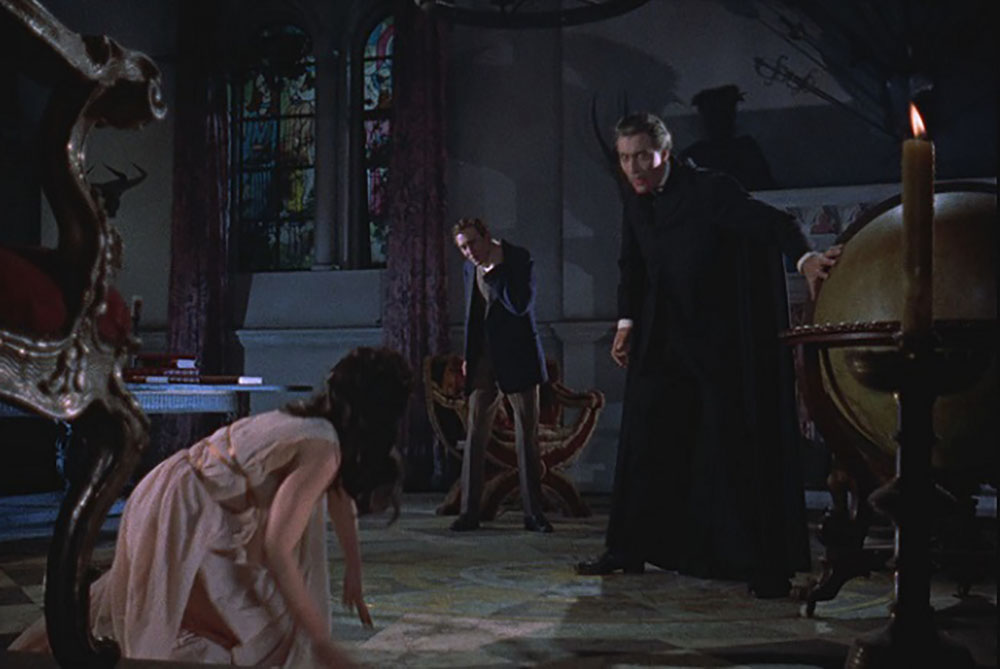
The main appeal of this version is the compulsively watchable pairing of Christopher Lee and Peter Cushing. Fisher fully capitalizes on Leeâs imposing, elongated figure; the actor stood almost two meters tall and the director shoots him mainly from low angles to emphasize his daunting appearance. Even as a stolid horror fan, a few of the scenes still even gave me chills.
Lee takes a different approach from Lugosiâs stillness and strange verbosity; he talks in a clipped, no-nonsense manner in early exchanges with Harker and displays unexpected physicality when baring his fangs. It is quite alarming when he launches himself at a victim; although, watching a man who is all elbows and knees run upstairs has a touch of “The Ministry of Silly Walks” about it. Nevertheless, he radiates charisma and gloomy sexuality, making it completely understable why women would tremble at his approach.

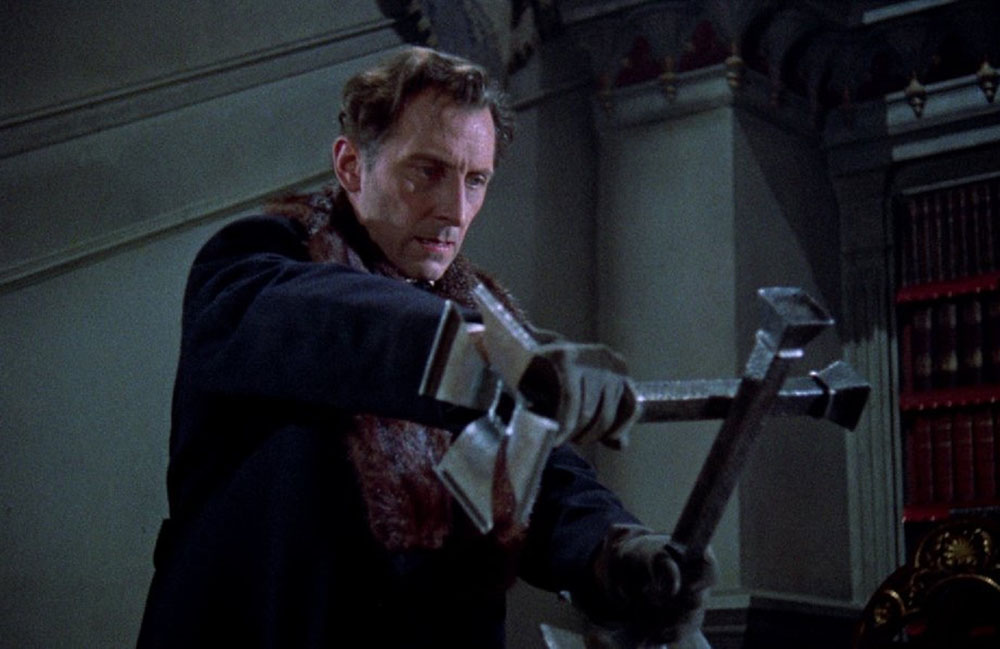
Lee is absent from the central portion of the film, but Cushing greatly picks up the slack as Van Helsing. The actor was in his forties when he took the role; yet he was still quite youthful compared to other versions of the character. Cushingâs Van Helsing is gravely dashing; he fearlessly confronts his much taller and stronger undead foe and, surprisingly, provides much of the filmâs warmth. Iâve always thought of him as rather a stoic actor; but here he is quite touching in the way he briskly reassures the vampireâs victims, or takes a moment to comfort a young girl by giving her his coat and a crucifix for protection. Itâs a short interaction that could have been cut altogether, but was one of my favourite scenes in the film.
Brusque, effective, and staying just the right side of camp, Fisherâs “Dracula” was a Box Office success; it spawned eight sequels, in three of which Lee and Cushing reprised their roles as the classic adversaries. It has dated far better than Lugosiâs earlier version and retained its popular appeal, ranking 65th in Time Outâs recent â100 Best British Moviesâ list. Pull the curtains, turn out the lights, and get in the popcornâthis is a great pick for Halloween.
You can view “Horror of Dracula” on HBO Max with a subscription.Â