âThe proper function of man is to live, not to exist. I shall not waste my days in trying to prolong them. I shall use my time.â As M (Ralph Fiennes) reads this Jack London quote aloud near the end of âNo Time to Die,â we realize how this latest installment in the James Bond film series takes the inevitability of time seriously.
And as Daniel Craigâs final outing in the titular role, we are witnesses to a 2-hour-43-minute tribute to arguably the best Bond in film history.
Nevertheless, there is an undercurrent of a pattern in Craigâs Bond outings. Safe to say, itâs interesting to note that his tenure as Bond has been a hit-or-miss; with the first (âCasino Royaleâ) and third (âSkyfallâ) entries garnering critical acclaim. On the other hand, the second (âQuantum of Solaceâ) and fourth (âSpectreâ) both reaped middling reviews. Hence, thereâs considerable pressure on director Cary Joji Fukunaga (who co-wrote the script with Neal Purvis, Robert Wade, and Phoebe Waller-Bridge) to make âNo Time to Dieâ deliver.
Not only should it be good to continue the trend; it should also serve as a fitting Craigâs swansong to the franchise.
And right off the bat: âNo Time to Dieâ is hardly a perfect film; but it is a great Bond filmâand one that closes Daniel Craigâs tenure as 007 in style.
Of Bioweaponsâand the Itch to Save the World
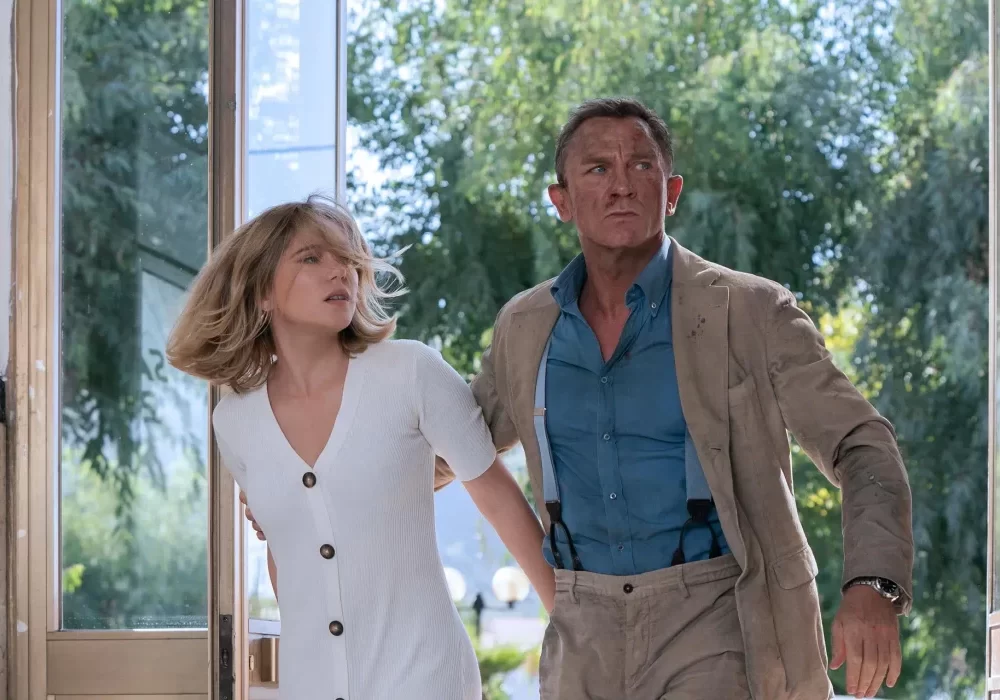
The film picks up just right after the events of âSpectre,â which means Léa Seydouxâs Madeleine Swann returns. This is huge, because itâs unheard-of in the franchise to bring back a Bond girl from previous filmsâalive and still be playing a major role.
The movieâs 24-minute cold open gives the audiences a lot to unpack. We see a flashback of Madeleineâs childhood with her mom before a tragedy that followed; and Bond and Madeleine absconding to Southern Italy, only to be ambushed by Spectre assassins sent by Ernst Stavro Blofeld (Christoph Waltz). With his trust broken, Bond believes Madeleine tipped the organization of their whereabouts, and he breaks the whole thing off.
Five years later, we see an MI6 scientist kidnapped by an unknown group to modify a bioweapon designed to program with the DNA and target specific individuals with precision. Into the wrong hands, the bioweapon can now be used to kill people on a larger, dispassionate scale.
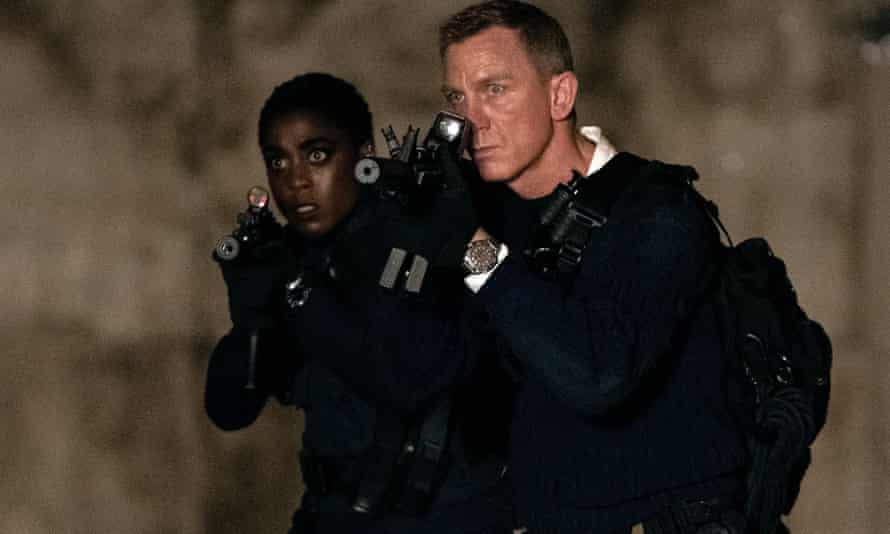
Naturally, trouble finds its way to Bond, even in his remotest places of self-imposed retirement. While being recruited by Felix Leiter (Jeffrey Wright) to help the CIA, M on the other hand sends Nomi (Lashana Lynch) a female double-0 agent who has made a name for herself while Bond is retired. Bond, visibly miffed at the new â00â agent, doesnât take too kindly to her dig that heâs not cut out for the world that has changed. And while Bond believes thereâs nobody trustworthy in a world that needs saving, Nomi, conversely, thinks that the world needs someone whoâs currently living in it. In a way, theyâre both correctâthey just donât know whoâs playing the parts this time.
The Trouble with Overcorrecting Missteps from Previous Films
Whatâs up in the air with âNo Time to Dieâ is how it tries to fix the narrative mess left by âSpectreâ and continue the story. While some viewers would appreciate such effort for the sake of continuity, audiences new to the franchise would feel like they have to re-watch the previous entryâand the others as well, for that matter.
This is evident in how the film integrated Blofeld and Leiter into the story. Personally, I think itâs a genius move to incorporate two of the integral characters in the James Bond mythos. Fukunaga and the crew are able to give both characters the closure they deserve, at least in the Craig incarnations.
In addition, the ramifications of the events from âSpectreâ set off the actions MI6 took to ensure it doesnât happen again. Naturally in these kinds of films, things go tits up, and before Bond knows it, heâs thrust back to the spotlight to try and save the day once again.
On Addressing the Longstanding Controversy with Sexism and Misogyny
Yes, Fukunagaâs direction plays a lead role in making sure âNo Time to Dieâ would work; but the script should be top-notch as well. This is important, especially since the franchise has been dogged for decades with accusations of sexism and misogyny with how the films write their female characters. To address this, Craig himself worked with the producers to bring Phoebe Waller-Bridge (âKilling Eve,â âFleabagâ) on board to help with the screenplay.
And it turns out, it might have been what the series has been lacking all along: a voice from a female perspective. Imagine, it took 22 Bond films later before another female screenwriter is hired (Waller-Bridge is just the second female screenwriter credited with writing a Bond film, after Johanna Harwood co-wrote âDr. Noâ and âFrom Russia with Loveâ).
This, to me, is the smartest choice the producers had done. Commissioning Waller-Bridge for the rewrites allowed for more character development and humor. More importantly, the film humanizes James Bond in a manner Iâve never seen since âCasino Royale.â âNo Time to Dieâ examines Bondâs usual cynicism to reveal a façade of self-defense that masks a broken man with the inability to trust and fully invest emotionally after âthe big oneâ (a phrase that would make Blofeld giggle).
In line with the screenplay, âNo Time to Dieâ also shows Bond in a light rarely seen in the franchise: he undergoes character development. By the time the third act unfolds, Bond doesnât care about his double-0 status anymore. Initially having a contentious relationship with Nomi, he now acquiesces. He just wants to help Nomi whatever way he can to stop the villain from accomplishing his plans of annihilation.

When Women Write Women, Thereâs Just No Time to Die
Thankfully, âNo Time to Dieâ manages to finally address the decades-long branding of the franchise as a misogynistic, sexist series that has taken ages to keep up with the times and the changing of the guard. This means that women in the film werenât merely to exist; they were there because they are needed. For one, casting Lynch as a â00â agent didnât feel like a token move, or something along the lines of appeasing the âMe Tooâ movement. In contrast, Lynch and the filmmakers make sure sheâs independent, with just as much recklessness and attitude as Bond himself.
Another surprise is the addition of Ana de Armas as Paloma, a neophyte albeit no-nonsense CIA agent. Despite having a short screentime, Armas imbues her character with a delicate mix of naivete and strength that could give rookie FBI agent Clarice Starling a run for her money.
Finally, we have Seydouxâs Madeleine Swannâalways a fierce, passionate woman and never a damsel in distress. These characters add life to the whole movie; and as a result, we get properly written strong female characters who need no savingâand instead lend their hands to the protagonist who obviously needs a pair.
The Recent Tradition of Casting Oscar Winners as the Main Villains
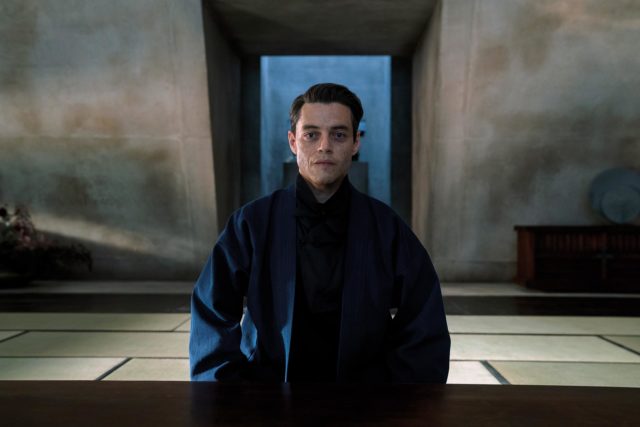
Speaking of the villain, the film introduces us to Lyutsifer Safin (a disfigured Rami Malek), a vengeful soul out to wreak havoc to the world by unleashing a bioweapon comprised of biorobots that can kill people with utter efficiency. Malekâs casting follows a growing trend in recent James Bond entries of casting Academy Award winners in the villainous roles; from Javier Bardemâs Raoul Silva in âSkyfallâ to Christoph Waltzâs Blofeld in âSpectre.â
Furthermore, Malekâs portrayal here follows the thread of the two mentioned villains. Hereâs a tortured man determined to commit genocide for what he views as justified action. When Bond calls him just another person standing in a âlong line of angry little men,â he simply replies, âIâm not angryâjust passionate.â Like the stereotypical villains of the franchise, Safin is talky, with an accent thatâs difficult to pin down and overpowering his monologues.
But while at times his performance is generic, Malekâs nuances in quieter scenes are scarily affective. For instance, when talking to a woman he once decided not to kill but who doesnât recognize him, he eerily remarks:
âSaving someoneâs life connects you to them foreverâ¦the same as taking itâ”
“âthey belong to you.â
How ‘No Time to Die’ Fares When Compared to Its Predecessors
Overall, I find âNo Time to Dieâ a massive improvement over the disappointing âSpectre.â Nevertheless, it ultimately settles in the shadows of what I consider the greatest Bond films ever, âSkyfall.â
A few reasons include the feeling the movie gives off from the get-go, which is to live up to the stratospheric expectations set by the 2012 entry. That air of self-consciousness is apparent in the narrative of the film featuring Bond on the retreat, only to be coaxed out of retirement. This part feels like a retread of âSkyfallâsâ first act.
Another reason involves Malekâs turn as the villain Safin. While paling in comparison to Javier Bardem and Christoph Waltzâs performances from previous installments, Malek does an admirable job while at times succeeding at being terrifying.
Finally, the movieâs theme song, sung by Billie Eilish which she co-wrote with her brother Finneas O’Connell, sounds like the melancholic twin sister of Adeleâs theme song for âSkyfallâ (Apropos: I wonât be talking about Sam Smithâs, since I still believe Radioheadâs rejected song for âSpectreâ is the best Bond theme that never was).
No Time to Die for This Long-Running Franchise: The Search for the Next Bond
As Craig finally steps down from the role, people have begun throwing various names around as the new Bond. From continuing the trend in Tom Hardy to the first black Bond in Idris Elba, the options are endless. There are even calls for Lynch to assume the part as the nextâand first womanâBond.
Regardless of who takes up the mantle next, theyâre going to fill in a very large pair of shoes.
The late great Sean Connery will always be the quintessential James Bond, especially for the olden days. But Daniel Craig is the perfect Bond for our times. Yes, there are fundamental flaws with the characterization; after all, itâs how Ian Fleming wrote the character in his books.
Having said that; Craig infuses his Bond with deeply layered emotionality sorely missing from other versions. When he cares, he deeply caresâoften to a fault. His confrontation scene with Madeleine midway through the film shows us just how much feelings this man can have, and still decide to bottle them all in. So, itâs understandable when a man like that loses hope in forging human connection and instead masks his hurt with hedonism and cynicism.
So, yes; this is a human killing machine who loves his nihilism as much as he loves drinks and girls. Flawed? Yes. Terrible? Almost always.
Human? Absolutely.
So, for now, letâs just appreciate Daniel Craigâs interpretation of James Bond. Five films in fifteen yearsâthatâs a hell of a way to go. And while itâs overall a bumpy ride; âNo Time to Dieâ is definitely a great Bond film, and the perfect swansong for the Daniel Craig.