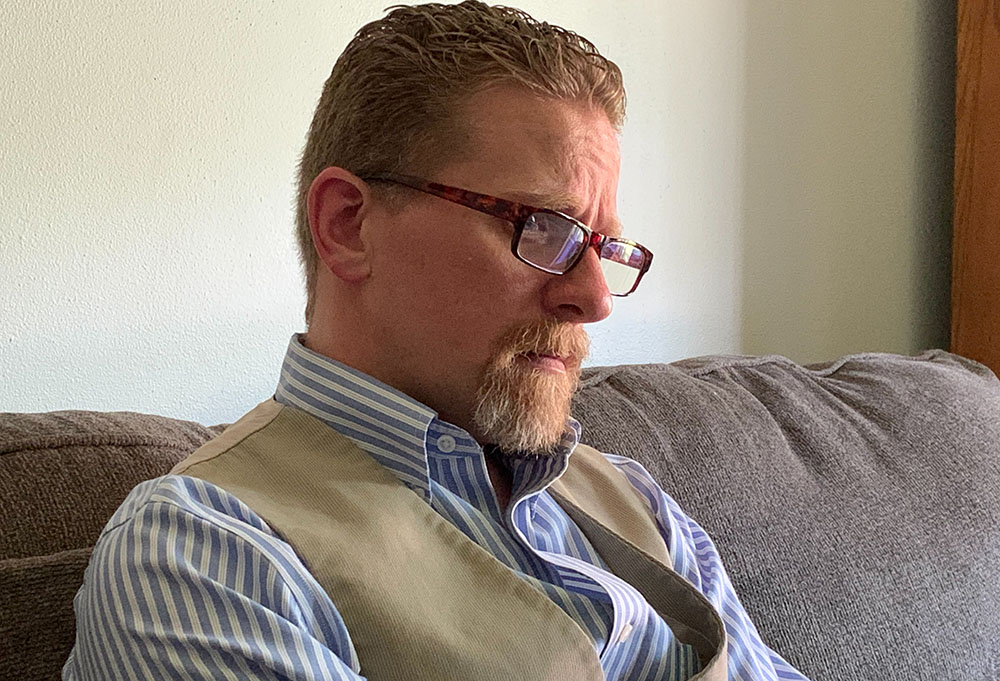
âLive Healthâ is a short, independent film written by actor Timothy J. Cox, and produced and directed by Timothy and Jamie Cox. This is an intimate story, a story about a mental health therapist conducting video chat sessions from home that takes into account his own mental health as well as the pressures of the pandemic. This is a timely piece; Timothy Cox, as the therapist, imbues all the nuances of being in a helping profession and approaching burnout. âLive Healthâ doesnât mean to judge however, but to let us understand. The cinematography shines a light on the filmâs protagonist and lets us infer what we will. The result is poignant and real.Â
Cox, a film and stage actor from New York, has played a plentitude of characters on-screen, both comedic and serious. However, none of it approaches his deft with âLive Health,â which requires capable facial acting and body cues with little in the way of speech to guide him. We watch as Coxâs âDoctor Marcusâ listens to many of his patients throughout his day, choking his emotions to try and help them. Marcus doesnât say much; he doesât have to. His patients take cues from him and share their darkest struggles.
One of the strong parts of âLive Healthâ is the selection of actors to play Marcusâ patients and their stories. Writer Cox has really hit the nail on the head of both what itâs like to be in a helping profession and what kinds of things a professional in this capacity would hear from day-to-day. Some patients have trouble opening up, others speak garrulously; and yet others live in denial, blaming Marcus for his âbad adviceâ when it is clear they have yet to really try it. These are people with real problems; I laud Cox for writing believable characters and not simply caricatures of what he thinks mental health treatment is like.Â
But some of the best parts of this 9-minute short are Coxâ mannerisms when heâs on the camera and off. The opening shows him slumped, lifeless in a lawn chair outside his house before his first session begins, resignedly placing his eyeglasses back on his head and heading inside. The eyeglasses come into play a lot; between sessions he takes them off, rubs his head, and then places them back on to continue his next session. In this way, the film has notes of “Glengarry Glen Ross” by David Mamet. However, unlike that film, Marcusâ profession is worthwhile; but his own mental health is suffering as a result of helping so many people, worsened, doubtless, by the pandemic.Â


The film has excellent cinematography, and Timothy and Jamie Cox juggle Marcusâ many patients well. Itâs a testament to the filmâs success that its camera, which points at little but Marcus and a laptop screen, has the impact it does. You feel Marcusâ plight, as well as his patients. But it’s here the filmâs only criticism comes: while its ending is apropos, and realistic, I wish the film had been longer to really hammer home the themes it intends to elaborate on. How does Marcusâ burnout affect his patients? Does it show, or is its effect merely only visible to him, as most of our own struggles often are. Also, how are his patients bettered by Marcusâ presence in their lives? Most often, we affect people deeply without even knowing it. I canât help but wonder if this validation is what is missing from Marcusâ life.Â
But all-in-all this is a good film. Itâs relevant and poignant; mental health professionalsâas all health professionalsâare increasingly taxed during the pandemic, and it was good to see Timothy and Jamie Cox shine a light on this. The short is also filmed well; Cinematographer Jamie Cox highlights Marcusâ struggles while also showing that of his patients, and itâs a testament to the filmmaking that we feel we’re in Marcusâ shoes. âLive Healthâ feels like watching a therapy session, and not merely actors playing one for effect. The short further features original music by Matthew Mahler, which adds to the film in needed ways.Â
âLive Healthâ is a good film. Itâs a definite recommend for those who want a look inside the life of work-from-home therapists, or for those looking for empathy into peopleâs lives they may have hitherto only offered a passing thought.Â
“Live Health” is available to watch on YouTube. You can click the window below to watch the film.Â