Horror author Clive Barker has a way of twisting and turning his stories into semi-perfect macabre portraits, weaved around the sins of infidelity, and âCandymanâ is no exception. But where âHellraiserâ stayed skin-deep, this film goes further, examining themes of poverty, racism, regret, sorrow, and remorseâwhile also painting a haunting picture that is complete and harrowing. âCandymanâ isnât perfect; but this is a film defined by its tone, which is superlative. You can glimpse insanity watching this film, and at times even feel tainted by it. With winning performances from its leads, it sets the stage for an experience you can feel.
What works about Barkerâs story (originally titled âThe Forbiddenâ in its written form) is that Candyman is not a slasher. The â80s were rife with those, and this film, directed and written by Bernard Rose, makes the myth surrounding the villain palpable. Rose spends a tremendous portion of the filmâs first act setting up the tone and characterization. An ambitious graduate student named Helen (Virginia Madsen) is researching a legend of a man with a hook for a hand seeking revenge, but she really thinks itâs an urban legend. So does her husband Trevor (Xander Berkley), a college professor who may or may not be having an affair with one of his students. But things become real when (*spoiler*) Helen says Candymanâs name five times and summons the villain to life.
âCandymanâ had the pieces to fall apart, and itâs a credit to its direction and story that it didnât. A fabled figure with a hook for a hand sounds cliché; but when Candyman first appears its seems a bit silly and awkwardâuntil it doesnât. The film quickly devolves into the throes of insanity. Helen is stalked by the man who frames her for crimes that become more and more ghastly; this takes place all while tormenting her psychologically and physically. It has all the horror of Freddy Krueger in the series opener without any of the comic jokes, combined with tone and scene-setting that just feel uncomfortable.
We have to talk about Candyman, played here by Tony Todd who would gain infamy from the character. He appears suddenly, draped in a large wool and feather long-coat, concealing things showed later that are what nightmares are made off. He looks normal enough, save a hook nailed into a stub of a hand with crude handiwork. Weâve heard about his suffering in an urban legend told earlier at a dinner party; the man certainly has an axe to grind, and weâre at first unsure why he picked Helen. The reason becomes clear in the filmâs third act which clambers somewhat; however, it hits with enough merit to make it work.
Into this mix, Barker and Rose insert a commentary on inner-city life and racism, but itâs handled deftly and responsibly. This is a progressive film. We see how the filmâs projects (explained as the genesis of a horrible crime attributed to the Candyman) becomes a parable for prejudicial city planning and cultural interloping. A character (Vanessa Williams) warns Helen that bad things happen when White folks come around. Helen means well, but how off the mark is this? Her presence brings about the return of Candyman, along with several attacks on their community. âCandymanâ comments on the push and pull of racism slowly, shining its light on it but almost sidestepping it. This is a film far ahead of its time, brimming with commentary but reticent to make it. Yet the whole thing feels appropriate and scary, and is an unnerving picture to behold.

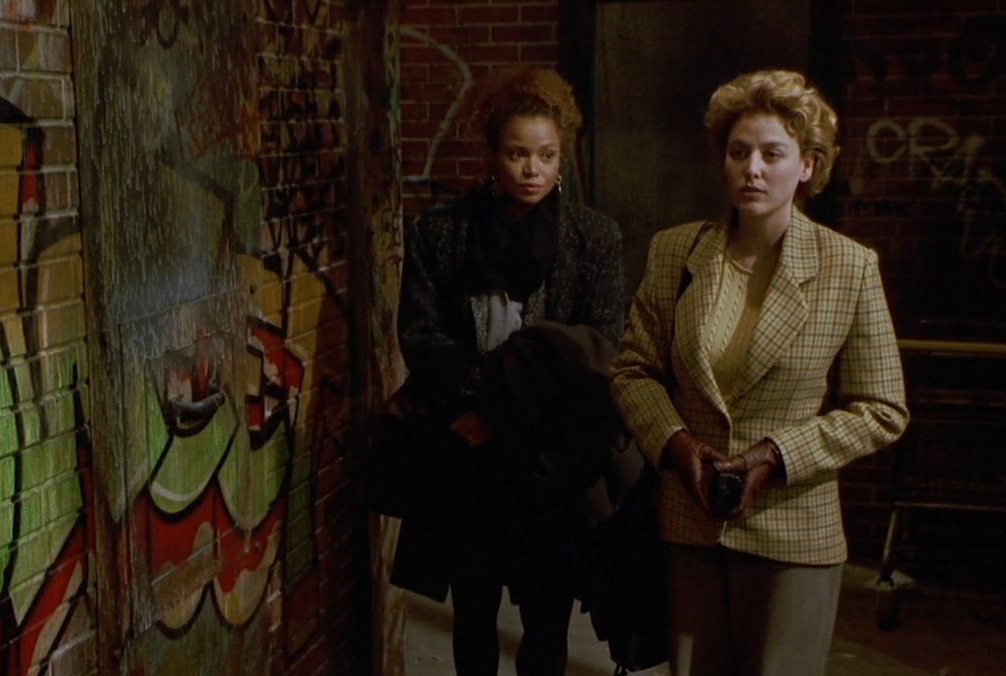
The performances are all good. Madsen carries the lead role well of a pushy grad student who canât leave well enough alone, backed up by her friend Bernadette (Kasi Lemmons), who is also good. As Helenâs duplicitous husband Trevor, Xander Berkley is extremely apt; he plays the part of a semi-snobby erudite who has a conscience buried deep within, and the whole thing works. Heâs lost amidst the noise for most of this, but the closing scene he knocks it out of the park. Some other ancillary characters round out the cast, most notably DeJuan Guy who plays a little boy named Jake who lives in the project and befriends Helen, even though he later questions this decision.
âCandymanâ is a hard film to describe. Its tone is its stronger aspect, and the story in essence tells itself around it. This is 1992; thereâs not a lot of effects to play with, and the film handles its bloodier parts with grace. Theyâre scary, but not defiling, and a weaker film would have made its audiencesâ stomaches churn instead of their minds. It juggles its themes as best it can, and bathes the proceedings with an organ score that adds to its haunting nature. Under it all, this is a ghost story; with Toddâs creepy presence and the filmâs attack on human sanity, it leaves its mark as a thoughtful horror film despite its sometimes-illusory handling. The film is a definite recommend for those looking for horror that sidesteps slashers. It’s also a great entry point for those looking to check out its sequel/reboot, currently in theaters and streaming.
“Candyman” is available to watch or rent on most streaming services.